
I’ll admit I went to Mallorca with low expectations. I’d absorbed the clichés — package tourism, Magaluf, lobster-red Brits drinking San Miguel at airport-adjacent hotels. What I found instead was a limestone mountain range with peaks above 1,400 metres, a UNESCO-protected cultural landscape of dry-stone terraces and olive groves, villages built from honey-coloured stone where the only sound was church bells, and a food scene led by chefs who’d done time in Michelin-starred kitchens in Barcelona and London before coming home to cook with Mallorcan ingredients.
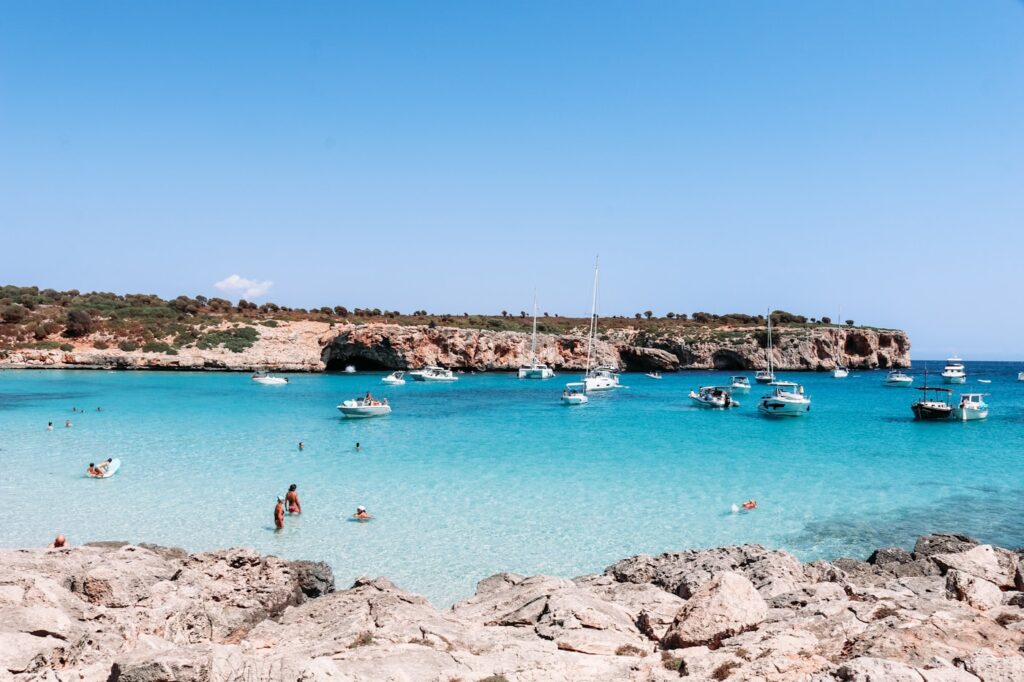
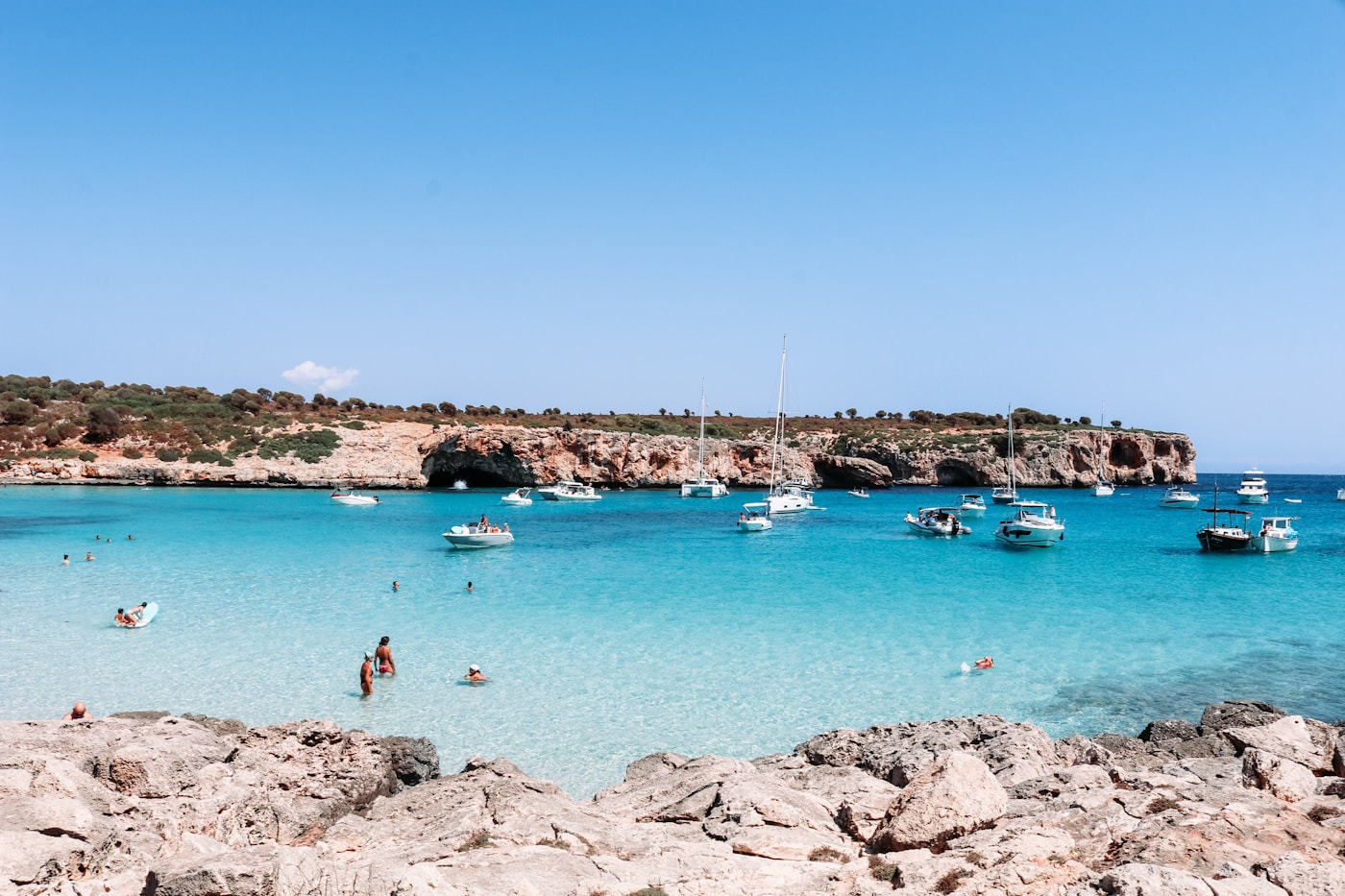
The package tourism still exists — concentrated in a few resort zones on the south and east coasts. But it’s a fraction of what the island offers. Mallorca is 3,640 square kilometres — roughly the size of Long Island — with a mountain spine (the Serra de Tramuntana) running its entire northwest coast, a flat agricultural interior dotted with windmills and vineyards, and a coastline so indented with coves (calas) that you could spend a month just beach-hopping and still miss half of them.
The cycling is what first brought international attention to a different Mallorca. Professional teams have been using the island for winter training camps since the 1990s, and the roads — smooth tarmac winding through mountain passes with virtually no traffic — are now legendary in the cycling world. The hiking followed, with the GR 221 long-distance trail traversing the Serra de Tramuntana. Then came the food: a new generation of restaurants serving Mallorcan cuisine that’s both rooted in tradition and genuinely creative.
What’s in This Guide
- Why Mallorca in 2026
- The Serra de Tramuntana
- Palma: the capital
- The best calas
- Cycling in Mallorca
- Food and wine
- Villages worth visiting
- Getting there and around
- Realistic budget
- What nobody tells you
- FAQ
Why Mallorca in 2026
Mallorca has been steadily climbing travel lists for several years, but 2026 is a particularly interesting moment. The Balearic government’s tourism sustainability law — which caps accommodation licences and requires environmental levies — has been slowing mass tourism growth while encouraging higher-quality, lower-impact visits. New boutique hotels and agriturismo (farm-stay) properties are opening in the interior and mountains, shifting the island’s centre of gravity away from the coast. Palma’s art and gallery scene has expanded with new spaces in the Santa Catalina and Es Jonquet neighbourhoods. And the island’s wine industry — virtually unknown a decade ago — is producing Mediterranean reds and whites that are turning heads at European wine fairs.
The Serra de Tramuntana
The UNESCO World Heritage mountain range running along Mallorca’s northwest coast is the island’s greatest asset and its best argument against the package-holiday stereotype. The Tramuntana is a landscape of dramatic limestone peaks, ancient terraced olive groves, dry-stone shepherd paths, and villages that cling to hillsides with a determination that suggests centuries of practice.
Deià is the most famous — a village of stone houses cascading down a hillside to a rocky cove, made legendary by Robert Graves, who lived here from the 1930s until his death in 1985. It’s beautiful and it knows it — prices reflect the fame. Valldemossa, where Chopin and George Sand spent a difficult winter in 1838, has a Carthusian monastery and a quieter charm. Sóller, connected to Palma by a vintage wooden tram, sits in a bowl of orange and lemon groves surrounded by peaks. Fornalutx, a 10-minute drive above Sóller, regularly appears on lists of Spain’s most beautiful villages.
The GR 221 — the Dry Stone Route — traverses the range from Andratx to Pollença over about 135km. It follows ancient paths through olive groves, mountain passes, and forests of holm oak, with overnight stays in restored refugis (mountain shelters). The full route takes 6–8 days; shorter sections are available as day hikes. The path from Deià to Sóller (about 3 hours) is the most popular single-day section.
Palma: The Capital
Palma is a proper Mediterranean city — not a resort town with ideas above its station. The old town is a maze of narrow streets, Renaissance courtyards, and Gothic churches, centred on a cathedral (La Seu) that drops visitors’ jaws with its sheer size and the way the rose window catches the morning light. Gaudí and Miquel Barceló both worked on the interior at different points, and the combination of Gothic structure, Art Nouveau interventions, and contemporary ceramic murals is genuinely extraordinary.
The neighbourhoods to know: Santa Catalina — the former fishermen’s quarter, now the food and nightlife district, with tapas bars, wine bars, and the Mercat de Santa Catalina (the best food market for eating, not just looking). Es Jonquet — the old windmill quarter above the port, now home to galleries and boutique hotels. La Lonja — the waterfront area around the medieval exchange building, good for cocktails and people-watching.
The Best Calas
Mallorca’s coastline is defined by calas — small coves, often backed by cliffs and pine trees, with water that ranges from transparent turquoise to deep Mediterranean blue. The best ones require effort to reach, which keeps them uncrowded.
Caló des Moro — A tiny cove near Santanyí, accessed by a steep trail through pine forest. The water is Caribbean-clear. Arrive before 10am or you won’t find space. Cala Deià — A rocky beach at the foot of the village, with a couple of seafood restaurants and water so blue it looks artificial. Cala Varques — An undeveloped beach on the east coast, a 20-minute walk from the road. No facilities, no sunbed rentals — just sand, clear water, and cliffs. Cala Figuera (Formentor) — A narrow pebble beach on the wild Cap de Formentor peninsula, surrounded by pine-covered cliffs. Es Trenc — The longest undeveloped beach on the south coast: 3km of white sand, shallow water, and dunes. More accessible than the calas but still beautiful.
Cycling in Mallorca
Professional cycling teams come to Mallorca for winter training, and amateur cyclists follow. The appeal is obvious: smooth, quiet mountain roads through spectacular scenery, minimal traffic, reliable sunshine from February onwards, and a cycling infrastructure (bike-friendly hotels, rental shops, repair stations) that’s been built up over decades.
The signature climbs: Sa Calobra — a 10km descent (and brutal ascent) through switchbacks carved into limestone cliffs down to a turquoise cove. One of Europe’s most famous cycling roads. Puig Major — the highest paved road on the island, part of the MA-10 through the Tramuntana. Coll de Sóller — a classic pass connecting Palma to the northern valleys. Rental bikes (quality road bikes or e-bikes) are available in Palma and most towns from €25–60/day. Guided cycling holidays with luggage transfer are a well-established industry.
Food and Wine
Mallorcan cuisine is Mediterranean island food: olive oil, almonds, pork, fish, and whatever’s growing. The traditional dishes are hearty — pa amb oli (bread rubbed with tomato and olive oil, topped with ham and cheese), tumbet (a layered vegetable bake similar to ratatouille), frit mallorquí (offal fried with potatoes and peppers), and sobrassada (a soft, spreadable cured sausage flavoured with pimentón). The ensaïmada — a coiled pastry dusted with powdered sugar — is the island’s iconic bakery item, eaten for breakfast with coffee or filled with cream, angel hair squash, or sobrassada.
The wine: Mallorca has two DO (denomination of origin) wine regions — Binissalem and Pla i Llevant — and the local grape varieties (Manto Negro, Callet, Prensal Blanc) are producing increasingly impressive wines. Several small bodegas offer tastings — Macià Batle and José L. Ferrer in Binissalem are the established names; smaller operations like Ànima Negra and 4 Kilos are the cult favourites. A bottle of excellent local wine at a restaurant runs €18–30.
Villages Worth Visiting
- Pollença — A stone-built town with a Sunday market, a 365-step stairway to a hilltop chapel, and a quieter alternative to Palma as a base. Good restaurants and art galleries.
- Artà — A hillside town in the northeast with a fortress, a Tuesday market, and access to the Llevant Natural Park’s hiking trails and unspoilt beaches.
- Santanyí — A honey-stone town in the southeast known for its Saturday market, art galleries, and proximity to the best southern calas. Popular with German and Scandinavian expats.
- Sineu — The geographical centre of the island, with a Wednesday market that’s been running since the 13th century and a cluster of wine bars and restaurants in medieval stone buildings.
Getting There and Around
Palma de Mallorca Airport (PMI) has direct flights from most European cities — it’s the third busiest airport in Spain. Budget airlines (Ryanair, easyJet, Eurowings) keep prices low: London to Palma from £30 return in shoulder season. From the US, connect through Madrid, Barcelona, or London. A rental car is the best way to explore beyond Palma — compact cars from €25–45/day. The TIB bus network covers the island but infrequently in rural areas. The Palma–Sóller vintage train is a scenic ride through the Tramuntana but primarily a tourist experience, not practical transport.
Realistic Budget
- Budget (hostel, pa amb oli lunches, public transport): €60–90/day
- Mid-range (boutique hotel, restaurant meals, rental car): €150–250/day
- Comfortable (finca hotel, fine dining, guided tours): €300–500/day
- Pa amb oli at a market bar: €5–8
- Dinner at a good restaurant: €30–50 per person
- Road bike rental: €25–60/day
- Boat trip to hidden calas: €40–80
What Nobody Tells You
- April and October are the best months. Summer (July–August) is hot, crowded, and expensive. April has wildflowers, comfortable temperatures, and empty beaches. October still has warm sea temperatures and autumn light that photographers love.
- The interior is the secret. Most visitors stay on the coast, but the flat agricultural interior — the Es Pla — has the best traditional restaurants, the most authentic weekly markets, and a quieter Mallorca that feels decades removed from the beach resorts.
- Learn to say “no” to Magaluf. It’s one strip of one town on an island that has 200+ beaches. Judging Mallorca by Magaluf is like judging Italy by a motorway service station.
- The sustainable tourism tax is real. All visitors pay a nightly eco-tax (€1–4 depending on accommodation type and season). It funds environmental conservation and cultural preservation. It’s automatically added to your hotel bill.
- Catalan is the local language. Mallorquín is a dialect of Catalan, and it’s the first language for many locals. Spanish (Castellano) is universally understood. English is common in tourist areas but appreciated if you manage a few words — “bon dia” instead of “buenos días” goes a long way.
Experiences & Activities
Book Tours & Activities in Mallorca
Browse boat trips to hidden calas, Serra de Tramuntana hikes, Palma food tours, and wine tasting excursions — all bookable online with free cancellation on most options.
Browse Mallorca Experiences →New guides every few months — no noise, no spam.
Subscribe freeFrequently Asked Questions
What is the best time to visit Mallorca?
April to June and September to October. Summer is hot and crowded. Winter is mild but some hotels and restaurants close. April has wildflowers and empty beaches; October has warm seas and golden light.
Do I need a car in Mallorca?
For Palma, no — it’s walkable with good bus connections. For exploring the Tramuntana, the calas, and the interior villages, a car is strongly recommended. Bus service exists but is infrequent outside main routes.
Is Mallorca just for package tourists?
No. Package resorts occupy a small fraction of the coastline. The Serra de Tramuntana is UNESCO-listed wilderness, the interior has authentic villages and vineyards, and Palma is a genuine Mediterranean city with excellent food and culture.
How many days should I spend in Mallorca?
A week is ideal — two days in Palma, two or three in the Tramuntana, and two or three exploring calas and villages. You could fill two weeks easily if you add cycling, hiking the GR 221, or wine touring.