
I drove the Road to Hana on a Tuesday, which turned out to be the right call. By the time I reached the first waterfall — Twin Falls, about 10 minutes past the town of Paia — the tour buses hadn’t arrived yet, and I stood alone in a freshwater pool surrounded by bamboo and ginger plants, listening to nothing but water and birdsong. It lasted about 15 minutes before the first group showed up, but those 15 minutes were worth the 5am alarm.
This is the essential Maui tension: extraordinary natural beauty that attracts so many visitors that the beauty risks being loved to death. The island gets roughly 3 million visitors a year — about 10 times its resident population — and the impact is visible in traffic on the one-lane Hana Highway, overcrowded beaches at Kaanapali, and a housing market that’s priced most locals out of the communities their families have lived in for generations.
The 2023 Lahaina wildfire, which destroyed the historic town and killed over 100 people, brought these tensions into sharp focus. Lahaina’s rebuilding is ongoing, and the question of what Maui tourism looks like going forward — more sustainable, more community-directed, more respectful of Hawaiian culture and land — is being actively negotiated. Visiting in 2026 means engaging with that reality, not avoiding it. It means spending money at locally owned businesses, respecting cultural sites, and understanding that this island is someone’s home first and your vacation second.
What’s in This Guide
- Why Maui in 2026
- The regions
- The Road to Hana
- Haleakalā
- The best beaches
- Ocean activities
- Food
- Hawaiian culture
- Realistic budget
- What nobody tells you
- FAQ
Why Maui in 2026
Maui’s tourism landscape has shifted meaningfully since the Lahaina fire. The county has implemented new visitor management systems — reservation requirements for popular trailheads, capacity limits at crowded beaches, and a stronger emphasis on directing visitors toward locally owned businesses and cultural experiences. Lahaina’s waterfront is being rebuilt with community input, and several new Hawaiian cultural centres and heritage trails have opened across the island. The result is a Maui that’s more thoughtful about tourism than it was pre-2023 — and, for visitors willing to engage with that, a richer experience.
The Regions
West Maui (Kaanapali, Kapalua, Lahaina) — The resort coast. Kaanapali Beach is a 5km stretch of golden sand fronting the major hotels. Kapalua, further north, is quieter and more upscale, with excellent snorkelling at Kapalua Bay. Lahaina, the historic whaling town, is in active reconstruction — check local sources for current access and open businesses.
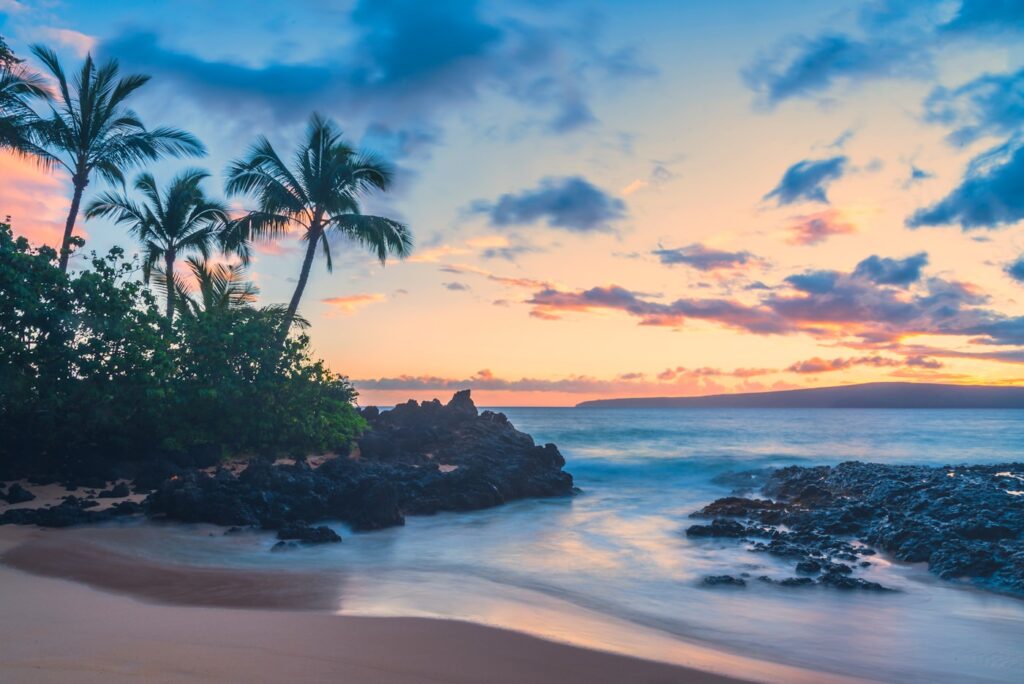
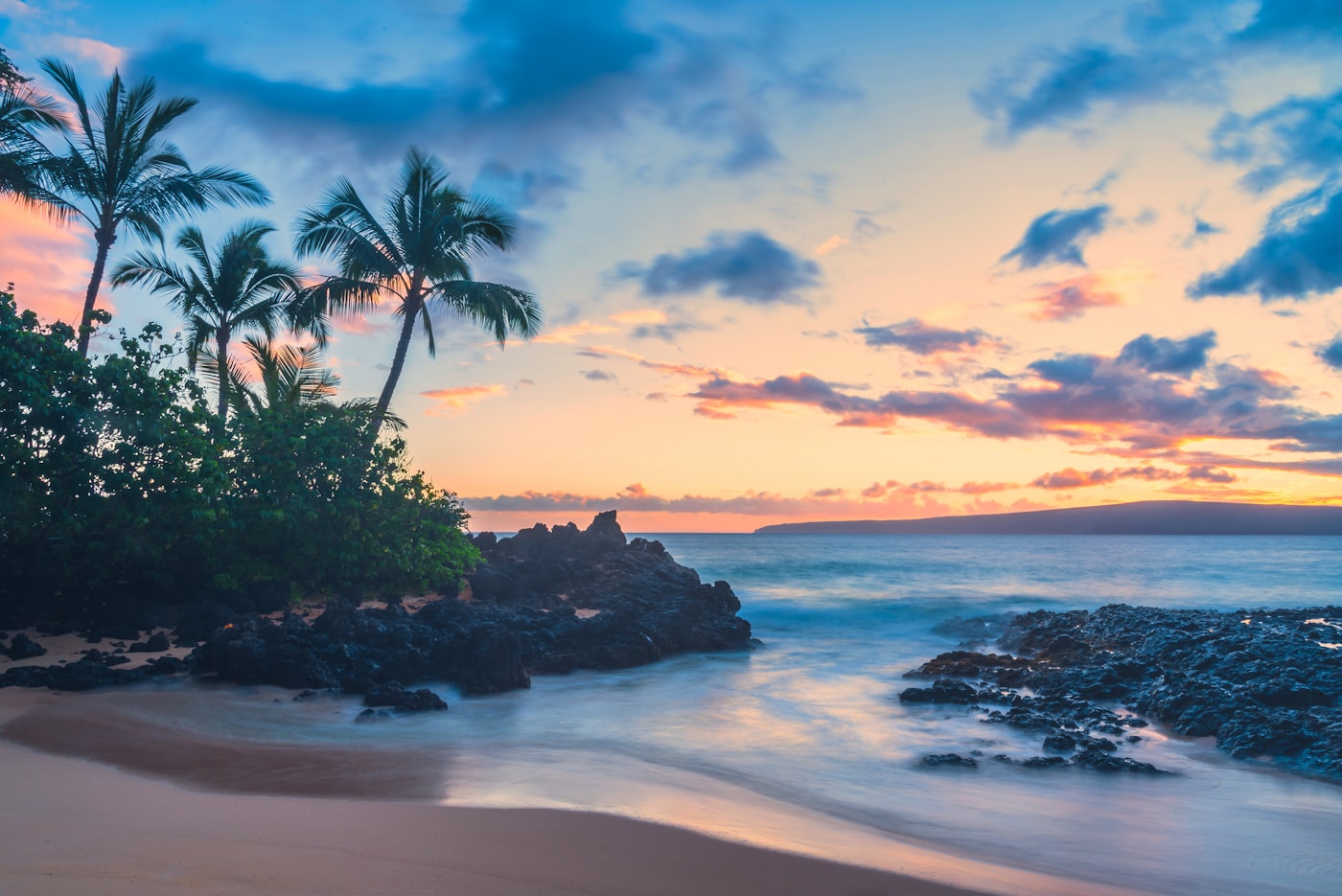
South Maui (Kihei, Wailea, Makena) — The sunny side. Kihei is the more affordable, local-feeling beach town. Wailea is resort territory with manicured beaches and golf courses. Makena, at the southern end, has Big Beach — a wide sweep of golden sand with bodysurf-worthy shorebreak — and the otherworldly lava fields of La Pérouse Bay.
Central Maui (Kahului, Wailuku) — Where locals live and work. Kahului has the airport, Costco (everyone’s first stop for supplies), and the best local restaurants. Wailuku, the old county seat, has a small-town main street with antique shops, galleries, and Tiffany’s Bar & Grill, which is neither fancy nor related to the jewellery brand but serves excellent food.
Upcountry (Kula, Makawao, Haiku) — The agricultural highlands on the slopes of Haleakalā. Cooler temperatures, protea and lavender farms, ranching country, and a bohemian-cowboy culture in the town of Makawao. Grandma’s Coffee House in Keokea serves coffee grown on the slopes below and has a porch view that extends to the ocean.
East Maui (Hana) — The remote, rainforest side. Hana is a small community at the end of the famous highway, with black-sand beaches, waterfalls, and a pace of life that makes the rest of Maui feel frantic. Staying overnight in Hana (rather than doing the road as a day trip) transforms the experience.
The Road to Hana
The Hana Highway is 84km of coastal road with 620 curves and 59 one-lane bridges, winding through rainforest, past waterfalls, along sea cliffs, and through small communities that existed long before the road did. It’s one of the great drives in the United States, and it’s also one of the most over-touristed, which creates a paradox: the best way to experience the road is to ignore most of the stops that the guidebooks recommend and find your own rhythm.
That said, some stops are non-negotiable. Waikamoi Ridge Trail — a short loop through bamboo forest that most people drive past. Wai’anapanapa State Park — black volcanic sand beach, sea caves, a coastal trail (reservation required). Hana town itself — Hasegawa General Store, Hana Bay, the Hana Cultural Center. And if you continue past Hana on the “back road” through Kipahulu, the Pools of ‘Ohe’o (formerly Seven Sacred Pools) in Haleakalā National Park are worth the entry fee.
Start early (before 7am), drive slowly, pull over for locals who know the road, and consider staying in Hana overnight — the town after the day-trippers leave is an entirely different place.
Haleakalā
Haleakalā — “House of the Sun” — is a 3,055m shield volcano whose summit crater is one of the most surreal landscapes in Hawaii. The crater floor is a desert of red and grey cinder cones, lava formations, and silversword plants (ahinahina) that grow nowhere else on earth. The sunrise from the summit is famous — you drive up in the dark, arrive at the visitor centre, and watch the sun come up above the clouds from what feels like the edge of space. Reservations are required for sunrise viewing and sell out weeks in advance.
The hiking inside the crater is spectacular and surprisingly uncrowded. The Sliding Sands Trail drops 760m from the summit into the crater floor — a moonscape hike that takes 4–6 hours round trip. For a full experience, book one of the three backcountry cabins inside the crater (by lottery, months ahead) and spend a night in the volcanic wilderness. The temperature at the summit can be near freezing even when it’s 28°C at the beach — bring layers.
The Best Beaches
Big Beach (Makena) — The gold standard. A wide, dramatic beach with powerful shorebreak (not for casual swimmers but perfect for boogie boarding). Uncrowded by Maui standards. Kapalua Bay — Protected cove, calm water, excellent snorkelling, sea turtles. Best all-round family beach. Ho’okipa Beach — The windsurfing and kiteboarding capital of the world, and in winter a big-wave surf break. Even if you don’t participate, watching from the bluff is mesmerising. Hamoa Beach — A crescent of sand near Hana, reachable by road but remote-feeling. James Michener called it the best beach in the Pacific. Wai’anapanapa — Black volcanic sand, turquoise water, sea caves. Reservation required.
Ocean Activities
Whale watching (December–April) — Humpback whales migrate to Maui’s warm waters to breed and calve. The whale density is extraordinary — you can often spot breaches from shore. Boat tours from Lahaina and Ma’alaea run 2–3 hours ($40–80 per person) and get you close enough to hear them breathe.
Snorkelling — Molokini Crater, a partially submerged volcanic crater offshore, is the headline spot — clear water, coral, tropical fish, and occasional manta rays. Tours from Ma’alaea ($100–180). For free snorkelling, Kapalua Bay and Olowalu (mile marker 14) are excellent. Sea turtles are common at most sites.
Surfing — Beginners: Cove Park in Kihei or Lahaina Breakwall. Intermediates: Ho’okipa (summer swells). Experts: Pe’ahi (Jaws), which produces some of the biggest waves on earth in winter. Lessons from $80 for a group session.
Food
Maui’s food reflects its plantation history — waves of immigration from Japan, China, the Philippines, Portugal, and Korea created a fusion cuisine that’s uniquely Hawaiian. Plate lunches — two scoops rice, macaroni salad, and a protein (kalua pork, chicken katsu, loco moco) — are the working-class staple and available everywhere for $10–15. Poke (cubed raw fish, usually ahi tuna, with soy, sesame, and onion) is sold at grocery store deli counters and is often better than what you’d pay $18 for at a mainland restaurant.
For dining, the upcountry farm-to-table scene has matured — restaurants in Kula and Makawao source from farms you can see from the dining room. In Kahului, Tin Roof (from Top Chef’s Sheldon Simeon) serves local comfort food at counter-service prices. In Paia, Mama’s Fish House remains the island’s most famous restaurant — expensive ($50–80 per main), touristy, but the oceanfront setting and fresh-catch preparations justify at least one visit.
Hawaiian Culture
Hawaii is not just a tropical backdrop — it’s an indigenous culture that was nearly destroyed by colonisation and is actively being revitalised. On Maui, opportunities to engage respectfully with Hawaiian culture include: the Maui Arts & Cultural Center in Kahului, which hosts Hawaiian music and hula performances; the Hawaiian Islands Humpback Whale National Marine Sanctuary education centre; and community-run cultural walks that explain the significance of heiau (temples), fishponds, and traditional land management.
The concept of mālama (to care for) is central to how many Hawaiians want visitors to engage with their home. Several organisations offer mālama volunteer experiences — beach cleanups, native plant restoration, reef conservation — that give back to the island while deepening your understanding of it.
Realistic Budget
- Budget (hostel/camping, plate lunches, no car — difficult): $100–150/day
- Mid-range (vacation rental, mix of eating out and cooking, rental car): $250–400/day
- Comfortable (resort hotel, restaurant dinners, guided tours): $500–800/day
- Plate lunch: $10–15
- Poke bowl (grocery store): $12–16/lb
- Molokini snorkel tour: $100–180
- Haleakalā National Park entry (per car): $30
- Rental car: $70–120/day
What Nobody Tells You
- You absolutely need a car. Maui has minimal public transport. Without a car, you’re trapped in your resort zone. Book early — rental car prices on Maui are notoriously volatile and can spike to $200+/day in peak season.
- Lahaina is rebuilding. The 2023 fire destroyed most of the historic town. Reconstruction is ongoing and guided by community input. Check mauilahaina.com for current conditions. Respect the space — it’s still a recovery zone for many families.
- The shorebreak is no joke. Hawaiian beaches have powerful waves, especially in winter. Broken necks from shorebreak are a real emergency-room category on Maui. If you’re not experienced with surf conditions, stick to calm-water beaches like Kapalua Bay or ask lifeguards about current conditions.
- Book Haleakalā sunrise weeks ahead. Reservations at recreation.gov open 60 days in advance and sell out within hours. The sunset is equally beautiful and doesn’t require a reservation.
- Support local businesses. The economic impact of tourism is debated in Hawaii. Eating at locally owned restaurants, booking local guides, shopping at farmers’ markets, and tipping generously makes a meaningful difference in a community where the cost of living is among the highest in the US.
Experiences & Activities
Book Tours & Activities in Maui
Browse Haleakalā sunrise tours, Molokini snorkelling trips, Road to Hana guided drives, and whale watching excursions — all bookable online with free cancellation on most options.
Browse Maui Experiences →New guides every few months — no noise, no spam.
Subscribe freeFrequently Asked Questions
What is the best time to visit Maui?
April to May and September to November offer the best balance of good weather, lower prices, and fewer crowds. Winter (December–March) brings whale season and bigger surf but higher prices. Summer is busy with families.
How many days should I spend in Maui?
Seven days is ideal — enough for the Road to Hana, Haleakalā, beach time, and snorkelling. Five days works if you prioritise. Less than that and you’ll spend too much time driving.
Do I need a rental car on Maui?
Yes, essentially. Public transport is limited. A rental car is the only practical way to drive the Road to Hana, reach Haleakalā, and explore beaches beyond your resort area. Book well in advance.
Is Maui too expensive for budget travellers?
Maui is expensive but manageable on a budget. Camp at state parks, cook with groceries from Costco, eat plate lunches, and focus on free activities like beaches and hiking. The biggest cost is the rental car — try booking early or in shoulder season.