
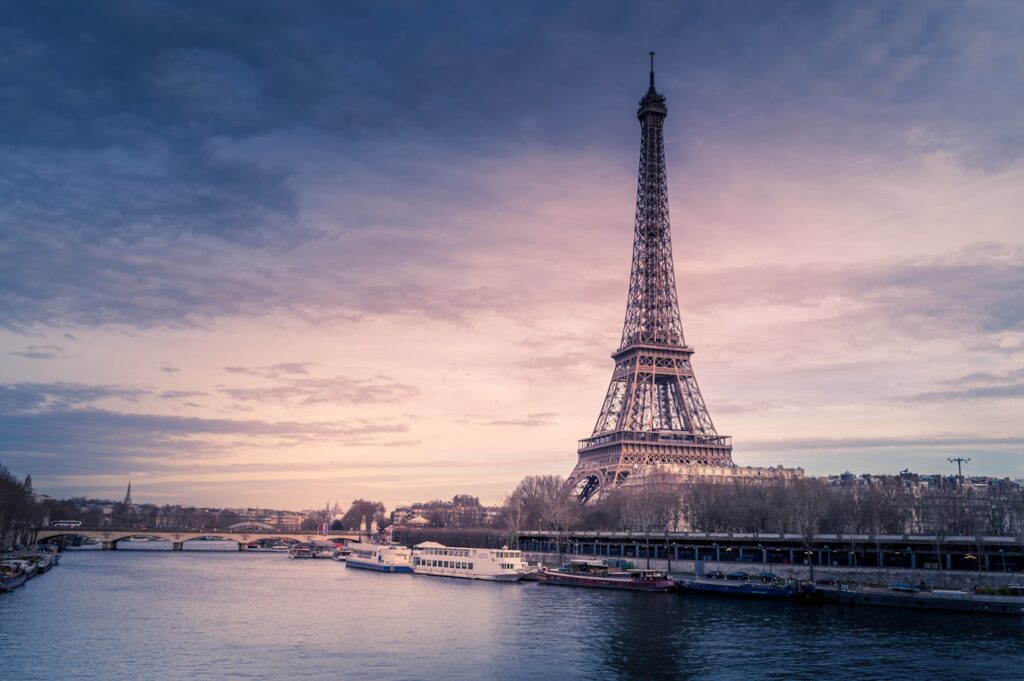
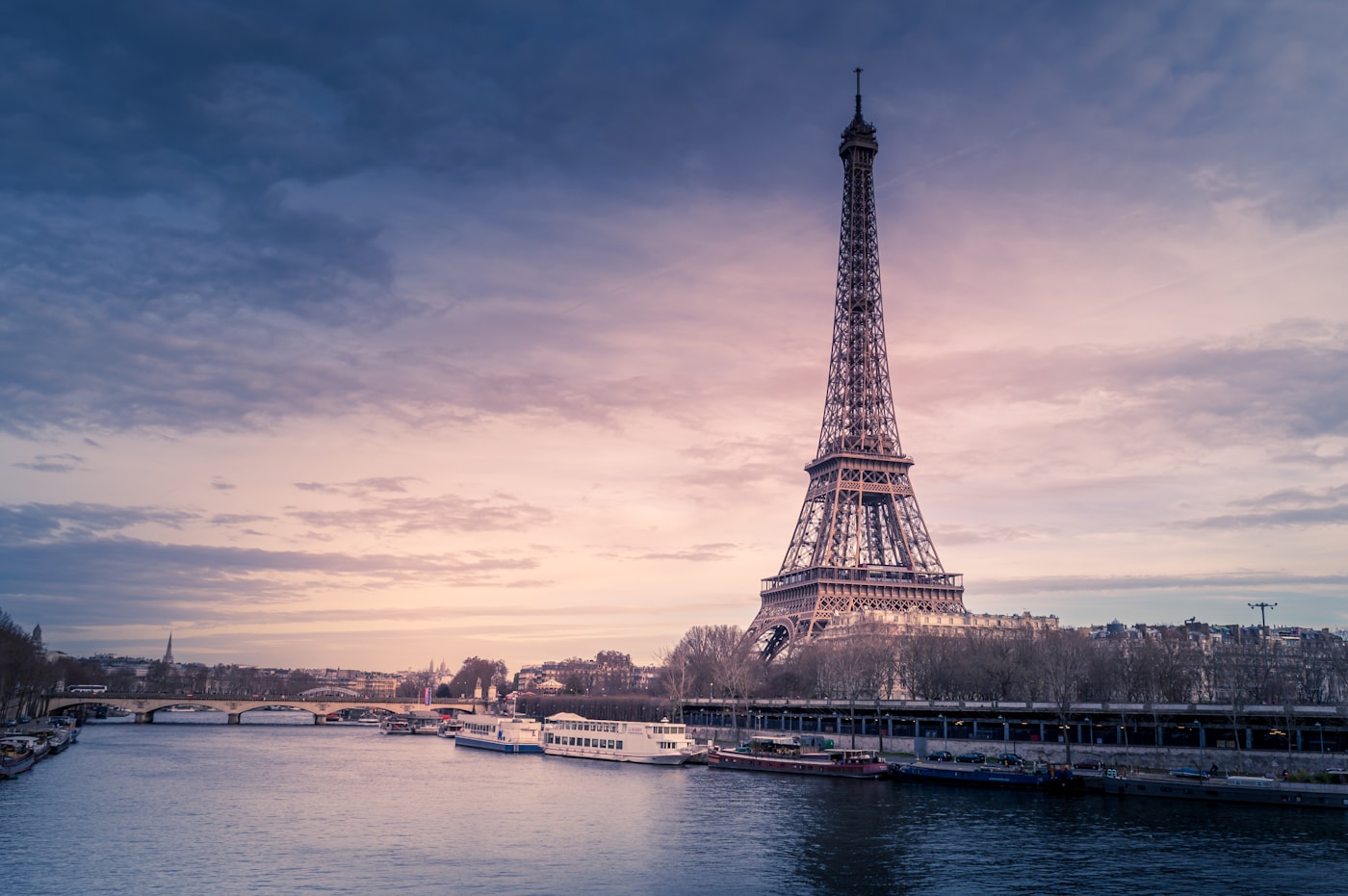
I’ve been to Paris six times now, and I’ve only been to the Eiffel Tower once — by accident, on a run along the Seine that took a wrong turn at the Pont de l’Alma. This isn’t a brag about avoiding tourist sites. It’s an observation about how little the postcard version of Paris has to do with the actual experience of being there. The city’s real magic is in the ordinary: a café crème at a zinc-topped bar at 7am, the way a fromagerie smells in December, the light on the Seine at five o’clock in October, the sound of someone practising piano in an apartment above a boulangerie.
Paris is dense, walkable, and constructed for pleasure in a way that most modern cities have forgotten how to be. The arrondissement system spirals outward from the centre like a snail shell, and each of the twenty has its own character — from the aristocratic calm of the 7th to the North African markets of the 18th, from the literary cafés of the 6th to the Chinese supermarkets of the 13th. You could spend a year exploring one arrondissement and still find new streets.
The food is the other thing. Not the Michelin-starred food (though Paris has more three-star restaurants than any other city) but the everyday food infrastructure: the boulangeries producing croissants at 5am, the market at Rue Mouffetard that’s been selling cheese and wine for five centuries, the bistro where the plat du jour is duck confit with lentils for €16 and the house wine comes in a carafe and costs less than a coffee at Starbucks. This infrastructure exists nowhere else on earth at this density and this quality. It’s the reason chefs from around the world still come here to learn.
What’s in This Guide
- Why Paris in 2026
- The neighbourhoods
- Food and drink
- Museums (the real list)
- The best walks
- Day trips
- Getting around
- Realistic budget
- What nobody tells you
- FAQ
Why Paris in 2026
The 2024 Olympics left Paris with genuinely improved infrastructure — the Seine is now clean enough to swim in (the first time in a century), new cycling lanes crisscross the city, and the metro system has been expanded and modernised. The natural wine and neo-bistro movements that revolutionised Parisian dining continue to evolve, with a new wave of restaurants run by chefs from West Africa, the Caribbean, and Southeast Asia bringing flavours that Paris’s traditional kitchen never imagined. The Grand Palais has reopened after a four-year renovation, and the cultural calendar is stacked. And the weak euro makes the city more affordable for visitors from the US, UK, and Asia than it’s been in years.
The Neighbourhoods
Le Marais (3rd & 4th) — The medieval quarter that became the Jewish quarter, then the gay quarter, then the fashion quarter, and is now all of those things at once. Narrow streets, aristocratic hôtels particuliers (mansions) converted to museums, falafel on Rue des Rosiers, vintage boutiques, and the Place des Vosges — the oldest planned square in Paris and still its most beautiful.
Saint-Germain-des-Prés (6th) — The literary Left Bank. Café de Flore and Les Deux Magots are the famous names (overpriced now, but the interiors are genuine). The side streets hide excellent bookshops, galleries, and some of the best chocolate shops in the world (Patrick Roger, Pierre Hermé). The Luxembourg Gardens, five minutes south, are where Parisians go to read, argue, and ignore tourists.
Canal Saint-Martin (10th) — The neighbourhood that defines modern young Paris. Iron footbridges over a tree-lined canal, natural wine bars, independent coffee roasters, vintage shops, and a Sunday atmosphere that makes you want to move here permanently. Bob’s Juice Bar started the brunch revolution; Du Pain et des Idées does the best bread in the city.
Belleville (20th) — The multicultural hilltop. Chinese grocers, Tunisian patisseries, African hair salons, and a growing art gallery scene in former workshops. The Parc de Belleville has the best free view in Paris — the entire skyline from Sacré-Cœur to Montparnasse. Less polished than the Marais, more real.
Montmartre (18th) — Yes, it’s touristy around Sacré-Cœur. But walk five minutes north or east and you’re in a village — cobblestone streets, ivy-covered houses, neighbourhood bistros where the regulars know each other. The Marché de la Rue Lepic is a proper food market. The Moulin de la Galette is a windmill that’s survived since the 17th century.
Food and Drink
Parisian food operates on three levels, and the one most visitors miss is the middle one. Level one is the tourist trap — overpriced croque-monsieurs on the Champs-Élysées. Level three is the Michelin circuit — extraordinary but €200+ per person. Level two — the bistros, the market stalls, the wine bars — is where the city actually eats, and it’s both better and cheaper than most visitors expect.
The neo-bistro movement, which started around 2010, has matured into the city’s dominant food culture. These are small, chef-driven restaurants with daily-changing menus, open kitchens, natural wines, and prices that would be considered cheap in London or New York. A three-course lunch at Le Bouillon Chartier runs €15–20. Le Comptoir du Panthéon does steak-frites for €18. Chez Janou serves the most famous chocolate mousse in Paris (served from a giant bowl, unlimited refills) after a €22 main.
The wine bar scene — bars à vins — has exploded. Natural wine (vin nature) is practically the state religion in certain arrondissements. Le Verre Volé on Canal Saint-Martin, Septime La Cave in the 11th, and Aux Deux Amis in Oberkampf are the landmarks. A glass of natural wine starts at €5–7; a bottle at retail runs €8–15. The staff at these places are evangelists — tell them what you like and they’ll pour something that changes your relationship with wine.
Boulangeries: Paris has roughly 1,200, and the quality floor is absurdly high. A croissant (€1.20–1.80) from any decent boulangerie is better than what passes for a croissant in most other countries. The annual Grand Prix de la Baguette competition crowns the city’s best baguette maker — the winner supplies the Élysée Palace for a year.
Museums (The Real List)
The Louvre is overwhelming and the queue is brutal. If you go, book a timed-entry ticket online (€22) and enter through the Passage Richelieu entrance, not the pyramid. Spend two hours maximum and focus on one wing — trying to see everything is a recipe for museum fatigue.
Better experiences: Musée d’Orsay — Impressionist masterpieces in a converted railway station. Smaller, more manageable, and arguably better than the Louvre for most visitors. Musée de l’Orangerie — Monet’s Water Lilies in two oval rooms designed specifically for them. Twenty minutes. Transcendent. Musée Rodin — Sculptures in a garden setting, including The Thinker. One of the most pleasant museum experiences in the city. Fondation Louis Vuitton — Frank Gehry’s glass-sail building in the Bois de Boulogne. The architecture alone justifies the visit. Centre Pompidou — Now reopened after renovation, with the best modern art collection in Europe and a rooftop view that includes every Paris landmark.
First Sunday of the month: most national museums are free. The queues are longer, but free entry to the Orsay and the Orangerie is worth the wait.
The Best Walks
Seine riverbank (Musée d’Orsay to Île Saint-Louis) — Walk the lower quays, now pedestrianised. Pass the Pont des Arts, Notre-Dame (still being rebuilt, the scaffolding is part of the story), and end on the Île Saint-Louis with a Berthillon ice cream. 4km, 1 hour.
Canal Saint-Martin to Parc de la Villette — Follow the canal north from République through locks, footbridges, and café terraces. End at the Parc de la Villette with its Cité des Sciences and open lawns. 5km, 1.5 hours.
Montmartre morning — Start at Abbesses metro, climb to Sacré-Cœur for the view, then loop through the back streets (Rue Cortot, Place du Tertre when it’s empty, Rue Lepic). Finish with breakfast at Le Consulat or Café des Deux Moulins (the Amélie café). 3km, 1.5 hours with stops.
Day Trips
Versailles — The palace is magnificent and exhausting. The gardens are better. Go on a weekday, arrive at opening (9am), do the palace in 2 hours, then spend the afternoon in the gardens. RER C from central Paris, 40 minutes. €21 for the full estate.
Giverny — Monet’s house and gardens, 75 minutes northwest by train. The water lily pond is real and it looks exactly like the paintings. April to October only. Go early or late to avoid the crush.
Champagne (Reims or Épernay) — TGV to Reims takes 45 minutes. Tour a grande maison (Veuve Clicquot, Taittinger, Ruinart) in the morning, lunch in town, return by afternoon. Or rent a car and drive the Route du Champagne through the vineyards. A cellar tour with tasting runs €25–50.
Getting Around
The Métro is fast, cheap (€2.15 per ticket, €16.90 for a carnet of 10), and covers the entire city. The RER commuter trains connect to airports (CDG and Orly), Versailles, and Disneyland. Vélib’ bike-share has 20,000+ bikes across the city — €5/day for unlimited 45-minute rides, and the new cycling infrastructure makes Paris genuinely bikeable. Walking is the best way to experience most neighbourhoods. Taxis and Uber work but traffic can be brutal.
Realistic Budget
- Budget (hostel, boulangerie meals, metro): €70–100/day
- Mid-range (hotel, bistro lunches, wine bars): €180–280/day
- Comfortable (boutique hotel, fine dining, taxis): €350–550/day
- Croissant + café crème: €3.50–5
- Bistro lunch (plat du jour + wine): €16–25
- Natural wine bar (glass): €5–9
- Louvre entry: €22
- Métro day pass (Zones 1–2): €8.45
What Nobody Tells You
- September is the best month. The summer tourists leave, Parisians return from August holidays, the restaurants reopen with new menus, the light turns golden, and the temperature is perfect. October is nearly as good.
- The waiter isn’t rude — you’re misreading the culture. French service style is professional and formal, not performatively friendly. Say “bonjour” when you enter, “s’il vous plaît” when you order, and “merci, au revoir” when you leave. These aren’t optional pleasantries — they’re social requirements. Skip them and yes, the service will feel cold.
- Lunch is the value meal. Most good restaurants offer a formule (set menu) at lunch that’s 30–50% cheaper than dinner. The food is identical. A two-course formule at a restaurant that charges €45 at dinner often runs €18–24 at lunch.
- The Marais on Sunday, everything else on weekdays. Paris is one of the few European cities where many shops close on Sunday — except in the Marais, which stays open. Plan accordingly.
- Learn six words of French. Bonjour, merci, s’il vous plaît, excusez-moi, l’addition (the bill), and parlez-vous anglais? That’s enough to transform every interaction. Parisians don’t expect fluency — they expect effort.
Experiences & Activities
Book Tours & Activities in Paris
Browse skip-the-line Louvre tickets, Seine river cruises, Versailles day trips, and Montmartre food tours — all bookable online with free cancellation on most options.
Browse Paris Experiences →New guides every few months — no noise, no spam.
Subscribe freeFrequently Asked Questions
What is the best time to visit Paris?
September and October for the best weather and fewest crowds. April to June is lovely but busier. July and August are hot and many locals are on holiday. Winter is cold but atmospheric, with fewer tourists and Christmas markets.
How many days do I need in Paris?
Five days lets you cover the major museums, several neighbourhoods, and a day trip. A week allows a more relaxed pace with time for wine bars, markets, and wandering. Three days is rushed but covers the highlights.
Is Paris expensive?
Accommodation is expensive. Food can be surprisingly affordable if you eat at bistros and markets rather than tourist restaurants. A boulangerie lunch costs under €8. The métro is cheap. Museums are free on the first Sunday of each month.
Do I need to speak French?
Basic greetings are essential — “bonjour” when entering any shop or restaurant is non-negotiable. Beyond that, English is widely understood in tourist areas. A few French phrases dramatically improve the warmth of every interaction.