
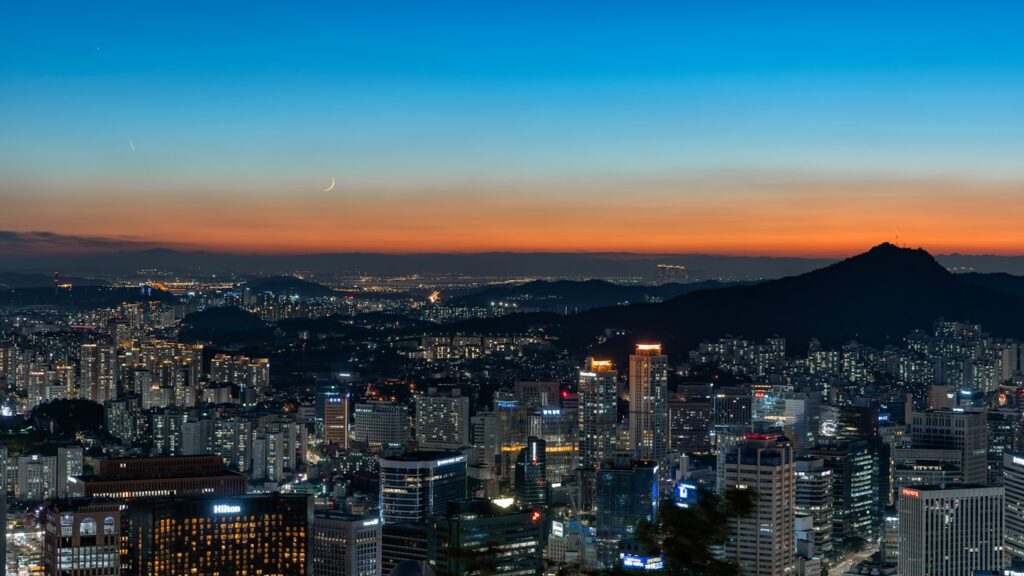
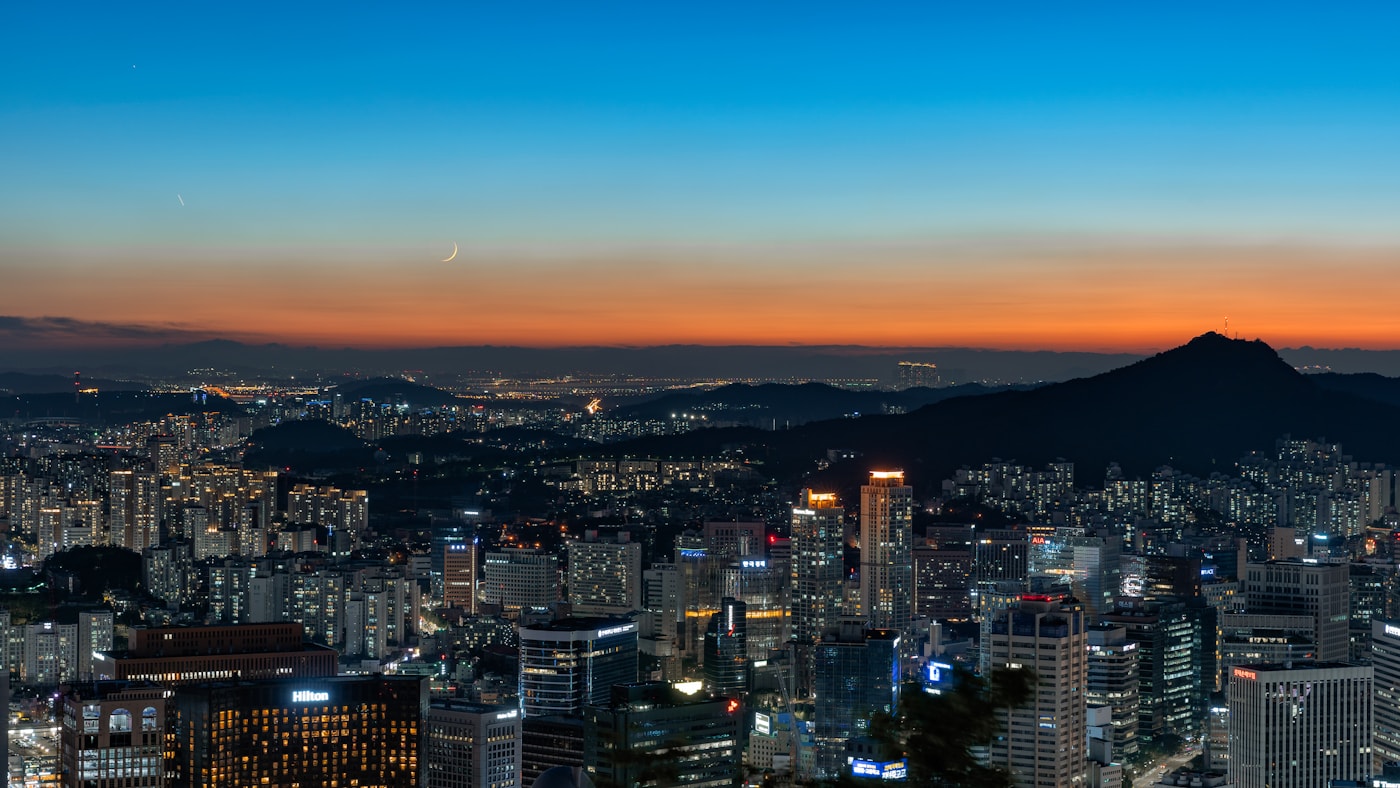
Seoul is a city of 10 million people that moves at a pace most cities can’t match. The metro system is among the world’s best. The street food is phenomenal and runs until 3am. The palaces are genuine — six centuries of Joseon dynasty history sitting inside a city of glass and steel, looking completely at home. The nightlife in Hongdae and Itaewon starts when other cities are going to sleep.
The Korean Wave (Hallyu) has been the dominant cultural export of South Korea for twenty years: the music, the television dramas, the beauty standards, the food. That wave has brought enormous tourist attention to Seoul. It’s also produced a very specific kind of visitor — pilgrims to idol cafés, K-drama filming locations, and beauty shop districts — who sometimes miss the deeper texture of the city they’re standing in.
The deeper texture is extraordinary. Seoul has been a major city continuously for over six hundred years, was almost entirely destroyed in the Korean War, and rebuilt itself with an energy and ambition that shows in its bones. The result is a place that understands both its own history and its own urgency — ancient palaces and hyper-modern skyscrapers sharing the same skyline without apology, and a population that treats both as equally its own.
What’s in This Guide
- Why Seoul in 2026
- Neighbourhoods worth knowing
- The palaces
- Food: the real reason to come
- Nightlife and late-night culture
- Getting to Seoul
- Getting around
- Where to stay
- Realistic budget breakdown
- Things nobody tells you
- FAQ
Why Seoul in 2026
National Geographic named South Korea as one of its Best of the World destinations for 2026, specifically highlighting the new Dongseo Trail — a coast-to-coast hiking route opening in sections across the peninsula — and the continued growth of Seoul as a food destination. The city was also boosted culturally by the international success of several major K-drama productions and the ongoing global expansion of Korean cuisine beyond bibimbap and Korean fried chicken (though both remain essential).
South Korea’s visa-free arrangements cover most Western nationalities for stays of up to 90 days, making entry straightforward. Incheon Airport continues to rank among the world’s best, with excellent connections from North America, Europe, and across Asia. The won, while not as dramatically weakened as the Turkish lira, has made Seoul meaningfully more affordable for international visitors than five years ago.
Neighbourhoods Worth Knowing
Jongno and Insadong (Historic Centre)
Jongno is the historic core of the city, home to the Gyeongbokgung Palace, the Bukchon Hanok Village (a cluster of traditional Korean houses on a hillside), and Insadong — a street of tea houses, art galleries, antique shops, and craft stores that has somehow resisted the full homogenisation that hits most tourist streets. Bukchon is best visited on a weekday morning before 10am; by 11am on weekends it has more people than it comfortably holds, and some residents have put up signs asking visitors to be quiet.
Hongdae (Youth and Arts District)
Hongdae is the neighbourhood around Hongik University, and it has been Seoul’s youth culture epicentre for decades. Street performances, busking, clubs, indie record shops, and late-night street food. The energy here is entirely different from the historic areas — louder, younger, and running on a schedule that starts at midnight. The K-pop idol café scene is concentrated here; if you want to eat ice cream surrounded by wall-sized photographs of your favourite group, this is the place. If you don’t, the restaurants and bars around the main drag are independently excellent.
Itaewon and Haebangchon
Itaewon developed around the American military base and became Seoul’s most internationally diverse neighbourhood — ethnic restaurants from 40+ countries, international bars, and a long-established LGBTQ+ district. Haebangchon (HBC), the hillside neighbourhood adjacent to Itaewon, is more residential and increasingly a destination in its own right for small independent restaurants and quiet bars. The 2022 Halloween crowd crush in Itaewon was a tragedy that changed the neighbourhood’s atmosphere temporarily; it has largely recovered, though the approach to large gatherings in narrow streets is now more carefully managed.
Gangnam
Yes, the song is about this. Gangnam is Seoul’s wealthy southern district — expensive apartments, luxury shopping, the COEX convention centre and its underground mall, and a density of plastic surgery clinics that has made it the centre of South Korea’s substantial medical tourism industry. It’s also home to genuinely excellent restaurants and coffee shops, and the Apgujeong and Cheongdam neighbourhoods have a design and fashion scene that’s worth an afternoon. The Gangnam vibe is real but the district itself is more interesting than the meme suggests.
The Palaces
Seoul has five grand palaces from the Joseon dynasty (1392–1897). Gyeongbokgung is the largest and most visited — the changing of the Royal Guard ceremony runs twice daily and draws a crowd, but the main palace complex is large enough to absorb it. Entry is free if you’re wearing a hanbok (traditional Korean dress), which you can rent from shops surrounding the palace for 10,000–15,000 KRW for several hours. This is not a tourist gimmick; Koreans do it too.
Changdeokgung Palace, a UNESCO World Heritage Site, is smaller and in many ways more beautiful — particularly its Secret Garden (Huwon), a 78-acre royal garden of pavilions, lotus ponds, and ancient trees that can only be visited on a guided tour (book ahead online, tours are limited and fill up). Deoksugung Palace in the centre of the city is the smallest but sits in an unusual urban setting, surrounded by modern office buildings and connected to the surrounding streets by a gate that’s been there for 500 years.
Food: The Real Reason to Come
Korean food is one of the great underappreciated cuisines of the world, partially because its full range — the fermented, the spiced, the grilled, the brothed — rarely survives intact when it emigrates. In Seoul you eat the whole thing. The banchan (small side dishes) that arrive automatically with every meal and are refilled for free. The doenjang jjigae (fermented soybean paste stew) that locals eat for breakfast. The galbi tang (short rib soup) that comes in a clay pot still boiling when it reaches the table.
Korean BBQ deserves its reputation. The experience of grilling marinated pork belly (samgyeopsal) or beef short ribs (galbi) over charcoal at your table, wrapping it in lettuce with pickled garlic and gochujang, is one of the great pleasures of eating anywhere. Mid-range BBQ restaurants in the non-tourist parts of the city charge 15,000–25,000 KRW per person for a full meal including side dishes and rice.
For street food, the markets around Gwangjang Market (open since 1905) offer the most concentrated variety. Bindaetteok (mung bean pancakes fried fresh), mayak gimbap (addictive small sesame rice rolls), and raw yukhoe (beef tartare with pear and sesame) are the specialties. Eat at the stalls, sitting on the low stools, with a cup of makgeolli (milky rice wine) — this is exactly what the market has looked and tasted like for generations.
Nightlife and Late-Night Culture
Seoul runs late. Not bar-closes-at-midnight late — clubs-open-at-midnight-and-run-until-sunrise late. Hongdae is the entry-level nightlife district; clubs like Cakeshop and NB2 are genuinely well-programmed by international standards. Itaewon has the most international bar scene. Gangnam has the expensive clubs. The jjimjilbang (public bathhouse) culture means that after a night out, the standard move is to check into a 24-hour bathhouse, sleep in the communal rest area on a heated floor, and emerge 6 hours later clean and operational. This works.
Getting to Seoul
Incheon International Airport (ICN) is 50km west of central Seoul, consistently rated one of the world’s best airports for service and facilities. Korean Air and Asiana connect Seoul to most major cities; the airport is also a hub for multiple Asian carriers. From the US West Coast, direct flights to Seoul run approximately 11–12 hours. From the UK and Europe, typically 10–11 hours. The AREX express train connects the airport to Seoul Station in 43 minutes (9,500 KRW); the commuter service is slower but cheaper. Taxis to central Seoul run 70,000–90,000 KRW depending on traffic.
Getting Around
The Seoul Metro is one of the world’s great public transport systems. 23 lines, English signage everywhere, real-time apps, and fares starting around 1,400 KRW per journey. A T-Money card (available at any convenience store for 4,000 KRW) covers metro, bus, and taxi fares with a small discount. Taxis are metered and honest; Kakao Taxi (the Korean equivalent of Uber) is widely used and has an English-language option. Walking is viable in most neighbourhoods.
Where to Stay
Jongno and Insadong for the palace access and traditional atmosphere — several hanok guesthouses in Bukchon offer the experience of sleeping in a restored traditional house, starting around 100,000–150,000 KRW per night. Hongdae for the nightlife and a younger, more buzzing street atmosphere. Myeongdong is the central shopping district and very well-located but heavily tourist-facing. For better value and a more local feel, Mapo-gu (which includes Hongdae and Hapjeong) or Euljiro in the Jongno area offer a mix of traditional and modern Seoul within a manageable radius.
Realistic Budget Breakdown
- Budget traveller (guesthouse/hostel, street food, metro): 60,000–90,000 KRW/day (~$45–65 USD)
- Mid-range (private hotel, restaurant meals, museum entry): 150,000–250,000 KRW/day (~$110–185 USD)
- Comfortable (boutique hotel, BBQ dinners, day trips): 300,000–500,000 KRW/day (~$220–370 USD)
- Gyeongbokgung Palace entry: 3,000 KRW (free in hanbok)
- Changdeokgung Secret Garden tour: 8,000 KRW
- Gwangjang Market meal: 10,000–15,000 KRW
- Korean BBQ dinner (per person): 20,000–35,000 KRW
- Jjimjilbang overnight stay: 12,000–20,000 KRW
Things Nobody Tells You
- Convenience stores are genuinely excellent. GS25, CU, and 7-Eleven in Korea stock fresh kimbap, hot ramen, good coffee, beer, and snacks at any hour. A 7-Eleven late-night dinner of triangle kimbap and canned soju in a park is a very Seoul experience.
- Download Naver Maps, not just Google Maps. Google Maps in South Korea is limited by law (detailed mapping data can’t be shared with foreign servers). Naver Maps has complete data including real-time transit routes, walking directions, and business information. Kakao Maps is an alternative.
- The spa (jjimjilbang) experience is not optional. Dragon Hill Spa in Yongsan is the largest in Seoul — floors of different temperature saunas, a rooftop garden, a cinema, a food court, and sleeping rooms. Entry around 12,000–16,000 KRW. It’s open 24 hours. Go.
- Korean dining etiquette is specific. Don’t pour your own drink (pour for others, they’ll pour for you). Don’t stick chopsticks upright in rice (funeral association). Do use both hands when giving or receiving. None of these are deal-breakers if you get them wrong, but locals appreciate the effort.
- Spring (late March–May) is the best time to visit. Cherry blossoms in April are genuinely magnificent — the parks along the Han River, Yeouido, and the palace grounds all bloom. Book accommodation far ahead for this period.
Experiences & Activities
Book Tours & Activities in Seoul
Skip the planning stress. Browse guided palace tours, DMZ day trips, K-pop experiences, street food walks, and Han River cruises in Seoul — all bookable online with free cancellation on most options.
Browse Seoul Experiences →New guides every few months — no noise, no spam.
Subscribe freeFrequently Asked Questions
Do I need a visa to visit South Korea in 2026?
Citizens of over 100 countries can enter South Korea visa-free for 90 days, including the US, UK, EU, Canada, and Australia. South Korea re-implemented its K-ETA (Korea Electronic Travel Authorization) requirement for some nationalities — check the official Korean immigration website before travel as requirements have changed in recent years.
What is the best time to visit Seoul?
Spring (late March through May) for cherry blossoms and mild temperatures. Autumn (September through November) for foliage and cool weather. Summers are hot and humid with a monsoon season in July–August. Winter is cold (below freezing) but the city functions normally and there are fewer tourists.
Is Seoul expensive for tourists?
Seoul is moderate by Western standards. Street food and convenience store meals cost $3–8 USD. A restaurant dinner runs $15–30 per person. Mid-range hotels start around $80–120 per night. Public transport is very cheap. Overall, Seoul is significantly more affordable than Tokyo, London, or New York for comparable quality of experience.
Is English widely spoken in Seoul?
English is spoken in tourist areas, major hotels, and by younger Koreans with good proficiency. Outside the main tourist zones, communication can require translation apps. The metro has English signage throughout. Google Translate’s camera mode works well for menus and signs.
What is a jjimjilbang and should I visit one?
A jjimjilbang is a Korean public bathhouse and sauna complex, usually open 24 hours. You pay a flat entry fee (typically 12,000–20,000 KRW), receive a towel and shorts, and have access to different temperature saunas, hot and cold pools, rest areas, and food. Many Koreans use them overnight after nights out. Absolutely worth visiting — Dragon Hill Spa near Yongsan Station is the largest and most visitor-friendly.