
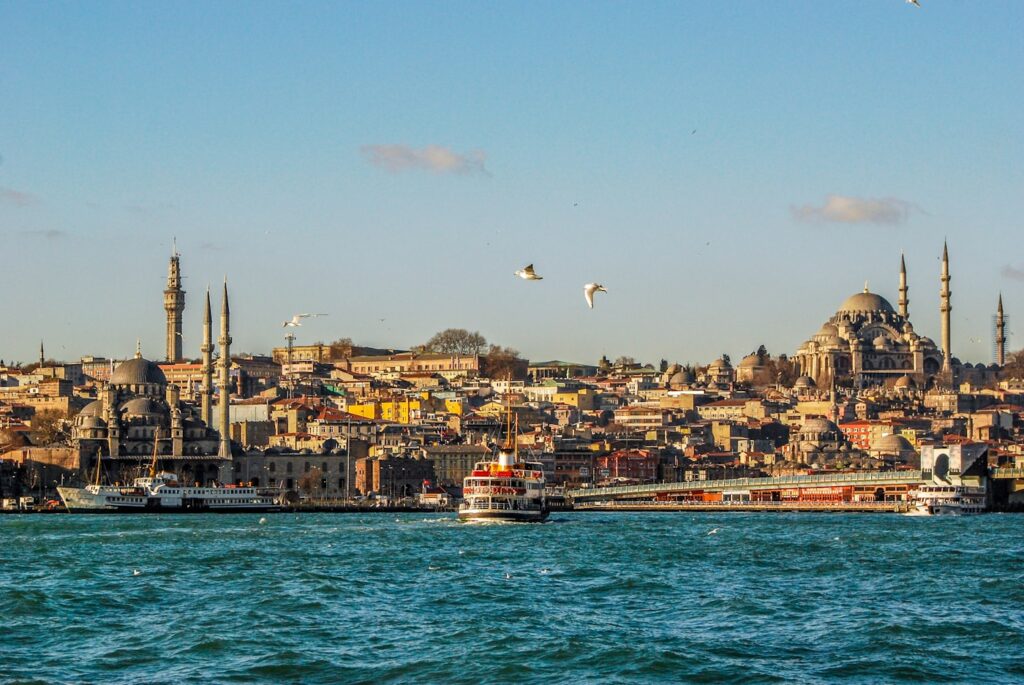
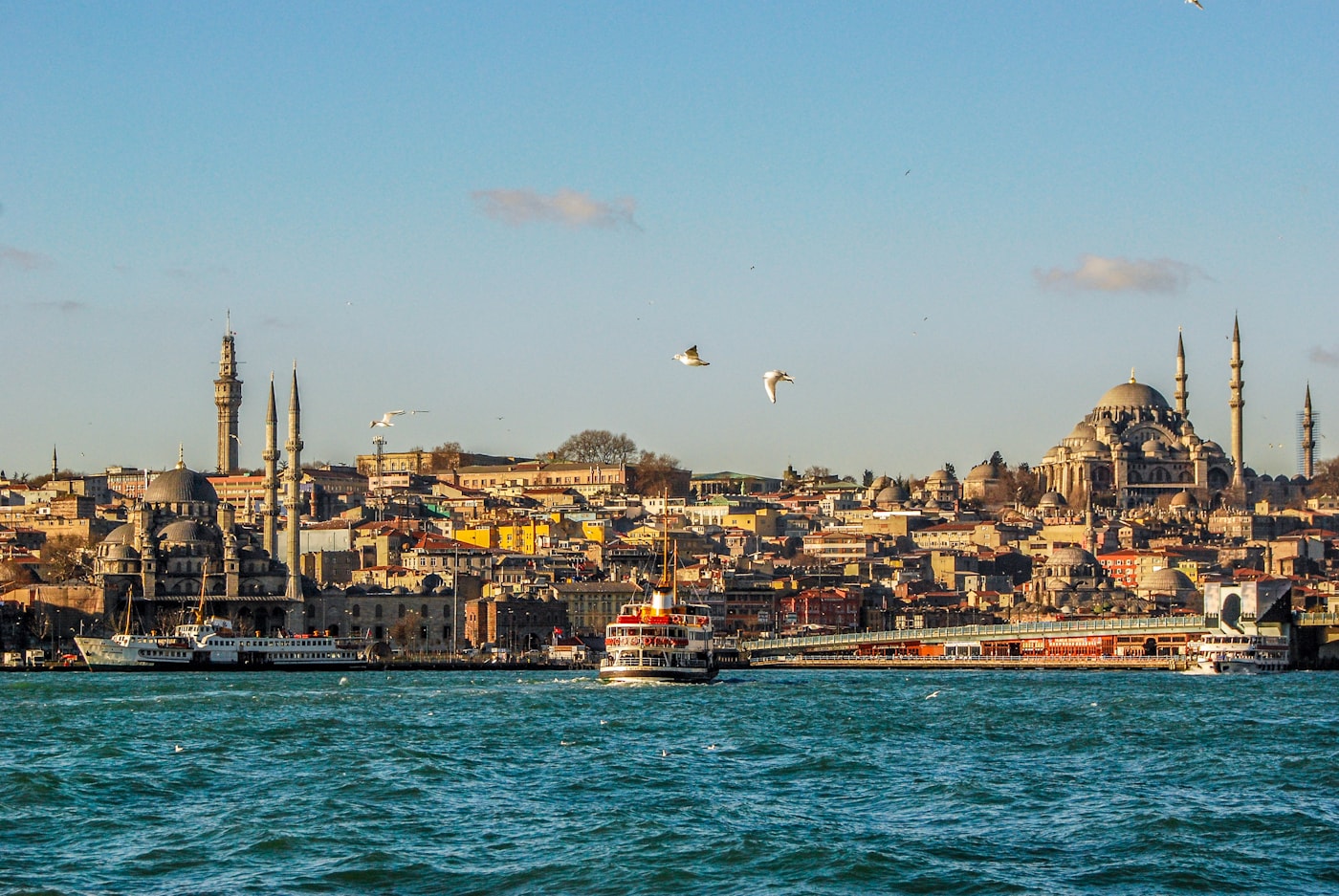
Every city claims to be where East meets West. Istanbul is the only one where the claim is literally true. The Bosphorus strait divides the city between Europe and Asia, and you can cross it on a commuter ferry for less than a dollar in each direction. Standing on the boat midway — European skyline behind you, Asian shore ahead — is one of those moments that stops being a metaphor and becomes something genuinely physical.
What makes Istanbul extraordinary beyond the geography is that it has been a capital city three times over: Roman Constantinople, Byzantine Constantinople, Ottoman Constantinople. Each empire left layers in the stone, and those layers are visible and accessible in a way that’s unusual in a city of 16 million people. The Hagia Sophia has been a church, a mosque, and a museum, and is now a mosque again. The Topkapi Palace is a 600-year record of one of history’s most powerful dynasties, open to anyone with a ticket. The Grand Bazaar has been continuously trading since 1461.
And then there is the contemporary city. Kadıköy on the Asian shore has a coffee shop and restaurant scene that rivals anything in London or Berlin. Karaköy and Beyoğlu have galleries, meyhanes, and bars that fill until 4am on weekends. The food — the grilled fish, the meze, the köfte, the simit, the baklava — is a complete argument on its own.
What’s in This Guide
- Why Istanbul in 2026
- Sultanahmet: the historic peninsula
- Beyoğlu and Karaköy
- The Asian side
- What to eat (and where)
- The Bosphorus
- Getting to Istanbul
- Getting around the city
- Where to stay
- Realistic budget breakdown
- Things nobody tells you
- FAQ
Why Istanbul in 2026
Istanbul has been consistently ranked among the most visited cities in Europe for the past decade. In 2026 it continues to grow — partly because Turkish Airlines has made Istanbul one of the best-connected hubs in the world, partly because the fall in the value of the Turkish lira over the past several years has made it exceptionally affordable by Western European or North American standards, and partly because the city itself keeps getting more interesting.
The museum infrastructure has improved significantly. The Istanbul Modern reopened in a new building in Karaköy in 2023. The Topkapi Palace has ongoing restoration that is steadily opening more areas. The Hagia Sophia’s reconversion to a mosque in 2020 changed the visitor experience — non-Muslims can still enter outside prayer times, but the atmosphere is different from the museum era — and it remains one of the most awe-inducing buildings on earth.
The affordability point is worth being direct about. For visitors paying in euros, dollars, or pounds, Istanbul in 2026 is roughly 40–50% cheaper than equivalent European capitals for food, accommodation, and transport. This is a significant structural advantage that continues as long as the lira remains under pressure.
Sultanahmet: The Historic Peninsula
Sultanahmet is where you go for the headline sights, and the headlines are justified. The Blue Mosque (Sultan Ahmed Mosque) is closed to non-worshippers during the five daily prayers but open the rest of the time, and entry is free. The interior is genuinely spectacular — 20,000 hand-painted Iznik tiles, six minarets, the cascade of domes. Remove your shoes, cover your hair if you’re a woman, and move quietly.
The Hagia Sophia is directly across Sultanahmet Square. Built in 537 AD — nearly 1,500 years ago — it held the record as the world’s largest cathedral for nearly a thousand years. As a mosque, the Christian mosaics are now partially covered with curtains during prayers, but the building’s scale, the light through the high windows, and the accumulated weight of its history remain overpowering regardless. Go first thing in the morning.
The Topkapi Palace is a 15-minute walk. Budget at least three hours — the complex is vast, the harem section requires a separate ticket, and the Treasury (which contains the Spoonmaker’s Diamond, the Topkapi Dagger, and an emerald the size of a fist) is genuinely extraordinary. The fourth courtyard’s terrace overlooks the Bosphorus, the Princes’ Islands, and on clear days the Asian shore.
The neighbourhood around Sultanahmet — Cankurtaran and Arasta Bazaar — is almost entirely tourism infrastructure. The restaurants are overpriced, the carpet shops are persistent, and the ambient pressure to spend money is constant. Eat here once for the view; eat everywhere else for the food.
Beyoğlu and Karaköy: Modern Istanbul
Cross the Galata Bridge northward and you’re in a different Istanbul. Karaköy is the city’s art and café district — a former port neighbourhood that was largely derelict twenty years ago and is now one of the most interesting urban spaces in southern Europe. The Istanbul Modern sits on the waterfront here. Bunches of small galleries, design studios, and coffee shops fill the surrounding streets.
Walk uphill from Karaköy and you reach Galata Tower (built 1348, stunning views, worth the queue) and then the Galata neighbourhood proper, which transitions into Beyoğlu. İstiklal Avenue is the main artery — long, pedestrian, flanked by nineteenth-century European-style buildings, and usually packed. It runs from Taksim Square at the top down to Galata. The nostalgic tram that runs its length is the slowest way to travel it; walking is faster and more interesting.
The meyhanes (Turkish taverns) in the side streets off İstiklal are where locals come to eat meze, drink rakı (the anise-based national spirit), and stay until midnight. The ritual is specific: order a spread of cold meze first (dolma, haydari, ezme, patlıcan), drink slowly, then move to hot dishes and possibly fish. The bill arrives when you ask for it; lingering is not just acceptable but expected.
The Asian Side
Kadıköy is the neighbourhood most visitors to Istanbul miss, and it is possibly the most likeable part of the city. Take the ferry from Eminönü or Karaköy (15 minutes, a few lira), arrive at the ferry terminal, and walk into what is effectively a very good European neighbourhood that happens to be on the Asian side of the Bosphorus.
The Kadıköy market is excellent — fresh produce, cheese, spices, fish, and a specific Turkish breakfast culture (simit, börek, tea, white cheese, tomatoes, olives) that represents the city at its most daily and least performed. The streets around Moda, a ten-minute walk south of the ferry terminal, are where young Istanbullus live and eat — excellent restaurants, zero tourist infrastructure, entirely local clientele.
Üsküdar, just north of Kadıköy on the Asian shore, has a more traditional and quieter character, with the Maiden’s Tower (Kız Kulesi) sitting on a small island just offshore. The views back across the Bosphorus to the European side from the Üsküdar waterfront are among the best in the city.
What to Eat (and Where)
Istanbul’s food scene is built around several things done extremely well. Börek — flaky pastry filled with spinach, cheese, or meat — is the city’s universal snack and comes in a dozen forms. Buy it from a börekçi (dedicated börek shop) for 20–30 TL a piece. Simit — sesame-encrusted bread rings sold from carts — is breakfast for half the city, and costs 5–8 TL. The fish sandwiches (balık ekmek) sold from boats moored at the Galata Bridge are not an Instagram prop; they’re lunch.
For a proper sit-down meal, meze at a meyhane is the essential Istanbul experience. Order 8–10 small cold dishes as a table, share everything, drink rakı with water and ice alongside. Budget 400–700 TL per person including drinks at a decent Beyoğlu meyhane. For breakfast specifically, the Van Kahvaltı Evi near Taksim does a Kurdish-style spread (30+ small dishes, jams, cheeses, honey, kaymak cream, eggs, olives) that takes 90 minutes to eat properly and costs around 500 TL per person.
Baklava requires a visit to Karaköy Güllüoğlu, open since 1871, where the pistachio baklava (fıstıklı) is made fresh each morning and sold by weight. Do not buy baklava from Sultanahmet. The Grand Bazaar’s baklava stalls are adequate at best.
The Bosphorus
The commuter ferries that cross and run along the Bosphorus are a legitimate sightseeing experience. The ferry from Eminönü to Üsküdar passes under the span of the first Bosphorus Bridge and through water that connects the Black Sea to the Sea of Marmara. The longer Bosphorus cruise ferries run from Eminönü to Anadolu Kavağı on the Black Sea coast — 90 minutes each way, a few euros, views of palaces, fortresses, and the increasingly wild shores as the city gives way to forest.
Getting to Istanbul
Istanbul Airport (IST) is one of the world’s busiest, with Turkish Airlines connecting to more countries than any other airline on earth. From the US, direct flights operate from New York, Chicago, Los Angeles, and Miami. From the UK and Europe, the connection is straightforward from virtually every major city. The airport is 45km from the city centre; the metro (M11) connects to the metro network and takes about 35 minutes to reach central Istanbul for 90 TL. Taxis are plentiful but ensure the meter is running.
Getting Around the City
The İstanbulkart (transit card) is essential. Loaded with credit at any metro station, it covers the metro, tram, funicular, bus, and ferry systems. Without it, single trips cost significantly more. Load 200–300 TL for a 3–4 day stay. The metro system is fast but doesn’t cover Sultanahmet directly (the nearest stations are Sirkeci or Eminönü). Trams cover the historic peninsula. Ferries cover the Bosphorus crossings. Taxis cover the gaps.
Where to Stay
Sultanahmet is convenient for the sights but genuinely overpriced for what you get. The breakfast views over the Marmara are lovely; the aggressive carpet-shop gauntlet is less so. Beyoğlu offers far better value — you’re close to great restaurants and the ferry terminals are a short walk down toward Karaköy. For a quieter but very comfortable experience, Arnavutköy on the European Bosphorus shore is a residential neighbourhood with excellent boutique hotels and a 15-minute taxi to everywhere that matters.
Budget range: 800–1,500 TL per night in Beyoğlu gets you a clean private room in a decent hostel or guesthouse. Mid-range in a well-located boutique hotel: 2,500–5,000 TL. High-end properties (Çırağan Palace, Four Seasons Sultanahmet, The Peninsula): 15,000–40,000 TL — and at those exchange rates, still cheaper than their European equivalents.
Realistic Budget Breakdown
- Budget traveller (hostel, street food, ferries): 1,200–1,800 TL/day (~$35–55 USD)
- Mid-range (private hotel, restaurant dinners, museum entry): 3,000–5,000 TL/day (~$90–150 USD)
- Comfortable (boutique hotel, meyhane dinners, boat trips): 7,000–12,000 TL/day (~$200–360 USD)
- Hagia Sophia entry: Free (mosque)
- Topkapi Palace + Harem: ~800 TL combined
- Ferry across the Bosphorus: ~90 TL each way on İstanbulkart
- Bosphorus long cruise: ~350 TL return
Things Nobody Tells You
- The Grand Bazaar is exhausting. 4,000 shops, constant attention, and sensory overload. Go once, early, navigate a specific route, and leave when you’re done. Don’t wander aimlessly unless you want to spend three hours in a carpet conversation you didn’t ask for.
- The Asian side is quieter and friendlier. Kadıköy locals are accustomed to tourists but not overwhelmed by them. You’ll have more authentic interactions there than in Sultanahmet.
- Türkiye has one of the most interesting breakfast cultures on earth. Find a neighbourhood breakfast spot (not a hotel), order the full spread, and spend 90 minutes eating it. This is how Istanbul mornings actually work.
- Avoid the “Turkish Night” dinner show packages. They exist for a reason (the dance and music traditions are real) but the packaged tourism versions are a poor facsimile. The real cultural experiences are in the meyhanes and during Ramadan, when evening performances in public squares are free and genuinely extraordinary.
- Photography inside the Hagia Sophia during prayers is not permitted. Outside of prayer times, photography is allowed in most areas.
Experiences & Activities
Book Tours & Activities in Istanbul
Skip the planning stress. Browse guided Bosphorus cruises, historical walking tours, cooking classes, hammam experiences, and day trips to Cappadocia and the Princes’ Islands — all bookable online with free cancellation on most options.
Browse Istanbul Experiences →New guides every few months — no noise, no spam.
Subscribe freeFrequently Asked Questions
Do I need a visa to visit Istanbul in 2026?
Visa requirements vary by nationality. Citizens of the EU, UK, and most Western countries can obtain an e-Visa online before arrival (currently around $50 USD for US citizens, valid for 90 days). Citizens of some countries are exempt entirely. Check the official Turkish e-Visa website for your specific nationality before travel.
Is Istanbul safe for tourists in 2026?
Istanbul is generally safe for tourists. Petty crime (pickpocketing) occurs in crowded tourist areas like the Grand Bazaar and Sultanahmet Square. The main scam to be aware of is the “shoe shine drop” — someone ahead of you drops a brush, and when you alert them, they offer to shine your shoes and then charge an extortionate fee. Violent crime against tourists is rare.
What currency is used in Istanbul and can I pay by card?
The Turkish lira (TL/TRY) is the currency. Cards are widely accepted in hotels, restaurants, and larger shops. Street food, small market stalls, and some ferries are cash-only. ATMs are plentiful throughout the city. Avoid exchanging currency at the airport; rates in the city are significantly better.
How many days do I need to see Istanbul properly?
Four to five days is the minimum to cover the major historic sites, spend proper time in Beyoğlu and Kadıköy, and take a Bosphorus cruise. Istanbul rewards slow travel — a week allows you to settle into the city’s rhythm, explore neighbourhoods at a leisurely pace, and take a day trip to the Princes’ Islands or Bursa.
What is the best neighbourhood to stay in Istanbul?
Beyoğlu/Karaköy for location, food scene, and value. Sultanahmet for convenience to the main historic sights (but at a premium and surrounded by tourist infrastructure). For a quieter, more residential feel with stunning Bosphorus views, Arnavutköy or Bebek on the European shore are excellent choices for longer stays.