
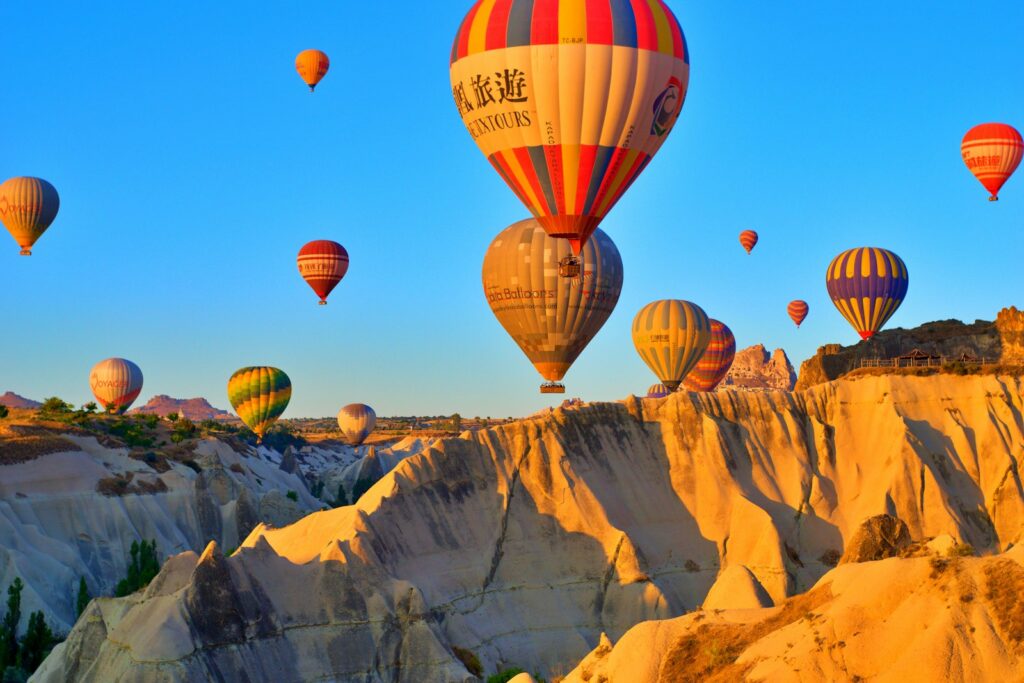
The balloons go up at five-forty-seven in the morning, give or take. The exact time shifts by ten or fifteen minutes through the season, and on about one morning in five they don’t go up at all, because the wind is wrong or the visibility is poor or the airfield directors have decided that today is not a day to put a hundred Turks and Iranians and Belgians and Indonesians in the hands of a propane burner. You don’t find this out until you’re already awake at four-thirty in the cold and the dark, in a hotel where the breakfast room is not yet lit. The man on reception shrugs. He has done the shrug a thousand times.
I’d say this about Cappadocia, having now spent enough time there to stop being amazed by every roadside cliff: the place is older than its legend, more practical than its photographs, and quieter — in the right corners, on the right days — than you would believe possible for somewhere with this much Instagram weight pressing down on it.
This guide is not going to tell you that Göreme is magical. Göreme is magical for forty minutes after sunrise, then it is a small town with souvenir shops, rooftop bars, and dogs lying in the road. Both things are true at once. That doubleness is the actual experience of Cappadocia, and the more honest your expectations going in, the better the place treats you.
When to come, honestly
The high season runs from late April through June, and again from mid-September to early November. Within that, the windows worth chasing are narrower than the guidebooks suggest.
Late April into the first week of May is the best fortnight of the year. Days warm enough to walk the valleys in a t-shirt, nights cold enough for a jumper, balloon flight success rate at its highest, and the crowds — while real — still on the right side of bearable. Late September gives you the same weather pattern, plus the poplars in Pigeon Valley turning yellow over about three weeks in October. October itself is the second-best window; you’ll need a layer in the mornings and you’ll have the place to yourself in the afternoons.
July and August are punishing. The valley floor hits thirty-five degrees and offers almost no shade. The balloons go up before dawn but you are sleeping in a cave room at twenty-eight degrees, because most so-called boutique cave hotels do not have serious air conditioning. The cave-room myth, here, breaks down a little — the walls hold the day’s heat once it gets in.
December through February is snow Cappadocia, which is a different place entirely. Fewer balloons; some weeks they don’t fly at all. Hotel rooms run hot with bad ventilation. If you’re going for the snow photographs, accept that you may not get the balloons. March is the month to skip outright — cold, often wet, low cloud that kills the morning flights.
The balloons, and what no one tells you
A standard flight in 2026 costs €260 to €330 a person, and the price has gone up sharply since 2022. It will not come back down. Don’t book the cheapest one — the licensing in Turkey is real, the safety record better than the whispers suggest, but there are still operators who quietly oversell capacity and put twenty-eight people in a basket built for twenty. The well-regarded outfits keep baskets at sixteen or under and brief properly. Royal, Butterfly, and Voyager are the names that come up most often among repeat travellers. Book direct; the hotel concierge skims twenty percent.
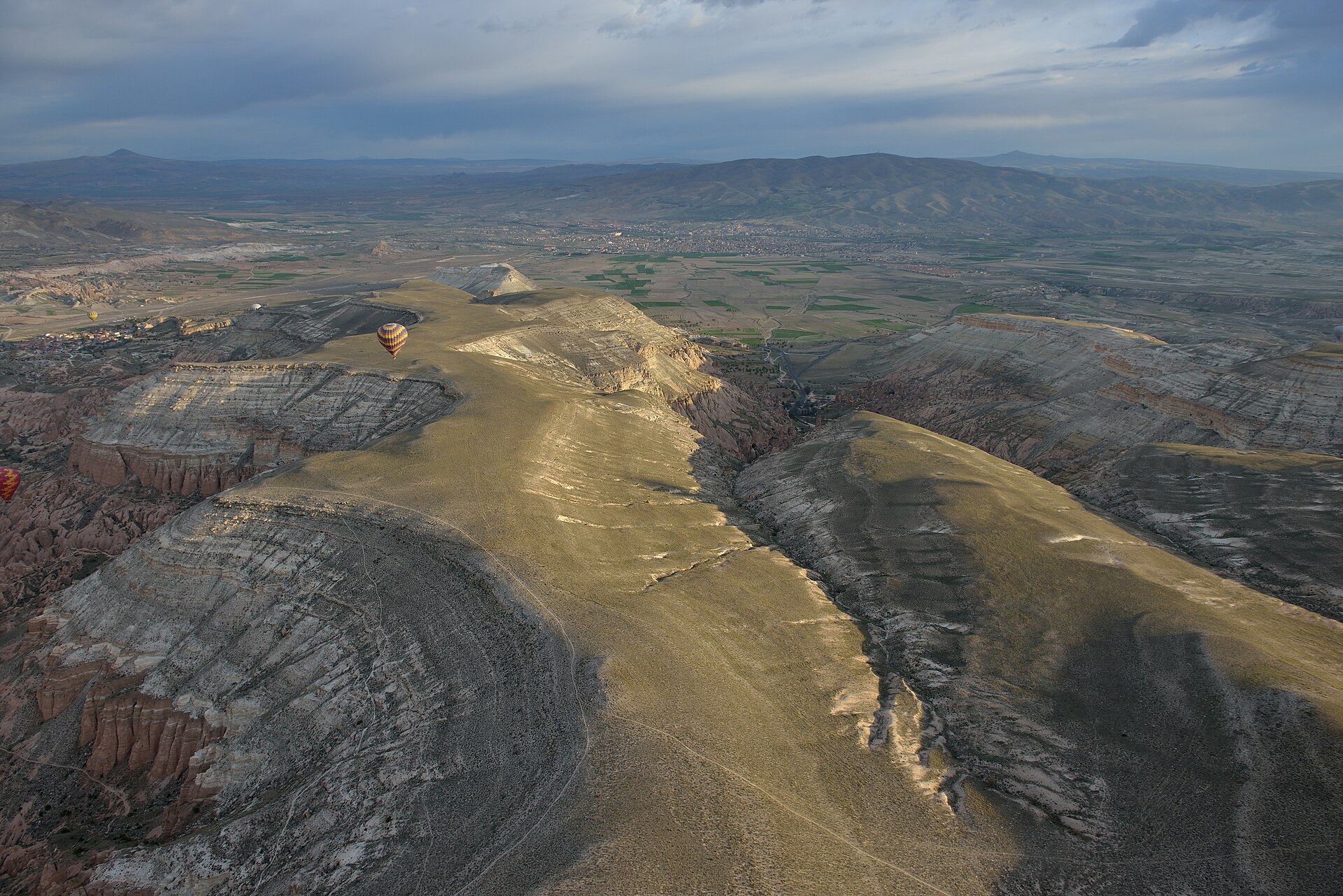
The flight itself is shorter than you imagine. Forty-five minutes to an hour in the air. The interesting part is the first twenty minutes, when you rise from valley-floor level to several hundred metres above the ridge lines. After that, the pilot is mostly killing time and tilting the basket so each side gets its turn at the view.
The photograph everyone takes — your balloon, in the air, with other balloons around it — is not actually photographable from your own basket. The photo you want is taken from a viewpoint on the ground, of someone else’s flight.
This is the thing I wish someone had told me before I went. If the morning your flight is scheduled is also the morning you want the photographs, you are going to be inside the photograph, not making it. Plan two mornings if you can. One for the flight, one for the cameras.
Viewpoints worth knowing
Sunset Point above Göreme is the obvious one, and exactly as crowded as the internet suggests. Arrive forty minutes before sunrise to get a spot you can actually stand on. Lover’s Hill, technically the same ridge a few hundred metres along, is slightly quieter with a slightly better angle; the walk up is steep enough to filter out the half-committed. There’s an unmarked ridge behind Kelebek Hotel that some local guides know about, with no entry fee and, on a good morning, almost no one on it — ask politely at your hotel and sometimes you get pointed there. Rose Valley overlook is the one that pays out better at sunset than at sunrise.
The cave hotels, in honest categories
“Cave hotel” has come to mean everything from a 200-year-old volcanic-tuff dwelling restored by a stubborn family to a six-month-old concrete shell sprayed with stone texture. They are not the same product, and it pays to know the spread.
At the top end, the classics — Museum Hotel, Argos in Cappadocia, Sacred House. Four hundred to eight hundred euros a night. Genuine restored cave structures, actual antique furniture, the kind of dim wood-and-stone evening lighting you don’t see in a hotel lobby anywhere else in the world. Worth the money if this is the trip-of-a-lifetime version of the visit.
The honest mid-range is where most well-prepared travellers stay. Kelebek, Sultan Cave Suites, Mithra. A hundred and twenty to two hundred and eighty euros, real cave rooms rather than decorated rooms in a normal building, breakfast that involves at least eight kinds of homemade jam and a small ceremony around the cheese.
And then the cosplay tier, which has multiplied in Göreme over the last five years. Concrete shells with a stone-textured spray finish, ventilation that does not actually work, “cave” walls that are smooth in a way no real cave ever is. Forty to ninety euros. Fine for a young traveller on a budget; not the thing you came here for.
A specific note: Sultan Cave Suites is famous because of one terrace, with one set of carpets and cushions, which appears in approximately every Cappadocia Instagram post since 2019. The hotel itself is fine; the terrace is open in the early morning to guests of any nearby hotel for a small fee. You do not need to stay there to get the photograph.
What to actually do on the ground
Most travellers come for the balloons, take the obvious photographs, and never see the place underneath. The valleys are the place underneath.
The Red Valley to Rose Valley loop is the single most rewarding walk in Cappadocia. Start it from the Çavuşin side and walk roughly south for three to four hours. You’ll pass a series of rock-cut churches with surprisingly good frescoes — Byzantine, tenth and eleventh century, deeply unphotographed because the lighting is bad. Bring a torch. The signage is minimal and occasionally wrong. This is partly why it is still a quiet walk.
Ihlara Valley is the day trip everyone agonises over. It is worth doing if you want to see the green Cappadocia — the gorge cuts about a hundred metres down through the plateau, and the bottom is genuinely green and shaded, with a small river that the locals come to picnic beside on Sundays. Skip the group coach tour if you can; rent a car or hire a private driver. The walk along the river is twenty minutes from one entrance and three hours from the other.
Derinkuyu underground city is real and frequently overstated. It is interesting for forty minutes; it does not deserve a half-day. The ceilings are low, you will hit your head, and the eighth-level depth that guides love to mention is closed.
The pottery in Avanos is its own conversation. Avoid the bus-group studios with someone “demonstrating” on the wheel for tips. The serious ceramicists are in unmarked workshops one street back from the river. If you want a piece worth taking home, look for older Iznik-style hand-painting — cobalt and turquoise on white — rather than the gaudy tourist plates.
The food question
Cappadocia is, gastronomically, not Istanbul. Don’t go in expecting fine dining; go in expecting a particular regional Anatolian cooking — slow-baked clay pots, bread out of a wood oven, a strong local dried-bean tradition, and surprisingly good wines from the Kalecik-Karası grape grown around Ürgüp.
Testi kebab is the regional theatre dish — meat and vegetables sealed in a clay pot, broken open at your table. It is theatre, and it is also good. Eat it once, preferably at Topdeck Cave Restaurant in Göreme or Old Greek House in Mustafapaşa rather than the bus-route places along Göreme’s main strip.
The wine surprise: Cappadocia produces some of Turkey’s best reds, particularly Kocabağ and the better Kavaklıdere selections. Most tourists never taste them because the only wine list they see is the one at the hotel restaurant, which is short. Walk into a proper wine shop in Ürgüp and ask for a bottle of Kalecik-Karası — the local equivalent of a soft, bright Pinot Noir — for under twenty euros.
For breakfast, order a full village breakfast (köy kahvaltısı) at least once. Eight to fifteen small plates arrive in waves over an hour — black olives, three kinds of fresh cheese, sucuk that bleeds paprika oil, honey still in the comb, ripe tomatoes that have not been in a fridge, eggs scrambled in a copper pan over a wood flame. The point is not the food, which is good rather than exceptional. The point is the duration. The Turkish village breakfast is a small ceremony of unhurriedness; the waiter will not bring your bill until you ask, and even then he will think about it for a while.
The practical shape of a good visit
Three nights is the right minimum. Four to five is better. A day shape that has worked for me, more or less: up at four-thirty for the balloon flight or a sunrise viewpoint; long breakfast at the hotel until nine or ten; one valley walk in the late morning, two to three hours; late lunch and a rest in the cool of the cave room through the heat of the afternoon; out again at five for the sunset viewpoint, or just a slow wander through Göreme or Uçhisar; dinner from seven-thirty, slowly.
Avoid the half-day “Green Tour” and “Red Tour” that every hotel sells. They cram four sights into a coach day with bad guiding and the same lunch stop everyone else has. If you must take a tour, hire a private guide for a half-day — the price of a one-on-one beats the price of a one-of-thirty almost everywhere outside high August.
What will surprise you
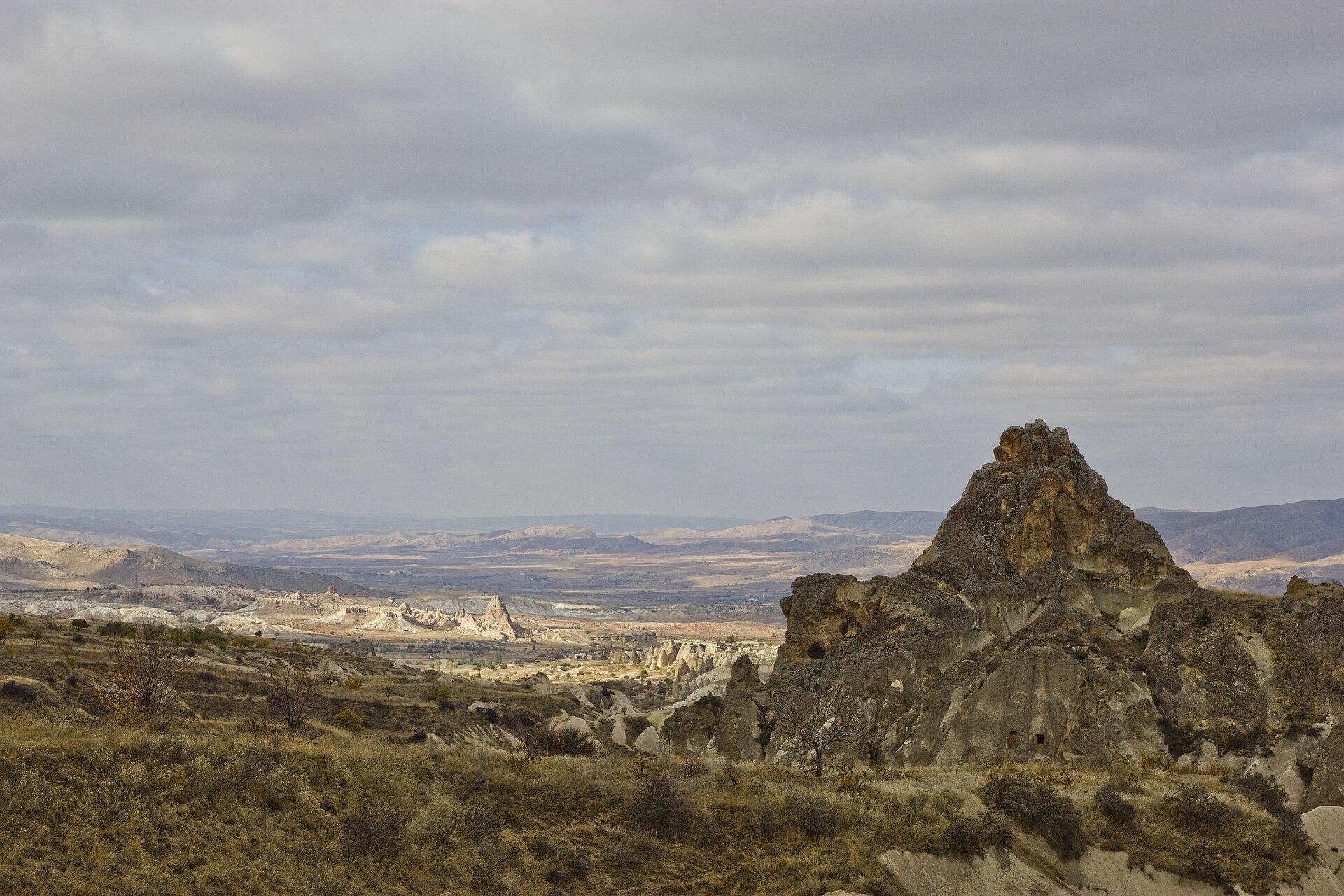
How cold it gets at altitude before sunrise, even in May. Bring a real jacket. How quickly you can walk out of the postcard and into a working agricultural landscape — vineyards, walnut groves, women selling pumpkin seeds from card tables at the corner of an unpaved road. How much of Cappadocia is empty: once you’re outside Göreme and Avanos and Ürgüp, you can walk for an hour and see no one.
The Cappadocian dogs. Large, calm, almost always friendly, and frequently following walkers down trails for stretches at a time. If one decides you are its companion for the afternoon, the kindest thing is to let it.
And the light. Cappadocia is high on the central Anatolian plateau and the air is dry; the late-afternoon light is unlike anything in coastal Turkey. Photographers chasing the golden hour will find that the hour is more like ninety minutes here, and that the colour of the tuff cliffs shifts through three distinct tones in the last forty minutes of it.
What will disappoint you if you let it
The crowds at sunset point. The aggressive carpet salesmen on the main street of Göreme who still try the “just take tea” routine — smile and walk. The fact that the balloons do not fly every day. They fly maybe four mornings in five at peak season, three in five in shoulder months. Build it into your trip plan; book the flight for your first morning, not your last, so you have a backup window if the wind is wrong.
Getting there, briefly
Two airports: Kayseri (ASR) and Nevşehir (NAV). Kayseri has more flights, particularly from Istanbul on Pegasus and Turkish Airlines, and is the easier of the two if your itinerary is flexible. Both are about forty-five minutes by transfer from Göreme. Don’t fly into Ankara unless you are doing a longer central-Turkey road trip — the drive is four hours of mostly steppe.
A final note
Most people come to Cappadocia for one morning. The morning is good, often great. But the place rewards the third or fourth day in a way the first day cannot. The valleys begin to feel less like film sets and more like a real geography. You start recognising the bird calls. The breakfast lady at the hotel starts giving you the bigger eggs. By the third evening, you stop reaching for your camera.
That is the Cappadocia worth coming for. Not the one in the photograph.