
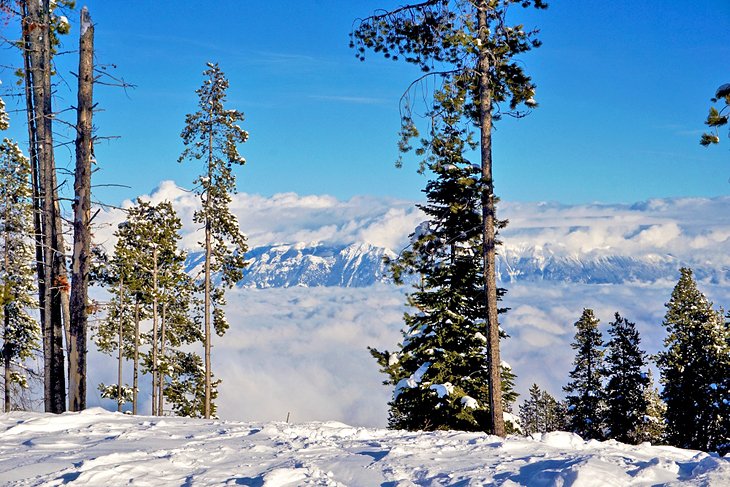
Banff is northern hemisphere alpine — the calendar splits cleanly into summer (hiking, lakes, wildlife) and winter (ski, ice, snow play). The summer window June–September is the broadest, with long daylight, accessible passes, and the mountains, nature, lakes on full display. Shoulder seasons are gorgeous but unpredictable: early-October snow on the peaks is a real possibility.
Month by Month
January in Banff
Shoulder or off-season. Winter month — skiers or snow-landscape interest only. Many summer routes inaccessible.
February in Banff
Shoulder or off-season. Winter month — skiers or snow-landscape interest only. Many summer routes inaccessible.
March in Banff
Shoulder or off-season. Winter month — skiers or snow-landscape interest only. Many summer routes inaccessible.
April in Banff
Shoulder or off-season. Transitional month — check trail and pass status before committing.
May in Banff
Shoulder or off-season. Transitional month — check trail and pass status before committing.
June in Banff
Best window. Summer in the high country — passes open, alpine huts running, long daylight hours.
July in Banff
Best window. Summer in the high country — passes open, alpine huts running, long daylight hours.
August in Banff
Best window. Summer in the high country — passes open, alpine huts running, long daylight hours.
September in Banff
Best window. Strong shoulder month — fewer crowds, weather mostly cooperative, trails still open.
October in Banff
Shoulder or off-season. Transitional month — check trail and pass status before committing.
November in Banff
Shoulder or off-season. Transitional month — check trail and pass status before committing.
December in Banff
Shoulder or off-season. Winter month — skiers or snow-landscape interest only. Many summer routes inaccessible.
Sweet Spots
If you’re optimizing for the trade-off between weather, crowds, and price, the strongest weeks tend to be at the edges of the best-month window — the first half of June and the last weeks of September. Peak weather is locked in but the Banff of those bookend weeks isn’t yet (or no longer) at full tourist capacity. Local festivals and the post-rain green-everywhere window are bonus signals to chase.
When to Avoid (and the Exceptions)
If you can flex your dates, the months that consistently disappoint most Banff travellers are January–March. That said, off-season has its compensations — the obvious one is price (accommodation can drop 30–50%), the subtle one is what locals call the ‘real’ version of the place: no queues, no tour buses, and everyday life running at its actual pace.
Quick Facts
- Best months overall: June–September
- Daily budget tier: Premium
- Crowd profile: Peak in summer
- Recommended trip length: 5-7d
- Defined by: mountains, nature, lakes, adventure
Keep Reading
This best-time page is a structured companion to the full Banff travel guide — first-hand reporting and editorial depth live there. If you’re weighing Banff against another destination, the interactive comparison tool sets them side by side on best months, budget, crowds, trip length and vibes.