
Last updated August 28, 2026 · Editorial policy
Banff Itinerary: 5-Day Day-by-Day Travel Plan
Quick answer: Five Banff days: town and the Sulphur Mountain gondola, a shuttle-smart Moraine Lake and Lake Louise day with the Lake Agnes teahouse, the Icefields Parkway to Peyto Lake, Johnston Canyon and a Minnewanka cruise, then Sunshine Meadows and the Upper Hot Springs.
Planning a trip to Banff? This itinerary is built from a first-time-visitor perspective: hit the icons, eat the best food, and finish with memorable experiences. Each day mixes a major sight, food stops, and downtime.
Banff Itinerary at a Glance
| Day | Focus |
|---|---|
| Day 1 | Banff Town & the Gondola |
| Day 2 | Lake Louise & Moraine Lake |
| Day 3 | Icefields Parkway |
| Day 4 | Johnston Canyon & Minnewanka |
| Day 5 | Sunshine Meadows & Hot Springs |
Day-by-Day Itinerary
Day 1 — Banff Town & the Gondola
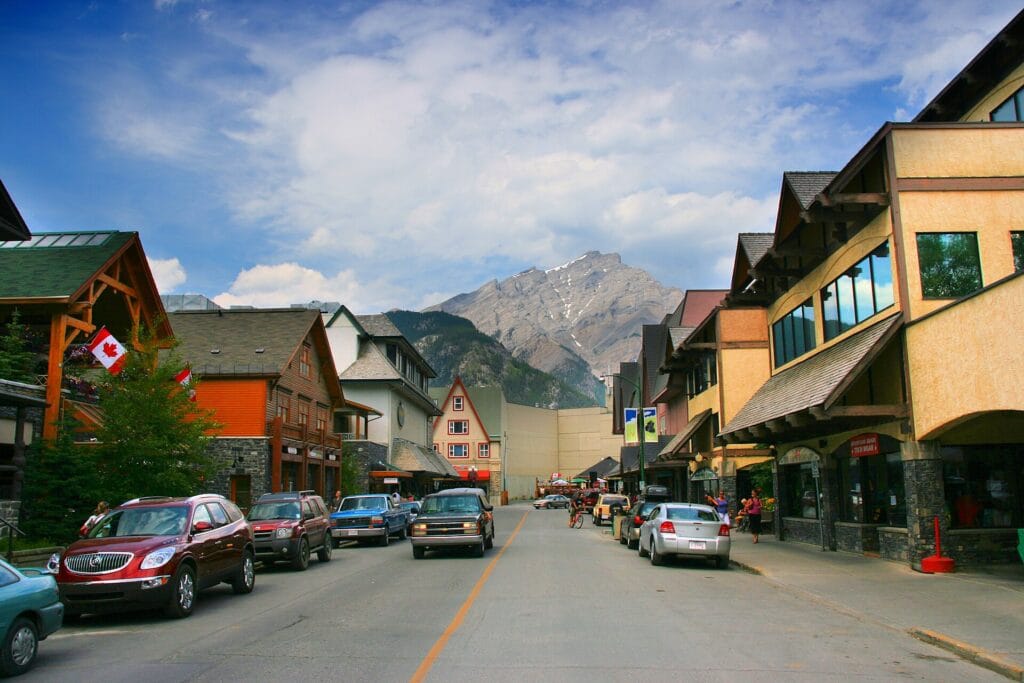
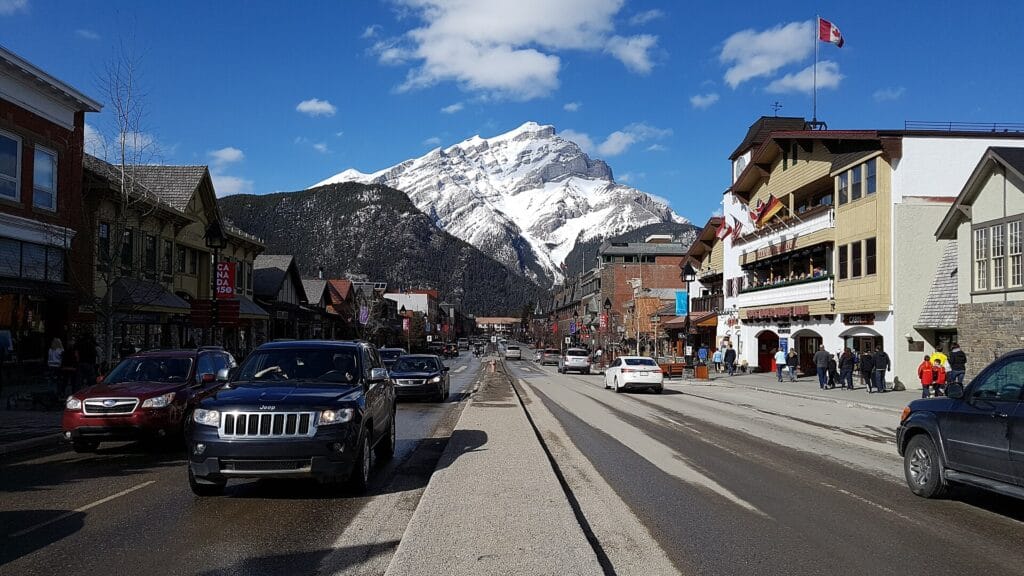
Settle into Banff town (buy your Parks Canada pass — about C$11/day per adult or C$145 for the annual Discovery pass). Warm up on the easy classics: the Bow Falls viewpoint and the riverside trail, then the Banff Gondola up Sulphur Mountain (about C$70–80; cheaper twilight fares) for the boardwalk ridge-walk and a 360° of six mountain ranges. Wander Banff Avenue’s outfitters and fudge shops with the castle-like Cascade Mountain closing the view. Wildlife etiquette from minute one: elk own the golf course, bears own everything else — carry spray on trails and never feed anything. Dinner: Alberta beef or bison, obviously.
Day 2 — Lake Louise & Moraine Lake
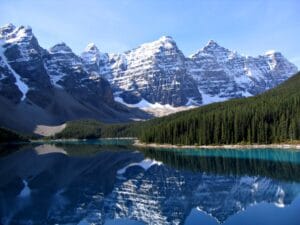
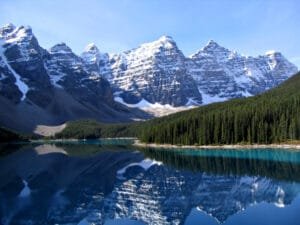
The big two, done right. In summer, Moraine Lake’s road is closed to private cars — reserve the Parks Canada shuttle from the Lake Louise park-and-ride weeks ahead (about C$8; Roam transit and private shuttles are backups), and take the dawn departure: the Valley of the Ten Peaks over that impossible blue is the Rockies’ definitive image, and the Rockpile viewpoint crowds by 9am. Shuttle-hop to Lake Louise itself, walk the shoreline beneath Victoria Glacier, then earn tea and scones with the 3.5km climb to the Lake Agnes Teahouse (cash-friendly, cooked on-site). Canoe rentals on either lake are splurgy (about C$145/hour at Louise) — and worth it once.
Day 3 — Icefields Parkway
Drive the Icefields Parkway, routinely called the world’s most beautiful road — even the first 100km as a day trip earns the title. Mandatory pullouts: Crowfoot Glacier, then Bow Lake‘s mirror mornings, and the short paved climb to the Peyto Lake platform — a wolf-head of impossibly turquoise meltwater. Continue if time allows to Saskatchewan Crossing or all the way to the Columbia Icefield, where glacier-buggy tours and the glass Skywalk are bookable add-ons (roughly C$90–120 combined). Fill the tank in Lake Louise first, pack snacks, and budget double your map app’s estimate — this road forcibly slows humans down.
Day 4 — Johnston Canyon & Minnewanka
Classic canyon morning: Johnston Canyon‘s catwalks bolted to the limestone walls lead to the Lower Falls’ spray-cave window (1.1km) and the Upper Falls (2.7km) — be walking by 8am or after 4pm; midday is a conga line in July–August. Continue the Bow Valley Parkway loop watching for bighorn sheep. Afternoon at Lake Minnewanka, Banff’s biggest lake: the hour-long interpretive cruise (about C$60–70) tells the story of the submerged resort town of Minnewanka Landing, or just picnic and skip stones at Two Jack Lake next door — a locals’ favorite with Rundle’s profile behind. Evening: Banff’s surprisingly good brewery and distillery scene.
Day 5 — Sunshine Meadows & Hot Springs
Finale in the alpine. Ride up to Sunshine Meadows (gondola + chair, about C$65–75; typically late June–early September), where easy trails cross flower-filled meadows on the Continental Divide to the Rock Isle Lake viewpoint — the Rockies’ gentlest taste of true high country. Hiker’s alternative near Moraine: Larch Valley in golden late September, if shuttles and conditions align. Descend for the ritual soak: the Banff Upper Hot Springs (about C$17–18), outdoor mineral water at 39°C with mountain views — the same waters that created the park in 1885. One last wildlife loop on the Minnewanka road at dusk, then home — already planning the Jasper extension.
Where to Stay in Banff
Choose a central neighborhood within walking distance of major sights — you’ll save hours of commute time over 5 days. Book 6-12 weeks ahead for best rates.
Budget Breakdown (5 Days)
Canada is rated Pricey in our Travel Cost Index 2026. Figures are country-level daily ranges per person and exclude international flights.
| Travel style | Per day | Total 5 days |
|---|---|---|
| Budget | $55-100 | $275-500 |
| Mid-range | $180-300 | $900-1,500 |
| Luxury | $450-700 | $2,250-3,500 |
Source: Packzup Travel Cost Index 2026 — country-level averages; city and peak-season prices run higher. Excludes international flights.
What to Pack
- Clothing: Pack layers for fast-changing Rockies weather: fleece, warm hat, and a waterproof shell even in July, plus sturdy hiking boots for rocky trails and lingering snow or ice at elevation.
- Tech: Canada uses Type A and B plugs at 120V, same as the US. Download offline maps before hiking since cell signal drops fast outside the Banff townsite; eSIMs work well in town.
- Documents: Most visa-exempt travelers flying into Canada need an eTA, while US citizens are exempt; check current entry rules before booking. Carry passport copies, travel insurance details, and your Banff National Park pass.
- Money: Canada uses the Canadian dollar. Cards and contactless are accepted almost everywhere, including park gates and gondolas, so you need little cash. Tipping 15 to 20 percent is standard in restaurants.
- Day bag: Bear spray for trails (rent or buy in town, it cannot fly with you), a refillable bottle since tap water is excellent, sunscreen for strong alpine UV, and a rain layer.
Banff Routing Mistakes: Sequencing the Lakes Without Backtracking
The single biggest planning error is treating Moraine Lake as a place you can drive to. Moraine Lake Road has been closed to private vehicles year-round since 2023, so a car gets you nothing here. You need a Parks Canada shuttle from the Lake Louise Park and Ride, a private operator like Moraine Lake Bus Company, or the connector bus between the two lakes. The second trap is rolling up to the Lake Louise lakeshore lot mid-morning. It routinely fills before sunrise and turns cars away, with nowhere to idle and wait.
Sequence by geography, not by photo wish-list. The town-east cluster (the Banff Gondola at 2.5 km from the centre and Lake Minnewanka about a 10 to 15 minute drive out) pairs cleanly into one half-day. Save the lakes for a separate day, since Lake Louise sits roughly 60 km and about 45 minutes northwest on the Trans-Canada. Slot Johnston Canyon, only around 25 km and 30 minutes from Banff on the Bow Valley Parkway, on your way in or out rather than as its own trip.
- Skip the full Columbia Icefield run on a packed schedule. It is about 3 hours one way and swallows a lake day whole.
- Add a sunrise lake slot instead of fighting midday crowds for parking.
Frequently Asked Questions
Is 5 days enough for Banff?
For first-time visitors, 5 days in Banff covers the main highlights without rushing. If you want to add day trips, slower pace, or hidden gems, plan 2-3 more days.
How much will a 5-day Banff trip cost?
Using the Budget Breakdown table above, drawn from our Travel Cost Index 2026: Budget $55-100/day ($275-500 for 5 days), Mid-range $180-300/day ($900-1,500 for 5 days), Luxury $450-700/day ($2,250-3,500 for 5 days). Country-level averages, excluding international flights.
What’s the best time for this Banff itinerary?
Shoulder seasons offer the best balance of weather, crowds, and prices for Banff. See destination-specific best-time guide.
How do I get around Banff?
Banff has no scheduled train service; fly into Calgary and take the Banff Airporter shuttle (about 2 hours). In town, Roam Transit buses reach Lake Louise, Canmore and Johnston Canyon, and Moraine Lake is shuttle-only, so a car is optional.
What should I pack for 5 days in Banff?
Banff weather swings fast: even July mornings at the lakes can sit near freezing, so pack layers, a waterproof shell and sturdy trail shoes; winter regularly hits -20C. Dress everywhere is casual outdoor wear.
Should I book hotels in advance?
Book 6 to 9 months out for July and August, when Banff hotels routinely sell out, and well ahead for Christmas ski weeks and late-September larch season; May and October are far more forgiving.
Related Banff Travel Guides
- Best Things to Do in Banff
- Where to Stay in Banff
- Best Food in Banff
- Best Time to Visit Banff
Best time to visit Banff (real climate data)
Best months: July, August.
Banff’s warmest month is July (avg 22°C / 72°F), the coolest is February (low -15°C / 4°F). The wettest is June (92 mm) and the driest is January.
Source: Open-Meteo / WMO climate normals (WMO 1991–2020, or ERA5 2019–2023 where unavailable). See the full month-by-month weather →
You Might Also Love

Written by
Drew Treasury is a contributing travel writer at Packzup, specialising in city culture, food markets, street art, and neighbourhood-level travel.
Trip prep: before you travel, plan what to wear, check the tap water, sort your mobile data, and see if it is a cash or card country, and skim local etiquette.
