
Last updated September 11, 2026 · Editorial policy
- The 2023+ Moraine Lake shuttle reality
- Summer vs Winter Banff: two different trips
- Canmore as your base, not Banff townsite
- Lake Louise crowd timing
- Icefields Parkway: the drive
- Banff vs Jasper
- Parks Canada pass + reservation system
- What 5 days really costs
- Related guides
- Frequently asked
- Plan Your Banff Trip
- More Travel Guides You'll Love
- Frequently Asked Questions
Banff is Canada’s most popular national park and one of the world’s famous mountain destinations. The introduction of the Moraine Lake shuttle reservation system changed how visitors plan their trip, personal vehicles are now banned from Moraine Lake year-round. This guide covers a 5-day Banff trip with the shuttle reality, the Canmore-vs-Banff base decision, the Icefields Parkway drive, and the summer-vs-winter split.
Quick stats
- When to come: Jul: Sep (hiking); Dec. Mar (skiing + Northern Lights)
- Best month: September (fall colours, fewer crowds, all trails still open)
- How long: 5 days for the standard loop
- Daily budget: CAD 200–350 mid-range
- Parks Canada pass: CAD 11/day adult, CAD 22 family; CAD 75 annual
- Moraine Lake shuttle: Reserve at Parks Canada website 48 hours ahead; CAD 8/person
| Best month to visit | August — 22.1°C, 8 wet days |
|---|---|
| Warmest month | July, 22.2°C average high |
| Wettest month | June, 13 wet days |
| Plugs & power | Type A,B · 120 V · 60 Hz |
| Driving side | Right |
Climate: normals (WMO 1991–2020, or ERA5 2019–2023 where unavailable) via Open-Meteo. Open data.
The 2023+ Moraine Lake shuttle reality
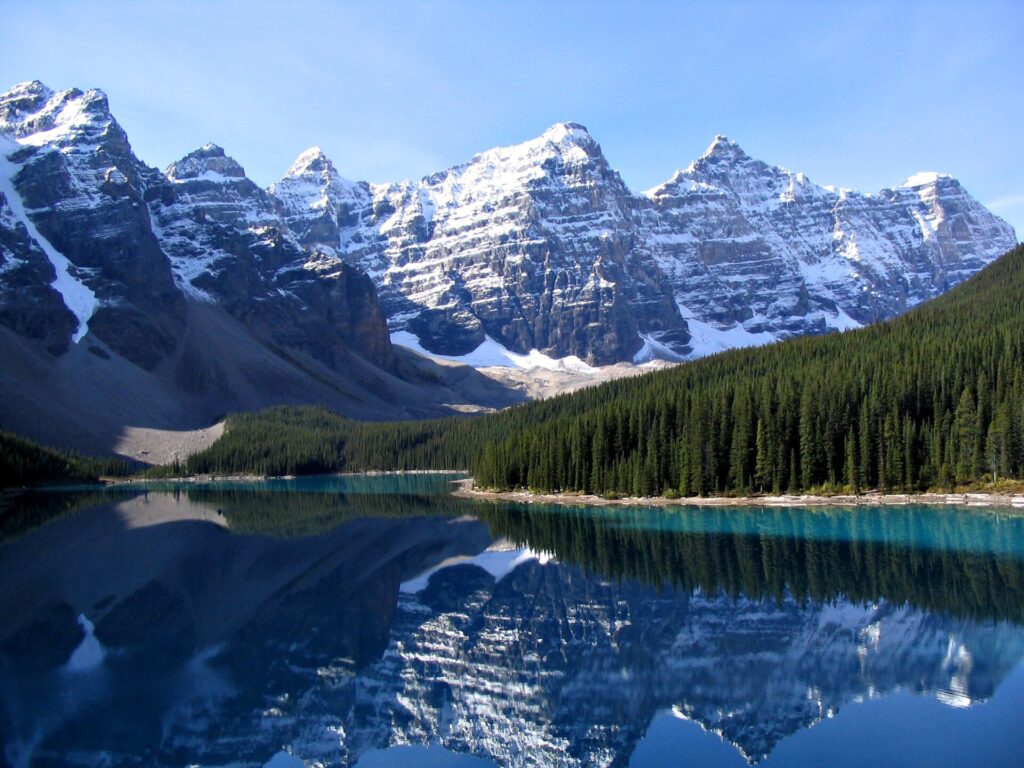
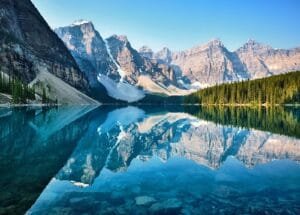
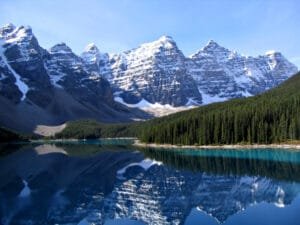
In 2023, Parks Canada permanently banned personal vehicles from Moraine Lake. The road that previously allowed self-drive access closed to private cars year-round. To visit Moraine Lake, you have four options
- Parks Canada shuttle (recommended): Reservations open 48 hours in advance at reservation.pc.gc.ca. CAD 8/person round trip. Departs from the Lake Louise Park & Ride lot. Limited spots — reservation typically gone within minutes of opening for peak-summer dates.
- Commercial bus tours: Several operators (Pursuit, Discover Banff Tours, Brewster) run guided tours that bypass the reservation system. CAD 80–150 per person, includes commentary and stops at multiple sites.
- Roam Transit public bus: The local public transit serves Lake Louise but not Moraine Lake directly: you’d combine with the Parks Canada shuttle.
- Bike from Lake Louise: 12 km uphill ride from the Lake Louise lakeshore. For fit cyclists only. Free.
The reservation system is also enforced at Lake Louise during peak season, though personal vehicles can access via shuttle-lot transfers. The same Parks Canada reservation system covers both.
Plan: book your shuttle the moment you have firm dates. Peak summer (Jul-Aug) sells out within an hour of reservations opening.
Summer vs Winter Banff: two different trips
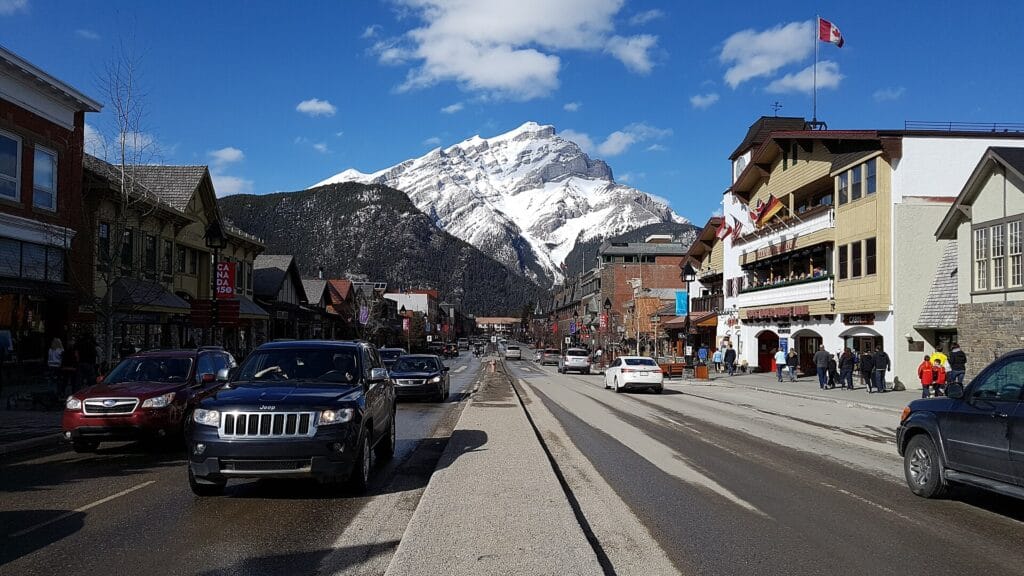
Banff is a year-round destination, but summer and winter are essentially separate trips
Summer (June–September)
- All hikes open, lakes accessible by trail and boat.
- Long days (sunrise 5am, sunset 9:30pm in June).
- Wildlife actively visible (bears, elk, bighorn sheep).
- Peak crowds (especially July–August).
- Mid-range hotels CAD 250–500/night in town.
Winter (December–March)
- Three ski resorts open (Lake Louise, Sunshine Village, Mt Norquay). The “SkiBig3” pass covers all three.
- Hot springs (Banff Upper Hot Springs) at peak appeal.
- Northern Lights visible on clear nights (verify aurora forecast).
- Cold (often -15°C, occasional -30°C cold snaps).
- Most hiking trails closed; ice walks (Johnston Canyon) become possible.
- Hotel prices 30–50% below summer.
Shoulder (April–May, October–November)
Avoid if possible. Late April-May is “mud season”. Trails are wet, snow patches linger, wildlife is groggy, but ski season has ended. Late October-November is similar in reverse, cold without yet being a proper winter ski destination.
Canmore as your base, not Banff townsite
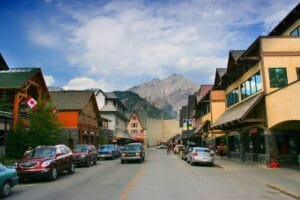
Banff townsite is convenient (you’re inside the park) but expensive and crowded. Canmore, the town 20 minutes east of Banff and just outside the park boundary, offers the alternative most repeat visitors prefer
- 30–40% cheaper accommodation. Hotels that run CAD 400/night in Banff cost CAD 250–300 in Canmore.
- Better local food scene. Canmore’s restaurants serve locals and skiers; Banff’s serve tourists.
- 20-minute drive to Banff townsite, 45 minutes to Lake Louise.
- Roam Transit bus runs from Canmore directly into Banff, every 20–30 minutes. CAD 6 each way.
- Three Sisters Mountain views from town — arguably more scenic than Banff townsite.
The standard 5-day trip: 4–5 nights in Canmore, day-trip into the park each day. Drive in, return for dinner.
Caveat: if you want walkable evenings to bars/restaurants and don’t mind paying, Banff townsite has the better immediate atmosphere. For travellers prioritising value and quieter evenings, Canmore wins.
Lake Louise crowd timing
Lake Louise, the turquoise glacier-fed lake with the Chateau hotel on the shore: is the most photographed location in Canada. Crowds peak from 11am to 4pm in summer. Timing matters more here than at any other Banff site
- Sunrise visit (5–7am in summer): The contrarian play. You’ll share the lake with 20–40 photographers instead of 2,000+ tourists. Parking is open. Coffee at the Chateau opens at 7am.
- Evening visit (7–9pm in summer): Second-best timing. Light is good for photographs, tour buses have left, lake activities (canoe rental) close at 6pm but the shore walk remains open.
- Midday (11am–3pm): Worst timing. Avoid if possible.
Canoe rentals
Lake Louise canoe rental is CAD 145/hour. It’s expensive, but the experience of paddling the turquoise water is the closest you get to “alone on Lake Louise” during day hours. Bookings open with a Chateau Lake Louise visit or via the rental desk on arrival.
Tea-house hikes
Two trails climb from Lake Louise to historic teahouses, where you can sit on a deck eating soup and looking down at the lake
- Lake Agnes Tea House: 7 km round trip, 400 m elevation. 3 hours. The classic.
- Plain of Six Glaciers Tea House: 11 km round trip, 365 m elevation. 4–5 hours. Slightly longer, slightly quieter.
Both teahouses are cash-only and operate without electricity. They’re the right way to escape the lakeshore crowd while still being at Lake Louise.
Icefields Parkway: the drive
The Icefields Parkway (Highway 93) runs 230 km between Lake Louise and Jasper. It is widely considered one of the world’s most scenic drives. Even if you’re not going to Jasper, drive at least to Peyto Lake (40 minutes north of Lake Louise) and ideally to Saskatchewan River Crossing (90 minutes).
The essential stops
- Bow Lake / Crowfoot Glacier (30 minutes north of Lake Louise): Pullover with view of the receding Crowfoot Glacier.
- Peyto Lake (45 minutes north): The wolf-head-shaped turquoise lake. 15-minute walk from the parking lot to the viewing platform. The classic Banff postcard.
- Mistaya Canyon (65 minutes north): Short trail to a tight slot canyon. Often skipped, worth the 20-minute stop.
- Saskatchewan River Crossing (90 minutes north): The natural turnaround point if you’re not going to Jasper. Fuel station, modest accommodation, the only services until Jasper.
- Athabasca Glacier (continuing toward Jasper): Drive onto the glacier in the Brewster Ice Explorer. The standard “what to do on Icefields Parkway” stop.
Time: half-day for the round-trip Lake Louise ↔ Peyto Lake. Full day if you continue to Saskatchewan River Crossing. Two days if you continue all the way to Jasper.
Banff vs Jasper
Banff is the busier, more developed park. Jasper, 3 hours north via the Icefields Parkway, is bigger, quieter, and wilder, one of the largest dark-sky reserves in the world.
Where they differ
- Banff: More famous lakes (Louise, Moraine, Peyto), more developed tourism infrastructure, more international visitors, easier access via Calgary airport (1.5 hours from Banff townsite).
- Jasper: Bigger wildlife populations (elk, bears, even wolves), darker skies, gondola to the top of Whistlers Mountain, Maligne Lake. Less crowded but also less convenient (Calgary is 4.5 hours away; Edmonton is 4 hours).
For a 5-day trip, Banff alone is enough. For 7+ days, add 2–3 nights in Jasper. The Icefields Parkway connecting them is a destination in itself; do not rush the drive.
Parks Canada pass + reservation system
The Parks Canada pass covers entry to Banff, Jasper, and all Canadian national parks. Pricing
- Single-day: CAD 11/adult, CAD 22/family group (up to 7).
- Annual Discovery Pass: CAD 75/adult, CAD 151/family.
For trips of 6+ days, the annual pass is cheaper than buying daily. Buy online ahead or at the park gate.
Reservation triple-stack
Three reservation systems exist for popular sites. They’re separate and easy to confuse
- Park entry pass: Always required; can buy at gate.
- Moraine Lake shuttle: Reserve at reservation.pc.gc.ca 48 hours ahead.
- Campsite reservations (if camping): Open March–April for the following summer at the same Parks Canada site.
What 5 days really costs
For two travellers, mid-range,
- Accommodation (Canmore base): CAD 200–300/night.
- Rental car (essential): CAD 70–110/day.
- Parks Canada pass: CAD 75 for annual or CAD 55 for 5 daily.
- Moraine Lake shuttle: CAD 16 for two round trips.
- Food: CAD 60–100/day per person.
- Activities (canoe, gondola, hot springs): CAD 200–400 across the trip.
Total for two, 5 days: CAD 2,500–4,000 excluding international flights.
Canadian-dollar caveat: at USD/CAD rates around 1.35, USD-based travellers benefit from the exchange. EUR-based travellers similarly. CAD has been weak against most major currencies in 2026, making Banff better value than headline prices suggest.
Related guides
Frequently asked
Do you need a reservation for Moraine Lake?
Yes, private vehicles have been banned year-round since 2023. Reserve the Parks Canada shuttle at reservation.pc.gc.ca 48 hours in advance (CAD 8/person), join a commercial bus tour (CAD 80–150/person), or cycle 12 km uphill from Lake Louise. Peak-summer shuttle slots sell out within minutes of opening.
How many days do you need in Banff?
5 days for the standard loop covering Banff townsite, Lake Louise, Moraine Lake, Icefields Parkway to Peyto Lake, and one hiking day. 7 days lets you add Jasper. 3 days is the minimum and forces choices between Lake Louise and Icefields Parkway.
Should you stay in Banff or Canmore?
Canmore for value (30–40% cheaper accommodation), local atmosphere, and Three Sisters mountain views. Banff townsite for walkable evenings and inside-the-park convenience. Most repeat visitors prefer Canmore as their base and day-trip into Banff via car or Roam Transit bus.
Is Banff better in summer or winter?
Different trips. Summer (Jul-Sep) gives you all hikes, long days, and accessible lakes, but with peak crowds and prices. Winter (Dec-Mar) gives you top skiing at three resorts, the Banff hot springs, and possible Northern Lights — with hotel prices 30–50% below summer.
Banff or Jasper: which one?
Banff for icon-status lakes (Louise, Moraine, Peyto) and easier Calgary access. Jasper for bigger wildlife populations, darker skies, and far fewer international visitors. For a 5-day trip, Banff alone suffices. For 7+ days, add Jasper via the Icefields Parkway.
How much does the Parks Canada pass cost?
CAD 11/day for one adult, CAD 22 for a family group of up to 7. The annual Discovery Pass costs CAD 75 individual or CAD 151 family. For trips of 6+ days, the annual pass costs less than daily entries. Valid at Banff, Jasper, and all Canadian national parks.
Plan Your Banff Trip
- Best Time to Visit Banff
- Banff Itinerary
- Banff Travel Budget
- Banff vs Jasper: Which Canadian Rockies Park to Visit
Frequently Asked Questions
Is Banff worth visiting?
Yes. Banff rewards travelers who are willing to look beyond the surface. From local food to cultural sites, there is plenty to discover for every type of traveler.
How many days should I spend in Banff?
Three days covers the essentials: Banff townsite, the Banff Gondola, Lake Minnewanka, and Lake Louise with Moraine Lake. Five to seven days adds the Icefields Parkway toward Jasper, Johnston Canyon, and real hiking time in Sunshine Meadows or Larch Valley.
What is the best way to get to Banff?
Nearly everyone flies into Calgary International Airport (YYC), then drives 90 minutes west on the Trans-Canada Highway. Rental cars are most flexible; the Banff Airporter and Pursuit shuttles run direct from the airport. Within the park, Roam Transit buses link Banff, Canmore, and Lake Louise.
Do I need travel insurance for Banff?
Non-residents pay out of pocket for Canadian healthcare, and a single emergency room visit or ambulance ride runs into thousands. Coverage matters most for ski and hiking injuries, plus winter driving on icy mountain roads and trip disruptions from sudden snow closures.
Still deciding? Compare it directly: Banff vs Patagonia.
Best time to visit Banff (real climate data)
Best months: July, August.
Banff’s warmest month is July (avg 22°C / 72°F), the coolest is February (low -15°C / 4°F). The wettest is June (92 mm) and the driest is January.
Source: Open-Meteo / WMO climate normals (WMO 1991–2020, or ERA5 2019–2023 where unavailable). See the full month-by-month weather →
You Might Also Love


Written by
Founder of Packzup. Independent travel writer covering offbeat destinations across six continents since 2018. Every guide is independently researched and self-funded — no press trips, never sponsored.
Before you go: see whether they speak English in Banff and what to wear, check the tap water, sort your mobile data, and find out if it is a cash or card destination, and brush up on local etiquette.
