
Oaxaca in October means Día de los Muertos — the Day of the Dead celebrations centred on October 31 to November 2, but with cultural activity stretching from late October through the first week of November. Oaxaca is the original heartland of the holiday (Mexico City’s parade is a relatively recent invention, popularised by the 2015 James Bond film). The Oaxacan version is family-centred, cemetery-vigil-based, and far less performative than the Mexico City version. This guide covers the actual dates, cemetery-visit etiquette, the three village cemeteries with public vigils, hotel pricing reality (it triples), and the booking window for visitors hoping to attend in 2026.
October Oaxaca at a glance (2026)
- Día de los Muertos 2026 dates: Oct 31 (children) – Nov 1 (children) – Nov 2 (adults)
- Cultural activity window: Oct 27 – Nov 3
- Average temperature: 13–26°C (55–79°F)
- Hotel cost vs September: 200–300% premium during festival week
- Cemetery vigil etiquette: Ask before photographing; bring marigolds as guest
- Booking window opens: 6 months ahead; mid-range hotels gone by July
Oaxaca vs Mexico City for Día de los Muertos
The most common confusion: visitors who book Mexico City for the famous parade and miss the actual Día de los Muertos. The two cities offer dramatically different versions of the holiday.
Mexico City
The Mexico City “Day of the Dead Parade” was largely invented for tourism after the 2015 release of the James Bond film Spectre, which featured a fictional parade. Mexico City’s tourism authorities created an actual parade the following year. The parade itself is now an enormous spectacle with elaborate floats, costumes, and tens of thousands of attendees — but it is a modern tourism event, not the traditional ritual.
Oaxaca
Oaxaca preserves the traditional family-and-cemetery version. The holiday centres on:
- Home altars (ofrendas): Built in family homes from late October, decorated with marigolds, photographs of deceased relatives, favourite foods, mezcal.
- Village cemetery vigils: Families spend nights of October 31, November 1, and November 2 at the graves of their dead, candle-lit, often with mariachi music, sometimes with picnics.
- Sand tapestries: Elaborate sand-and-flower-petal carpets at major plazas.
- Comparsas (street processions): Costumed processions through neighbourhoods, more intimate than the Mexico City parade.
The cultural distinction matters. Oaxaca is the original. Mexico City is the tourist version of the original.
The actual dates (and which night is which)
Día de los Muertos is not a one-day holiday. The full calendar:
The traditional timeline
- October 27: Altars begin being built in homes. Some markets shift to selling marigolds and pan de muerto.
- October 31 (Halloween / All Hallows’ Eve): Día de los Angelitos — the day for deceased children. Some cemetery vigils begin at midnight.
- November 1 (All Saints’ Day): Continued vigils for children. Many family altars peak.
- November 2 (All Souls’ Day): Día de los Muertos properly — the day for deceased adults. The most intense night of cemetery vigils.
- November 3: Altars are dismantled. Tourism wave departs.
The trip-length math
To experience the full cultural arc, plan to arrive October 28–30 and depart November 3 or later. A 6-day stay (Oct 29 – Nov 3) gives you the calm pre-festival days for altar-viewing and workshops, then the main vigil nights.
Shorter trips miss the cultural texture: arriving for the main night (Nov 2) alone reduces the experience to a single dramatic event without context.
Cemetery vigil etiquette
The cemetery vigils are the most photographed and most fraught aspect of foreign visitor participation. The honest etiquette:
Photography rules
- Always ask before photographing individuals or graves. A simple “¿Puedo tomar una foto?” works. Many families welcome respectful photography; others actively decline. Both responses are valid.
- No flash on people. The candle-lit vigils are atmospheric for photographers but invasive when flashed.
- Do not photograph children without parental permission.
- Wide cemetery shots without individuals are generally acceptable, but use judgement.
How to behave
- Sit, don’t walk constantly. Families sit at graves for hours; tourists who walk endlessly between graves feel intrusive.
- Bring something: a small bundle of marigolds purchased at the village market, or candles. Set them at the cemetery entrance gate or offer to a family who welcomes you. This signals you are a respectful guest, not a tourist.
- Speak quietly. The vigils are not parties; they are vigils.
- Don’t drink heavily. Some families share mezcal with guests; accepting is fine, but the cemetery is not a bar.
Why guides matter for village cemeteries
For the village cemeteries (not the central Oaxaca cemetery), a local guide significantly improves the experience. A guide bridges language, explains family-specific symbolism, knows which families welcome visitors, and prevents the visitor from feeling like an unwelcome stranger. Most riads and tour operators offer guided cemetery-vigil tours for USD 30–60 per person.
Xoxocotlán vs San Felipe vs Atzompa
Three village cemeteries near Oaxaca run public-welcome vigils. Their characters differ:
Xoxocotlán (commonly called “Xoxo”)
Located 15 minutes south of central Oaxaca. The most famous and most-touristed of the village cemeteries. Two main sections: the old cemetery (more traditional vigils, locals only or with respectful visitors) and the new cemetery (more open to tourists, more candles, larger crowds). The atmosphere is overwhelmingly visual — thousands of candles light the whole cemetery.
Best night: November 1 evening into November 2 morning. The crowds peak; the photography is most spectacular; the cultural authenticity is least.
San Felipe del Agua
Closer to central Oaxaca, smaller, quieter. The vigils here feel more intimate — fewer tourists, more family-only sections. Visit if you want a less performative experience.
Atzompa
15 minutes west of central Oaxaca. The mid-size option. Famous for the village’s pottery culture; the cemetery vigils integrate with handcraft displays. A balance between Xoxo’s spectacle and San Felipe’s quiet.
The two-night strategy
Travellers with multiple nights free should pair Xoxocotlán on the busy main night (Nov 1) with one of the quieter villages (Atzompa or San Felipe) on the second night (Nov 2). The contrast between performative and traditional vigils is itself part of understanding the holiday.
Hotel pricing tripling: when to book
The single biggest planning fact for Día de los Muertos: Oaxaca hotel prices triple during the festival week. A mid-range USD 80/night room in September runs USD 200–250/night during the late-October-to-early-November window. The increase begins around October 28 and falls back to normal around November 4.
The booking calendar
- May (6 months out): Hotel availability is good. Pre-booking discounts available.
- July (4 months out): Mid-range hotels in Centro begin selling out.
- August (3 months out): Most mid-range Centro accommodation is gone.
- September (2 months out): Only high-end or far-from-centre options remain.
- October: Last-minute availability is almost exclusively Airbnbs in outer neighbourhoods or high-end hotels.
Where to stay
- Centro (historic centre): The best location. Walking distance to the Zocalo, the Templo de Santo Domingo, and most workshops. Casa Oaxaca, Quinta Real, Hotel Sin Nombre are the main mid-to-high-range options.
- Reforma neighborhood: Slightly outside the centre, quieter, mid-range. Good walking distance to the centre.
- Outer neighbourhoods: Cheaper but require Uber/taxi for the late-night cemetery returns.
The casa particular alternative
Many Oaxacan families rent rooms or full apartments during the festival. These run USD 40–120/night via Airbnb or direct booking. The advantage: often a more personal experience, sometimes including invitation to the host family’s altar. Book early.
Workshops and altar-building
Several cultural institutions offer workshops during the festival week that transform the visitor experience from observer to participant.
Casa Panteón
Workshops on altar construction, sugar-skull decorating, marigold-petal carpet making. Sessions run USD 25–60. Book through the institution’s website 1–2 months ahead.
IAGO (Instituto de Artes Gráficas de Oaxaca)
The Francisco Toledo-founded institution. Lectures and panel discussions on the holiday’s anthropology. Most are in Spanish; some have English translation. Free or low-cost.
Centro Cultural San Pablo
Cooking classes featuring mole negro (the autumn-equinox dish), pan de muerto baking, and chocolate workshops. USD 40–100. Book ahead.
Marigold-petal carpet workshops
Several smaller cultural centres run hands-on workshops where you help create the sand-and-petal carpets that appear in plazas during the festival. USD 15–40. The participatory experience is often the most-remembered part of the visit.
Beyond the vigils: pan de muerto, mole season, mezcalerías
Pan de muerto (bread of the dead)
The shaped bread that appears in every panadería from mid-October. Round, glazed with sugar, decorated with bone-shaped dough on top. Some include orange-blossom water in the dough. Three Oaxaca bakeries worth seeking out:
- Pan y Café in Reforma: Modern interpretation; sells out by 2pm.
- Don Tomás Yan ag (near Mercado Benito Juárez): Traditional, more rustic.
- La Tehuana: Indigenous-Zapotec recipe with hojaldra (a less-sweet variation).
Mole negro season
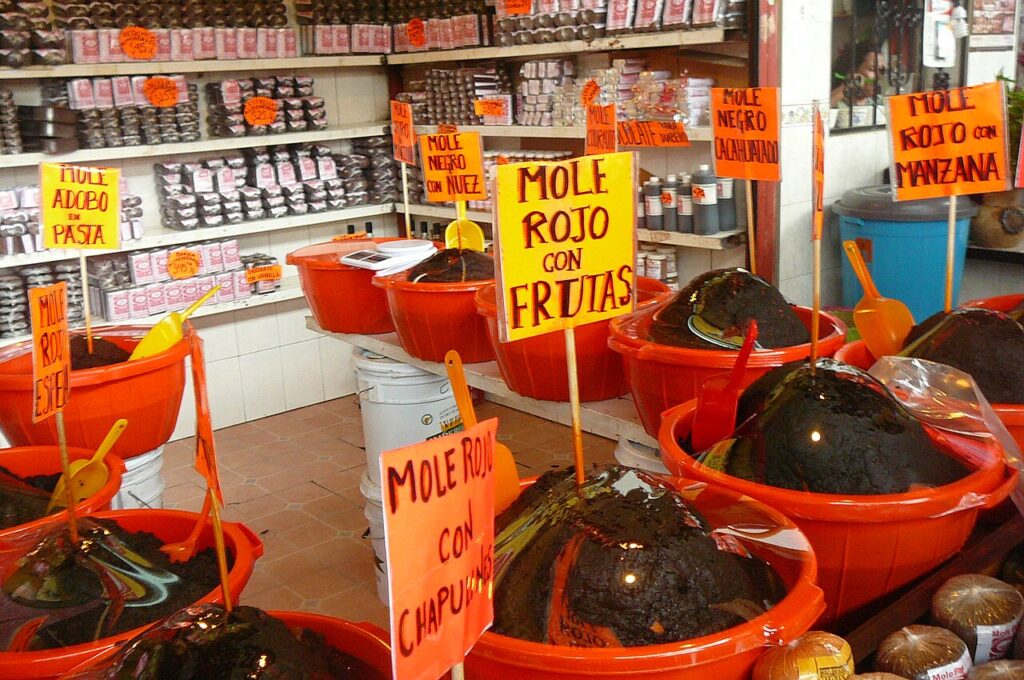
October is the month for Oaxaca’s signature dish: mole negro, the complex chocolate-chili sauce served over turkey or chicken. El Tipico, Catedral, and the family-run La Olla serve excellent versions. Reservations recommended during festival week.
Three mezcalerías where November mezcal-tasting is a thing
- Mezcalería Los Amantes: Owned by mezcal pioneer Las Tres Hermanas. Tasting flights USD 8–20.
- In Situ: Curated mezcal bar with deep selection from small producers. Often features special November releases.
- Bosé: Closer to a wine bar with mezcal expertise. Good for non-mezcal-experts wanting structured education.
Day-of-the-Dead Oaxaca in 5 days: itinerary
October 30 (Wednesday)
Arrive Oaxaca. Evening walking tour of the Centro to see early altars in shops and restaurants. Dinner at Casa Oaxaca.
October 31 (Thursday) — Día de los Angelitos
Morning altar-building workshop. Afternoon visit to Templo de Santo Domingo and the Centro Cultural museum. Evening: comparsa procession through one of the city’s neighbourhoods (Jalatlaco or Xochimilco).
November 1 (Friday)
Half-day to Hierve el Agua (the calcified mineral waterfalls) or Mitla (Zapotec ruins) — both standard Oaxaca day-trips. Return for evening Xoxocotlán cemetery vigil. Hire a guide. Bring marigolds. Stay until 11pm or midnight.
November 2 (Saturday) — Día de los Muertos
Late start (sleep in after Xoxo). Visit Atzompa or San Felipe del Agua cemetery for the quieter vigil. Spend evening at a smaller comparsa or with friends/hosts in their family altars. Mezcal at one of the In Situ-style bars before bed.
November 3 (Sunday)
Wind-down day. Visit the Zocalo to see the sand-tapestry remnants. Last meal of mole negro. Catch flight or bus.
For shorter trips: prioritise the Nov 1 vigil and one workshop, accept that the rest is light coverage.
Read alongside
Frequently asked
When is Día de los Muertos in Oaxaca 2026?
The traditional dates are October 31 (Día de los Angelitos — children), November 1 (continued children’s day), and November 2 (Día de los Muertos proper — adults). Cultural activity stretches from October 27 (altar-building begins) through November 3. The main cemetery vigils peak the nights of November 1 and 2.
Oaxaca or Mexico City for Day of the Dead?
Oaxaca for the authentic, family-and-cemetery traditional version. Mexico City for the large modern parade (largely invented after the 2015 Bond film Spectre). The two cities offer dramatically different experiences. Most travellers seeking cultural depth prefer Oaxaca; travellers seeking spectacle prefer Mexico City’s parade.
Is it disrespectful to visit cemeteries during Día de los Muertos?
Not inherently — Oaxacans generally welcome respectful visitors to public-village cemeteries. Disrespectful behavior includes: photographing without permission, walking constantly while families sit, speaking loudly, treating the vigil as entertainment. With a guide (USD 30–60) and basic etiquette (bring marigolds, sit, ask before photos), visitors are part of the holiday’s tradition of welcoming.
How far in advance should I book Oaxaca for Day of the Dead?
6 months ahead for mid-range Centro hotels; 4 months for outer-neighbourhood options. By August (3 months out) most mid-range accommodation is sold out. Last-minute booking is largely limited to Airbnbs in outer neighbourhoods or high-end hotels. Hotel prices typically triple during the festival week.
How expensive is Oaxaca during Day of the Dead?
Hotels cost 200–300% above September baseline (USD 200–250/night for mid-range vs USD 80 normal). Restaurant prices remain stable; activity costs (workshops, guides) are typical. Total per-person daily budget during festival week: USD 200–350 mid-range, including accommodation.
Is Oaxaca safe in late October?
Yes — one of Mexico’s safer tourist destinations. The Centro and surrounding neighbourhoods are heavily-policed during the festival. Standard precautions (don’t flash valuables, take registered taxis at night) apply. The cemetery vigils are formally sanctioned with police presence at major sites.
Written by
Founder of Packzup. Independent travel writer covering offbeat destinations across six continents since 2018. Every guide is first-hand and self-funded — no press trips, never sponsored.