
Last updated September 11, 2026 · Editorial policy
- Banff vs Jasper at a glance
- Quick Comparison
- What Banff actually delivers
- What Jasper actually delivers
- If you only have 5 days
- If you have 7+ days, do both
- Wildlife compared
- Dark skies and the night experience
- The verdict for 2026: the wildfire recovery is now the real deciding factor
- Banff Vs Jasper FAQ
- Related guides
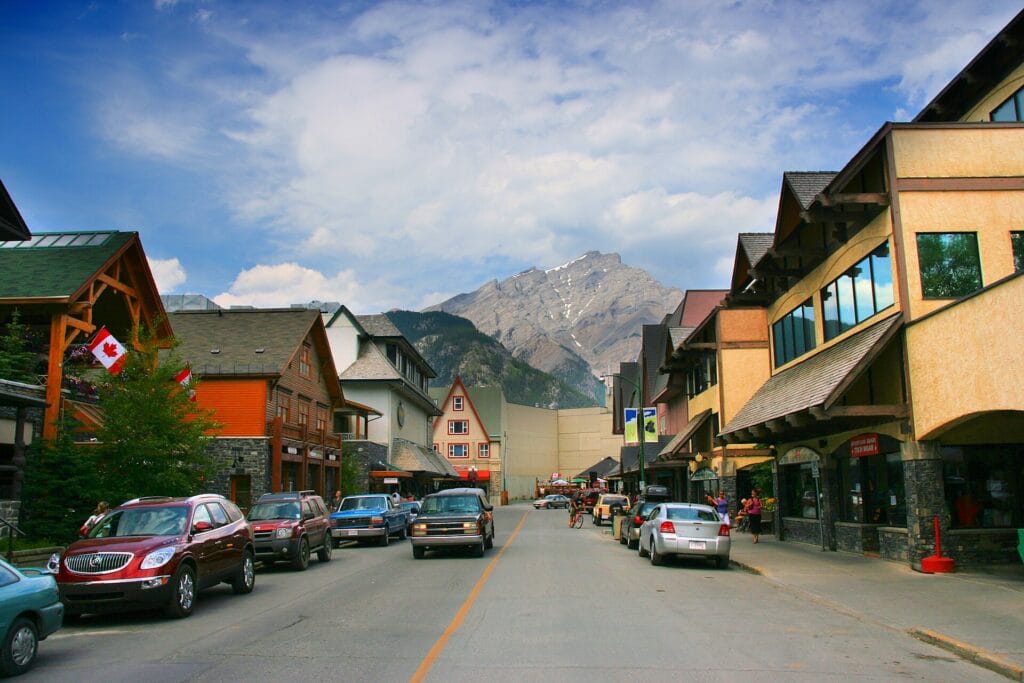
Banff and Jasper are the two flagship national parks in the Canadian Rocky Mountains. Banff is closer to Calgary (1.5 hours), more developed, more visited (~4 million visitors/year), and home to the famous Lake Louise and Moraine Lake. Jasper sits 3 hours north of Banff via the Icefields Parkway, is twice the size, has fewer visitors (~2.5 million/year), and is one of the world’s largest dark-sky preserves. This comparison covers crowd realities, wildlife, the lakes, and which park to prioritize for a 5–7 day Rockies trip.
Quick verdict
- Pick Banff if: You have 3–5 days, want famous lakes, easier airport access from Calgary.
- Pick Jasper if: You want fewer crowds, more wildlife, dark skies, and bigger park.
- Both: On a 7+ day trip, connected by the Icefields Parkway.
- Best season: June (snow melt + everything open) or September (autumn + fewer crowds)
Banff vs Jasper at a glance
| Banff | Jasper | |
|---|---|---|
| Best for | Iconic sights, amenities | Wilder, dark skies, fewer crowds |
| Vibe | Busy, polished | Quiet, rugged |
| Daily budget (mid-range) | $130–220 | $120–200 |
| Best time | Jun–Sep | Jun–Sep |
| Don’t miss | Lake Louise, Moraine Lake | Maligne Lake, the Columbia Icefield |
| The catch | Crowds | Farther; quieter |
Quick Comparison
| Category | Banff | Jasper |
|---|---|---|
| Established | 1885 (oldest in Canada) | 1907 |
| Park area | 6,641 km² | 11,228 km² (almost 2× Banff) |
| Annual visitors | ~4 million | ~2.5 million |
| Distance from major airport | Calgary, 1.5 hours | Edmonton 4 hours OR Calgary via Banff 4.5 hours |
| famous lake | Lake Louise + Moraine Lake | Maligne Lake + Spirit Island |
| Hot springs | Banff Upper Hot Springs | Miette Hot Springs |
| Wildlife density | High (elk, bighorn sheep, occasional bears) | Higher (elk, caribou, bears, occasional wolves) |
| Dark-sky status | Light pollution from Banff townsite | Designated Dark Sky Preserve |
| Best month | June–September | June–September |
| Hotel cost (peak) | CAD 250–500/night | CAD 180–400/night |
What Banff actually delivers
Banff is Canada’s most visited national park and the closest to a major international airport (Calgary, 1.5 hours). The defining experiences: Lake Louise (the turquoise lake with the chateau, photographed millions of times), Moraine Lake (the more dramatic, formerly accessible-by-car lake in the Valley of the Ten Peaks, now requires shuttle reservations since), the Icefields Parkway drive (often called one of the world’s most scenic), and Banff Upper Hot Springs.
Banff townsite (population ~9,000) is small but tourist-oriented: restaurants, bars, gondola to Sulphur Mountain, and the Banff Centre arts complex. Canmore, 20 minutes east just outside the park, is 30–40% cheaper for accommodation and the locals’ preferred base.
The Moraine Lake reservation system (introduced in 2023) is now mandatory — Parks Canada shuttle from Lake Louise village (CAD 8/person round-trip) or commercial tour buses. Personal vehicles cannot drive to Moraine Lake. Book shuttle reservations 48 hours ahead at reservation.pc.gc.ca; peak summer slots sell out within minutes of opening.
See the full Banff travel guide for the 5-day itinerary, Canmore base details, and the shuttle math.
What Jasper actually delivers
Jasper is Banff’s quieter, wilder, bigger sibling. The defining experiences: Maligne Lake (with Spirit Island, accessible only by boat tour, the second-most-photographed scene in the Rockies after Lake Louise), Maligne Canyon (a slot canyon you can walk above or through with ice-walks in winter), Jasper Skytram (gondola to 2,277m on The Whistlers), and the Columbia Icefield (along the Icefields Parkway, half-way between the two parks: technically in Jasper).
Jasper townsite (population ~5,000) is smaller and less manicured than Banff townsite. It’s a working town first, tourist town second. Wildlife wanders through regularly. Elk in town parking lots is normal.
The big draw for repeat Rockies visitors: fewer crowds + bigger landscape + better wildlife. The Icefields Parkway pull-outs north of Banff (Sunwapta Falls, Athabasca Falls) are far less crowded than the Banff-side equivalents. The Dark Sky Preserve designation means stargazing here is among the best in North America (Jasper Dark Sky Festival each October).
If you only have 5 days
Pick Banff if you have 5 days or fewer. Reasons
- Banff is closer to Calgary airport (1.5h vs 4.5h), saving a full day each way.
- Lake Louise + Moraine Lake are the popular icons most first-time Rockies visitors want.
- The Icefields Parkway can be driven as a day-trip from Banff (turn around at Saskatchewan River Crossing or push to Athabasca Glacier).
- Hotel infrastructure is denser, making last-minute booking more feasible.
The 5-day Banff itinerary: Day 1 arrival + Banff townsite + Banff Gondola. Day 2 Lake Louise (dawn + tea-house hike) + Moraine Lake (shuttle). Day 3 Icefields Parkway (to Peyto Lake or further). Day 4 Johnston Canyon hike + Banff Upper Hot Springs. Day 5 Vermillion Lakes + departure.
If you have 7+ days, do both
The classic 7-day Canadian Rockies trip
- Days 1–3: Banff. Lake Louise, Moraine Lake, Banff townsite area.
- Day 4: Icefields Parkway drive (Banff to Jasper), 230 km, 3.5 hours without stops. With photo stops (Peyto Lake, Sunwapta Falls, Athabasca Glacier walk), 6–7 hours.
- Days 5–6: Jasper. Maligne Lake boat tour to Spirit Island, Maligne Canyon, Jasper Skytram, evening stargazing.
- Day 7: Optional Edmonton flight out, or drive back south for Calgary flight.
The Icefields Parkway drive is genuinely one of the world’s most scenic highways. Don’t rush it. Allow 7+ hours including stops at Bow Lake, Crowfoot Glacier, Peyto Lake, Saskatchewan River Crossing (fuel stop), Sunwapta Pass, Athabasca Glacier (Brewster Ice Explorer add-on), Athabasca Falls, Sunwapta Falls.
Wildlife compared
Both parks have rich wildlife but with different densities and species.
Banff wildlife: bighorn sheep (often visible on roadsides near Banff townsite), elk (Bow Valley Parkway is the reliable bet), occasional black bears (Bow Valley Parkway, Vermillion Lakes), and grizzlies (rare, usually in the Lake Louise area). Wolves are present but rarely seen by visitors.
Jasper wildlife: same species as Banff plus caribou (which Banff doesn’t have), more frequent bear sightings (Maligne Lake Road, Pyramid Lake Road), wolves (rare but more common than Banff), and bighorn sheep (Mount Edith Cavell Road).
For wildlife photographers and nature-focused travelers, Jasper rewards more. For first-time visitors who just want “a chance to see something big and mammal-like”, both work.
Dark skies and the night experience
Jasper holds the dramatic edge here. Jasper Dark Sky Preserve (designated 2011) covers 11,228 km² and is one of the largest accessible dark-sky preserves in the world. The Milky Way is visible to the naked eye from most park locations on clear nights. The annual Jasper Dark Sky Festival (mid-October) features astronomy speakers, telescope viewing nights, and aurora-borealis-hunting tours.
Banff has light pollution from the townsite, gondola summit, and ski resorts. Stargazing is possible at remote pull-outs (Vermillion Lakes, Castle Junction) but Jasper’s quality is meaningfully better.
For aurora borealis: both parks are too far south to be reliable aurora destinations, but auroras do appear during high solar activity. October to March is the window.
The verdict for 2026: the wildfire recovery is now the real deciding factor
Choose Banff if you want a fully running townsite and the postcard lakes with zero caveats; choose Jasper if you want thinner crowds, real dark skies, and you do not mind a town still rebuilding. The single deciding factor right now is the July 2024 wildfire that burned about a third of Jasper’s townsite. Jasper reopened to visitors in September 2024 and the headline sights are back: the Columbia Icefield, Maligne Lake, Maligne Canyon, and Miette Hot Springs all reopened through 2024-2025, and trails like the full Lac Beauvert loop returned by July 2025. The park itself is fully open in 2026.
The catch is the town, not the scenery. Officials estimate most homes and businesses take 3 to 5 years to rebuild and full ecological recovery 7 to 10 years or more, so expect construction, fewer beds, and visible burn scars on the drive in. That pushed overflow toward Banff, which braced for record crowds in 2025. If you want unbroken polish, Banff wins. If you will trade a rebuilding townsite for Jasper’s Dark Sky Preserve status and far quieter trails, Jasper is the call.
Banff Vs Jasper FAQ
Banff or Jasper?
Banff for iconic lakes and amenities; Jasper for wilder, quieter wilderness and dark skies.
Should I drive the Icefields Parkway?
Yes — it links Banff and Jasper and is one of the world’s great scenic drives.
Related guides
You Might Also Love


Written by
Founder of Packzup. Independent travel writer covering offbeat destinations across six continents since 2018. Every guide is independently researched and self-funded — no press trips, never sponsored.
