
Last updated September 10, 2026 · Editorial policy
- Niseko vs Furano at a glance
- At a glance
- Niseko: the international destination
- Furano: the locals' alternative
- Powder reality compared
- Off-mountain experience
- Day-trip options from each
- Which to pick
- Related guides
- The verdict: pass holders and pure beginners split these two cleanly
- Frequently asked
- Frequently Asked Questions
Niseko and Furano are Hokkaido’s two main international ski destinations. Niseko has become the de-facto powder mecca for Australian, Singaporean, and Chinese skiers, with prices and infrastructure that now resemble Whistler. Furano remains the more Japanese-coded resort with comparable snow at 30–50% lower prices and far fewer English speakers. This comparison covers powder reliability, terrain, English-friendliness, off-mountain experience, and which resort matches which type of skier.
Quick verdict
- Pick Niseko if: You’re a first-time Japan skier, want English-friendly resort, varied terrain.
- Pick Furano if: You’re a repeat skier wanting better value, more local atmosphere, comparable powder.
- Best time: Mid-January to late February (peak powder)
- Snow record: Niseko ~14m/season; Furano ~9m/season, both world-class
Niseko vs Furano at a glance
| Niseko | Furano | |
|---|---|---|
| Best for | World-famous powder, nightlife, intl scene | Quieter slopes, family, authentic, value |
| Vibe | International, buzzing | Local, relaxed |
| Daily budget (ski) | $150–300 | $110–220 |
| Best time | Dec–Mar | Dec–Mar |
| Don’t miss | The powder, the après scene, Mt Yotei views | Quiet groomers, lavender fields (summer), onsen |
| The catch | Crowded; pricey; very international | Smaller terrain |
At a glance
| Category | Niseko | Furano |
|---|---|---|
| Annual snowfall | ~14 metres | ~9 metres |
| Skiable terrain | 1,308 hectares (4 interconnected mountains) | 190 hectares (2 mountains: Furano + Kitanomine) |
| Lift ticket (peak) | JPY 8,500/day | JPY 6,500/day |
| Mid-range hotel | JPY 30,000–60,000/night peak | JPY 18,000–35,000/night peak |
| Ski school English | Native English instructors common | Limited English; book ahead |
| Off-mountain dining | Aussie pubs + Japanese restaurants | Mostly Japanese, some Western |
| Night skiing | Limited | Excellent, biggest illuminated area in Japan |
| Best from | Sapporo (CTS): 2.5 hr bus | Sapporo (CTS): 2 hr train |
| Lift queues | Long at peak (10–25 min) | Short (rarely over 10 min) |
Niseko: the international destination
Niseko United is Japan’s most internationally famous ski destination. Four interconnected mountains (Grand Hirafu, Hanazono, Niseko Village, Annupuri) share a single lift pass. The combined terrain covers 1,308 hectares with intermediate to advanced runs dominating. Off-piste tree skiing and gated backcountry areas (after avalanche checks) give Niseko a reputation for some of the best powder skiing accessible from a lift.
The town infrastructure has transformed since 2003: Australian-owned ski shops, English-language schools, modern condos, and a restaurant scene that includes everything from ramen to Italian to French bistros. Hirafu village is the busiest area; Niseko Village (Hilton-anchored) is the upscale option; Annupuri at the lower base is quieter and cheaper.
The price has matched the development. Peak-season lift tickets run JPY 8,500/day, mid-range hotels JPY 30,000+/night, and lunch on the mountain JPY 2,500. A 7-night Niseko trip easily exceeds JPY 500,000 per person including flights from Asia.
Furano: the locals’ alternative
Furano is a 90-minute train from Sapporo into the central Hokkaido plains. Two main ski areas — Furano Resort (the larger, with the gondola and the family-friendly base) and Kitanomine (the older, smaller area), share a lift pass. Terrain is less varied than Niseko (no four-mountain network), but the runs are well-groomed and the lift queues rarely exceed 10 minutes.
Annual snowfall is ~9 metres: less than Niseko’s 14 metres but still world-class. The snow tends to be slightly drier (Niseko’s coastal location gives it heavier, deeper powder dumps but more wind closure days). Powder days at Furano are quieter and less competitive than at Niseko.
The town of Furano (population ~21,000) is a working agricultural town first, ski resort second. The off-mountain dining is overwhelmingly Japanese (ramen, izakaya, ramen, more ramen). English is limited. The cost differential is significant: same hotel quality runs 30–50% less than Niseko, and lift tickets are JPY 6,500/day.
Powder reality compared
Both resorts deliver some of the world’s best powder, but with different characteristics.
Niseko powder: extremely consistent (the Sea of Japan effect dumps snow reliably from late November through March). Average storm cycle: 30–50 cm overnight several times per week. The powder is heavier and slightly wetter than continental Japan powder due to coastal influence. Wind-closure days are common (the Hirafu lifts shut in storms 3–4 days per month).
Furano powder: slightly less frequent (storms come less consistently than coastal Niseko) but typically drier and lighter. The continental location means more bluebird days between storms. Lift closures from wind are rarer. The trade-off: when Niseko gets a 50 cm dump, Furano often gets 25 cm. Still excellent, but not the legendary fluff.
For pure powder-hunting, Niseko has the edge. For consistent ski conditions across a week-long trip, Furano has fewer wind-closures and clearer-weather days.
Off-mountain experience
Off-mountain experiences diverge sharply.
Niseko off-mountain: the town is a small international ski village. Australian pubs (Bar Gyu+ / The Frog Bar) sit next to traditional Japanese izakaya. Onsens are plentiful (Yukoro Onsen, Yamada Onsen) and well-trafficked. The town has English signage everywhere. Most restaurants accept credit cards and have English menus. Imported Italian wine and Australian beer outnumber sake. It feels less like Japan than like a generic international ski resort.
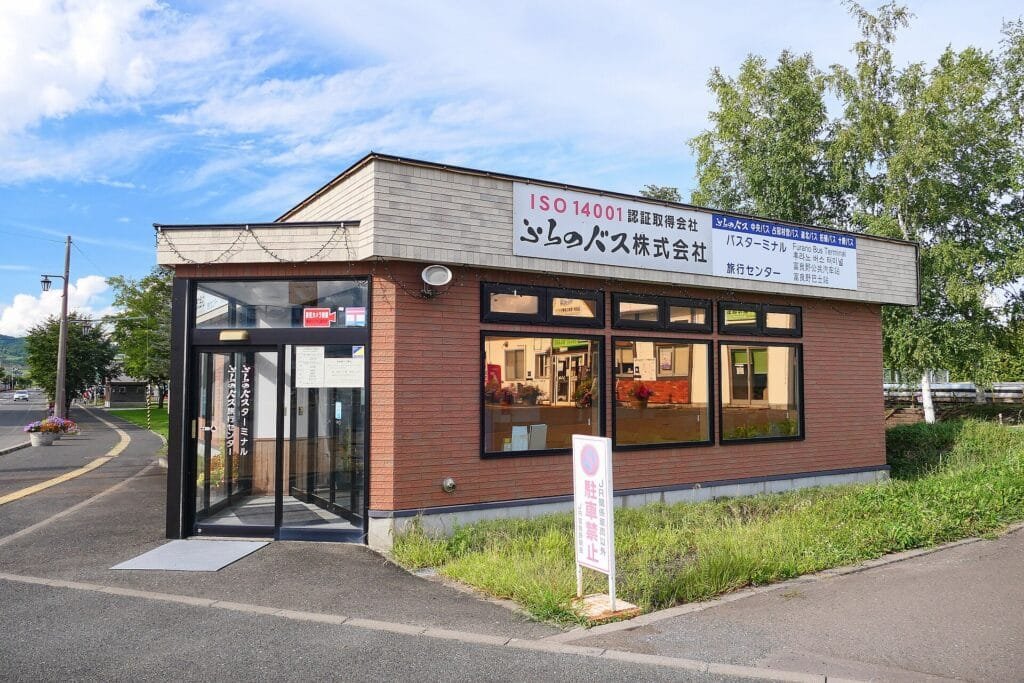
Furano off-mountain: traditional Hokkaido town. The Furano Cheese Factory and Furano Winery are local-product specialties. Onsens (Highland Furano Onsen, Furano Hot Springs) are quieter. Restaurants almost universally Japanese-only menus. The Ningle Terrace (a small craft-village strip) is a winter draw. The Furano Snow Festival (late February) is smaller than Sapporo’s but more intimate.
If you want après-ski international socializing, Niseko. If you want a Japanese ski-town experience with quiet evenings and local culture, Furano.
Day-trip options from each
Niseko day-trips: Otaru (1.5 hours by bus, canal town with sushi street), Sapporo (2 hours, for shopping + ramen alley), Lake Toya (1 hour, hot springs and winter scenery).
Furano day-trips: Asahikawa (1 hour, the Asahiyama Zoo + Ramen Village), Biei (15 minutes by train, the patchwork-quilt landscape and Aoike “Blue Pond”), Sapporo (2 hours by train).
Furano’s proximity to Biei is a meaningful advantage, the Blue Pond at sunset in winter is a striking 30-minute drive from Furano resort. Niseko has no equivalently close non-ski attraction.
Which to pick
Decision matrix
- First-time Japan ski: Niseko. English-friendly infrastructure removes friction.
- Repeat skier with budget concerns: Furano. Same snow, 30-50% lower cost.
- Family ski trip: Either works; Furano’s slower pace and shorter lift lines suit younger skiers.
- Backcountry powder-focused trip: Niseko. Gate-accessed terrain is larger.
- Cultural-immersion ski trip: Furano. Genuine Japanese ski-town atmosphere.
- Mixed-group trip (skiers + non-skiers): Niseko’s town offers more for non-skiers (shopping, restaurants, spa services). Furano’s town is sparser.
For more complete Hokkaido planning, see the Hokkaido travel guide.
Related guides
The verdict: pass holders and pure beginners split these two cleanly
Choose Niseko if you ski advanced and want the gates; choose Furano if you are a beginner, want quiet runs, or hold an Ikon Pass and hate blackout dates. The single deciding factor is the 2025/26 Ikon Pass shake-up. Furano joined Ikon for the first time this season with 7 days and no blackout dates, while Niseko’s Ikon Base and Session passes are blocked on the dates you actually want: Dec 27-31, 2025, Jan 17-18, 2026, and Feb 14-15, 2026. If you are skiing peak holidays on a Base pass, Furano is simply usable and Niseko is not.
On terrain the gap is real. Niseko’s lift-served gate system opens side-country and backcountry that expands the rideable area by over 50%, which Furano’s tighter gate network does not match. Niseko runs roughly 30% advanced terrain against Furano’s 20%, while Furano flips that with about 40% genuinely beginner runs and lift queues rarely over 10 minutes. So the honest split: Niseko for the steep gate-accessed powder and the Australian-run apres scene, Furano for first-timers and skiers who would rather lap empty groomers than queue.
Frequently asked
Niseko or Furano for first-time Japan ski?
Niseko, for first-time Japan skiers. The English-friendly infrastructure (instructors, restaurants, ski shops) makes the trip far easier. Furano is the better choice for repeat skiers who want comparable conditions at 30–50% lower cost.
How much snow does Niseko vs Furano get?
Niseko averages ~14 metres of snowfall per season; Furano averages ~9 metres. Both are world-class. Niseko’s coastal location yields more frequent, heavier dumps; Furano’s continental location yields drier snow and fewer wind-closure days.
Is Niseko more expensive than Furano?
Yes, by 30–50% across the board. Niseko peak-season hotels run JPY 30,000–60,000/night; Furano equivalents run JPY 18,000–35,000. Niseko lift tickets are JPY 8,500/day; Furano JPY 6,500. Restaurant meals in Niseko average 25–40% higher than Furano.
Which has better powder?
Niseko on raw quantity and reliability. Furano on consistency and lower wind-closure rate. For pure powder-chasing trips, Niseko. For week-long trips wanting more ski days versus closed days, Furano.
Can you do Niseko AND Furano on one trip?
Yes. Both are reachable from Sapporo (Niseko 2.5 hours by bus; Furano 2 hours by train). A typical 7-night trip splits 4 nights Niseko + 3 nights Furano (or vice versa) to compare. The transit between them passes through Sapporo or via the Hokkaido Expressway.
When is the best month to ski Hokkaido?
Mid-January to late February for peak powder. December and early January can be lighter snowpack; March is warmer and crowds drop. Avoid Christmas-New Year week (Japanese domestic ski week) and Chinese New Year (massive Asian visitor influx, especially at Niseko).
Frequently Asked Questions
Which destination is better for first-time visitors?
Both have strengths for first-timers. Consider your priorities — food, culture, nature, nightlife — and match them to each destination’s strengths as outlined in the comparison above.
Which destination is cheaper?
Costs vary by season and travel style. Check the budget comparison section above for specific price differences in accommodation, food, and activities.
Can I visit both destinations in one trip?
Depending on proximity and your available time, combining both is often possible. Check transport options and allow enough days to avoid rushing through either one.
You Might Also Love




Written by
Founder of Packzup. Independent travel writer covering offbeat destinations across six continents since 2018. Every guide is independently researched and self-funded — no press trips, never sponsored.
