
Last updated September 10, 2026 · Editorial policy
- Lake Bled vs Lake Bohinj at a glance
- At a glance
- Why Bled is the postcard
- Why Bohinj is the locals' pick
- The two-base strategy that works
- Photography compared
- Cost differential
- Weather and season
- Related guides
- The verdict: base yourself at the quiet lake, day-trip the famous one
- Frequently asked
- Frequently Asked Questions
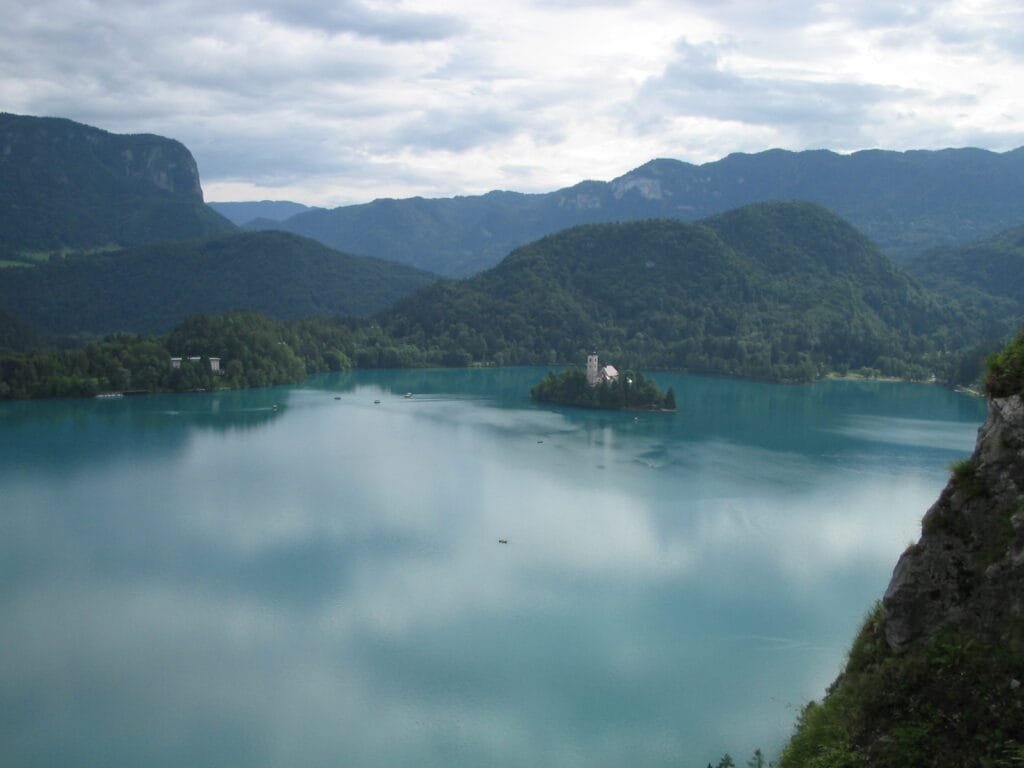
Lake Bled and Lake Bohinj are 30 minutes apart, both in the Slovenian Julian Alps, and they get compared constantly. Bled is the postcard, the small lake with the island church and the cliff castle that you’ve seen on every Slovenia article ever published. Bohinj is the larger, quieter, less-photographed lake that most Slovenian locals prefer. This comparison covers what each actually delivers, the crowd reality, swimming and hiking, hotel pricing, and why the right answer for most travelers is to base in one and day-trip to the other.
Quick verdict
- Pick Bled if: You want the famous photograph, the kremšnita, and a 1–2 night stay.
- Pick Bohinj if: You want to swim, hike, escape crowds, and stay 3+ nights.
- Both: Easy day-trip between them. 30 min by car or bus.
- Best month: May–June or September (warm enough to swim, fewer crowds)
Lake Bled vs Lake Bohinj at a glance
| Lake Bled | Lake Bohinj | |
|---|---|---|
| Best for | Iconic island church, polished, easy | Bigger, wilder, quieter, in Triglav NP |
| Vibe | Postcard, touristy | Natural, serene |
| Daily budget (mid-range) | €80–120 | €70–110 |
| Best time | May–Sep | Jun–Sep |
| Don’t miss | The island church, the castle, a pletna boat | Savica Waterfall, Vogel cable car, swimming |
| The catch | Crowds; pricier | Fewer amenities |
At a glance
| Category | Lake Bled | Lake Bohinj |
|---|---|---|
| Size | 2.1 km long × 1.4 km wide | 4.2 km long × 1 km wide |
| Setting | Town-adjacent, manicured | Inside Triglav National Park |
| Most photographed view | Island church + castle from northwest shore | Mt Vogel summit looking over the lake |
| Swimming | Discouraged due to boat traffic | Welcomed, multiple free beaches |
| Around-the-lake walk | 6 km flat, 2 hours | 12 km flat, 3–4 hours |
| Crowds (July–August) | Heavy, buses arrive 10am | Light — locals only |
| Mid-range hotel | €80–150/night | €60–110/night |
| Boat option | Pletna boat to island (€18) | Electric boat tours, no rowing required |
| Best season for visit | All year (winter is quiet) | May–October (winter closes most services) |
Why Bled is the postcard
Lake Bled became a Habsburg-era resort in the 1850s and the tourism infrastructure has matured for 170 years. The island church (Maria Help Pilgrimage Church, built on a pre-Christian Slavic shrine), the cliff-top Bled Castle (11th century), and the Bled Cream Cake (kremšnita, invented at Park Hotel café in 1953) are the three icons every visitor encounters.
The standard visit: walk the 6-km lakeside path (2 hours), take a Pletna boat to the island (€18 round-trip, the rowing technique is protected as cultural heritage), climb to the castle for the view (€15 entry), eat kremšnita. That’s a day and a half.
The reality: Bled is small. You can see “all of Bled” in 24 hours. Hotels are pricier than Bohinj’s, restaurants are tourist-coded, and July–August crowds make the lakeside path uncomfortable. One night is enough for most visitors.
Why Bohinj is the locals’ pick
Lake Bohinj sits 30 minutes south-west of Bled, inside Triglav National Park, twice as large, with one-fifth of the visitor density. The lake is swimmable (the water is clean, deep, and has several free pebble beaches), the surrounding mountains are real Alpine hiking terrain, and the Mount Vogel cable car (€25 round-trip) climbs to 1,535m for the panorama photographers chase.
What you do across 2–3 days: walk the lake (12 km, 3–4 hours), swim if temperature allows, take the Vogel cable car for views, hike to Slap Savica waterfall (1 hour each way), or extend to multi-day hut-to-hut hiking in the Triglav Park system.
Bohinj rewards longer stays. The atmosphere is wilderness-edge rather than resort-town. You can sit at a lakeside restaurant in Ribčev Laz (the main village) at 7pm and see fewer people than at any single moment in Bled.
The two-base strategy that works
For 3+ day visits, the right structure is
- 1 night Bled (Day 1 arrival, late afternoon walk, evening at the lake, morning Pletna boat to island)
- 2 nights Bohinj (Days 2–3 hiking, swimming, Vogel cable car, restaurant dinners)
This covers both lakes properly without padding either. The 30-minute Bled-to-Bohinj drive (or bus, runs every 1–2 hours) makes the transition easy.
For 5+ day Slovenia trips, this pairing fits naturally with Ljubljana (2 nights) and Soča Valley (1–2 nights) as covered in the Slovenia travel guide.
Photography compared
The two lakes reward different photographers.
Bled is best photographed from the northwest shore (Mlino area) at sunrise or sunset with the island and castle aligned. The most-shared shot includes Pletna boats in the foreground rowing toward the island. Wet-summer mornings often yield mist over the water. Drone photography is heavily restricted around the island and castle but permitted with notification at certain shore positions.
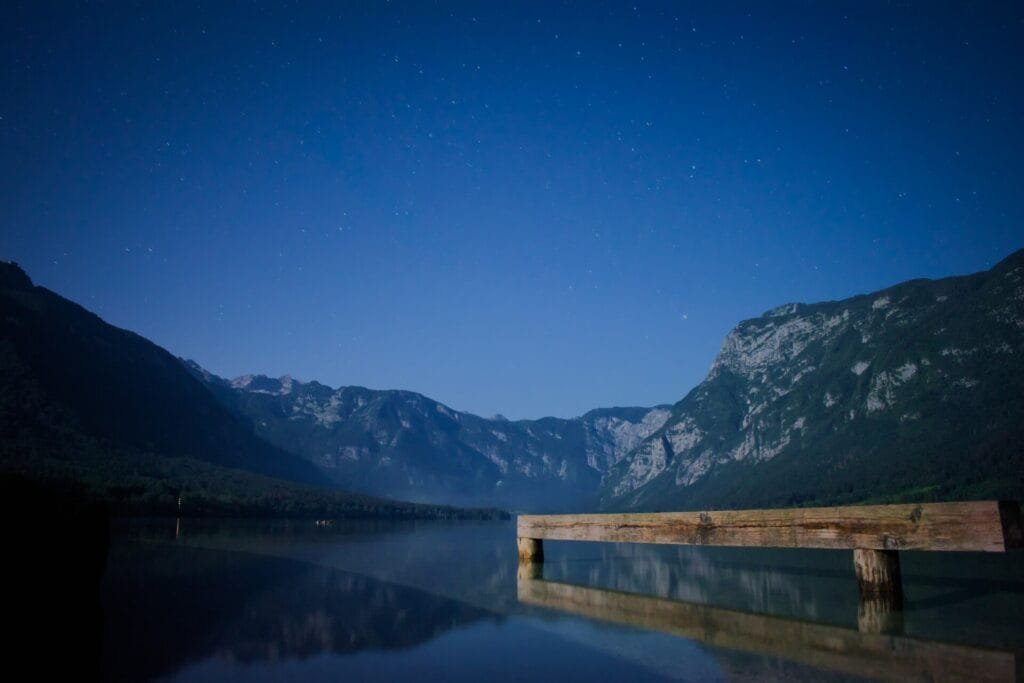
Bohinj is best photographed from the Mt Vogel cable-car summit looking down (the lake-as-emerald-arrow shot) or from the Church of St John the Baptist at the lake’s east end. The lake itself photographs less iconically than Bled but the surrounding mountain scenery (Mt Triglav peak visible in clear weather) creates dramatic depth.
Cost differential
Mid-range, 1 night each lake
- Bled: Hotel €100/night, Pletna boat €18, castle €15, lunch €15, dinner €25 = ~€175 for the day.
- Bohinj: Hotel €80/night, Vogel cable car €25, lunch €12, dinner €20 = ~€140 for the day.
Bohinj averages 20–25% cheaper across the board (hotel, food, activities). For longer stays the gap widens, a 4-night Bohinj base costs ~€500 vs ~€680 for 4 nights at Bled.
Weather and season
Both lakes share Slovenia’s Alpine-fed climate. Practical differences
- Spring (April–May): Snow melt feeds the lakes, surrounding mountains still snow-capped. Cold water (lake temp 12–15°C). Lakeside walks ideal.
- Summer (June–August): Lake temp 18–22°C: swimmable at Bohinj. Peak tourist density at Bled. Bohinj remains manageable.
- Autumn (September–October): The locals’ favorite season. Cool, golden, fewer crowds. Lake temp drops to 15–17°C.
- Winter (November–March): Bled remains visit-able with the castle illuminated for Christmas. Bohinj most services close; only the cable car operates for ski access.
Related guides
The verdict: base yourself at the quiet lake, day-trip the famous one
Choose Bled if you want the island church, the castle, and restaurants and tours on tap; choose Bohinj if you want real Alpine wilderness and room to breathe. The single deciding factor is what you do with July and August, when compact Bled gets genuinely shoulder-to-shoulder and Bohinj, sitting inside Triglav National Park, stays calm. The move locals and repeat visitors make is to sleep in Bohinj and day-trip Bled, not the reverse.
Bohinj earns it on scale and altitude. The lake runs about 4.4 km long, and the Vogel cable car lifts you from the Ukanc shore at 579 m to the 1,535 m viewpoint in roughly 4 minutes, opening summer hiking up toward Mount Vogel at 1,922 m. Bled has no equivalent high-mountain gateway. Practically, the two lakes sit only about 30 minutes apart with a direct bus from Bohinj’s Ribcev Laz hub through Bled and on to Ljubljana, so basing in Bohinj costs you nothing in access. Pick Bled for a one-night highlight reel; pick Bohinj if you want a base for swimming and the high trails.
Frequently asked
Is Bled or Bohinj better for swimming?
Bohinj, decisively. Bled discourages swimming because of boat traffic in the small lake. Bohinj has multiple free beach areas with clean, deep water. Lake temperature peaks at 22°C in July–August.
Can you do Bled as a day-trip from Ljubljana?
Yes. Bled is 1.25 hours from Ljubljana by bus (€6.30) or 45 minutes by car. The standard day-trip is morning bus to Bled, walk the lake, Pletna boat, lunch, castle, return evening. Bohinj as a day-trip works but feels rushed; better to stay a night.
Is Bled overrated?
Partly. The view is genuinely beautiful and the photographs do not lie, but the lake is smaller than expected (2 hours to walk around), the town caters heavily to tourism, and crowds in July–August are significant. One night is enough. Many travellers prefer Bohinj as a primary base.
How long should you spend at each?
Bled: 1–2 nights is right. Bohinj: 2–3 nights rewards longer stays with hiking, swimming, and slower pace. Combined: split your Slovenia trip 1 night Bled + 2 nights Bohinj for the best of both.
Are both lakes accessible by public transport?
Yes. Bled is reached by direct bus from Ljubljana (1.25 hours, €6.30). Bohinj requires either a train to Bohinjska Bistrica + local bus, or direct bus from Ljubljana (1.5 hours). Between the two: bus runs every 1–2 hours, 30 minutes.
When is the best month to visit both?
June or September, the goldilocks shoulder months. Warm enough to swim (Bohinj), few enough crowds at Bled, lake colors fully revealed, and weather mostly reliable. May is cooler; July–August is peak crowds; October is end of season.
Frequently Asked Questions
Which destination is better for first-time visitors?
Both have strengths for first-timers. Consider your priorities — food, culture, nature, nightlife — and match them to each destination’s strengths as outlined in the comparison above.
Which destination is cheaper?
Costs vary by season and travel style. Check the budget comparison section above for specific price differences in accommodation, food, and activities.
Can I visit both destinations in one trip?
Depending on proximity and your available time, combining both is often possible. Check transport options and allow enough days to avoid rushing through either one.
You Might Also Love
Written by
Founder of Packzup. Independent travel writer covering offbeat destinations across six continents since 2018. Every guide is independently researched and self-funded — no press trips, never sponsored.
