
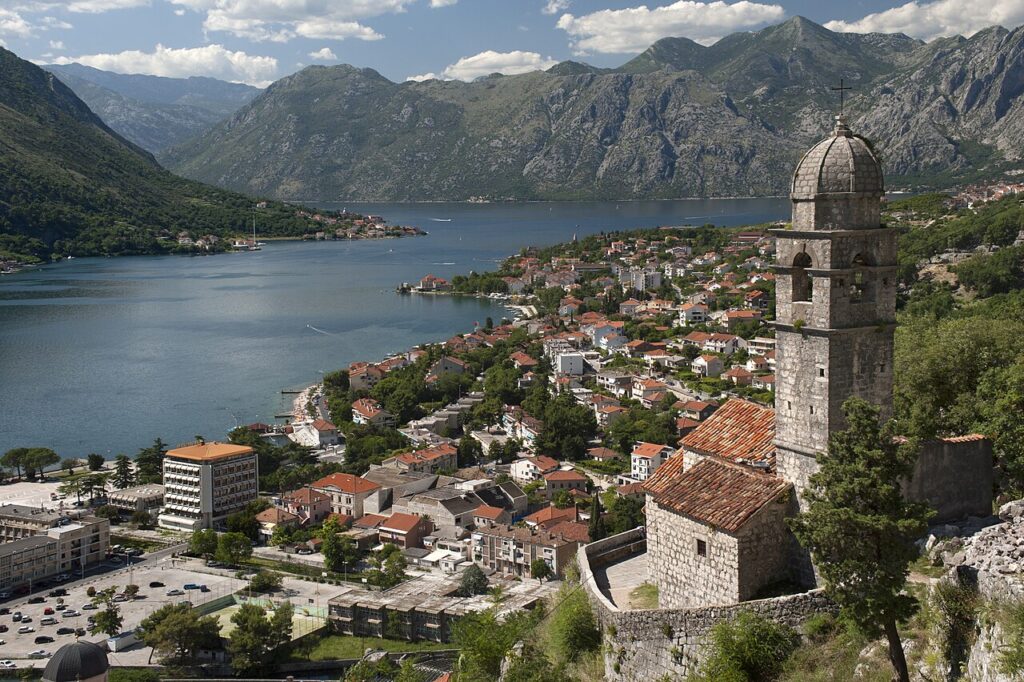
Albania has gone from the empty corner of Balkans-tourism to one of Europe’s fastest-growing destinations in five years. The 2024 search-data shows Albania ranking among the top three trending European destinations — ahead of Croatia, ahead of Slovenia. The reasons are simple: still genuinely affordable (Croatia is no longer), still genuinely uncrowded outside two months, and still has a beach coast that compares favourably with anywhere on the Adriatic. This guide covers a 10-day trip across Tirana, the Albanian Riviera (Sarandë to Himarë), and the Albanian Alps (Theth and Valbona), with the Kosovo crossing and the Corfu ferry day-trip.
Quick stats (2026)
- When to come: May, June, September (peak comfort, no peak crowds)
- Best month: September (post-Italian-holiday, warm sea, lower prices)
- How long: 10 days minimum to see Riviera + Alps
- Daily budget: EUR 50–80 mid-range; still genuinely cheap
- Tirana to Sarandë bus: 5 hours, EUR 18–25
- Theth-Valbona hike permit: Free; ferry across Lake Komani separate (EUR 10)
Why Albania, why now
Albania’s tourism growth from 2020 to 2026 has been the steepest in Europe. International arrivals doubled between 2021 and 2024. The country has gone from “the Balkans place nobody had heard of” to “the place everyone’s heard of but few have actually visited.”
The structural drivers:
- Croatia became expensive. Dubrovnik in August now rivals Amalfi pricing. Albania’s coast (Albanian Riviera) is genuinely cheaper — sometimes one-third the price.
- The Adriatic-coast tourism wave needed an outlet. Albania has been the obvious answer.
- Direct flights expanded. Wizz Air, Ryanair, and Albania’s own Air Albania added dozens of routes between 2021 and 2026, mostly from European capitals.
- The 90-day visa-free entry for most Western nationalities requires zero advance paperwork.
The “still cheap” reality: Sarandë in August has caught up to Croatian pricing on the high end (EUR 150+ hotel rooms). The interior, the Alps, and the off-season Riviera remain genuinely affordable — restaurant meals under EUR 15, guesthouses for EUR 30–50.
Tirana: 2 days, no more
Tirana is the capital, population around 500,000, and rebuilt itself between 2000 and 2025 from grey-concrete communist legacy to a colourful, walkable European city. The communist-era apartment blocks were painted in patterns by mayor Edi Rama starting in 2000 — one of the most visible urban transformations in modern Europe.
Essential stops:
- Skanderbeg Square: The central plaza, named after Albania’s medieval national hero. Surrounded by the Et’hem Bey Mosque (Ottoman-era), the National History Museum, and the clock tower.
- Bunk’Art 1 and Bunk’Art 2: Two cold-war bunker museums. Bunk’Art 1 is the giant 5-floor complex on Mount Dajti’s lower slope (worth the trip). Bunk’Art 2 is the smaller bunker in the city centre. EUR 8 each.
- Mount Dajti cable car (Dajti Ekspres): The 15-minute cable car climbs 800 m to a viewpoint with restaurants and easy hiking. EUR 12 round trip.
- Blokku district: The former communist-elite neighbourhood, now Tirana’s restaurant and bar zone. Walkable from the centre.
Two days covers Tirana. The third day extension is Kruja, 45 minutes north — the medieval fortress town where Skanderbeg resisted the Ottomans for 25 years.
The Albanian Riviera: Himarë vs Ksamil
The Albanian Riviera runs roughly 60 km along the Ionian coast from Vlora in the north to Sarandë in the south. Three main bases compete for travellers:
Ksamil
The southernmost option, near the Greek border. Famous for the four small islands you can swim to from the beach. The Instagram-coded version of the Riviera — turquoise water, white pebble beaches, but also the most developed and increasingly the most crowded. Skip in July–August unless you book months ahead. Best in May, June, September.
Himarë
The middle option, 45 minutes north of Sarandë. Quieter, more local-coded, with a genuine fishing-village atmosphere alongside the beach tourism. The town itself has a 14th-century castle and a 7-km waterfront. Multiple coves accessible by short drives. The Packzup pick for travellers wanting Riviera without theme-park crowds.
Dhërmi
The northern option, 20 minutes north of Himarë. The “boutique” Riviera — smaller, more upscale, with a few high-end resorts (Hotel Folie Marine, Akrothalassa). Quietest of the three. The Llogara Pass drive (above) ends here.
The Llogara Pass drive
One of Albania’s most spectacular roads. The pass climbs from the coast to 1,027 metres through Llogara National Park, with viewpoints showing the entire Riviera below. The road is paved but tight; allow 45 minutes despite the short distance. Worth a stop at the Llogara Pass viewpoint cafe for the panoramic view.
Sarandë and the Corfu ferry
Sarandë is the largest town on the Riviera and the gateway to Butrint, the UNESCO ancient-Greek and Roman city 18 km south. The town itself is mostly hotels and apartment buildings, but it serves as the obvious base for a day-trip combo: Butrint in the morning, beach in the afternoon.
The Corfu ferry as a day-trip
The 25-minute fast-ferry from Sarandë to Corfu (Greece) is one of the Mediterranean’s underrated travel hacks. EUR 25–30 each way. Multiple daily departures in summer. You can leave Sarandë at 9am, spend the day in Corfu Town, and return by 7pm.
The trip works as a passport stamp, as a Greek-island day-trip without the airfare, or as an extended overnight if you want to add Corfu to your Albania trip. Bring your passport — this is an EU/Schengen entry from non-EU Albania.
Theth and Valbona: the Albanian Alps hike
The Albanian Alps in the north are an entirely different country from the coast — Alpine pine forests, glacial lakes, and limestone peaks rising to 2,500+ metres. The signature experience is the Theth to Valbona hike, a 17-km mountain pass crossing that has become the country’s most popular multi-day trail.
The classic 3-day loop
- Day 1: Drive from Shkodër to Theth (2.5 hours, the road is mostly paved as of 2024). Stay in a Theth guesthouse. EUR 25–40/person with dinner.
- Day 2: Hike Theth to Valbona via the Valbona Pass (1,815 m). 17 km, 6–8 hours, 1,000 m elevation gain. Stay in a Valbona guesthouse. The hike itself is the trip’s highlight.
- Day 3: Drive from Valbona to Fierzë, take the Lake Komani ferry (3 hours through a steep-sided fjord-like lake, EUR 10), continue back to Shkodër.
The hike
Mostly well-marked, mostly safe in summer. The peak crossing has snow into June some years; verify with guesthouses. Bring water (limited refill points), good shoes (rocky descent on the Valbona side), and a packed lunch. Most guesthouses will pack one. Guides are not strictly necessary but available (EUR 30–50/day).
Lake Komani
The ferry through Lake Komani is itself one of Albania’s most spectacular experiences — a 3-hour boat ride through a narrow, vertical-walled reservoir that feels more like a Norwegian fjord than a Balkan lake. Public ferries (Berisha or similar) run morning and afternoon departures; book through your Valbona guesthouse.
Berat and Gjirokastër: the UNESCO duo
Albania has two UNESCO-listed historic towns, both Ottoman-era, both stunning, both reasonable day-trips from main routes:
Berat (“the town of a thousand windows”)
White Ottoman houses stacked up two mountainsides facing each other across the Osum River. The castle on the hilltop is still inhabited. Walkable, well-preserved, atmospheric. The right base for 1 night; 2 nights if you also do the Tomorri National Park day-trip.
Gjirokastër
Birthplace of dictator Enver Hoxha and writer Ismail Kadare. Greyer than Berat (Ottoman-stone houses with slate roofs), with a massive citadel and a fascinating Cold War Tunnel museum. 1 night is enough.
The choice: Berat is the photogenic, beautiful one; Gjirokastër is the historically-textured, slightly less touristed one. Many 10-day Albania itineraries include both, with Berat on the route between Tirana and the coast, and Gjirokastër as a stop on the way back north from the Riviera.
Crossing into Kosovo (or Greece)
Albania shares borders with Montenegro, Kosovo, North Macedonia, and Greece — all are practical for travellers extending the trip.
Pristina, Kosovo
From Tirana, the 3.5-hour drive to Pristina is straightforward (the new highway is open all the way). Buses run multiple times daily (EUR 25, 4–5 hours). Kosovo is visa-free for most Western nationalities. Pristina itself is a 1-day visit (Brutalist architecture, Mother Teresa Cathedral, the Bear Sanctuary nearby) but the bigger draw is Prizren, the Ottoman-quarter town 90 minutes south. Most travellers do Pristina + Prizren as a 2-day extension.
Greece (Sarandë routes)
From Sarandë, two options: the Corfu ferry (covered above) or the land border at Kakavija, which gets you onto the mainland near Ioannina (3-hour bus, EUR 20).
What 10 days really costs
Mid-range, two people, 10 days, in 2026:
- Accommodation: EUR 40–80/night. Coastal towns in August are at the upper end; interior and shoulder season at the lower end.
- Rental car: EUR 25–45/day. Essential for the Alps. Optional for the coast (buses cover Sarandë-Himarë-Vlora).
- Food: EUR 15–25/day per person. Restaurant lunches under EUR 10 are normal.
- Activities (boats, hikes, castles): EUR 100–200 total.
- Fuel: EUR 80–130 for the full trip.
Total for two, 10 days: EUR 1,200–2,000 excluding international flights. Albania remains one of Europe’s best-value Mediterranean countries, even after the price increases of 2023–2026.
Related guides
Frequently asked
Is Albania safe to travel to in 2026?
Yes — one of the safer Balkan destinations. Petty theft exists but violent crime against tourists is rare. Driving requires caution (Albanian driving is aggressive). Solo female travel is generally manageable with standard precautions. The 90s reputation for instability is two decades out of date.
How many days do you need in Albania?
10 days for the standard Tirana + Riviera + Alps loop. 7 days if you skip either the Alps or compress the coastal section. 14 days lets you add Berat, Gjirokastër, and a Lake Ohrid extension. Less than 5 days means choosing one of: coast, mountains, or capital.
Is Albania still cheap?
Yes, with caveats. Interior, Alps, and shoulder-season coastal stays are genuinely cheap by European standards (EUR 30–50 guesthouses, EUR 10–15 restaurant meals). Sarandë and Ksamil in July–August have caught up significantly — book those months early or pay a premium.
Albania or Montenegro — which one?
Albania for more landscape variety (Alps + Riviera + Ottoman towns) and significantly lower prices. Montenegro for more dramatic coastal scenery in a tighter geography (Kotor Bay) and slightly more developed infrastructure. Many travellers do both in a 2-week Balkans trip.
What is the best month to visit Albania?
September. Post-Italian-holiday crowds have left, the sea is at its warmest, prices drop 20–30%, and weather remains reliably warm into mid-October. May is the second-best month for similar weather but slightly less reliable sea temperatures.
How do you get from Albania to Greece?
Three options: the Sarandë-Corfu fast ferry (25 minutes, EUR 25 each way), the Kakavija land border to Ioannina (3 hours by bus, EUR 20), or the Kapshticë border to Kastoria (less common, more remote). The Corfu ferry is the most popular for day-trippers.
Written by
Founder of Packzup. Independent travel writer covering offbeat destinations across six continents since 2018. Every guide is first-hand and self-funded — no press trips, never sponsored.