
Marrakech in March is the peak shoulder — warm enough for the medina at midday, cool enough that the Atlas Mountains day-trip remains comfortable, and ahead of the summer heat that makes June through August physically difficult in the souks. Daytime temperatures sit at 19–24°C, the post-rainy-season Atlas turns green and snow-capped (the photogenic combination), and the spring riad pricing is below the autumn peak. The Ramadan calendar shifts each year — in 2026, Ramadan runs February 18 to March 19, which affects daytime restaurant operations through the first 18 days of March. This guide covers the Atlas day-trip, the souks in March’s pleasant midday temperatures, hammam etiquette, and the hotel pricing window.
March Marrakech at a glance (2026)
- Average temperature: 8–24°C (46–75°F)
- Atlas day-trip feasibility: Excellent — snow on peaks, green foothills
- Hotel cost vs August: Higher (peak season) but below October–November
- Ramadan 2026 dates: Feb 18 – Mar 19 (affects first 18 days of March)
- Best 3 day-trips: Atlas (Imlil/Setti Fatma), Essaouira, Ourika Valley
- Average daily budget: EUR 70–120 mid-range
Why March is the peak shoulder
Marrakech sits at the edge of the Sahara at 466 metres elevation. The climate has two characters: comfortably warm winter (November-March) and brutally hot summer (June-August). March is the last month of the comfortable window before temperatures begin climbing rapidly in April.
The specific case for March
- Daytime 19–24°C: Walkable all day. The souks in midday are pleasant rather than oppressive. Light layers, no coat needed during daylight.
- The Atlas Mountains photograph: Snow remains on the High Atlas peaks through March; the foothills are post-winter-rain green. This combination of foreground green + snow-capped peaks is the photo most travellers want and only March-April delivers reliably.
- Pre-summer pricing: March pricing sits between the November-February value floor and the April-May spring premium. Mid-range riads run EUR 60–100/night versus EUR 80–140 in October.
- Air quality: Marrakech can be hazy in late spring (dust from the south). March is typically clear — the Atlas remains visible from the Koutoubia minaret.
The April comparison
April is the more famous “best month” for Marrakech — warmer evenings (no jacket needed after dark), pre-Ramadan dates for years where Ramadan was in March. But April has higher prices, more crowds, and slightly less reliable Atlas visibility. March is often the contrarian-better answer.
Ramadan in March (year-dependent)
Ramadan dates shift backward by about 11 days each year following the Islamic lunar calendar. In 2026, Ramadan falls February 18 – March 19, which affects March travel for the first 18 days of the month.
What changes during Ramadan
- Daytime food service: Most local restaurants (especially small medina spots) close from sunrise to sunset. Tourist-zone restaurants and riads usually remain open with normal service.
- Souk hours: Many stalls operate reduced hours; the busiest period shifts to evening (after iftar — the breaking of the fast at sunset).
- Atmosphere: Daytime feels slower, evenings transform. The Jemaa el-Fnaa square at iftar (around 6:30pm in March 2026) becomes one of the most extraordinary urban experiences in North Africa — families breaking fast at the square’s open-air food stalls.
- Alcohol: Hotel bars and high-end restaurants serve normally to non-Muslim guests. Standalone bars close.
The benefit, not a bug
Travelling during Ramadan in Marrakech is not problematic — many travellers prefer it. The evening Jemaa el-Fnaa transformation, the sense of cultural immersion, and the genuinely lower tourist density during Ramadan all add up to a memorable trip. The honest caveat: budget for sit-down restaurants at your riad rather than relying on medina lunches.
If you specifically want to avoid Ramadan
Book for the second half of March (after March 19 in 2026) or for years where Ramadan falls in different months. Verify Ramadan dates for your year — the dates shift forward by 11 days annually, so Ramadan in 2027 will fall earlier (early February to mid-March), and in 2028 even earlier.
Atlas Mountains day-trip in March
The High Atlas Mountains rise from the plains 50 km south of Marrakech. The day-trip options:
Imlil + Toubkal foothills
The most popular option. Imlil is the village at 1,740 metres elevation that serves as the base for Mount Toubkal (4,167 m, North Africa’s highest peak). For day visitors, the walk from Imlil to Sidi Chamharouch (a small mosque village at 2,310 m) is a 3-hour round-trip giving you the Atlas-foothills experience without requiring a multi-day trek.
Logistics: 90-minute drive from Marrakech to Imlil. Most travellers book through their riad or a tour company (EUR 30–60 per person for the day-trip package). Self-drive is possible (rental car from Marrakech, mountain road but paved).
Setti Fatma (Ourika Valley)
Closer to Marrakech (1 hour by car) and gentler terrain. The valley has Berber villages, a series of seven waterfalls (the Cascades de Setti Fatma), and Saturday markets in spring. The right pick if your group includes children or non-hikers. Tour packages EUR 25–45.
Why March specifically
The Atlas in March:
- Snow on the higher peaks (Toubkal, Ouanoukrim).
- Green foothills from winter rain.
- Daytime mountain temperatures 12–18°C — perfect hiking weather.
- Wildflowers beginning at lower elevations.
By May, the foothills brown out and snow disappears. March’s combination of snow + green + wildflowers is briefly extraordinary.
The souks in March
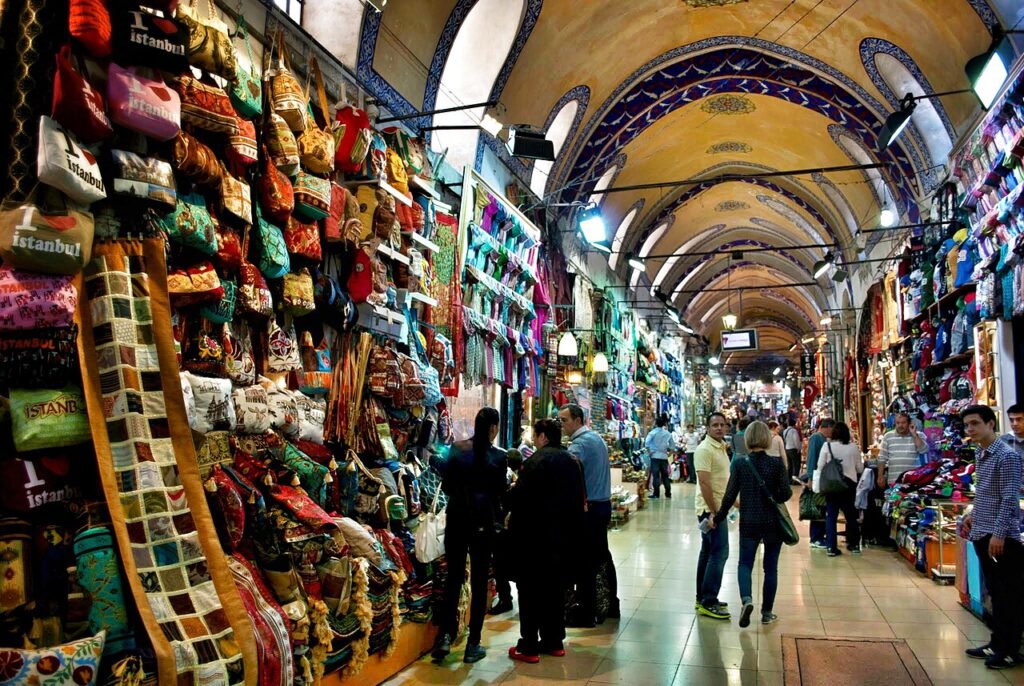
Marrakech’s medina is a network of covered souks — the dyers’ quarter, the spice market, the metalworkers’ lane, the carpet warehouses. The midday souks become physically taxing in summer heat (over 35°C in narrow lanes). In March, you can walk all day.
The walking rhythm
The traditional Marrakech day:
- 9am–noon: Major sights (Bahia Palace, Madrasa Ben Youssef, Saadian Tombs) before midday crowds peak.
- Noon–3pm: Long lunch and rest at your riad rooftop. Even in March-comfortable temperatures, the midday energy drops.
- 4pm–7pm: Souks. The 4pm light is photographic, prices feel less aggressive than the morning rush, and the energy is high without exhaustion.
- 7pm onwards: Jemaa el-Fnaa square food stalls, dinner, riad return.
Avoiding the guide-scam at souk entrances
At major souk entrances (the Spice Square and the Place des Épiciers), unofficial “guides” approach offering to show you the souks. Most are aggressive and lead you to specific shops for commission. Decline politely and walk past. The souks are signposted, mappable on Google Maps, and walkable without guidance. Official guides (with badges) charge fixed daily rates and are useful for first-time visitors; book through your riad.
Hammam: yes, especially in March
The hammam (steam bath) is a Moroccan institution, and March is the right month to experience it — warm enough that you don’t shiver post-steam, cool enough that the heat feels rejuvenating rather than punishing.
Public vs riad hammam
- Public hammams (e.g., Hammam Bab Doukkala, Hammam Mouassine): the traditional version. Communal rooms, basic facilities, EUR 5–15 entry plus EUR 10–20 for the gommage (exfoliation scrub). An authentic but rough experience — basic plastic stools, your own bucket, less privacy. Not for the squeamish.
- Riad / spa hammams (most riads offer in-house treatments): the polished version. Private rooms, smooth-stone surfaces, mint tea afterwards. EUR 35–90 for a full hammam + massage package. The standard tourist experience.
What you actually do
The ritual:
- Strip to underwear (or naked in some public hammams — men’s and women’s sections are separate).
- 15 minutes in the steam room.
- Body wash with savon noir (black soap), left to soak for 5 minutes.
- Aggressive scrub with kessa glove — this is the part that surprises visitors. Skin emerges noticeably smoother.
- Rinse, often with mint-water buckets.
- Optional massage with argan oil.
- Rest with mint tea.
Total time: 1–2 hours. Plan for the afternoon — you’ll want to nap afterwards.
Riads in March: which class, which price
Marrakech accommodation divides cleanly between hotels (mostly outside the medina, modern, larger) and riads (traditional courtyard houses inside the medina, smaller, more atmospheric).
The riad experience
A riad is a traditional Moroccan house built around a central courtyard with a fountain. Most have 5–12 rooms, a rooftop terrace, and a small staff (often the owning family). Breakfast is included; many serve dinner on request. The experience is fundamentally different from a hotel — quieter, more intimate, an active immersion in the medina’s pace.
March pricing tiers
- Budget riads (EUR 40–70/night): Smaller properties, simpler rooms, basic decor, often family-run. Riad Cinnamon, Riad Aladdin, Riad Itrane.
- Mid-range riads (EUR 80–160/night): The sweet spot. Renovated, in-house spa, rooftop dining, breakfast included. Riad Anyssates, Riad Tachfine, Riad El Fenn.
- Boutique riads (EUR 200–500+/night): Architecturally designed, often historic conversions. La Mamounia (technically a hotel but the most famous), Riad Joya, Riad Yasmine.
Why the medina-deep riad beats the outside-the-walls hotel
The deep-medina riad puts you within 5-minute walks of the Bahia Palace, the souks, the Jemaa el-Fnaa. The hotel-zone alternatives (Hivernage, Gueliz) require taxis for every visit and disconnect you from the medina rhythm. For 4-5 night stays, riad-in-medina is almost always the better choice.
Essaouira day-trip
Essaouira is the small Atlantic coast city 3 hours west of Marrakech by bus. The combination of UNESCO-listed Portuguese-Moroccan medina + ocean + wind + working fishing port creates one of Morocco’s most distinctive day-trip targets.
The wind reality
Essaouira’s reputation is built on wind. The Alizé trade winds blow steadily from the north all year, making the city Morocco’s kitesurfing capital but also constantly windy. In March: pleasant, cool, breezy — you’ll want a jacket on the ramparts even in midday.
Day-trip vs overnight
- Day-trip (3 hours each way): 6 hours bus + 5 hours in Essaouira. Tight but workable. Most tour packages run EUR 25–40 round trip with a CTM or Supratours bus. You’ll see the medina, the port, the ramparts.
- Overnight: The better experience. Allows for sunset on the ramparts, a proper seafood dinner at the port, morning on the beach. Mid-range hotels EUR 50–100/night.
For 5-day Marrakech trips, the overnight is the right choice. For shorter stays, skip in favour of more Marrakech time.
Three-day Marrakech in March itinerary
Day 1: Medina day
- Morning: Bahia Palace, Saadian Tombs, lunch in the medina.
- Afternoon: Madrasa Ben Youssef (recently reopened after restoration), souks.
- Sunset: Jemaa el-Fnaa square — arrive before sunset to watch the square transform from daytime market to evening performance space.
- Dinner: Jemaa el-Fnaa food stalls or a rooftop restaurant overlooking the square.
Day 2: Atlas day
- Full day Atlas trip (Imlil + Sidi Chamharouch walk, or Ourika Valley + waterfalls).
- Return by 6pm.
- Evening hammam at riad.
- Dinner at riad.
Day 3: Gardens + neighbourhood + departure
- Morning: Jardin Majorelle and Yves Saint Laurent Museum (book ahead during Ramadan and shoulder peaks).
- Lunch: La Mamounia gardens lunch (open to non-guests, but reservation required) or a Gueliz restaurant.
- Afternoon: Last souks rotation for any final purchases, riad checkout.
Read alongside
Frequently asked
Is March a good time to visit Marrakech?
Yes — one of the best months. Daytime temperatures sit at 19–24°C, perfect for souk walking. The Atlas Mountains retain snow on peaks while foothills turn green. Pre-summer pricing is below the April-May spring peak. The main caveat: Ramadan timing affects daytime food service in some years (Ramadan 2026 ends March 19).
How hot is Marrakech in March?
Daytime 19–24°C (66–75°F), evenings drop to 8–12°C (46–54°F). A light layer is sufficient by day; you’ll want a jacket or sweater for evenings. The temperature climbs sharply in April-May, reaching 30+°C by late April.
Is Marrakech safe during Ramadan?
Yes — tourism continues normally, and tourist-zone restaurants/riads remain open during daytime. Local restaurants often close for daytime hours. The evening transformation of the Jemaa el-Fnaa after iftar (sunset) is one of the year’s most extraordinary experiences. Verify Ramadan dates for your year; in 2026 it runs Feb 18 to March 19.
Can you visit the Atlas Mountains from Marrakech in March?
Yes — March is excellent for Atlas day-trips. Day visits to Imlil (Toubkal foothills) or Setti Fatma (Ourika Valley) take 1-3 hours each way and remain comfortable in March’s 12-18°C mountain temperatures. Snow remains on the highest peaks. Tour packages EUR 25–60 per person.
What should I wear in Marrakech in March?
Light layers. Daytime: long sleeves or t-shirt with a light overshirt. Evenings: warm sweater or jacket. For the medina, modest dress is respectful (covered shoulders and knees, particularly for women) without requiring conservative coverage. Comfortable walking shoes are essential — medina cobblestones are uneven.
March or October — which is better for Marrakech?
March if you want post-rainy-season green Atlas + snow-capped peaks and shoulder-season pricing. October if you want pre-rainy-season clear skies and the autumn equinox light. Both deliver comfortable temperatures (19–25°C daytime). October has slightly more reliable weather; March has the photogenic Atlas. Most photographers prefer March; most general travellers find them comparable.
Written by
Founder of Packzup. Independent travel writer covering offbeat destinations across six continents since 2018. Every guide is first-hand and self-funded — no press trips, never sponsored.