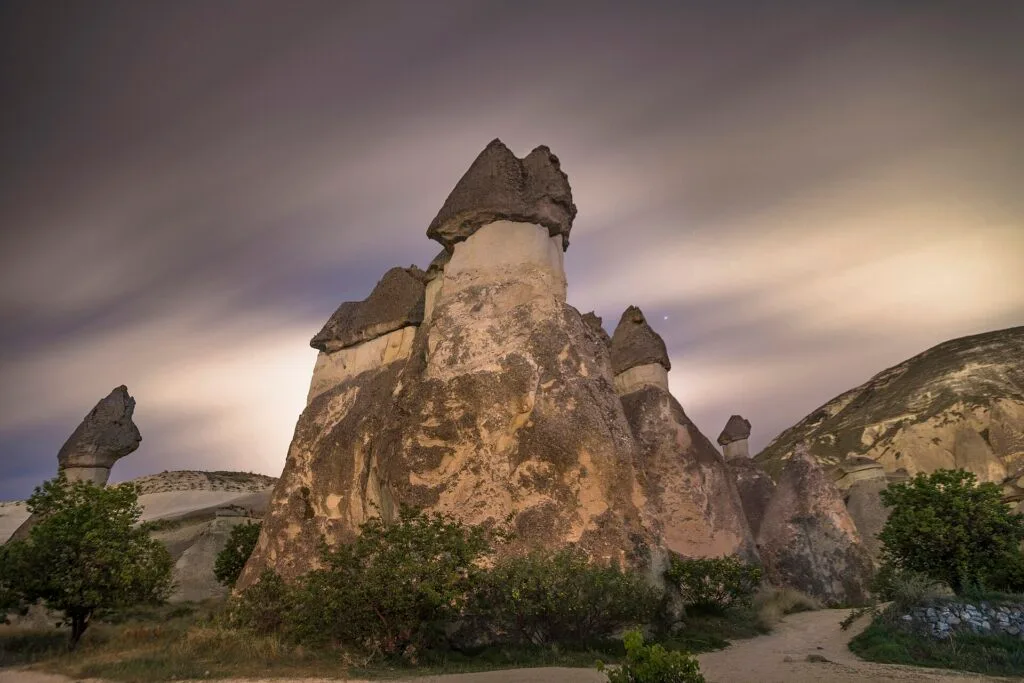
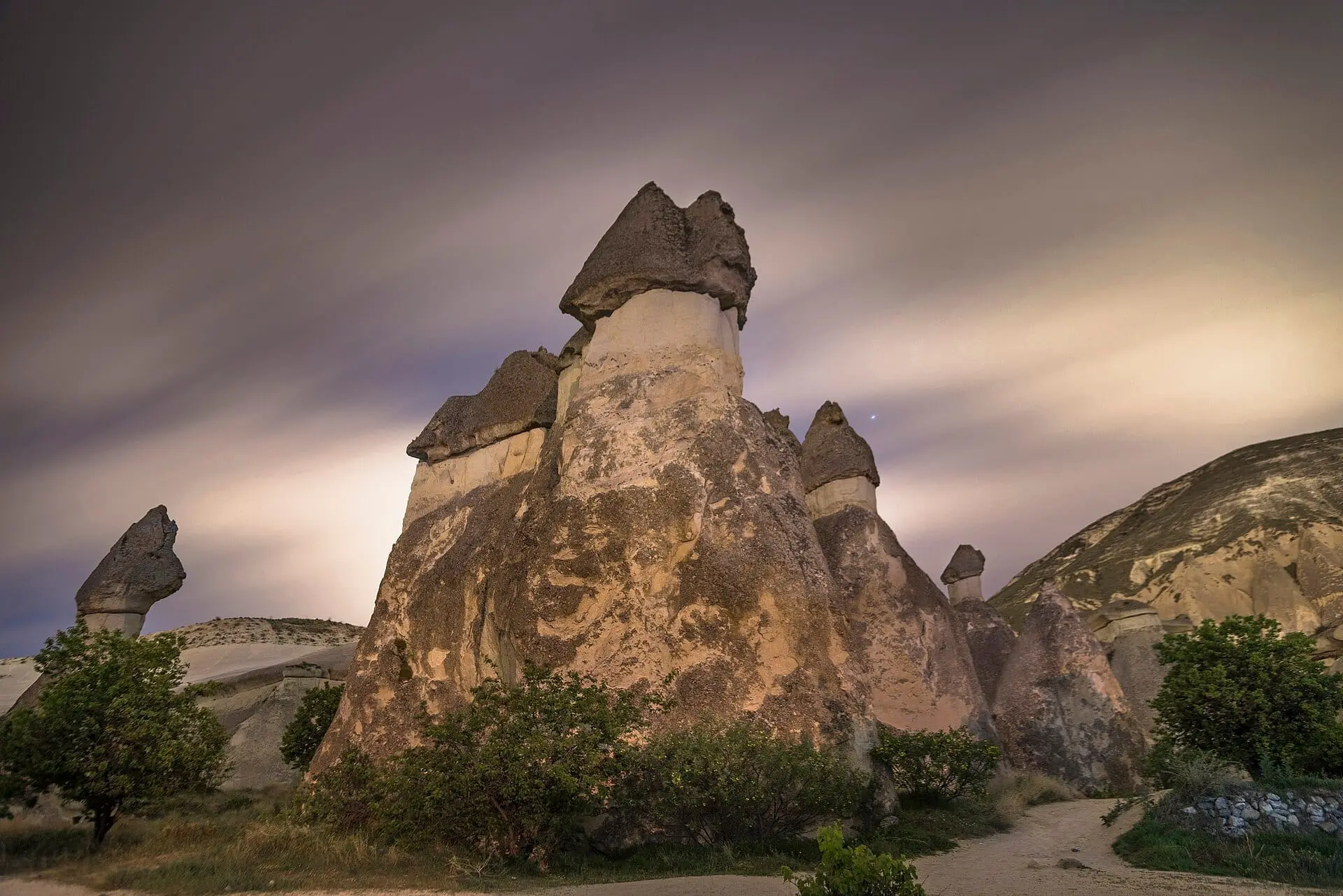
The awkward-between month. That’s Cappadocia in March. Daytime temperatures sit between 0°C and 12°C, the sun is up for about 6 hours with sunrise around 6:15am and sunset around 6:15pm, and the morning balloon flights are cancelled roughly 30% of the time. Crowds are moderate, prices are low, and the landscape looks very specific to this month — nothing like spring, nothing like late autumn.
Snow has mostly melted but the valleys haven’t greened yet: landscapes look more brown than rose. The trade-off: real shoulder pricing without summer crowds. What you actually need to know: weather, balloons, packing, and an honest verdict at the end. For the year-round overview, see our Cappadocia travel guide.
What the Weather’s Really Like
Cappadocia sits on the central Anatolian plateau at 1,000m elevation, which is why its weather diverges sharply from coastal Turkey. In March expect
- Average daytime high: 12°C
- Average overnight low: 0°C
- Rain days: 5 per month
- Snow days: 2 per month
- Daily sunshine: ~6 hours
- Sunrise / sunset: 6:15am / 6:15pm
Worth knowing: mornings and evenings are dramatically colder than midday, even in summer. The plateau radiates heat fast after sunset. A March sunrise on a hotel terrace can feel a full 10°C colder than the daytime forecast.
Hot Air Balloons in March
The civil aviation authority cancels all flights when the surface wind exceeds 25 km/h, when ground temperature drops below -5°C, or when visibility is poor. March’s cancellation rate of around 30% means roughly 21 out of 30 mornings see flights take off as planned.
Practically: build buffer days into your trip. If your only balloon-flight window is the morning of your single full day in Goreme, you have a 30% chance of missing it. Plan three nights minimum, four if you’re visiting in March specifically because the cancellation rate is elevated.
Pricing in March is at the low end of the range: expect €180-260 per person for a standard 1-hour flight in a shared 16-20 passenger basket. Premium private flights remain €500-700 regardless of season.
Crowds & Pricing
The first time I did the balloon ride it was -4°C on the ground; the photos were worth the freezing toes.
Crowd level in March is moderate. On the ground
<!– /wp:paragraph –- Goreme hotel terraces fill up but you can still find space
- Restaurants don’t require reservations except for weekends
- Cave hotel rates 20-35% below peak
- Tour buses arrive but rarely overlap at attractions
What to Bring for March
- Insulated winter jacket (the balloon basket at altitude is colder than ground)
- Thermal base layer + warm sweater for the 5:30am terrace wait
- Hat, gloves, scarf: non-negotiable for the dawn balloon ride
- Waterproof boots with grip. Tuff stone gets slippery when wet/icy
- Hand warmers: available in pharmacies in Goreme but cheaper to bring from home
- Sunglasses: snow glare is real
- Lip balm and moisturiser: dry winter plateau air
Best What to Do in Cappadocia in March
- Sunrise balloon ride: if conditions cooperate. Book through a licensed operator (Royal, Voyager, Butterfly, Turkiye Balloons). Cancellation insurance built in.
- Goreme Open-Air Museum, the rock-cut Byzantine churches with surviving frescoes. Arrive at 8am opening time. Around 600 TRY entry.
- Rose & Red Valley hike: best in the two hours before sunset year-round. 8km loop, 3-4 hours.
- Derinkuyu or Kaymakli underground city: 40 minutes south of Goreme. Pick one, not both.
- Uchisar Castle: highest point in the region, the best free view.
- Urgup wine tasting. Turasan and Kocabag cellar tours, €10-20.
Pros & Cons of Cappadocia in March
What works
- Hotel terraces have space, restaurants take walk-ins, cave hotel rates 30-50% below peak
- Bottom-of-cycle pricing on cave hotels and tour operators
- Wildflowers in the valleys, fresh greens against pink tuff
- Cappadocia’s core attractions (open-air museums, underground cities, cave hotels) operate year-round
The trade-offs
- Plan three to four nights to buffer against balloon cancellation risk
- Overnight lows of 0C; pre-dawn terrace photography needs serious insulation
- The Goreme tourist strip remains commercialised regardless of season
Who Should Visit (and Who Should Skip)
March is right for you if…
- Photographers who want empty hotel terraces and the morning balloon launch to themselves
- Budget travellers stacking cheap cave hotels with low-season flight prices
- Hikers who want wildflower season in the Rose and Pigeon valleys
Maybe skip March if…
- Travellers with a non-flexible single-morning balloon window
- Travellers with rigid march dates and no buffer day for balloon-flight rescheduling
Photography Conditions in March
Sunrise sits around 6:15am. Plan for the morning balloon-or-terrace shot first, then move into the valleys for the second hour of post-sunrise light.
- Fresh greens against pink rock provide the strongest colour contrast of the calendar, especially the Rose and Red valleys at golden hour.
- Balloon-launch days are unpredictable, if you wake to a clear morning, run; don’t wait.
March vs Adjacent Months
If your dates are flexible by a week or two, here’s how March stacks up against February and April on the metrics that matter
| Month | Temp range | Days w/ precip | Balloon flights | Crowds | Pricing |
|---|---|---|---|---|---|
| February | -3 to 7°C | 4 rain / 5 snow | ~45% cancelled | quiet | low |
| March | 0 to 12°C | 5 rain / 2 snow | ~30% cancelled | moderate | low |
| April | 5 to 18°C | 6 rain / 0 snow | ~15% cancelled | busy | mid |
Read the dedicated guides: Cappadocia in February · Cappadocia in April.
Verdict: The Verdict
Decent value if you don’t mind a slightly bleak landscape. The last week of March is dramatically better than the first as everything starts to green.
If you want alternatives: the three best months based on a combined balloon-reliability + crowd-density + price index, are September, June, and July. The full year-round comparison is in our main Cappadocia guide.
Experiences & Activities
Book Tours & Balloon Flights for March
Browse sunrise hot air balloon flights, Red and Green Tour day trips, underground city visits, and ATV valley tours — bookable online with free cancellation on most options.
Browse Cappadocia experiences →How to Actually Play the March Balloon Lottery (and Hike Without Wrecking Your Shoes)
The page tells you roughly a third of March balloon flights get scrubbed. Here is the part that decides whether you fly: the go or no-go call is made the night before or one to two hours before sunrise, because March sits among the windiest months of the Cappadocia year and the ground wind at launch is what kills a slot, not the cold. That timing is why shoulder-season operators quietly tell you to book two consecutive mornings rather than one. If your first dawn is blown out, the second is your insurance, and you simply cannot buy that buffer if you only have one balloon-eligible morning on your itinerary.
The money side is friendlier than people fear. When the operator cancels for weather, reputable companies give you a free reschedule to the next flyable morning or a full refund, and if you are leaving Cappadocia that day they refund in full. Build your trip so a scrub is annoying, not ruinous.
For the ground game, treat early March trails with respect:
- Snow can still sit in shaded valley floors in the first half of the month.
- After rain, the soft tuff paths in Rose Valley and Red Valley turn slippery, and low sections get genuinely muddy.
Bring real hiking shoes with grip, not the sneakers that survive the Goreme Open-Air Museum’s paved loop.
Frequently Asked Questions
What is the weather like in Cappadocia in March?
March in Cappadocia averages 0°C overnight and 12°C during the day, with about 5 rain days, 2 snow days, and 6 hours of daily sunshine. Mornings on hotel terraces feel 8–10°C colder than the daytime forecast.
Do hot air balloons fly in Cappadocia in March?
Yes: flights operate year-round in Cappadocia, but March has approximately a 30% cancellation rate due to wind, cold, or visibility. Build at least one buffer day into your trip so a cancellation doesn’t end your only chance.
Is Cappadocia crowded in March?
Crowd level in March is moderate. Most attractions and hotel terraces have space without advance arrival.
How many days should I spend in Cappadocia in March?
Three nights is the practical minimum in March so you have a buffer for balloon-flight cancellations (especially relevant this month given the elevated cancellation rate). Four nights is more comfortable.
What should I pack for Cappadocia in March?
Insulated winter jacket, thermal base layer, hat and gloves for the dawn balloon, waterproof boots, hand warmers, and high-SPF sunscreen for snow glare.
You Might Also Love




Written by
Founder of Packzup. Independent travel writer covering offbeat destinations across six continents since 2018. Every guide is independently researched and self-funded — no press trips, never sponsored.