
Last updated September 8, 2026 · Editorial policy
Quick answer: A classic north-to-south loop of mainland Portugal by train and bus: Lisbon with a Sintra day trip, then north via Obidos to Coimbra and Porto, out to the Douro Valley and Aveiro, and back south for Evora and a final coastal day in Cascais. Best months: April-June and September-October (Mediterranean perfection). July-August peak tourist season with Algarve at its busiest. Total cost: US$1600-2400 mid-range per person / US$5000+ luxury. Excludes international flights.
Ten days is right for the classic Portugal trip — 3 nights Lisbon, 3 nights Porto + Douro Valley, 3 nights Algarve, 1 buffer. This itinerary gives you walkable cities + wine country + warm beaches without rushing. Built across 3 personal Portugal trips.
Portugal itineraries by trip length
Still deciding? Compare: Croatia vs Portugal · Greece vs Portugal
Day-by-day breakdown
Day 1 — Lisbon Old Town Arrival
Land at Humberto Delgado Airport and take the red Metro line into town (about €1.80 with a reusable Navegante card) — it is faster and cheaper than a taxi in traffic. Base yourself around the Baixa or Chiado so you can walk everywhere. Shake off the flight with a slow climb through the Bairro Alto lanes up to the Miradouro de São Pedro de Alcântara, a terraced viewpoint over the castle hill; it is free and best in late-afternoon light. Ride the century-old Elevador da Glória funicular back down (roughly €4 one way, or free with a 24-hour transit pass). For dinner, order bacalhau à brás, the shredded salt-cod-and-egg classic. Planning note: buy the 24-hour Carris/Metro pass (about €6.80) on day one — it covers the famous trams and funiculars you would otherwise pay for singly.
Day 2 — Alfama & Belem
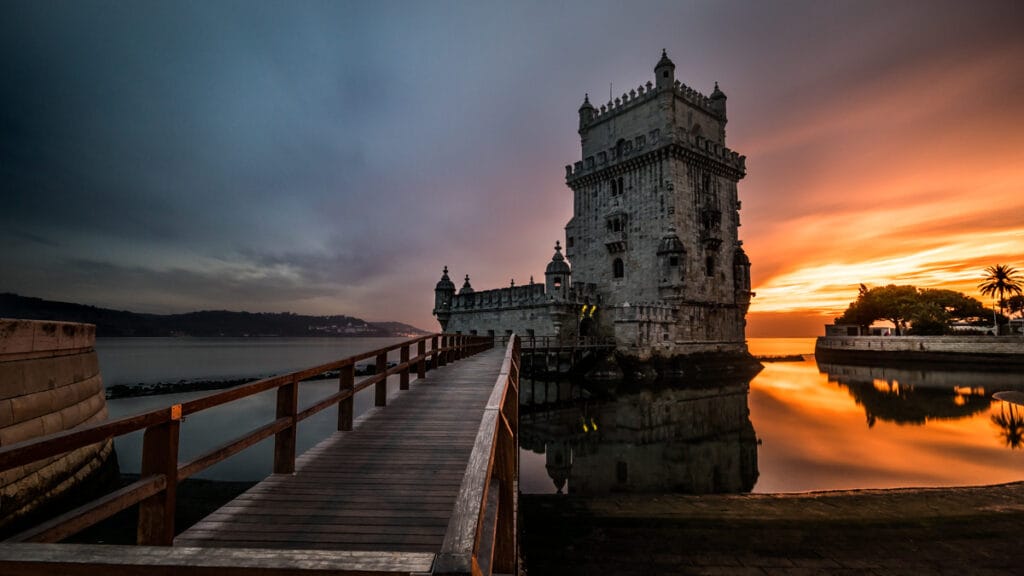
Start early in Alfama, the Moorish maze below the castle, before the tour groups. Catch the vintage Tram 28 from Martim Moniz around 8am to beat the crush, or simply walk the alleys to the Sé de Lisboa cathedral and up to Castelo de São Jorge (about €15 / roughly $16; book a timed slot online). After lunch, tram or Uber to Belém. Tour the Manueline Mosteiro dos Jerónimos (around €12) and the riverfront Torre de Belém. Do not skip Pastéis de Belém, the original custard-tart bakery since 1837 — a warm pastél de nata runs about €1.40. Planning note: eat your tarts standing at the back counter rather than the queue-choked front window; locals order there and it is far quicker. End with sunset drinks along the Cais do Sodré docks back in the centre.
Day 3 — Sintra Palace Day
Beat the crowds to Sintra, the fairytale hill town in the forested Serra. Trains leave Rossio station roughly every 20 minutes; the ride is about 40 minutes and a one-way ticket is only around €2.45. Aim to be in line for the Palacio da Pena by its 9:30am opening — the candy-coloured Romantic palace and its park cost roughly €14–20 (about $15–22) booked online, and midday queues can stretch two hours. Take the 434 bus loop (about €4.10 one way) up the steep hill rather than walking. Afterwards wander the mossy tunnels and initiation well of the Quinta da Regaleira estate. Planning note: the last direct Rossio trains fill fast in summer, so head down by early evening. Try a travesseiro, Sintra’s flaky almond-cream pastry, at a Rua das Padarias bakery before you leave.
Day 4 — North to Coimbra
Check out and head north. Rede Expressos and Rodotejo buses from Campo Grande reach the walled village of Óbidos in about an hour (roughly €8), a worthwhile morning stop. Walk the whitewashed Rua Direita, climb the medieval ramparts for free, and sip ginjinha, the local sour-cherry liqueur, served in an edible dark-chocolate cup for about €1.50. In the afternoon continue by train or bus to Coimbra, Portugal’s ancient university city on the Mondego River (allow 2–3 hours total travel). Settle into the historic upper town. Planning note: reserve your Biblioteca Joanina slot online at least two days ahead — only about 50 people enter every 20 minutes, and same-day tickets often sell out. Evening brings Coimbra-style fado, sung by men in university capes, in the intimate venues near the Sé Velha.
Day 5 — Onward to Porto
Spend the morning at the UNESCO-listed Universidade de Coimbra, one of Europe’s oldest. Tour the gilded 18th-century Biblioteca Joanina, the Baroque Capela de São Miguel, and the ceremonial Sala dos Capelos; a combined university ticket runs roughly €13–15 (about $14–16). Climb the university clock tower for river views if your legs allow. Grab lunch of leitão (Bairrada-style roast suckling pig) — the region south of the city is famous for it. Early afternoon, take the frequent CP train onward to Porto; the leg is roughly one hour and about €12–20 depending on service. Arrive at the tile-clad São Bento station and admire its 20,000 azulejo panels. Planning note: buy an Andante transit card at São Bento to hop Porto’s buses, metro and historic trams cheaply for the rest of your stay.
Day 6 — Ribeira & Port Cellars
Dive into Porto. Begin at the twin-towered Igreja do Carmo and its huge side wall of blue tiles, then browse Livraria Lello, the ornate 1906 bookshop that inspired Harry Potter lore (timed entry about €8, redeemable against a book). Walk down to the riverside Ribeira district and cross the double-deck Ponte Luís I on foot — the upper deck gives the postcard view. In Vila Nova de Gaia on the far bank, tour a historic port-wine cellar such as those lining the quay; a tasting flight is typically about €20–30 (roughly $22–33). Lunch on a francesinha, Porto’s decadent layered meat sandwich under melted cheese and beer sauce. Planning note: ride the Gaia cable car up, then walk back over the bridge’s top deck for sunset over the wine lodges and terracotta rooftops.
Day 7 — Douro Valley Wine
Take the scenic Linha do Douro railway east into wine country. Direct trains from São Bento reach Pinhão in roughly 2 to 2.5 hours; the fare is about €12–14 each way, with a discount on returns. Sit on the right-hand side after Régua for the best views as the line hugs the river past terraced vineyards. Pinhão’s tiny station is famous for its azulejo panels depicting the harvest. Book a tasting at a nearby quinta, or join a short rabelo-boat cruise on the river (typically about €15–20). Lunch here leans on grilled river fish and hearty Douro reds. Planning note: check the CP return timetable before you set out — only a handful of trains run daily, and missing the late-afternoon service back to Porto can strand you. Reserve seats in summer, as this route is popular.
Day 8 — Canals of Aveiro
Ride the CP regional train south to Aveiro, often called the Venice of Portugal; the trip from Porto is only about 40 minutes to an hour and costs roughly €3–4. The town’s central lagoon canals are plied by brightly painted moliceiro boats — a 45-minute cruise is typically around €13 (about $14). Admire the Art Nouveau facades along the waterfront and pick up ovos moles, the sweet egg-yolk-and-sugar shells sold in little wooden barrels. If time allows, hop the bus or train a few minutes to Costa Nova, whose candy-striped fishermen’s houses make a photogenic beach stop. Planning note: Aveiro’s train station itself is a sight, its old building sheathed in blue-and-white tiles depicting local life. Return to Porto by evening, or if your onward plan is southbound, this is a natural point to reposition by train back toward Lisbon for the final days.
Day 9 — Evora & Alentejo
Return to the Lisbon area and take a day trip east into the Alentejo to Évora, a UNESCO-listed walled town. Trains from Lisbon’s Oriente or Entrecampos stations take about 1 hour 35 minutes; fares are typically around €12–15. Inside the medieval walls, everything sits within a 15-minute walk: the 1st-century Roman Templo de Diana, the fortress-like Sé Cathedral, and the eerie Capela dos Ossos, a chapel lined with the bones of some 5,000 people (small entry fee, roughly €5). Lunch on Alentejo specialties like açorda bread stew or black-pork secretos, paired with a robust regional red. Planning note: buy a bag of queijadas or the local convent sweets to nibble, and confirm the last train back — direct services thin out in the evening. Return to Lisbon for your final night.
Day 10 — Cascais Coast Farewell
On your last day, slow down along the coast. Take the frequent train from Cais do Sodré west along the Estoril line to Cascais, a breezy former fishing town turned seaside resort; the ride is about 40 minutes and roughly €2.40 with your transit card. Stroll the marina, the sheltered town beaches, and out to the dramatic Boca do Inferno sea cave where waves crash through a rocky arch. Rent a bike or walk the coastal path toward the wild Praia do Guincho if the wind is calm. Lunch on ultra-fresh grilled fish or arroz de marisco (seafood rice) at a seafront tasca. Planning note: this laid-back coast is the perfect low-key finale before flying home — leave a comfortable buffer to train back into Lisbon and reach the airport, allowing at least two hours before an international departure.
What to book ahead
- Lello Bookstore Porto: Book online — €5 entry. World’s most beautiful bookstore, with crowds to match. Go at opening (10am) for fewer people.
- Douro Valley wine tour: Book 1-2 months ahead for September-October harvest period. Private tours from Porto: Living Tours or Authentic Tours.
- Benagil Cave kayak: Book 1 week ahead — extremely popular. Kayak from Marinha Beach (US$30-50). Boat tours from Carvoeiro larger but cheaper.
- Sintra entry tickets: Pena Palace gets crazy crowded. Buy timed-entry tickets 1 week ahead. First entry slot (9:30am) is essential.
A local planning note
Skip the famous Pastéis de Belém line (1+ hour wait) and walk 5 minutes to Pastéis de Cerca Moura instead — same recipe (egg tarts), no line, locals’ choice. The original Belém shop fame doesn’t reflect modern quality; many bakeries in Lisbon do the same pastry better.
Best time for this trip
April-June and September-October (Mediterranean perfection). July-August peak tourist season with Algarve at its busiest.
The Algarve Sequencing Mistake on a 10-Day Loop
Most Portugal mistakes are about transit math, not destinations. People assume the Algarve plugs in as easily as Porto, then discover there is no fast direct train south. Porto to Faro by train runs close to 6 hours, and Lisbon to Lagos has no through service at all: you ride an Intercidades or Alfa Pendular about 2.5 to 3 hours to Tunes, then change to a regional train for the final 45 minutes. Routing Porto, then Algarve, then a flight home from Faro means stacking the country’s two longest transfers back to back.
The fix is to keep the Algarve adjacent to Lisbon, not bolted onto Porto. A cleaner loop is Porto and the Douro first, the fast Alfa Pendular down to Lisbon in about 2 hours 45 minutes, then a short hop to the Algarve for the final stretch, flying home out of Faro. You also do not need a rental car for this corridor; Lisbon, Porto, Sintra, and the main Algarve towns all connect by train and bus. Reserve Alfa Pendular seats in advance, since they sell at fixed quotas and the cheap fares vanish first.
Frequently asked questions
Is 10 days enough for Portugal?
Yes for Lisbon + Porto + Algarve. 14 days adds the Azores or Madeira. 21 days for full country including the Alentejo wine region.
How much does a 10-day Portugal trip cost?
Backpacker: US$800-1100. Mid-range: US$1600-2400. Luxury: US$5000+. Portugal is the cheapest of Western Europe.
Best time to visit Portugal?
April-June and September-October are ideal. July-August is peak crowds. Winter (November-March) is mild but quieter.
Should I rent a car in Portugal?
Not for the cities (Lisbon and Porto are walkable + Uber/Bolt cheap). Yes for the Algarve coast. Renting in Faro is cheapest.
Is Portugal expensive?
Among Western Europe’s cheapest. Mid-range: US$80-120/day. Lisbon and Porto similar prices. Algarve in peak season more expensive.
Plan your Portugal trip
Best time to visit Portugal (real climate data)
Best months: March, April, May, June, July, August, September, October, November.
Portugal’s warmest month is July (avg 28°C / 83°F), the coolest is January (low 8°C / 47°F). The wettest is November (134 mm) and the driest is July.
Source: Open-Meteo / WMO climate normals (WMO 1991–2020, or ERA5 2019–2023 where unavailable). See the full month-by-month weather →
You Might Also Love




Written by
John Morrison is the founder and lead travel writer at Packzup. Over the past decade he has explored destinations across Africa, the Americas, Asia, Europe, the Middle East, and Oceania — always self-funded, never on a press trip.
Trip prep: before you travel, plan what to wear, check the tap water, sort your mobile data, and see if it is a cash or card country, and skim local etiquette.
