
Last updated August 31, 2026 · Editorial policy
Quick answer: A 10-day Vietnam itinerary covers the classic north-to-south route from three bases linked by two domestic flights: two nights in Hanoi, one aboard an overnight Ha Long Bay boat, three nights in Hoi An reached by air via Da Nang, then three nights in Ho Chi Minh City for the War Remnants Museum and a Cu Chi Tunnels or Mekong Delta day trip. Best months: November-April (dry north + south). Avoid May-October monsoon. December-January is peak in the north (cool and dry). Total cost: US$700-1100 backpacker / US$1500-2200 mid-range / US$5000+ luxury per person. Excludes international flights.
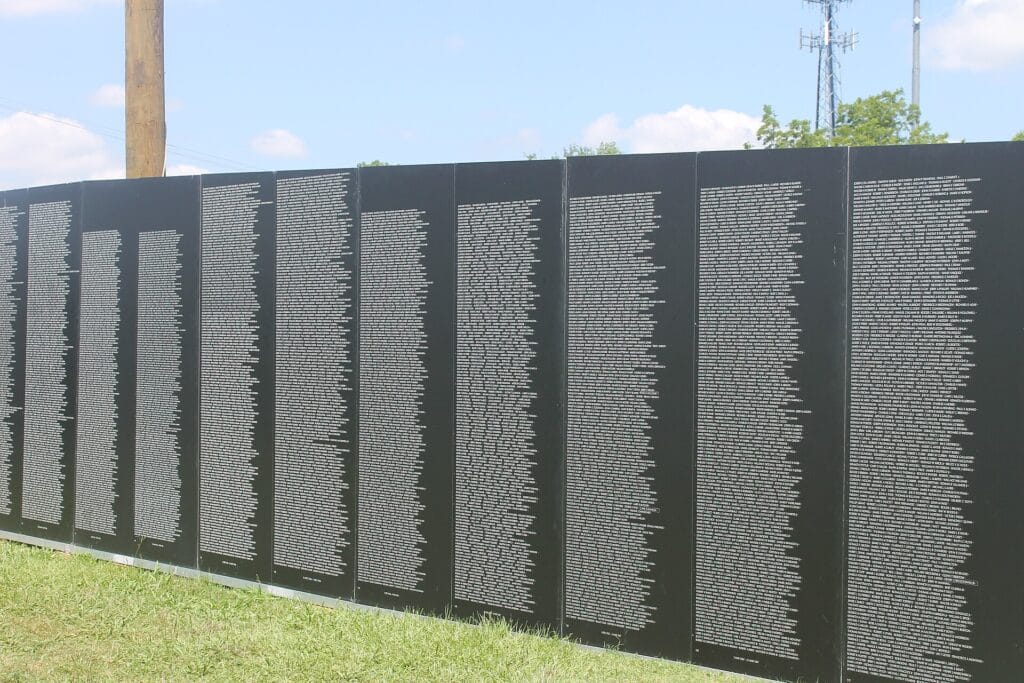
Ten days is the sweet spot for Vietnam — 3 nights Hanoi + Halong Bay, 3 nights Hoi An, 3 nights Ho Chi Minh City + Mekong Delta. This itinerary uses internal flights (cheap on Vietnam Airlines/VietJet) instead of long sleeper trains. Built across 2 personal Vietnam trips.
Vietnam itineraries by trip length
Still deciding? Compare: Sri Lanka vs Vietnam · Vietnam vs Thailand
Day-by-day breakdown
Day 1 — Landing in Hanoi
Fly into Noi Bai International Airport and grab a Grab car or the metered airport bus into the Old Quarter — the 35km ride runs about 400,000–500,000 VND (roughly $16–20) by car, far cheaper by bus. Drop your bags near Hoan Kiem Lake, then walk the tangle of trade streets around Hang Bac and Hang Gai, where each lane still sells one craft. As the light softens, cross the scarlet The Huc Bridge to Ngoc Son Temple. For dinner, seek out a bowl of bun cha — grilled pork over rice noodles, Hanoi’s signature lunch dish — for around 50,000–70,000 VND (about $2–3). Planning note: adjust to the traffic by walking at a steady pace and letting the motorbikes flow around you rather than stopping suddenly. Turn in early to beat the jet lag.
Day 2 — Hanoi Deep Dive
Start at the Ho Chi Minh Mausoleum complex, arriving before 9am since it closes around late morning and shuts on Mondays and Fridays; the grounds and nearby One Pillar Pagoda are free. Walk to the Temple of Literature, Vietnam’s first university dating to 1070, where entry is roughly 70,000 VND (about $3). After a noodle lunch, spend the afternoon at the excellent Vietnamese Women’s Museum (entry around 40,000 VND, about $1.60), one of the city’s most thoughtful collections. As evening falls, join locals for egg coffee — a Hanoi invention of whipped yolk and condensed milk — at one of the tucked-away cafes near the lake, about 35,000–50,000 VND. Planning note: if it’s a weekend, the streets around Hoan Kiem close to traffic and fill with games and music. Book tomorrow’s Ha Long cruise transfer tonight.
Day 3 — Sailing Ha Long Bay
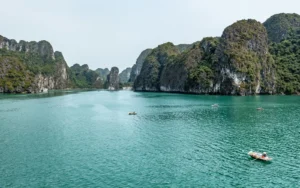
This morning your cruise transfer collects you from the Old Quarter for the drive east to the coast — the new Hanoi–Hai Phong expressway has cut this to roughly 2.5–3 hours. You’ll board an overnight junk at Ha Long Bay or the quieter, less crowded Lan Ha Bay near Cat Ba Island, both threaded with the same limestone karsts. Reputable overnight cruises typically run from about 2,500,000–5,000,000 VND per person (roughly $100–200) including meals, kayaking and a cave visit. Spend the afternoon paddling into a hidden lagoon or swimming off the deck, then watch the karsts turn violet at sunset over a seafood dinner aboard. Planning note: pick a smaller boat and the Lan Ha route to escape the day-tripper crowds around the main harbor. Book a cabin with a private balcony if the budget stretches — sunrise over the bay is the reason you came.
Day 4 — South to Hoi An
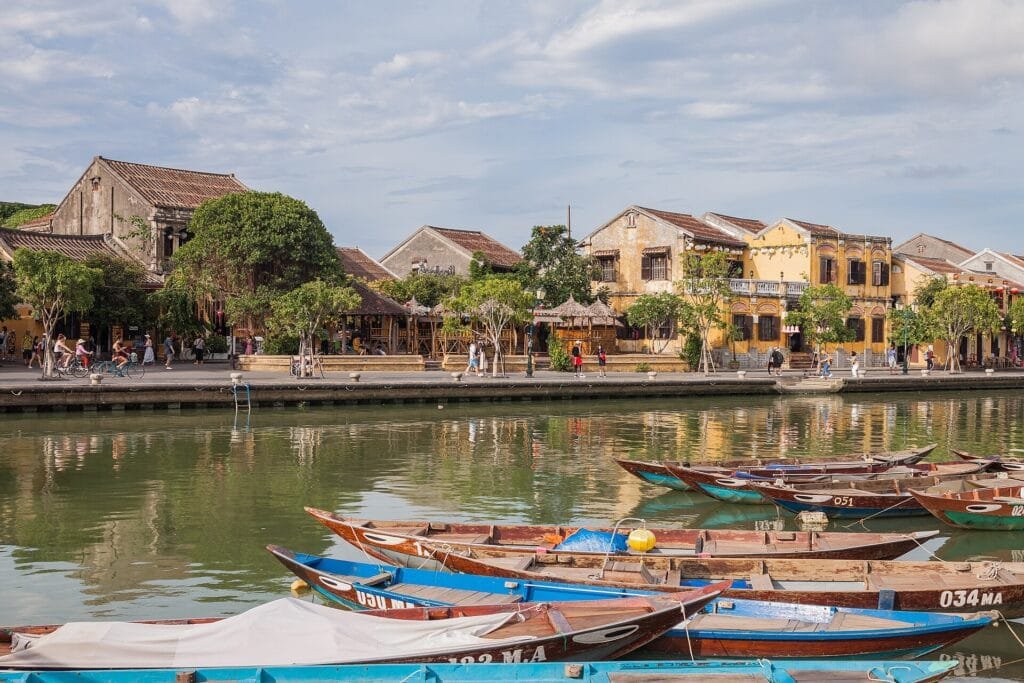
After a tai-chi session on deck and brunch as the boat cruises back, your transfer returns you to Hanoi in the early afternoon. Catch a short domestic flight from Noi Bai to Da Nang International Airport — Vietnam Airlines and the budget carriers fly it in about 1 hour 25 minutes, with fares often around 700,000–1,500,000 VND (roughly $30–60) if booked ahead. From Da Nang it’s a 45-minute taxi or Grab south to Hoi An, about 30km, for roughly 350,000–450,000 VND (about $14–18). Check into the lantern-lit old town and wander the riverfront once the day-heat lifts. Planning note: buy the Hoi An Ancient Town heritage ticket (120,000 VND for foreign visitors, about $5) — it funds preservation and admits you to five historic houses and assembly halls. Try cao lau, the pork-and-noodle dish unique to Hoi An, for dinner.
Days 5-6
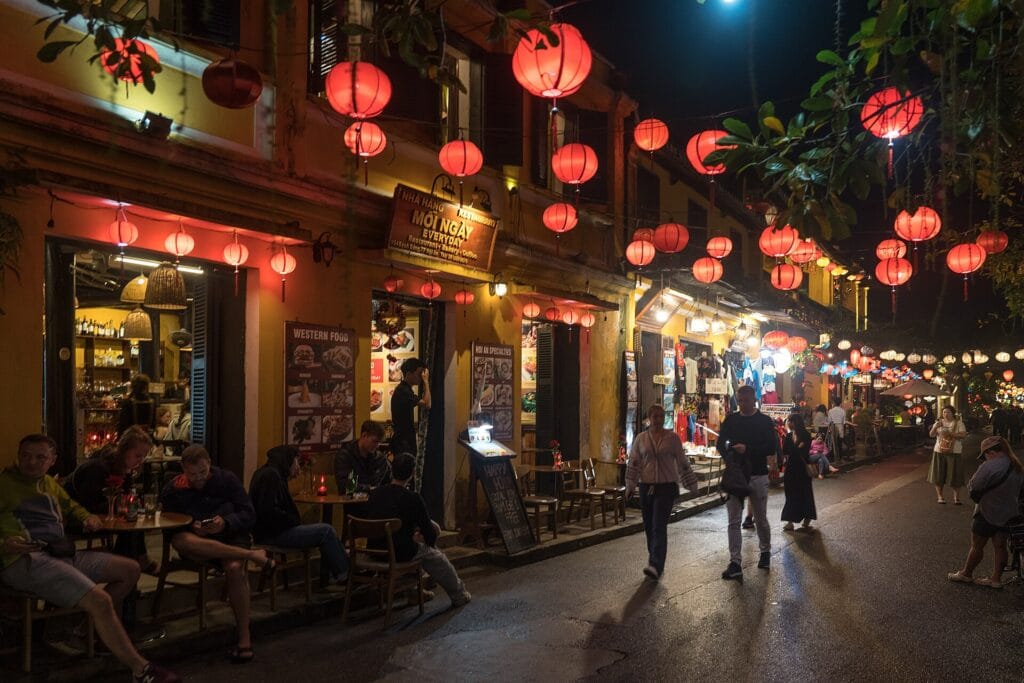
Hoi An magic: Day 1: Ancient Town walking + lantern night. Day 2: An Bang Beach + Hoi An cooking class. Custom tailoring (book 3+ days ahead for delivery).
Day 7 — Saigon Arrival
Transfer back to Da Nang for the roughly 1 hour 20 minute flight south to Tan Son Nhat Airport in Ho Chi Minh City (still widely called Saigon); fares booked ahead often run about 800,000–1,600,000 VND (roughly $35–65). A Grab from the airport into District 1 costs about 150,000–250,000 VND (roughly $6–10) and takes 30–45 minutes in traffic. Spend the afternoon on foot: the sobering War Remnants Museum (entry about 40,000 VND, roughly $1.60), the Reunification Palace, and the French-colonial Central Post Office beside the Notre-Dame Cathedral. Finish with a stroll down the Nguyen Hue Walking Street. Planning note: for dinner, dive into the street-food lanes around Ben Thanh Market and order com tam (broken-rice with grilled pork), a Saigon staple. The city stays lively late — grab a rooftop drink to see it glow.
Day 8 — Cu Chi & Mekong
Give your last full day to the countryside beyond the city. Most travelers book a combined full-day tour covering the Cu Chi Tunnels — the Viet Cong’s remarkable underground network about 70km northwest — and the Mekong Delta, though the pairing makes for a long 9–11 hour day; small-group tours run roughly 750,000–1,500,000 VND ($30–60). If that feels rushed, choose one: the tunnels for war history (site entry about 110,000 VND), or a slower Delta trip to My Tho or Ben Tre for sampan rides through the coconut canals, fruit gardens and a honey-farm stop. Planning note: at Cu Chi, the widened tourist tunnel section is claustrophobic — skip it if tight spaces trouble you; the surface exhibits tell the story well. Back in Saigon, toast the trip with a ca phe sua da (iced condensed-milk coffee) before your onward flight from Tan Son Nhat.
Day 9
Day trip: Cu Chi Tunnels (90 min from HCMC) or Mekong Delta full-day. Or stay in HCMC for District 3 cafe culture + Ben Thanh Market.
Day 10
Last day: Saigon coffee culture + last shopping. Departure from Tan Son Nhat airport.
What to book ahead
- Halong Bay cruise: Book 2-3 months ahead for premium boats. Mid-range: Indochina Sails ($150/night). Premium: Paradise Cruises or Au Co ($250+).
- Internal flights: VietJet, Vietnam Airlines, Bamboo Airways — book online 30-60 days ahead for $30-60 flights.
- Hoi An tailoring: Allow 3-5 days from order to delivery. Yaly Couture, Bebe Tailor — both excellent.
- Hoi An cooking class: Red Bridge Cooking School or Morning Glory — book at least 1 week ahead for season.
- A Vietnam eSIM: Sort mobile data before you fly — Grab, maps and cruise check-ins all assume you are online from the moment you land. Kovitel sells a local Viettel 5G eSIM with 5 GB of high-speed data per day and hotspot enabled: $9.99 for 7 days, $14.99 for 15, $18.99 for 30. The QR arrives by email in about 5–10 minutes, there is no eKYC paperwork, and the plan only starts counting down once the eSIM connects to Viettel inside Vietnam — so you can install it at home and keep your usual SIM in the other slot. Code PACKZUP10 takes 10% off.
Get 10% off with Kovitel →
Discount code PACKZUP10. This is an affiliate link — if you buy through it Packzup earns a commission at no extra cost to you, and the code still saves you 10%.
A routing call worth considering
Skip the Cu Chi Tunnels full-day tour and visit the My Tho version of the Mekong Delta instead (closer to Ho Chi Minh City and usually less crowded). Most tourists do Cu Chi half-day morning + Mekong half-day afternoon, when actually the Mekong full-day is more rewarding than the Cu Chi crowds.
To be clear about what this is: a routing opinion based on how the two trips are structured and how much of a day each consumes — not a first-hand report. Packzup has not run either tour. Confirm current operating details and opening hours before committing a day to either.
Best time for this trip
November-April (dry north + south). Avoid May-October monsoon. December-January is peak in the north (cool and dry).
Central Vietnam, month by month (measured)
This route spends its middle days in central Vietnam, and that is the stretch the weather decides. The figures below are five-year averages (2019–2023) computed from daily ECMWF ERA5 reanalysis values for a point at 16.17°N, 107.83°E — the Hue–Da Nang corridor, an hour or so from Hoi An.
| Month | Avg high °C | Avg low °C | Rain (mm) | Wet days |
|---|---|---|---|---|
| January | 18.4 | 12.4 | 180.1 | 21.4 |
| February | 21 | 13.5 | 82.5 | 12 |
| March | 24.9 | 16.4 | 74.8 | 11.6 |
| April | 26 | 17.9 | 171.6 | 17.4 |
| May | 27.3 | 19.2 | 218.1 | 24.2 |
| June | 28.3 | 19.7 | 144.3 | 21.4 |
| July | 27.5 | 19.4 | 193.8 | 24 |
| August | 27.2 | 19.3 | 278 | 24.2 |
| September | 24.9 | 18.2 | 424 | 27 |
| October | 22.1 | 17.2 | 950.3 | 28.6 |
| November | 21 | 16 | 408.6 | 25.2 |
| December | 17.8 | 13.2 | 356.3 | 25.8 |
What the numbers say. February and March are the two driest months on the coast (82.5 mm and 74.8 mm), which is why this itinerary works best in that window. October is the outlier: 950 mm across 28.6 wet days — the central-coast flood peak. Hoi An’s old town has flooded in most recent Octobers, and the Hai Van stretch is the first thing to close. Ha Long Bay cruises also cancel for weather, so a November–December trip needs a spare day in the plan.
One caveat that matters in Vietnam more than almost anywhere: this is a single geocoded point, and Vietnam has three distinct climate zones. Hanoi in the north runs cooler and drier in winter; Saigon in the south is warm year-round with a May–October wet season on a different schedule entirely. Do not read the table above as a national forecast — it describes the central coast. Full method, limitations and free CSV/JSON downloads are in our monthly climate dataset.
Two routing mistakes that quietly burn days in Vietnam
With only 10 days, the country’s 1,600 km north-to-south stretch punishes anyone who tries to add a stop. Two errors come up again and again.
- Doing Halong Bay as a day trip. The bay sits 2.5 to 3 hours by road from Hanoi each way, so a day tour gives you four to six hours of actual sailing wrapped in five to six hours of bus. A 2-day, 1-night cruise (commonly US$120 to US$250 per person) reaches quieter water, catches sunrise and sunset over the karsts, and costs you no extra calendar day because you sleep aboard.
- Hunting for a Hoi An airport. There is no airport in Hoi An. You fly into Da Nang, then it is a 30 km, 45-minute taxi or transfer south. Plan the flight as Hanoi to Da Nang, not Hanoi to Hoi An, or your driver booking will not line up.
Skip the temptation to bolt Sapa onto this loop. The overnight train or bus burns two of your ten nights, and the northern highlands deserve their own trip.
Frequently asked questions
Is 10 days enough for Vietnam?
Yes for the classic 3-city trip. 14 days adds Sapa rice terraces or Phu Quoc beaches. 21 days for complete north-to-south overland.
How much does a 10-day Vietnam trip cost?
Backpacker: US$500-700. Mid-range: US$1500-2200. Luxury: US$5000+.
Best time to visit Vietnam?
November-April for dry season. Best month for all-country travel is March (warm but pre-summer).
Vietnam Airlines or VietJet for flights?
Both are reliable. Vietnam Airlines is slightly more comfortable + on-time. VietJet is cheaper but has more delays.
Is Vietnam safe?
Very safe for tourists. Pickpocketing in HCMC and Hanoi (in crowded areas). Otherwise low crime, friendly locals.
Plan your Vietnam trip
Doing some of this by rail? Several legs of this route work well as train journeys, and the Hue–Da Nang stretch is the best few hours on the network. Our Vietnam by train guide covers classes, berths and booking direct with Vietnam Railways.
Best time to visit Vietnam (real climate data)
Best months: January, February, November, December.
Vietnam’s warmest month is June (avg 34°C / 93°F), the coolest is January (low 14°C / 57°F). The wettest is August (423 mm) and the driest is December.
Source: Open-Meteo / WMO climate normals (WMO 1991–2020, or ERA5 2019–2023 where unavailable). See the full month-by-month weather →
You Might Also Love


Written by
John Morrison is the founder and lead travel writer at Packzup. Over the past decade he has explored destinations across Africa, the Americas, Asia, Europe, the Middle East, and Oceania — always self-funded, never on a press trip.
Trip prep: before you travel, plan what to wear, check the tap water, sort your mobile data, and see if it is a cash or card country, and skim local etiquette.
