
Last updated September 8, 2026 · Editorial policy
Quick answer: A classic 10-day Turkey loop — three days in Istanbul, a short flight to Cappadocia, then down to the Mediterranean at Antalya before the Pamukkale travertines and ancient Ephesus, flying out from Izmir. Best months: April-May and September-October. Avoid June-August (heat + Cappadocia balloon crowds) and December-February (snow in Cappadocia, cold Istanbul). Total cost: US$1400-2300 mid-range / US$4500+ luxury per person. Excludes international flights.
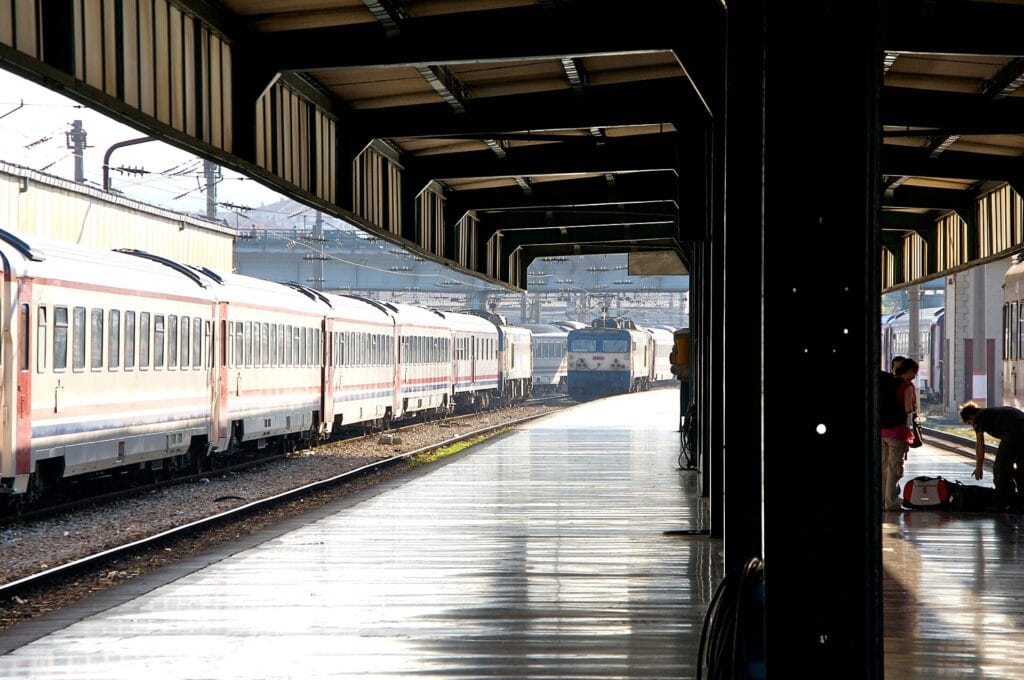
Ten days covers Turkey’s must-see four: 3 nights Istanbul, 2 nights Cappadocia (hot air balloons!), 1 night Pamukkale travertines, 2 nights Ephesus + Sirince, with internal flights between regions. Built across 2 personal Turkey trips.
Day-by-day breakdown
Day 1 — Istanbul’s Imperial Heart
Base yourself in Sultanahmet, Istanbul’s old-city core, and start early to beat the crowds. Enter Hagia Sophia when the tourist gallery opens around 09:00 (foreign-visitor ticket for the upper gallery runs about €25, roughly $27) to see the Byzantine Deesis mosaic before tour groups arrive. Cross Sultanahmet Square to the Blue Mosque (free; dress modestly and mind prayer-time closures), then wander down to the underground Basilica Cistern, whose sunken columns and Medusa heads stay blissfully cool at midday. Afternoon: tour Topkapı Palace, the Ottoman sultans’ residence, and pay the small extra fee for the Harem — it is worth it. Planning note: skip the touristy restaurants ringing the square and walk five minutes toward the Hocapaşa lanes for a proper plate of grilled köfte. Buy an Istanbulkart at any tram kiosk (around 130 TL, about $3.50) for the days ahead.
Day 2 — Bosphorus & Two Continents
Devote the morning to the Bosphorus, the strait dividing Europe from Asia. Board a public ferry from Eminönü or the longer municipal Bosphorus cruise that runs up toward the Black Sea; the short public crossing costs only a couple of dollars with your Istanbulkart, while the sightseeing boat is more. Glide past the Dolmabahçe Palace, the wooden waterfront yalı mansions, and the fortress at Rumeli Hisarı. Disembark near Ortaköy for its baroque mosque framing the first Bosphorus bridge, and grab the neighbourhood’s stuffed baked potato, kumpir, for roughly 150–250 TL (about $4–7). In the afternoon, ride the funicular and historic tram to Beyoğlu and stroll pedestrianised İstiklal Caddesi up to Galata Tower for sunset views. Planning note: book Galata Tower online for a timed slot to skip the notoriously long queue at the door.
Day 3 — Bazaars & Asian-Side Istanbul
Start at the Grand Bazaar (Kapalıçarşı), open Monday–Saturday from about 09:00 — over 4,000 shops of carpets, ceramics, and gold. Haggle politely and expect to pay perhaps 60–70 percent of the first quote. Walk downhill through the Spice Bazaar for Turkish delight and saffron, then cross the Galata Bridge past the rod-fishermen. In the afternoon, take the ferry to Asian-side Kadıköy, where locals actually shop and eat: the Kadıköy produce market is a feast, and the fish-sandwich stalls and meyhanes on Kadife Sokak (“Barlar Sokağı”) stay lively into the evening. A plate of mezes with rakı runs roughly 400–700 TL (about $11–19). Planning note: for the city’s most famous baklava, find a branch of a century-old Göztepe-area sweet shop rather than the Sultanahmet tourist stalls — pistachio content, and price, differ enormously. Pack tonight for an early flight.
Day 4 — Fly to Cappadocia
Take a morning domestic flight from Istanbul (from İstanbul Airport or Sabiha Gökçen) to Nevşehir (NAV) or Kayseri (ASR) — the flight itself is about 1 hour 15 minutes, and one-way fares typically run roughly $30–70 booked ahead. Pre-arrange a shuttle or hotel transfer to Göreme, the fairy-chimney village at Cappadocia’s heart (shared shuttles from Kayseri cost around $10–15; the drive is about an hour). Settle into a cave hotel, then spend the afternoon at the Göreme Open-Air Museum, a UNESCO site of rock-cut Byzantine churches with vivid frescoes (entry about €20, roughly $22; the Dark Church costs a little extra but preserves the finest paintings). Walk it slowly. Planning note: confirm tomorrow’s hot-air balloon booking tonight and go to bed early — pickups are around 04:30, and flights are cancelled in high winds, so having a flexible second morning helps.
Day 5 — Balloons Over Göreme
This is Cappadocia’s signature morning. If your hot-air balloon flight is confirmed, you will be collected before dawn for a roughly 45–60 minute drift over the valleys as the sun rises — expect to pay about €150–300 (roughly $165–330) per person in peak season, less in winter, usually including breakfast and a certificate. Back on the ground, explore on foot or by rental: hike the Rose Valley and Red Valley trails at golden hour, or descend into the Kaymaklı or Derinkuyu underground city, where early Christians sheltered many levels below the surface (entry a few euros; Derinkuyu is the deeper of the two). Stop in Ürgüp or Avanos, the pottery town on the Red River. Planning note: order testi kebabı, a meat-and-vegetable stew slow-cooked in a sealed clay pot that is cracked open at your table — a genuine regional speciality, not a tourist gimmick.
Day 6 — South to Antalya
Trade the volcanic plateau for the Mediterranean today. The most comfortable option is a short flight via Kayseri to Antalya (AYT) in summer (a little over an hour in the air, though connections stretch the door-to-door time); the direct bus is cheaper at roughly $15–25 but takes about seven hours through the Taurus Mountains. Either way, aim to arrive in Antalya by afternoon and check in around the atmospheric old quarter. Spend the late afternoon easing in at Konyaaltı Beach, a long pebble strand backed by the dramatic Beydağları mountains, or at the clifftop parks above the harbour. Planning note: if you take the bus, sit on the right-hand side for the mountain descent into the coastal plain, and keep water handy — the winding stretch is scenic but long. Dinner tonight in the Kaleiçi old harbour, where fresh Mediterranean fish is sold by weight.
Day 7 — Kaleiçi & the Coast
Explore Kaleiçi, Antalya’s walled old town, on foot this morning: a maze of Ottoman wooden houses, Roman and Seljuk walls, and the restored Old Harbour. Start at Hadrian’s Gate, the triple-arched marble gateway built for the emperor’s visit around AD 130, then find the fluted Yivli Minare, the city’s Seljuk-era landmark minaret. Afterwards, visit the Antalya Museum, one of Turkey’s best, for its hall of Roman statuary from nearby Perge (entry a modest few euros). In the afternoon, choose the Düden Waterfalls — walk behind the cascade at the leafy Upper Falls, or see the Lower Falls plunge straight into the sea from a clifftop platform. History buffs can instead day-trip to the superbly preserved Roman theatre at Aspendos. Planning note: a strong Turkish coffee with a piece of lökum (Turkish delight) in a Kaleiçi courtyard cafe is the correct way to pause here; expect roughly 80–150 TL (about $2–4).
Day 8 — Cotton Castle of Pamukkale
Head inland to Pamukkale, the “Cotton Castle,” a UNESCO site of blinding-white travertine terraces formed by mineral-rich thermal springs; it is roughly a three-to-four-hour drive from the Antalya region, easiest by organised transfer or intercity bus toward Denizli. The combined ticket for the terraces and the ruined Roman spa city of Hierapolis above them runs about €30 (roughly $33). You must walk the terraces barefoot to protect the calcium formations, so pack a bag for your shoes; note the water is rotated between sections, so not every pool will be full. Explore Hierapolis’s colonnaded street, theatre, and vast necropolis. For an extra fee of about €6–13, swim among submerged Roman columns in Cleopatra’s Antique Pool. Planning note: enter via the South Gate and walk downhill through the ruins to the terraces, saving the uphill climb, and time the white travertines for late-afternoon light.
Day 9 — Ancient Ephesus
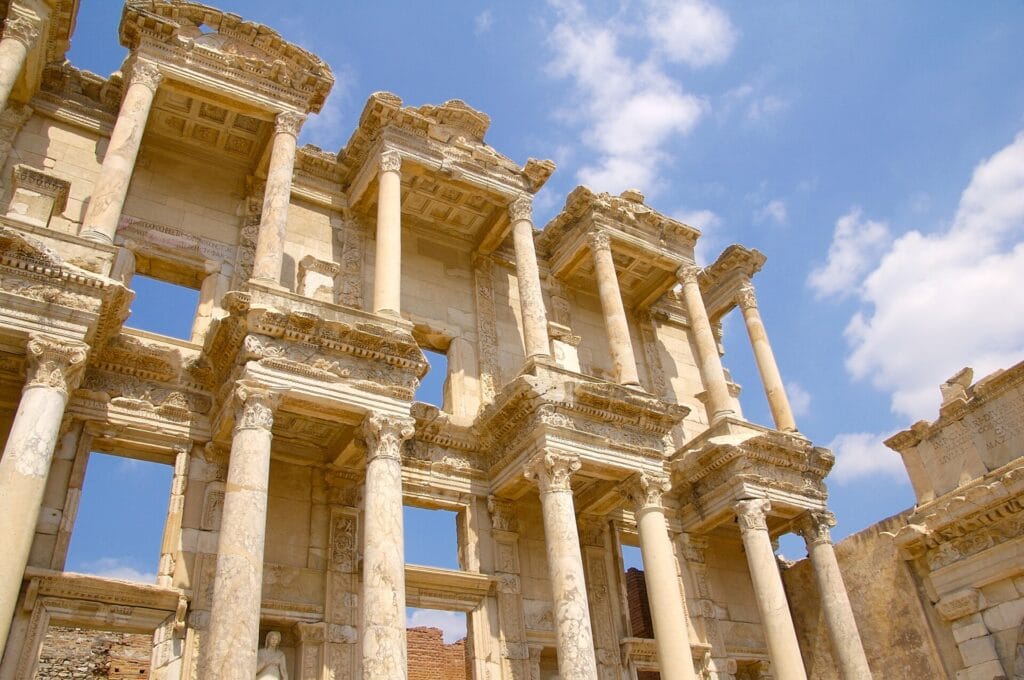
Today belongs to Ephesus, one of the best-preserved classical cities in the Mediterranean, a short drive from your base in Selçuk (about a two-to-three-hour transfer from Pamukkale). Arrive at opening, around 08:00, before the cruise-ship crowds pour in from Kuşadası. The main ticket is about €40 (roughly $44) and includes the iconic two-storey facade of the Library of Celsus, the Great Theatre that seated 25,000, and marble-paved Curetes Street. Pay the extra €15 for the covered Terrace Houses — their preserved frescoes and mosaics show how Ephesus’s wealthy actually lived, and most visitors skip them. Afterwards, in Selçuk, see the lone surviving column of the Temple of Artemis, once a Wonder of the Ancient World. Planning note: enter Ephesus by the upper (south) gate and walk downhill to the Library, then exit at the lower gate — far kinder in the Aegean heat.
Day 10 — Selçuk to Izmir Departure
Use your final morning around Selçuk before heading to the airport. Climb to the hilltop Ayaşuluk Fortress and the ruins of the Basilica of St. John, believed to mark the apostle’s tomb, for a sweeping view over the plain. If time allows, drive up to the peaceful stone House of the Virgin Mary on Bulbul Mountain, a pilgrimage chapel a short way from the ruins (small entry fee). For a last authentic bite, browse Selçuk’s town market for figs, olives, and the region’s famous çöp şiş, tiny skewers of grilled lamb. Then transfer to Izmir Adnan Menderes Airport (ADB), roughly an hour’s drive north, for a domestic connection back to Istanbul or an onward international flight. Planning note: build in a generous buffer — Aegean summer traffic toward Izmir can be slow, and you will not want to rush after ten memorable days. Güle güle — travel well.
What to book ahead
- Hot air balloon ride: Book 2-4 weeks ahead. US$200-280 includes hotel pickup, ~1h flight, breakfast on landing. Royal Balloon and Voyager are reliable.
- Cappadocia cave hotel: Book 2-3 months ahead for high season. Premium: Argos in Cappadocia, Museum Hotel. Mid-range: Carus Suites, Pacha Cave Hotel.
- Ephesus tickets: Book online — skip-the-line saves 1-2 hours in season. Combined with Terrace Houses ticket recommended.
- Internal flights: Pegasus, Turkish Airlines, AnadoluJet — book 30-60 days ahead for US$50-80 flights.
A local planning note
Skip the Çiya Sofrası tour groups and go to Kadıköy’s Çiya Sofrası restaurant directly via ferry from Eminönü — same legendary food, no tour markup. The ferry crossing alone is one of Istanbul’s best free experiences.
Best time for this trip
April-May and September-October. Avoid June-August (heat + Cappadocia balloon crowds) and December-February (snow in Cappadocia, cold Istanbul).
Smart routing for Turkey: the mistakes to avoid
The mistake that ruins more Turkey trips than any other is treating the Cappadocia balloon as a fixed appointment. Turkey’s civil aviation authority logged only 223 flight days in Cappadocia during 2025, meaning roughly 142 mornings were grounded for wind, fog or rain. Cancellation rates run above 50 percent in December through February and still hover around 15 to 20 percent in spring, so a single dawn in Goreme is a coin flip. Book at least two nights, three if you visit October through March, and treat the balloon as a chance you get two cracks at rather than a guarantee. Expect to pay 140 to 250 euros in shoulder months and 250 to 450 in May, June and September.
The other routing trap is the leg out of Cappadocia. Do not backtrack through Istanbul to reach Pamukkale. Fly or drive Nevsehir to Denizli, spend one night by the travertines and Hierapolis, then continue overland to Selcuk or Kusadasi for Ephesus before flying home from Izmir. Keep your final night in Istanbul as a buffer against missed domestic connections.
Frequently asked questions
Is 10 days enough for Turkey?
Yes for the classic Istanbul + Cappadocia + Pamukkale + Ephesus circuit. 14 days adds the Mediterranean coast (Antalya, Kaş) or Black Sea region.
How much does a 10-day Turkey trip cost?
Backpacker: US$600-900. Mid-range: US$1400-2300. Luxury: US$5500+ per person.
Best time for Cappadocia hot air balloons?
April-November for flights (winter often cancelled). May-September has best weather but most crowded balloons at sunrise.
Is Turkey safe?
Generally safe in tourist areas. Avoid borders (Syria, Iraq). Istanbul, Cappadocia, Ephesus all extremely safe. Tourist scams common (insistent shopkeepers, taxi meters).
Do I need a visa for Turkey?
Most Western passports get e-visa online for US$50, valid 90 days. Apply at evisa.gov.tr. Some passports get visa on arrival.
Plan your Turkey trip
Best time to visit Turkey (real climate data)
Best months: May, June, July, August, September, October.
Turkey’s warmest month is August (avg 30°C / 85°F), the coolest is February (low 4°C / 40°F). The wettest is January (100 mm) and the driest is August.
Source: Open-Meteo / WMO climate normals (WMO 1991–2020, or ERA5 2019–2023 where unavailable). See the full month-by-month weather →
You Might Also Love

Written by
John Morrison is the founder and lead travel writer at Packzup. Over the past decade he has explored destinations across Africa, the Americas, Asia, Europe, the Middle East, and Oceania — always self-funded, never on a press trip.
Trip prep: before you travel, plan what to wear, check the tap water, sort your mobile data, and see if it is a cash or card country, and skim local etiquette.
