
Last updated August 24, 2026 · Editorial policy
- The honest map
- When to come
- Where to stay
- What to actually do
- What will surprise you
- What will disappoint you if you let it
- Practical, briefly
- A final thought
- Seasonal questions
- Tokyo like a local: neighborhoods, food & the smart plan
- Tokyo Travel Guide FAQ
- More from Packzup
- More Travel Guides You’ll Love
- Frequently Asked Questions
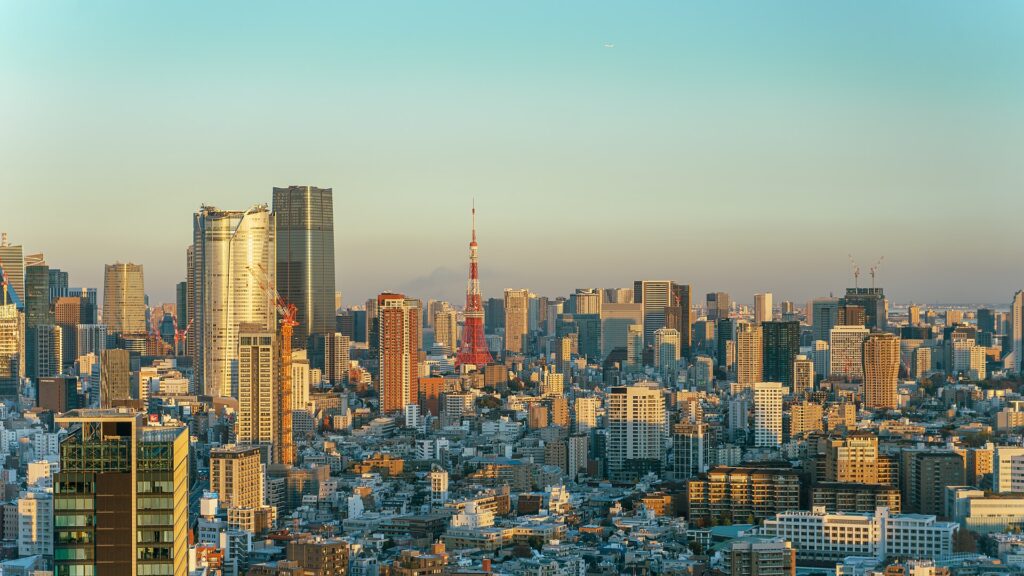
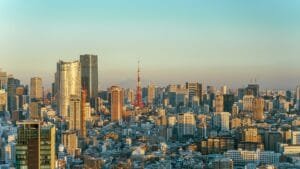
There is a moment, usually on the second or third day, when Tokyo stops feeling like a city and starts feeling like an arrangement of small towns held together by trains. The arrangement was deliberate, Edo grew as a stitched-together series of merchant quarters, samurai districts and temple precincts, and the modern subway map traces the seams. The reason this matters to a first-time visitor is that there is no centre to find. There is no equivalent of the Champs-Élysées, no Times Square that gathers the city’s energy in one spot for you. There are twenty centres, each with its own quiet language, and the city rewards the visitor who picks two or three of them and learns them slowly rather than the visitor who tries to see all of them in a week.
Most Tokyo guides give you a hit-list. I want to do something different. I’d rather tell you which neighbourhoods are worth slowing down for, what they actually feel like at five on a Tuesday afternoon, and which bits of the city the internet has overweighted in a way that no longer matches the experience. The Tokyo most travellers come for is real. It is also smaller, and quieter, and more concentrated in particular streets than a first reading of the city suggests.
Planning around the season?
See Tokyo in April for month-specific timing, pricing, and crowd realities.
| Best month to visit | May — 22.9°C, 12 wet days |
|---|---|
| Warmest month | August, 32°C average high |
| Wettest month | July, 20 wet days |
| Plugs & power | Type A,B · 100 V · 50/60 Hz |
| Driving side | Left |
Climate: normals (WMO 1991–2020, or ERA5 2019–2023 where unavailable) via Open-Meteo. Open data.
The honest map
Tokyo is enormous — fourteen million people across twenty-three special wards, and almost none of it is the Tokyo a visitor needs. Eight or nine neighbourhoods do almost all the work.
Shibuya is the famous crossing, the youth-culture engine room, and now permanently a coach-tour destination at the Hachiko exit. The interesting Shibuya is two blocks away from the scramble, the smaller streets uphill toward Tomigaya and Kamiyama-cho, where the better cafés and natural-wine bars live. Stand on the Hachiko corner once. Walk away.
Shinjuku is the city’s transport hub and, increasingly, its anonymous heart, the tower hotels live here, the businessmen go drinking in Golden Gai and Omoide Yokocho, the trains leave for the rest of Japan. It is functional Tokyo at full volume. Stay here if you want the easiest access; don’t expect charm.
Ginza is the polished one: wide streets, department stores, the kind of bars and sushiya that have been doing one thing for forty years. It is expensive in the way Paris’s eighth arrondissement is expensive, and worth a careful evening if you’ve planned for the price.
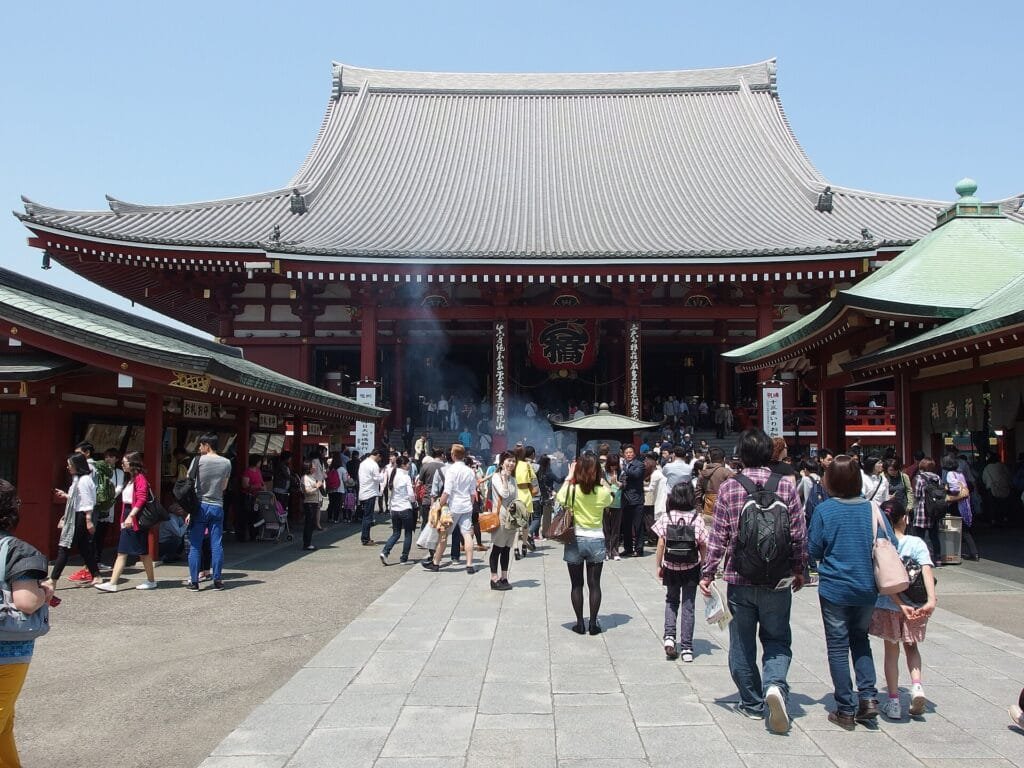
Asakusa is the eastern, lower-rise, more traditionally minded part of the city. Sensō-ji temple, the small wooden shopfronts of Kappabashi (the kitchen-supply street), and the Sumida river. Worth a half-day. Crowded at the famous gate; quiet two streets in any direction.
Yanaka, Nezu and Sendagi, collectively “Yanesen” — are the closest the central city has to an old, quiet, walkable district. Wooden houses, a few small temples per block, cats. The kind of place where you can spend three hours and barely see a tourist after eleven in the morning.
And then the neighbourhoods worth a base, which is a different category. Shimokitazawa west of Shibuya is the small-bookshop, vintage-shop, indie-music part of the city. Kichijoji further west is greener, calmer, with Inokashira Park. Nakameguro is the pretty one along the canal, full of small restaurants. Daikanyama next door has the Tsutaya bookstore everyone photographs, and the better small boutiques. These are the neighbourhoods where the real Tokyo residents who can afford to choose actually live, and a hotel here means walking out into a working part of the city rather than a tourist district.
When to come
Two famous windows, one underrated.
Cherry blossom. Sakura, runs roughly the last week of March through the first week of April. It is as good as advertised, and it is also the single most crowded week of the year. Hotel prices double. The famous parks (Ueno, Shinjuku Gyoen, Meguro-gawa) are wall-to-wall. The trick, if you come for sakura, is to walk the less-famous corridors: the riverside path along the Kanda river in Nakano-Sakaue, the slope down through Aoyama Cemetery, the small streets of Yanaka. The blossom is everywhere.
Autumn — momiji: runs late November through mid-December. The colours are smaller and more concentrated than New England, but the temples (Rikugien, Koishikawa Korakuen, the gardens at Mejiro) hold real conversations with the season. Crowds are a third of sakura’s. This is the window I’d recommend to a first-time visitor.
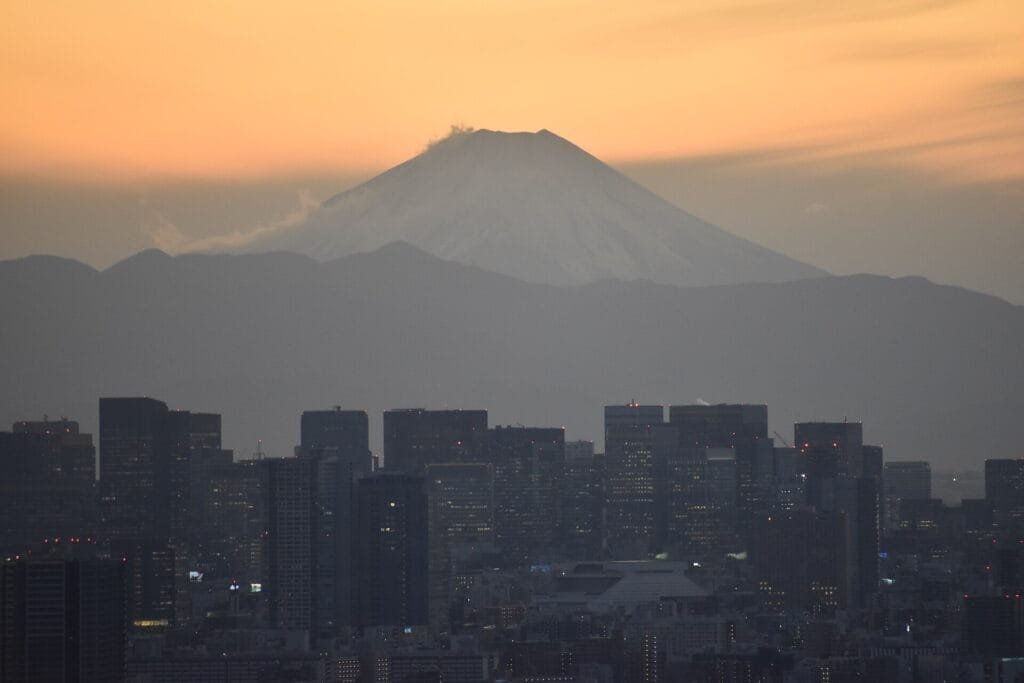
The underrated window is the second half of February. Cold, dry, clear, plum blossom rather than cherry, and the city is for once empty of foreign tourists. Hotel prices are at their annual low. Fuji is visible from a dozen viewpoints in the city on the right morning. Bring warm clothes; lean into the season.
Summer. Late June through August, is hot and humid in a way that surprises Europeans who have done Mediterranean summer. Avoid. Golden Week (late April / early May) is a Japanese domestic-travel surge; foreigners feel the price spike. New Year is mostly fine, with the caveat that on January 1st itself many small restaurants close.
Where to stay
I’d separate by trip purpose. The first-time visitor who wants efficiency: stay in Shinjuku or Tokyo Station area. The second-time visitor, or anyone who values the feel of the city over its convenience: stay in Nakameguro, Daikanyama, Yanaka, or Kichijoji. The traveller with money and a particular taste: the Hoshinoya Tokyo in Otemachi or the Aman in the same district are the genuine luxury Japanese-aesthetic plays, with the Aman skewing more international and the Hoshinoya more like a ryokan grafted into a skyscraper.
The Tokyo most travellers come for is real. It is also smaller, and quieter, and more concentrated in particular streets than a first reading of the city suggests.
The honest mid-tier of Tokyo hotels is now better than at almost any major city I can think of. Hotel Niwa, Trunk Hotel in Yoyogi-Koen or Cat Street, Mustard Hotel Shimokitazawa, K5 in Nihonbashi, all under three hundred dollars on a good night, all with serious design or service ideas. The genuine budget tier — Anne Hostel in Asakusa, the Almond Hostels, the Nine Hours capsules: is clean and well-run in a way you do not find at this price in most cities.
What to actually do
I’d put real time into three things and let the rest be discovery.
Eat slowly
Tokyo is the food city most worth a long visit. The reason isn’t the famous Michelin sushiya, which are good but no better than the equivalent in New York or Paris. The reason is the spread of small specialist restaurants, a six-seat tempura counter, a ten-seat yakitori bar, an unmarked tonkatsu shop where a third-generation owner is frying one cut of pork, that you cannot replicate anywhere else. Book one or two of these for your trip; let the rest be walk-in.
The genres to chase, in rough order: sushi at a sushiya rather than the conveyor belts (Sushi Saito and Sukiyabashi Jiro are the famous ones; the realistic ones are Sushi Tsubaki, Manten Sushi, or any neighbourhood place with a counter of eight and a phone number that doesn’t pick up after seven); tonkatsu at Tonki in Meguro or Butagumi in Nishi-Azabu; ramen at Tsuta or Nakiryu for the polished version, or any small shop with a queue of five locals at lunch for the everyday version; yakitori in the small bars under the tracks at Yurakucho or in Omoide Yokocho. Skip the famous “themed” cafés. Skip the Michelin-star kaiseki on a first visit unless you have ¥40,000 a head to spend; the experience translates poorly to a first taste.
Walk one neighbourhood at a time
A day in Tokyo that holds together usually means one neighbourhood at a time, slowly. Start in Yanaka in the morning. Eight o’clock is the right hour, the cats from Yanaka cemetery are still on the warm gravestones, the small bakeries on Yanaka Ginza have just put out the day’s pan, and the temple bells of Tennō-ji ring the hour through a neighbourhood that is, somehow, still mostly wooden. A coffee at Kayaba, a small wagashi at the shops near Nezu Shrine, and you have already had the best two hours of your day. Then change neighbourhoods entirely after lunch. Don’t try to combine Shibuya and Asakusa in one day; the transitions are mentally expensive even though they are physically short on the train. The city asks for a slow gear, and the visitor who shifts up too fast loses the texture.
The galleries and the gardens
Tokyo’s contemporary art scene is one of the world’s quietest top scenes, the Mori Art Museum in Roppongi, the Hara Museum (now relocated to Gunma but reopening as Hara CC), the Nezu Museum’s permanent collection in Aoyama. Pair one museum with a long afternoon in its adjacent garden. Nezu’s garden is the masterpiece, Hama-rikyu Onshi-teien for a slower one, Kyu-Furukawa for a small, half-Western, half-Japanese estate that nobody visits.
What will surprise you
The quiet, more than anything. Tokyo at ground level is not loud; the construction is louder than the people. The cleanliness, which is a thing the internet talks about and is somehow still understated. The lack of trash bins, which forces you to carry your wrappers and bottles for the day, a quirk that maps to the cleanliness more than people realise. The price of vegetables at a depachika (basement food hall) versus the price of a perfectly fine ramen, they are roughly the same, and this fact says something about Tokyo’s particular value system. The fact that the trains stop at midnight, which restructures the entire evening. The way a small bar with a stool count of six will run a tab for you on a handshake, or refuse you politely because the owner doesn’t speak English and the conversation is the product.
What will disappoint you if you let it
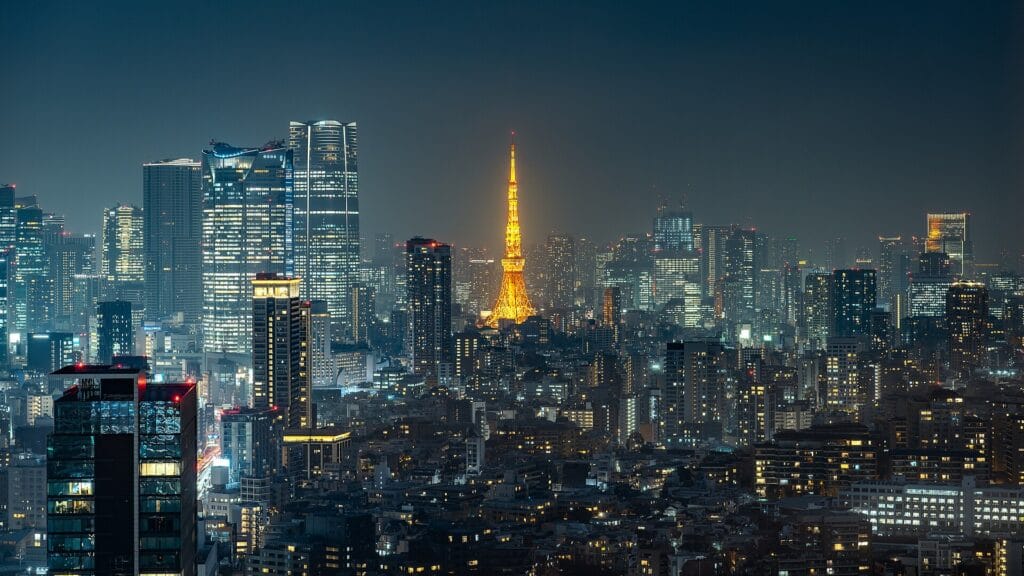
The famous things, mostly, in their famous places. The Robot Restaurant is closed. Shibuya Scramble is now a queue, and the rooftop viewpoint above it is monetised. Tsukiji’s inner market has moved to Toyosu and the outer market is now mostly tourist-oriented. The famous viewing decks (Sky Tree, Tokyo Tower) are fine, but the free one at Tokyo Metropolitan Government Building in Shinjuku is just as good. The “themed” cafés are not what they were a decade ago and never were what the photos promised.
Practical, briefly
Get a Suica or Pasmo card on day one — they live now in Apple Wallet for foreign iPhones, and use them for trains, buses, and most convenience stores. Cash is still useful in smaller restaurants. The trains stop just past midnight; budget a taxi after that, and accept the price. JR Pass is no longer the deal it was after the 24 price increase; recalculate before you buy. Most signs are bilingual at the major stations; the small lines are not. Google Maps works perfectly. Tipping is genuinely refused.
A final thought
The mistake most first-time visitors make is to come to Tokyo wanting to “see Tokyo.” There is no Tokyo to see in that sense. There is a Yanaka morning, a Shimokitazawa afternoon, a Ginza dinner, a Nakameguro Sunday, a small bar in a Shibuya side street that you can never find again on the map. The trip works when you accept the city’s own scale: small, neighbourhood by neighbourhood, slow, and fails when you try to impose a European city’s pace on it. Pick three neighbourhoods. Walk them properly. Eat at the counter, twice a day. The rest will arrive.
<!–
<!–
Planning around the season?
–>
<!–
See Tokyo in April for month-specific timing, pricing, and crowds.
–>
<!–
–>
Seasonal questions
When is the best month to visit Tokyo?
Late March to early April for the cherry blossoms, or November for the autumn foliage and 12-18 C clarity. October is the sweet spot for value: comfortable walking weather, hotel pricing 20-30% below cherry peak.
Is the cherry blossom season worth the crowds?
For a first Tokyo trip, yes. Book six months out, pay 2-3x off-peak rates, and expect Ueno Park and the Meguro River to feel like Shibuya at rush hour. If you have been before, skip it. April hotels routinely hit 35,000 yen per night for standard rooms.
How early should I book Tokyo for April?
Six months. By November, every well-located hotel under 30,000 yen per night is gone for the cherry-blossom window. The forecast tightens to plus/minus three days in mid-March, but by then you cannot reschedule the flights.
Tokyo like a local: neighborhoods, food & the smart plan
Tokyo isn’t one city — it’s a dozen distinct districts. Base near the JR Yamanote loop and tackle 1–2 areas a day.
The neighborhoods that matter
- Shinjuku — nightlife, Golden Gai’s tiny bars, the free Metropolitan Government observation deck.
- Shibuya — the Scramble Crossing, Shibuya Sky at sunset (book ahead).
- Asakusa — Senso-ji temple and old-Tokyo streets.
- teamLab Planets (Toyosu) — the immersive digital art museum; tickets sell out weeks ahead.
- Harajuku & Ginza — street fashion vs upscale.
Eating well
Conveyor-belt sushi, a Shinjuku ramen counter, a Shibuya izakaya, and depachika (department-store food halls) for the best cheap gourmet picnic. Convenience stores (7-Eleven, Lawson) are genuinely excellent.
Day trips & budget
Hakone (Mt Fuji + onsen), Nikko (shrines), or Kamakura (Great Buddha) are each a day. Budget ~¥15,000–25,000/day mid-range. Get a Suica/Pasmo IC card and ride the Yamanote line. Five days covers the core plus one day trip.
Tokyo Travel Guide FAQ
How many days do you need in Tokyo?
Four to five for the main districts plus a day trip to Hakone, Nikko or Kamakura.
Do I need to book Tokyo attractions ahead?
Yes for teamLab Planets and Shibuya Sky — both sell out days to weeks in advance.
More from Packzup
Frequently Asked Questions
Is Tokyo worth visiting?
Yes. Tokyo rewards travelers who are willing to look beyond the surface. From local food to cultural sites, there is plenty to discover for every type of traveler.
How many days should I spend in Tokyo?
Plan for at least 3-4 days to cover the main highlights. A week allows for day trips and a more relaxed pace that lets you experience the destination more deeply.
What is the best way to get to Tokyo?
Options typically include flights to the nearest international airport, followed by local transport. Check for direct flight routes from your departure city for the most convenient travel.
Do I need travel insurance for Tokyo?
Travel insurance is strongly recommended for any international trip. It covers medical emergencies, trip cancellations, and lost luggage — risks that are expensive to handle out of pocket.
Just landed? See our step-by-step guide on how to get from Narita Airport to Tokyo (N’EX vs Skyliner vs bus, with prices). Planning your days? Here are the 15 best things to do in Tokyo.
Stay connected: skip expensive roaming — see our guide to the best travel eSIMs for cheap mobile data the moment you land.
Stay connected: avoid roaming charges with the best travel eSIMs — instant data the moment you land.
Asia city pick? Tokyo vs Singapore
Still deciding on Tokyo?
More guides: Osaka vs Tokyo
Best time to visit Tokyo (real climate data)
Best months: April, May, June, July, September, October.
Tokyo’s warmest month is August (avg 32°C / 90°F), the coolest is January (low -0°C / 32°F). The wettest is October (235 mm) and the driest is February.
Source: Open-Meteo / WMO climate normals (WMO 1991–2020, or ERA5 2019–2023 where unavailable). See the full month-by-month weather →
You Might Also Love

Written by
Founder of Packzup. Independent travel writer covering offbeat destinations across six continents since 2018. Every guide is independently researched and self-funded — no press trips, never sponsored.
Before you go: see whether they speak English in Tokyo and what to wear, check the tap water, sort your mobile data, and find out if it is a cash or card destination, and brush up on local etiquette.
Still deciding? Read our honest take: Is Tokyo worth visiting? The honest verdict
Wondering about safety? Read the honest answer: Is Tokyo safe in 2026?
