Last updated August 21, 2026 · Editorial policy
Quick answer: 14-day India itinerary. Best months: October-March (cool dry season). Avoid April-June heat (45°C+) and July-September monsoon. Total cost: US$1500-2500 mid-range / US$6000+ luxury (heritage hotels) per person.
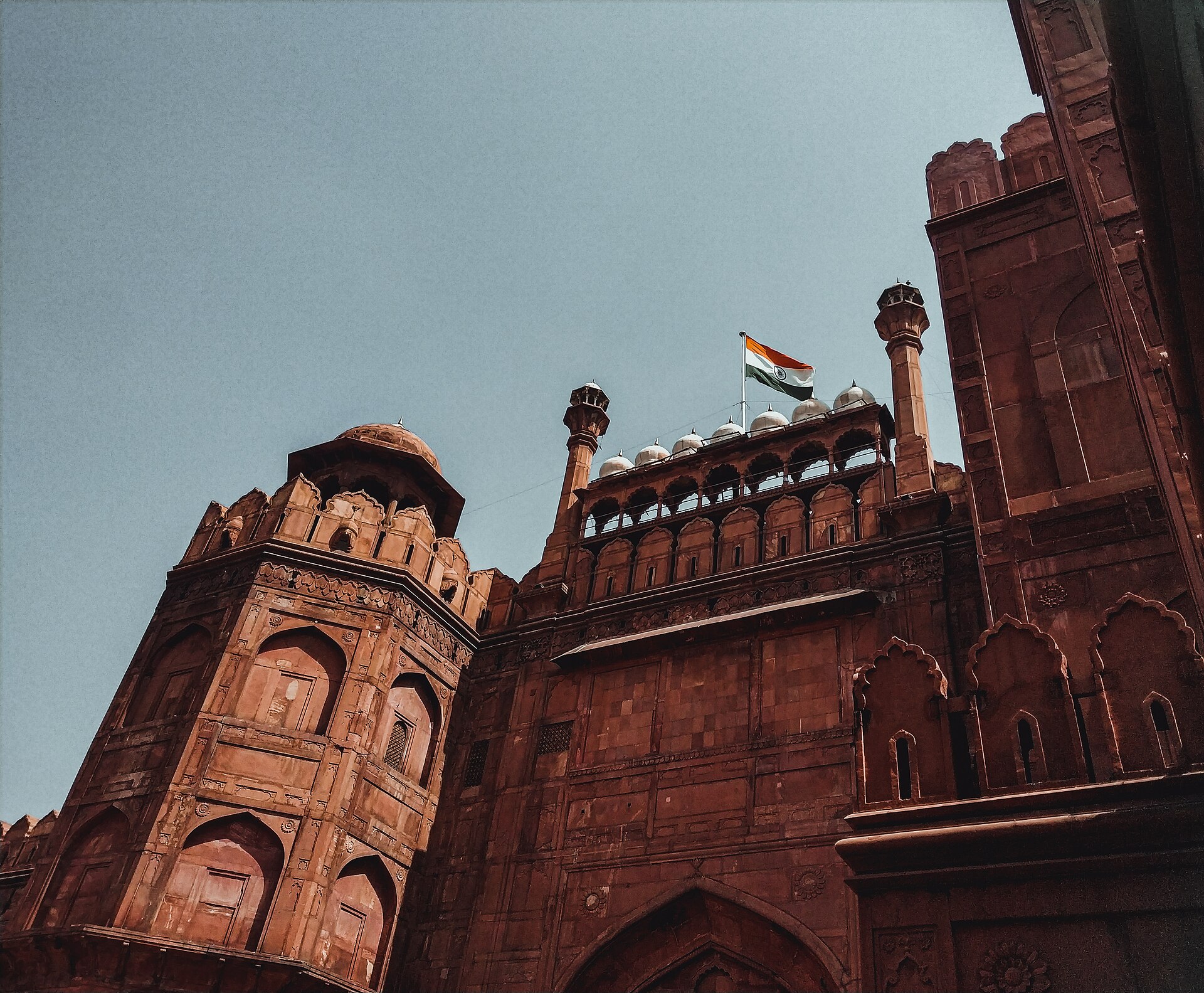
Two weeks in India is the minimum to cover the classic Golden Triangle (Delhi-Agra-Jaipur) plus a side trip to Rajasthan or Kerala. This itinerary uses internal flights (cheap on IndiGo) instead of long train journeys. Built across 2 personal India trips.
India itineraries by trip length
Still deciding? Compare: India vs Thailand · India vs Nepal
Day-by-day breakdown
Days 1-2
Arrive Delhi. Day 1: Recover from jet lag. Day 2: Old Delhi (Red Fort + Jama Masjid + Chandni Chowk food tour) + New Delhi (India Gate, Humayun’s Tomb).
Day 3 — Agra & the Taj Mahal
Take the early Gatimaan Express from Hazrat Nizamuddin station to Agra Cantt, a smooth ride of about 1 hour 40 minutes with breakfast served at your seat (chair-car fares run roughly ₹800–1,500, about US$10–18; book on IRCTC well ahead). The reason you came: the Taj Mahal, closed every Friday, so plan around it. Foreign entry is ₹1,100 (about US$13), plus ₹200 to step inside the mausoleum. Go at opening, around sunrise, for soft light and thinner crowds. Afternoon, tour the massive red-sandstone Agra Fort (about ₹650), where Shah Jahan spent his final years gazing at the Taj. Insider tip: for the classic reflection shot without the queue, cross the Yamuna at dusk to Mehtab Bagh garden. Dinner: try Mughlai kebabs and rich korma, Agra’s Mughal-era specialty.
Day 4 — Road to Jaipur
Hire a private car with driver for the scenic Agra to Jaipur road day, roughly 240 km taking 5–6 hours with stops (a full-day car costs about ₹3,500–5,000, US$42–60). First stop, 40 km out: Fatehpur Sikri, Emperor Akbar’s perfectly preserved ghost city of red sandstone, abandoned for lack of water (entry about ₹610 for foreigners). Ignore the aggressive freelance guides at the gate; hire an official one inside. Detour to Abhaneri to see Chand Baori, one of India’s deepest and most photogenic stepwells, plunging 13 stories in a dizzying zigzag of stairs (free entry). Insider tip: carry small cash and bottled water, as roadside ATMs are unreliable here. Reach Jaipur by evening; check into a haveli hotel in the old walled city and rest for a big fort day.
Day 5 — Amber Fort & Pink City
This morning belongs to Amber Fort (Amer), 11 km north of Jaipur, a honey-coloured hilltop palace of mirrored halls and courtyards; foreign entry is about ₹600. Arrive by 8am to beat both heat and tour buses. Please walk up or take a jeep rather than an elephant ride — the animal-welfare concerns are real and well documented. Below, pause at the Jal Mahal water palace floating in Man Sagar lake (view only). Back in the Pink City, tour the City Palace (about ₹700) and the extraordinary Jantar Mantar observatory, a UNESCO site of giant 18th-century stone astronomical instruments (about ₹200). Photograph the honeycomb facade of the Hawa Mahal from the cafe across the street. Insider tip: try dal baati churma or a Rajasthani thali for a true taste of the desert state.
Day 6 — Jaipur Bazaars & Palaces
Spend today deeper in Jaipur’s old town. Start at the block-printing and blue-pottery workshops, then dive into the bazaars: Johari Bazaar for gemstones and silver (Jaipur is a global gem-cutting hub — buy only from reputable shops and avoid too-good-to-be-true ‘export’ scams), and Bapu Bazaar for textiles and mojari leather slippers, where polite haggling is expected. Mid-morning, escape the heat inside the Albert Hall Museum (about ₹300 for foreigners), Jaipur’s grand Indo-Saracenic museum in Ram Niwas garden. Later, drive up to Nahargarh Fort on the ridge for a sweeping sunset over the whole pink city. Insider tip: cool down with a saffron-and-pistachio lassi served in a clay cup at the century-old Lassiwala on MI Road — look for the original stall numbered 312.
Day 7 — The Blue City, Jodhpur
Board a morning train from Jaipur to Jodhpur, roughly a 5-hour journey across increasingly arid Marwar country (AC chair or 2AC fares run about ₹700–1,400, US$8–17; book ahead on IRCTC). Jodhpur is Rajasthan’s Blue City, its old quarter washed in indigo houses tumbling below the fort. Check into a rooftop guesthouse in the old town near the Clock Tower (Ghanta Ghar) and spend the afternoon lost in the surrounding Sardar Market, a riot of spices, textiles, and tea stalls. Climb the lanes for photos of the blue rooftops. Insider tip: seek out a small stall for mirchi vada, a Jodhpur specialty of a whole chilli battered and deep-fried, or the famous makhaniya lassi, thick and buttery. Confirm tomorrow’s onward car to Udaipur tonight so you get an early start.
Day 8 — Mehrangarh & Desert Edge
Reserve the whole morning for Mehrangarh Fort, one of India’s most magnificent forts, rising 120 metres of sheer stone above the blue city; foreign entry is about ₹600 and includes an excellent audio guide. Its palace museum holds royal palanquins, miniature paintings, and a howdah collection, while the ramparts give jaw-dropping views over the indigo warren below. Just downhill, visit the white marble Jaswant Thada cenotaph (about ₹30). In the afternoon, drive out to Mandore Gardens, the old Marwar capital with cenotaphs and a temple courtyard, or take a village safari on the arid Bishnoi plains to see traditional life and, with luck, blackbuck and gazelle. Insider tip: for the zipline, Flying Fox runs six lines over the fort’s lakes and walls (book online, around ₹2,000) — genuinely thrilling and well run.
Day 9 — Ranakpur to Udaipur
Set off early by private car for the day-long, roughly 260 km drive from Jodhpur to Udaipur, deliberately routed through the Aravalli hills (a full-day car runs about ₹3,300–5,000, US$40–60). The unmissable stop is the Ranakpur Jain Temple, a 15th-century marvel of white marble held up by 1,444 individually carved pillars, no two alike; tourist entry is around ₹200 and shorts, leather, and photography restrictions apply, so dress modestly. If time and energy allow, add the vast hilltop Kumbhalgarh Fort, whose perimeter wall is among the longest in the world (about ₹600). Insider tip: the temple is calm and cool in late morning before tour groups arrive, and the drive itself, past terraced hills, is half the reward. Reach Udaipur by evening; choose a hotel overlooking Lake Pichola for the sunset.
Days 10-11
Backwater houseboat cruise — 2 nights traditional kettuvallam boat on Kerala backwaters. Includes meals + driver. ~US$80-150 per night.
Day 12
Drive Alleppey → Munnar (4h up Western Ghats) for tea plantations + cool mountain weather.
Day 13
Munnar tea plantation tour + Eravikulam National Park. Drive back to Kochi (4h).
Day 14
Fly Kochi → Delhi → home. Or extend with Goa (3 days beach time).
What to book ahead
- Taj Mahal: Book online 1-2 days ahead. ₹1100 (US$13) for foreign visitors.
- Internal flights: IndiGo, Vistara, Air India. Book 30-45 days ahead for US$50-100 flights.
- Backwater houseboat: Book 2-4 weeks ahead. Mid-range US$80-120/night, luxury US$200-400 per night.
- Heritage hotels Rajasthan: Book 2-3 months ahead. Taj Lake Palace Udaipur, Rambagh Palace Jaipur are iconic but pricey.
A local insider tip
Skip the elephant ride at Amber Fort (ethical concerns — elephants stand in chains 8+ hours). The jeep ride up gives equally spectacular views and supports better animal welfare. Stop at Stepwell Panna Meena Ka Kund (15 min from Amber Fort) for one of India’s most photogenic stepwells with zero crowds.
Best time for this trip
October-March (cool dry season). Avoid April-June heat (45°C+) and July-September monsoon.
The sequencing mistakes that cost first-timers a full day
The single most common error on the Delhi-Agra-Jaipur leg is treating the train as a backup to flights. It is the opposite: the Gatimaan Express covers the 188 km from Hazrat Nizamuddin to Agra Cantt in about 1 hour 40 minutes, and the newer Vande Bharat service is comparably fast. Book either through IRCTC the moment your 60-day window opens, because these premium trains fill long before budget travelers think to look.
Two routing fixes save real time:
- Visit Agra by train rather than backtracking by car, then continue to Jaipur by road so you can stop at Fatehpur Sikri, the abandoned Mughal capital that sits almost exactly on the route and gets skipped by people who fly.
- If you travel in December or January, do not schedule a tight Taj Mahal sunrise on a train-arrival morning. Fog routinely delays trains on the Delhi-Agra corridor and can hide the monument until mid-morning, so build a buffer day or shift your Taj slot to the afternoon.
Save the IndiGo flights for the long Rajasthan-to-Kerala jump, not the short northern hops where trains are faster door to door.
Frequently asked questions
Is 14 days enough for India?
Yes for Golden Triangle + Rajasthan + Kerala. 21 days adds Goa or Varanasi. 30 days for comprehensive.
How much does 14 days in India cost?
Backpacker: US$600-900. Mid-range: US$1500-2500. Luxury (heritage hotels): US$6000+.
Best time for India?
October-March cool dry season. November is peak comfortable. Avoid April-June heat.
Is India safe for solo female travelers?
Yes with sensible precautions — stay in mid-range or above accommodation, avoid late-night solo travel, dress modestly. Tourist areas well-managed.
Should I include Varanasi?
Yes if you have 21+ days. Varanasi is intense but unforgettable. Skip if you’re already overwhelmed by 14 days.
Plan your India trip
You Might Also Love


Written by
John Morrison is the founder and lead travel writer at Packzup. Over the past decade he has explored destinations across Africa, the Americas, Asia, Europe, the Middle East, and Oceania — always self-funded, never on a press trip.
Trip prep: before you travel, plan what to wear, check the tap water, sort your mobile data, and see if it is a cash or card country, and skim local etiquette.