
Quick answer: A classic 10-day Spain loop by high-speed rail and one short flight: Madrid (with a Toledo day trip), then south via Córdoba to Seville and Granada’s Alhambra, finishing with Gaudí’s Barcelona. Best months: April-June and September-October. Avoid July-August (40°C+ inland, beach crowds, brutal heat in Madrid and Sevilla). Total cost: US$2200-3400 mid-range / US$5800+ luxury. Includes AVE trains, accommodation, food, attractions. Excludes international flights.

Ten days is the sweet spot for a first Spain trip — 2 nights Madrid, 3 nights Barcelona, 2 nights Granada/Sevilla in Andalusia, 2 nights San Sebastián for food. This itinerary uses high-speed AVE trains between regions (no rental car needed). Refined across 3 personal Spain trips.
Still deciding? Compare: Croatia vs Spain · Italy vs Spain
Day-by-day breakdown
Day 1 — Madrid: Art & Plazas
Land at Madrid-Barajas and take the Metro Line 8 into the centre (about €5/$5.50 with the airport supplement, roughly 40 minutes). Drop bags near Puerta del Sol, Spain’s literal kilometre zero, then walk to the arcaded Plaza Mayor and the food stalls of Mercado de San Miguel. Spend the afternoon at the Museo del Prado — standard entry is about €15/$16, but it is free the last two hours daily (weekdays until 8pm), so time your visit and expect a queue. Wander the manicured Parque del Retiro afterward, renting a rowboat on the lake for roughly €6/$6.50. Insider tip: skip the touristy restaurants ringing Plaza Mayor and eat a block or two off it — try a plate of jamón ibérico or classic patatas bravas at a neighbourhood bar in the Barrio de las Letras, where prices are gentler and the crowd is local.
Day 2 — Royal Madrid & Tapas
Begin at the Palacio Real, Europe’s largest functioning royal palace by floor area; tickets run about €15/$16 and the Changing of the Guard happens on select mornings, so check the schedule before you go. Cross to the neighbouring Catedral de la Almudena, then stroll the leafy Jardín de Sabatini. In the afternoon, choose your masterpiece: the Reina Sofía holds Picasso’s Guernica (about €12/$13, free most evenings after 7pm). As dusk falls, join the ritual of tapeo in the buzzing La Latina district — Calle Cava Baja is wall-to-wall bars. Insider tip: in Madrid, a small tapa often comes free with your drink (a caña of beer costs roughly €2–3/$2.20–3.30), so bar-hop rather than sitting for one meal. Order a plate of callos a la madrileña, the city’s hearty tripe stew, if you’re feeling adventurous.
Day 3 — Toledo Day Trip
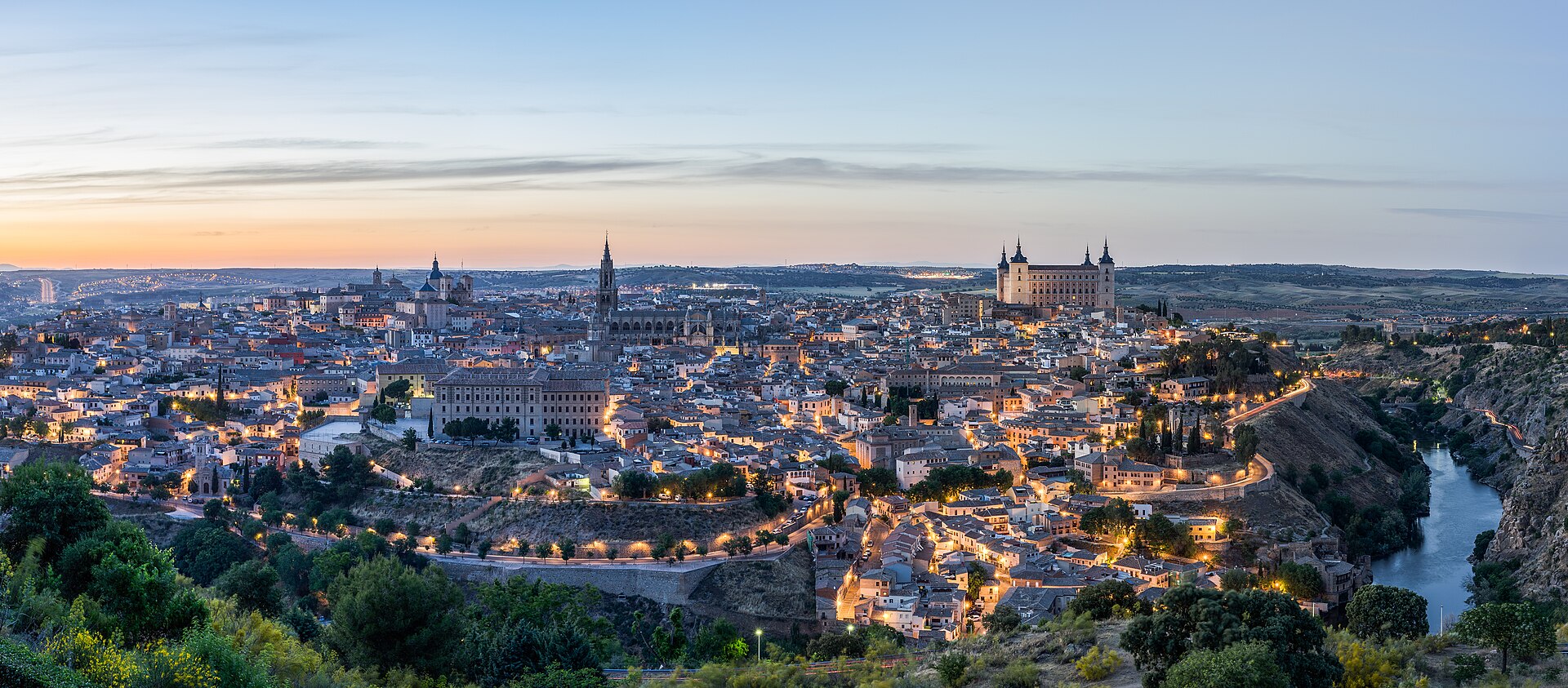
Take an early AVANT/AVE from Madrid-Puerta de Atocha to Toledo — the nonstop run is about 33 minutes and costs roughly €14–22/$15–24 each way; book ahead as departures are limited. The whole hilltop city, cradled by the Tagus River, is a UNESCO site. Climb to the vast Gothic Catedral Primada (about €12/$13) and stand before El Greco’s The Burial of the Count of Orgaz inside the nearby Iglesia de Santo Tomé. Wander the old Jewish Quarter and the Sinagoga de Santa María la Blanca. Insider tip: cross the river and walk (or take the tourist bus) to the Mirador del Valle for the postcard panorama of the walled city, best in late-afternoon light. Try local marzipán de Toledo from a convent shop, and a slice of the region’s Manchego cheese. Return to Madrid by evening train.
Day 4 — AVE South via Córdoba
Check out and ride the AVE south from Atocha, breaking the journey in Córdoba (about 1 hour 45 minutes; fares vary, roughly €30–60/$33–65 if booked early). Leave your bags in a station locker and walk 15 minutes to the Mezquita-Catedral, the astonishing mosque-cathedral with its forest of red-and-white double arches; entry is about €13/$14 and it’s free for a short window on weekday mornings, though those slots fill fast. Lose yourself in the flower-filled lanes of the Judería and peek down the impossibly narrow Calleja de las Flores. Insider tip: order salmorejo — Córdoba’s thick, chilled tomato-and-bread soup topped with egg and ham, richer than gazpacho. In the afternoon hop the short AVE leg on to Seville (about 45 minutes) and check into your hotel in the central Santa Cruz or Arénal area.
Day 5 — Seville’s Old Heart
Devote the day to Seville’s monumental core. Book a timed ticket in advance for the Real Alcázar (about €15.50/$17), a working royal palace of dazzling Mudejar tilework and gardens that doubled as Dorne in Game of Thrones. A few minutes away, climb the ramp inside La Giralda, the former minaret beside the world’s largest Gothic Catedral de Sevilla, where Columbus’s tomb rests (combined entry about €12/$13). In the afternoon, marvel at the semicircular Plaza de España in María Luisa Park — free to enter, and you can rent a rowboat on its canal for a few euros. Insider tip: Seville invented tapas culture; graze rather than commit to a big lunch, and try espinacas con garbanzos (spinach with chickpeas). Book Alcázar tickets days ahead in summer, as same-day slots routinely sell out.
Day 6 — Alcázar & Triana
Start in the medieval maze of the Barrio de Santa Cruz, the old Jewish quarter of whitewashed alleys and orange trees, ideally before the heat and crowds build. Mid-morning, cross the river on the Puente de Triana to the Triana district, historic home of flamenco and ceramics — browse the tile workshops and the Mercado de Triana food market. Consider climbing the modern Setas de Sevilla (Metropol Parasol) for rooftop views, about €15/$16. Evening is for flamenco: intimate tablaos in Triana or the Alfalfa area run roughly €20–35/$22–38 and are worth the splurge over free-but-touristy bar shows. Insider tip: for authentic, raw flamenco visit the Casa de la Memoria or a Triana peña rather than a dinner-show; the artistry is closer and the prices honest. Sip a chilled fino sherry, Andalusia’s signature aperitif, alongside fried fish (pescaíto frito).
Day 7 — Granada & the Alhambra
Travel from Seville to Granada — the most reliable option is a direct bus (about 3 hours, roughly €25–35/$27–38) or a train via Antequera; book the morning departure so you arrive by early afternoon. Granada’s crown is the Alhambra, the Nasrid hilltop palace-fortress that is one of the finest examples of Islamic architecture in the world. This is the single most important booking of your trip: reserve tickets weeks ahead on the official site (about €18–22/$20–24), and note your Nasrid Palaces entry is a strict half-hour timed slot — miss it and you don’t get in. Wander the Generalife summer gardens and the Alcazaba ramparts for city views. Insider tip: an evening Nasrid Palaces visit is cheaper, cooler and gorgeously lit — a superb alternative if daytime is sold out. Tapas here still come free with drinks, more generously than almost anywhere in Spain.
Day 8 — Albaicín & Sacromonte
Spend the morning in the Albaicín, the old Moorish quarter of steep cobbled lanes climbing opposite the Alhambra. Make for the Mirador de San Nicolás, whose terrace frames the classic view of the palace against the snow-dusted Sierra Nevada — go early or near sunset for the best light and fewer crowds. Wander down through the Caldería Nueva, Granada’s “little Morocco” of teterias (Moroccan tea houses) and spice shops. In the afternoon explore the Sacromonte hillside, famous for its cave dwellings and zambra flamenco. Free to roam; the small Cuevas del Sacromonte museum costs about €5/$5.50. Insider tip: to soak up local life, follow the tapas trail along Calle Navas or Calle Elvira, where each drink (about €2.50/$2.75) earns a free plate — three or four rounds is dinner. Try habas con jamón, broad beans with cured ham.
Day 9 — North to Barcelona
Today is a long transfer north; there is no fast direct rail, so flying is the sensible choice. From Granada Airport (about 45 minutes by shuttle bus or taxi from the centre) take a short domestic flight to Barcelona-El Prat (roughly 1.5 hours in the air; fares vary widely, often €40–100/$44–110 if booked early). From El Prat, the Aerobus or Rodalies train reaches the centre in about 30–35 minutes for a few euros. Check into a hotel in the Eixample or Gothic Quarter. Spend the afternoon easing into the city on foot: stroll the tree-lined Passeig de Gràcia past Gaudí’s undulating Casa Batlló and La Pedrera (Casa Milà), then descend the leafy La Rambla to the Mercat de la Boqueria. Insider tip: in Catalonia, order pa amb tomàquet (bread rubbed with tomato) and a glass of cava; watch your belongings closely on La Rambla, a notorious pickpocket zone.
Day 10 — Gaudí & Farewell
On your final day, dive into Gaudí’s masterworks. Book a timed slot far in advance for the Sagrada Família — basic entry is about €26/$29 and 2026 marks the Gaudí centenary, so slots sell out days ahead; the tower climb costs more and must be reserved. Then taxi or Metro up to Park Güell, the whimsical mosaic-tiled park with sweeping city views (Monumental Zone about €10/$11, also timed). Spend your last afternoon in the atmospheric Barri Gòtic around the Catedral de Barcelona and the medieval El Born district, home to the Basilica of Santa Maria del Mar and the Picasso Museum. Insider tip: for a proper Catalan send-off, book a seafood paella or fideuà near the Barceloneta beach, but note that authentic paella is a lunch dish — a restaurant pushing it as a quick dinner special is often reheated. Toast the trip with a final glass of cava.
What to book ahead
- Sagrada Familia: Book online at least 1 month ahead, longer in peak season (June-September). Tickets sell out same-day.
- Alhambra Granada: Book 2-3 months ahead — most pre-booked Spain attraction. Tickets release on rolling 90-day window.
- AVE trains: Book online via Renfe 60+ days ahead for promo fares (US$30-60 instead of US$90-150).
- San Sebastián Michelin restaurants: Asador Etxebarri, Arzak, Mugaritz — book 6+ months ahead for season.
A local insider tip
Skip Las Ramblas in Barcelona for shopping and dining — it’s the most aggressively tourist-trapped strip in Spain. Eat one block back in El Born or Gothic Quarter for the same atmosphere at 30% lower prices and zero pickpocketing risk.
Best time for this trip
April-June and September-October. Avoid July-August (40°C+ inland, beach crowds, brutal heat in Madrid and Sevilla).
Smart routing for Spain: the mistakes to avoid
The sequencing error that quietly wrecks a Spain loop is trying to bolt Granada on as a day trip from Seville. Granada earns two nights minimum, because the Alhambra’s Nasrid Palaces admit you only during the exact time slot printed on your ticket; arrive more than a few minutes late and you forfeit the palaces entirely, no refund. Those timed slots sell out weeks ahead, so book on the official patronato site two to three months out for spring and summer dates rather than gambling on the gate.
The good news on routing is that the long-delayed direct Seville to Granada rail link finally opened, so you no longer need a connection through Antequera. Renfe now runs about eight services a day in roughly 2 hours 40 minutes to 3 hours, with advance fares from around 21 euros. That makes a clean two-night Granada wedge between Seville and Madrid realistic without a rental car. Slot the Nasrid Palace entry for a mid-morning the day after you arrive, then keep the afternoon for the Generalife gardens and the Albaicin viewpoints.
Frequently asked questions
Is 10 days enough for Spain?
Yes for the classic Madrid + Barcelona + Andalusia + San Sebastián circuit. 14 days lets you add Valencia or Mallorca. 21 days for full circuit including Galicia and Asturias.
How much does a 10-day Spain trip cost?
Backpacker: US$900-1300. Mid-range: US$2200-3400. Luxury: US$6500+ per person.
Train or rental car in Spain?
Trains for the classic city circuit — AVE network is excellent. Rental car only if doing rural Andalusia or northern coast deep-dive.
Best time to visit Spain?
April-June and September-October — warm but not Mediterranean-brutal. Avoid July-August (heat + crowds).
Is Spain safe?
Very safe overall. Pickpocketing in Barcelona (Las Ramblas, metro) and Madrid (Sol metro) — keep zipped bags in front of you.
Plan your Spain trip
You Might Also Love

Written by
John Morrison is the founder and lead travel writer at Packzup. Over the past decade he has explored destinations across Africa, the Americas, Asia, Europe, the Middle East, and Oceania — always self-funded, never on a press trip.