
Last updated September 8, 2026 · Editorial policy
Italy vs Spain: traveler quick facts
Quick facts: Italy runs about $180-300/day mid-range (Pricey) vs Spain at about $100-180/day (Moderate). Spain is roughly 42% cheaper per day mid-range.
| Traveler factor | Italy | Spain |
|---|---|---|
| Daily cost (mid-range) | $180-300 (Pricey) | $100-180 (Moderate) |
| Tourist tax | Municipal tax where levied, ~EUR 1-10 pp/night by city (Rome 3-10, Venice 1-4.50, Florence 1-8) | EUR 12.00 per person per night at 5-star hotels in Barcelona (regional IEET EUR 7.00 + EUR |
| Tipping | Optional / appreciated | Optional / appreciated |
| Plug & voltage | C, F, L | 230V | C, F | 230V |
| Adapter needed from US | Yes | Yes |
Compiled from Packzup's Travel Cost Index, Tourist Tax Index, Tipping Index and Power Plug Index — updated 2026. Costs are per person, mid-range, excluding flights.
- Italy vs Spain at a glance
- How Italy and Spain compare on what matters
- Italy or Spain: the honest verdict
- Helpful Packzup guides
- Italy or Spain: which is better?
- You do not have to choose: how to route one trip through both
- Italy Vs Spain FAQ
- Frequently asked questions
- Which is better for your trip, Italy or Spain?
Quick verdict: Both are gold-standard European trip destinations with sun, food, and centuries of culture. Italy is the more refined, art-and-architecture obsessed pick. Spain is the more theatrical, late-night, regional-diversity pick. Here is how to actually decide.
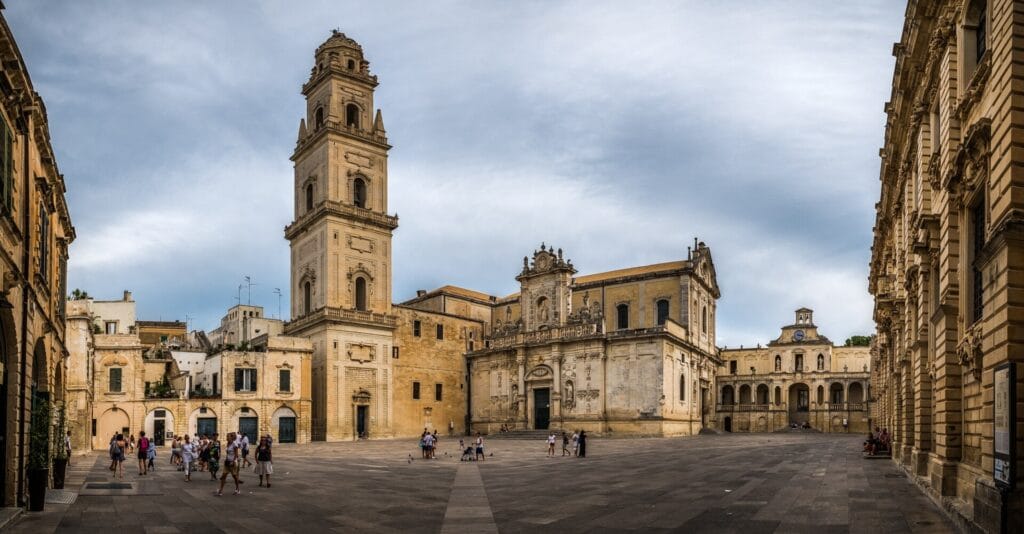
Italy
Best time: Apr-Jun, Sep-Oct
Daily cost: $130-200/day
Spain
Best time: Apr-Jun, Sep-Oct
Daily cost: $110-170/day
When to go: Italy vs Spain
Measured, not guessed — five years of climate normals (WMO 1991–2020, or ERA5 2019–2023 where unavailable). Months are ranked by how close the average high sits to 25°C, penalised by wet days.
Italy
- Best month
- June
- Then expect
- 29.8°C · 5 wet days
- Next best
- September, October
- Wettest month
- November (16 wet days)
Spain
- Best month
- May
- Then expect
- 25.1°C · 5 wet days
- Next best
- September, June
- Wettest month
- April (11 wet days)
- Different windows — Italy peaks in June, Spain in May. If your dates are fixed, that is the deciding factor.
- Biggest split is November — Italy is 3.5°C warmer that month.
Source: climate normals (WMO 1991–2020, or ERA5 2019–2023 where unavailable) via Open-Meteo, CC BY 4.0 — Packzup Travel Climate Dataset (open data).
Italy vs Spain at a glance
| Italy | Spain | |
|---|---|---|
| Best for | Art, food, history | Beaches, tapas, nightlife, variety |
| Vibe | Classic, romantic | Lively, late, social |
| Daily budget (mid-range) | €100–160 | €90–140 |
| Best time | Apr–Jun, Sep–Oct | Apr–Jun, Sep–Oct |
| Don’t miss | Rome, Florence, Venice, Amalfi | Barcelona, Madrid, Seville, Granada |
| The catch | Crowds; scams | Late dining; August heat |
How Italy and Spain compare on what matters
Food
Cities
Cost
Nightlife
History & Art
Ease of Travel
Italy or Spain: the honest verdict
Helpful Packzup guides
Italy or Spain: which is better?
Choose Italy if your trip is built around a few iconic, dense days of art and ruins, and you’ll happily pay for them. Choose Spain if you want the same Mediterranean magic with more euros left in your pocket and a slower, later rhythm. The single deciding factor is how you eat. In Spain, almost any weekday lunch is a three-course menú del día with bread and a drink for €12–18; in Rome a comparable trattoria meal runs €25 and up before wine. Multiply that across two weeks and Spain quietly funds an extra night somewhere.
Three concrete gaps worth knowing for 2026:
- Spain runs roughly 10–15% cheaper day to day, and the food math above is where you feel it most.
- New fees cut differently. Day-trip Venice on a peak Friday and you’ll pay a €5–10 entry fee just to walk in; Barcelona’s overnight tourist tax jumps to €10–15 per night from April 2026.
- For sheer hit rate, Italy stacks Rome, Florence and Venice within a few train hours. Spain spreads its best moments wider, from the Alhambra in Granada to late tapas crawls in Seville’s Triana.
First real trip to Europe and chasing bucket-list landmarks? Italy. Want warmth, value and nightlife that doesn’t quit? Spain.
You do not have to choose: how to route one trip through both
The smartest answer to Italy versus Spain is often a single trip that does both, and the connection is easier than most people assume. A flight between Rome and Barcelona runs about 1 hour 55 minutes, and Vueling, Ryanair, ITA Airways and Iberia all fly it cheaply when booked roughly six weeks out. Skip the train for this leg: there is no direct rail service, so the fastest schedules need around three changes and over 21 hours, and advance fares start near 280 dollars one-way. Flying is both faster and usually cheaper.
The honest mistake is splitting two weeks evenly and burning a day in each airport. A cleaner shape is to anchor in one country, then bolt on a 4 to 5 day tail in the other. Land in Rome, work north toward Florence, then fly out of a Spanish hub at the end. Two practical cost notes for 2026: Venice charges a day-tripper access fee of about 5 euros on busy dates, rising to roughly 10 euros if you register late, and Barcelona raised its city tax to about 6.60 euros per person per night from April. Budget those in rather than being surprised at checkout.
- Pair high-energy cities with slower regions: Barcelona with Tuscany, or Rome with Andalusia, so you alternate intensity instead of stacking two capitals back to back.
One open-jaw ticket, into Italy and out of Spain, avoids a costly backtrack and is the single change that makes a combined route work.
Italy Vs Spain FAQ
Is Italy or Spain cheaper?
Spain — food, wine and hotels run 15–25% less, especially outside Barcelona.
Which has better beaches?
Spain, with more variety plus the Balearic and Canary Islands.
Frequently asked questions
Can I visit Italy and Spain in one trip?
Is Spain cheaper than Italy?
Which has better beaches?
Which has better food?
Better for honeymoon?
Some links on Packzup are affiliate links. We may earn a small commission at no extra cost to you. We only recommend partners we trust.
Compare: England vs Italy — pubs and castles vs piazzas and pasta.
Compare: Brazil vs Spain — beaches and samba vs tapas and siestas.
Which is better for your trip, Italy or Spain?
For families
Verdict: Spain wins for families. Spain’s beach coasts are simply easier with kids: the Costa Dorada pairs shallow, calm beaches with PortAventura, one of Europe’s biggest theme parks, and resorts on the Costa del Sol and in the Balearics are built around family logistics with kids’ pools and short airport transfers. Italy’s family highlights like Rome and the Amalfi Coast involve more crowds, stairs, and pricier hotels, and its best beaches often require a car. Spanish dinner hours run late, but beachfront chiringuitos serve all day.
For couples & honeymoons
Verdict: Italy wins for couples and honeymoons. Venice gondolas, Tuscan hilltop towns like Montepulciano, and the Amalfi Coast’s cliffside hotels in Positano and Ravello are the romantic gold standard, and Italy’s rail network lets you combine two or three regions in one trip; note the Amalfi towns themselves need a bus or ferry hop from Salerno or Naples. Spain has Seville’s orange-blossom lanes and Granada’s Alhambra, but for a once-in-a-lifetime romance itinerary, Italy’s density of iconic settings is unmatched. Book Amalfi for May, June, or September to dodge the worst crowds and heat.
For budget travelers
Verdict: Spain wins on a budget. A weekday menu del dia lunch in Spain still runs roughly 12 to 16 euros for three courses with a drink, and cities like Valencia, Seville, and Granada undercut Rome and Florence on both hotels and tapas-style eating. Italy can be cheap in Puglia, Sicily, and Naples, but its headline sights, Venice, the Amalfi Coast, Cinque Terre, carry some of Europe’s highest peak-season prices. Budget airlines also blanket Spain’s coastal airports with cheap fares year-round.
For food lovers
Verdict: Italy wins for food, narrowly. Italy’s regional depth, Neapolitan pizza, Bologna’s fresh pasta, Sicilian street food, Piedmont’s truffles, means every region eats differently, and everyday trattoria cooking is consistently excellent at modest prices. Spain counters hard at the top end: San Sebastian has one of the world’s densest clusters of Michelin-starred restaurants, and its pintxos bars are a destination in themselves. Go to Spain to graze and splurge; go to Italy to eat brilliantly everywhere, every day.
Planning the trip? Go deeper with our Italy Travel guide and best time to visit Spain.
You Might Also Love



Written by
John Morrison is the founder and lead travel writer at Packzup. Over the past decade he has explored destinations across Africa, the Americas, Asia, Europe, the Middle East, and Oceania — always self-funded, never on a press trip.
