Things to do
The 12 things to do in Barcelona
Barcelona is one of Europe’s most concentrated cities for visual culture – Gaudi’s modernist architecture, Picasso’s formative years, the Gothic Quarter’s medieval lanes, and the Mediterranean beach right against the city. These 12 things define a 3-5 day trip.
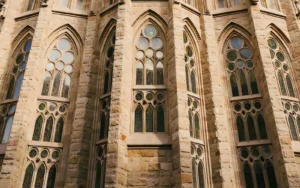
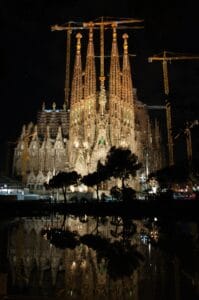
Sagrada Familia
Gaudi’s basilica, under construction since 1882 and scheduled for completion around 2026-2030. The interior columns mimic a forest canopy with light filtered through stained glass.
- Why do it
- The most photographed building in Spain and arguably the most ambitious architectural project of the modern era. The interior light is the experience.
- How long
- 2 hours
- What it costs
- 26-40 EUR depending on tower access
- When to go
- Book online 2-3 weeks ahead. Late afternoon timed entry (4-5pm) catches the western stained glass at its best.
Park Guell
Gaudi-designed park with the famous mosaic dragon (El Drac), serpentine bench, and panoramic Barcelona viewpoint. Most of the park is free; the Monumental Zone (with the dragon and mosaic terrace) requires a ticket.
- Why do it
- Where Gaudi’s organic-form architecture meets a hilltop public park. Worth the climb (or M-Bus 24).
- How long
- 2-3 hours
- What it costs
- 10-13 EUR for Monumental Zone
- When to go
- Pre-9am or after 5pm for fewer crowds. Sunset from the upper park is spectacular.
Casa Batllo + Casa Mila (La Pedrera)
Two Gaudi residential masterpieces on Passeig de Gracia. Casa Batllo has the dragon-scale facade and ‘magic night’ experience; Casa Mila has the rooftop chimneys.
- Why do it
- Modernism at residential scale. Casa Batllo’s facade is the iconic shot; Casa Mila’s rooftop is the underrated one.
- How long
- 1.5-2 hours each
- What it costs
- Casa Batllo 35 EUR; Casa Mila 28 EUR
- When to go
- Casa Batllo evenings have a ‘magic night’ experience with music. Casa Mila is best at sunset for rooftop light.
Picasso Museum
Five medieval Born palaces house Picasso’s most complete early-period collection, including his Las Meninas series and the Blue Period works.
- Why do it
- The most important Picasso collection outside of Paris’s Picasso Museum. Shows his evolution from teenage technical mastery to abstract experimentation.
- How long
- 1.5-2 hours
- What it costs
- 15 EUR; free Thursday after 5pm and first Sunday
- When to go
- Closed Monday. Best on Tuesday morning.
Gothic Quarter walk
Medieval Barcelona’s narrow winding lanes, Roman walls, Barcelona Cathedral, Placa Sant Felip Neri (bullet-marked from Spanish Civil War), and Placa Reial with Gaudi’s first commissioned lamp posts.
- Why do it
- The deepest historical layer in Barcelona. Worth doing at golden hour and again after dark.
- How long
- 2-3 hours
- What it costs
- Free; Cathedral entry 9 EUR
- When to go
- Late afternoon for golden-hour light. Avoid La Rambla (overtouristed); explore the quieter eastern Gothic Quarter.
Tapas crawl in El Born or Gracia
Move between 4-6 tapas bars across one neighborhood, sharing one or two plates at each. Quimet & Quimet, Cal Pep, Cana Vela, Bar del Pla are the iconic Born stops; Gracia has more local-leaning options.
- Why do it
- How Catalans actually eat. Better than a sit-down ‘tapas restaurant’.
- How long
- 3-4 hours
- What it costs
- 30-50 EUR per person across multiple stops
- When to go
- Dinner timing in Spain is 8-10pm. Start at 7:30pm with vermut, move to tapas at 9pm.
Barceloneta beach + seafood lunch
Urban beach right at the edge of central Barcelona, with the Hotel W tower at one end and the Olympic harbor at the other. Lunch at La Mar Salada or Can Sole for serious seafood.
- Why do it
- The only major European city with a real beach inside city limits. Best paella in Barcelona is here too.
- How long
- Half day with lunch
- What it costs
- Beach free; lunch 30-60 EUR per person
- When to go
- Weekday mornings in summer for less crowded beach. Cooler months (April-October) for swimming and views.
Boqueria Market for breakfast
Barcelona’s largest covered market, on La Rambla. Fresh seafood, jamón, fruit, juices, and breakfast counters (Pinotxo and El Quim de la Boqueria are the icons).
- Why do it
- Best market breakfast in Europe and a working market, not a tourist trap.
- How long
- 1-2 hours
- What it costs
- 10-25 EUR for breakfast
- When to go
- 8-10am to see the market still being set up. Closed Sunday.
Montjuic Magic Fountain + Olympic Stadium
Hilltop area south of the city with the Magic Fountain music-and-light show, the 1992 Olympic Stadium, MNAC (National Art Museum of Catalonia), and the Fundacio Joan Miro.
- Why do it
- The cultural high-density area Spaniards prioritize. The Fountain show is touristy but iconic.
- How long
- Half to full day
- What it costs
- Free fountain show; MNAC 14 EUR
- When to go
- Fountain show: Thursday-Sunday 9-9:30pm (varies). MNAC: Tuesday-Sunday.
Camp Nou (if Barca isn’t playing)
FC Barcelona’s massive stadium. Even non-fans can do the tour with locker room access, trophy room, and pitchside seats. Major renovation through 2026 may affect access.
- Why do it
- The largest football stadium in Europe. The atmosphere on match day (if you can get tickets) is the experience.
- How long
- 2-3 hours for tour; 3-4 hours for match
- What it costs
- 30 EUR tour; 60-200 EUR match tickets
- When to go
- Check renovation status before planning. Match days are unique.
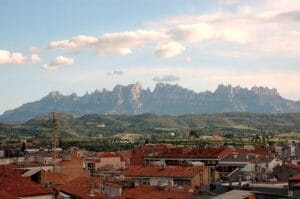
Day trip to Montserrat
Serrated holy mountain northwest of Barcelona, with a Benedictine monastery housing the Black Madonna, easy hiking trails, and a 1pm boys’ choir performance most days.
- Why do it
- Striking geological setting and one of Catalonia’s most-visited cultural sites.
- How long
- Full day
- What it costs
- 30 EUR train + cable car combo
- When to go
- 8am train from Plaça Espanya to beat the tour buses. Choir doesn’t sing in July.
Modernist hospital (Sant Pau)
Massive Art Nouveau hospital complex (1902-1930), now restored as a museum. Often called ‘the most beautiful hospital in the world.’
- Why do it
- Vastly underrated alternative to the Gaudi crowd-magnets. The mosaic-detailed pavilions and underground tunnels are spectacular.
- How long
- 1.5-2 hours
- What it costs
- 16 EUR
- When to go
- Pre-11am or after 3pm. Far less crowded than Gaudi sites.