Quick verdict: Both are hyper-efficient, deeply safe, and food-obsessed in ways most Western countries can’t match. But the texture is wildly different. Japan is layered tradition with a futuristic gloss. Korea is the trend-setting, dynamic, beat-driven sibling. Here’s how to choose.
Japan
Best time: Mar-May, Oct-Nov Daily cost: $120-180/day
South Korea
Best time: Apr-Jun, Sep-Oct Daily cost: $85-140/day
When to go: Japan vs South Korea
Measured, not guessed — five years of ERA5 reanalysis (2019–2023). Months are ranked by how close the average high sits to 25°C, penalised by wet days.
Japan
Best month
May
Then expect
22.9°C · 12 wet days
Next best
October, November
Wettest month
July (20 wet days)
J9°January: average high 9 degrees Celsius, 6 wet daysF11°February: average high 10.8 degrees Celsius, 7 wet daysM15°March: average high 15.3 degrees Celsius, 12 wet daysA18°April: average high 18.2 degrees Celsius, 11 wet daysM23°May: average high 22.9 degrees Celsius, 12 wet daysJ26°June: average high 26.2 degrees Celsius, 16 wet daysJ30°July: average high 29.6 degrees Celsius, 20 wet daysA32°August: average high 32 degrees Celsius, 14 wet daysS28°September: average high 27.8 degrees Celsius, 14 wet daysO22°October: average high 21.5 degrees Celsius, 13 wet daysN18°November: average high 17.5 degrees Celsius, 8 wet daysD12°December: average high 11.6 degrees Celsius, 7 wet days
South Korea
Best month
September
Then expect
25°C · 10 wet days
Next best
May, June
Wettest month
August (19 wet days)
J2°January: average high 2.4 degrees Celsius, 3 wet daysF5°February: average high 5.3 degrees Celsius, 3 wet daysM12°March: average high 12.1 degrees Celsius, 6 wet daysA17°April: average high 17 degrees Celsius, 7 wet daysM23°May: average high 22.5 degrees Celsius, 9 wet daysJ26°June: average high 26.2 degrees Celsius, 12 wet daysJ29°July: average high 28.8 degrees Celsius, 18 wet daysA29°August: average high 28.6 degrees Celsius, 19 wet daysS25°September: average high 25 degrees Celsius, 10 wet daysO18°October: average high 18.4 degrees Celsius, 7 wet daysN11°November: average high 11.4 degrees Celsius, 7 wet daysD3°December: average high 3 degrees Celsius, 5 wet days
Different windows — Japan peaks in May, South Korea in September. If your dates are fixed, that is the deciding factor.
South Korea is the drier bet at its peak — 10 wet days vs 12.
Biggest split is December — Japan is 8.6°C warmer that month.
Source: ERA5 reanalysis (2019–2023) via Open-Meteo, CC BY 4.0 — Packzup Travel Climate Dataset (open data).
South KoreaHanok villages, palaces, K-pop world, modern art (Leeum). More accessible to youth culture.
Edge: Japan
Cost
JapanPricier — $120-180/day mid-range. Tokyo and Kyoto hotels expensive.
South Korea$85-140/day; subway is cheaper, hotels run 30-40% less, street food legitimately a meal.
Edge: Korea
Nature
JapanMount Fuji, Japanese Alps, Hokkaido, hot springs, autumn foliage — diverse.
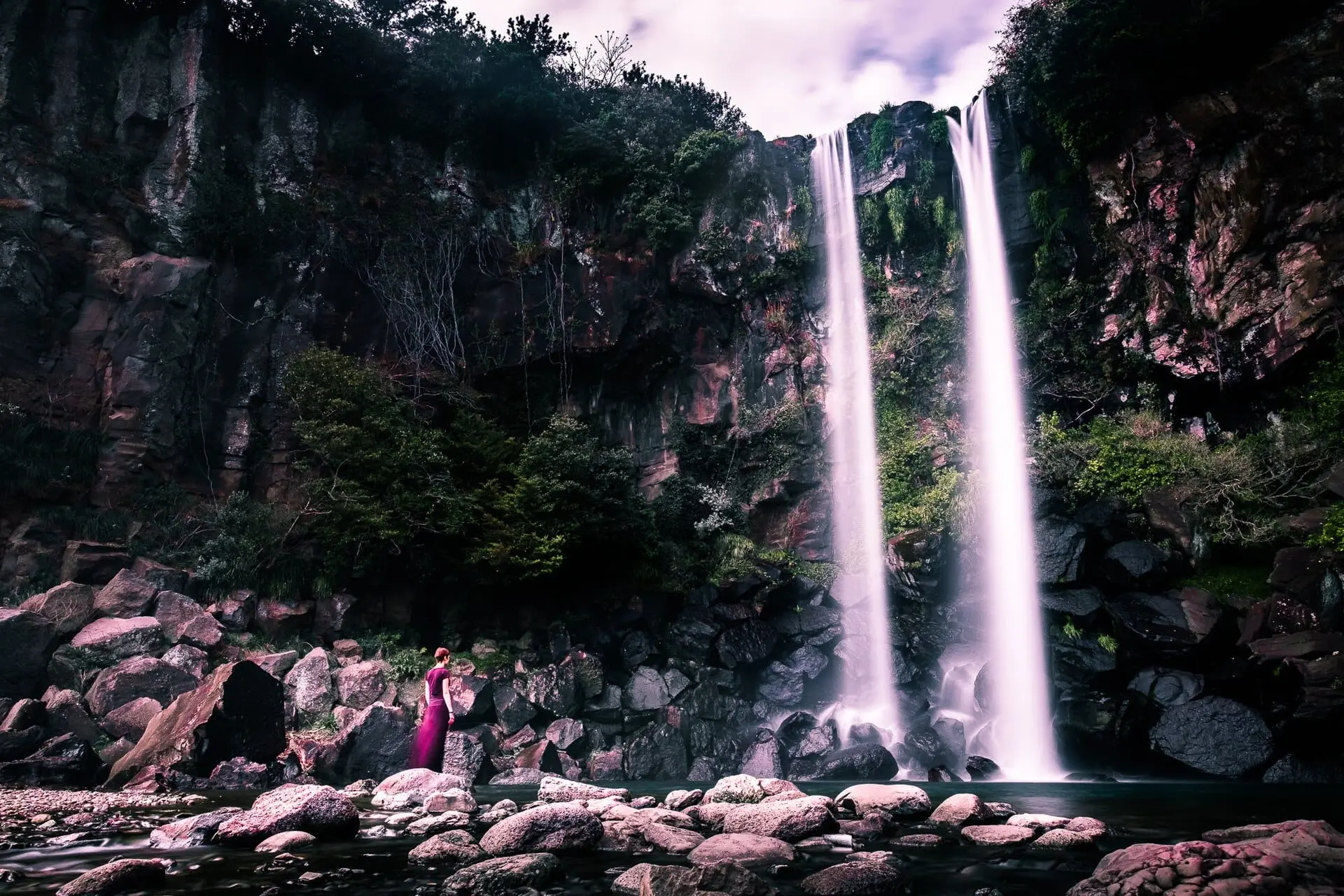
South KoreaJeju Island, Seoraksan, Boseong tea fields — beautiful but smaller country.
Edge: Japan
Ease & English
JapanEnglish signage solid in main cities; locals reserved but helpful. Cash-heavy still.
South KoreaEnglish signage strong, payment fully cashless, faster wifi than Japan.
Edge: Korea
Japan or South Korea: the honest verdict
Japan for first-timer to Asia, lifelong-trip checklist, traditional culture lover, or food obsessive. South Korea for energetic city break, K-pop/K-drama fan, better value, or anyone wanting a shorter trip (Korea is half the size and easier to do in 7-10 days).
Ready to book? Compare tours and tickets for both.
Choose South Korea if you want a faster, cheaper trip; choose Japan if breadth of scenery and food justifies paying more to move around. The single deciding factor is intercity travel cost. Japan’s 7-day Japan Rail Pass jumped roughly 70% in October 2023 to about 50,000 yen (around $335), so a typical first-timer loop now eats a big chunk of the budget before you board. Korea’s KTX charges per ticket with no pricey pass needed: Seoul to Busan, the full length of the country in about 2.5 hours, runs around 59,800 won (about $50). That gap compounds daily, which is why budget travelers spend near $42 a day in Korea versus about $77 in Japan.
Two more concrete differences settle it. Korea is small enough to base yourself in Seoul and day-trip, while Japan’s payoff is geographic spread, from Hokkaido snow to Okinawa reefs and the volcanic cone of Mount Fuji. And entry is frictionless for US passport holders right now: Korea has waived its K-ETA fee through December 31, 2026, so you skip both the application and the cost. Pick Korea for a tight, wallet-friendly week; pick Japan when the variety is worth the higher transit bill.
Frequently asked questions
Can I visit Japan and Korea in one trip?
Yes — it’s a fantastic combo. Flights between Tokyo/Osaka and Seoul/Busan run 90 minutes and are cheap. Plan minimum 14 days for both. Common route: 8-9 days Japan (Tokyo, Kyoto, Osaka) then 5-6 days Korea (Seoul + Busan).
Which is better value?
Korea, clearly. Subway is cheaper, hotels run 30-40% less, and street food is a legitimate meal for $5-8. Japan’s mid-range and high-end is significantly pricier than Korea’s equivalent.
Which has better food?
Subjective. Japan wins on consistency, refinement, and depth (more Michelin stars than any country). Korea wins on bold flavors, sharing culture, and night-eating scene. Both are top-3 food destinations in the world.
Which is better for solo travelers?
Japan ranks slightly higher for solo travel — exceptional safety, single-seating culture (ramen counters, sushi bars), and excellent solo-friendly trains. Korea is equally safe but more couples/group-oriented socially.
When should I avoid each?
Japan: avoid Golden Week (late April-early May) and Obon (mid-August) — domestic travel chaos. Korea: avoid Chuseok (mid-September Korean Thanksgiving) and Lunar New Year — most shops shut, transport packed.
Some links on Packzup are affiliate links. We may earn a small commission at no extra cost to you. We only recommend partners we trust.
John Morrison is the founder and lead travel writer at Packzup. Over the past decade he has explored destinations across Africa, the Americas, Asia, Europe, the Middle East, and Oceania — always self-funded, never on a press trip.