
Last updated September 1, 2026 · Editorial policy
Quick answer: 10-day Croatia itinerary. Best months: May-June and September-October. July-August is peak (and overcrowded with Game of Thrones tourism). Total cost: US$1800-2600 mid-range / US$5000+ luxury per person. Includes ferry transport + accommodation.
Ten days covers Croatia’s classic Adriatic strip — Dubrovnik, Split, the Dalmatian islands (Hvar, Korčula, Brač), plus Plitvice Lakes for inland scenery. This itinerary uses ferries (Adriatic coast) + a rental car (Plitvice access). Built across 2 personal Croatia trips.
Croatia itineraries by trip length
Still deciding? Compare: Croatia vs Portugal · Croatia vs Spain
Day-by-day breakdown
Day 1 — Zagreb Old Town Arrival
Land at Zagreb Airport and take the Croatia Airlines shuttle bus into the city (about €8 / roughly $9, 30 minutes to the main bus station). Base yourself in the Lower Town (Donji Grad), then walk up to Ban Jelačić Square, the pulsing heart of the capital. Ride the tiny Uspinjača funicular — one of the world’s shortest at 66 metres, about €1 (roughly $1.10) — up to the Upper Town for the noon firing of the Grič Cannon from the Lotrščak Tower. Wander the medieval lanes past St. Mark’s Church with its famous tiled coat-of-arms roof. For dinner, settle into a konoba in Tkalčićeva Street and try štrukli, baked cheese pastry that is pure Zagreb comfort food. Planning note: the funicular is charming but the parallel stone staircase beside it is free and takes barely two minutes.
Day 2 — Zagreb Museums & Markets
Start early at Dolac Market, the open-air “belly of Zagreb,” where farmers sell škripavac cheese, honey and seasonal fruit under signature red umbrellas — go before 10am for the best pick. A short walk away sits the quirky Museum of Broken Relationships, a genuinely moving collection of donated mementos (entry about €7 / roughly $7.50). Spend the afternoon in the leafy Zrinjevac and the “Green Horseshoe” chain of parks, then browse the neo-Baroque Croatian National Theatre square. If open, the Museum of Contemporary Art across the river is worth the tram ride. In the evening, join locals for coffee on a Bogovićeva Street terrace — the leisurely špica ritual is a Zagreb institution. Try a plate of purica s mlincima, roast turkey with baked flatbread, a Zagorje regional classic. Planning note: buy a day tram ticket (about €1.60) to hop the efficient ZET network.
Day 3 — Plitvice Lakes Waterfalls
Pick up a rental car or catch a morning bus toward Plitvice Lakes National Park, roughly a two-hour drive south on the A1 motorway. This UNESCO-listed wonder chains sixteen turquoise lakes down travertine terraces linked by roaring waterfalls, including the towering Veliki Slap. Peak-season adult entry runs about €40 (roughly $43) and includes the shuttle bus and the electric boat across Kozjak lake — book a timed morning slot online, as gates cap daily numbers. Follow one of the marked lettered routes; Programme C balances the Upper and Lower Lakes in three to four hours along cedar boardwalks suspended over glass-clear water. Bring water and grippy shoes, since the planks get slick with spray. Planning note: enter at Entrance 2 and walk the Lower Lakes first to beat the tour-bus crowds that flood in from Entrance 1 mid-morning. Overnight in a village guesthouse nearby.
Day 4 — Coastal Zadar Sunset
Drive or bus onward to Zadar on the Dalmatian coast, about two hours west, trading forests for the sparkling Adriatic. This underrated Roman-founded city packs its history onto a compact peninsula. Wander the Roman Forum ruins and step inside the round, ninth-century Church of St. Donatus, one of Croatia’s finest pre-Romanesque buildings (small entry, about €5 / roughly $5.50). Climb the Cathedral of St. Anastasia bell tower for rooftop views across the channel. But save the waterfront Riva for sunset, where the Sea Organ plays haunting tones through wave-driven pipes and the adjacent Greeting to the Sun solar disc lights up the promenade after dark — both free, and both genuinely magical. Alfred Hitchcock called Zadar’s sunset the world’s finest. Planning note: grab a scoop of local Maraschino-cherry gelato and claim a spot on the Sea Organ steps an hour before dusk.
Day 5 — Split & Diocletian’s Palace
Head south to Split, roughly ninety minutes by bus or car along the coast. Croatia’s second city is built inside a living Roman monument: the fourth-century Diocletian’s Palace, a UNESCO site where cafes, apartments and shops fill the emperor’s retirement complex. Explore the columned Peristyle square, descend into the atmospheric substructures (basement halls, small fee about €7 / roughly $7.50), and climb the Cathedral of St. Domnius bell tower for terracotta-roof panoramas (about €7). Escape the afternoon heat with a walk up the wooded Marjan Hill peninsula for views over the harbour and islands. A guided walking tour brings the palace stones to life. For dinner, hunt down a pašticada — slow-braised beef in a sweet-and-sour wine sauce served with gnocchi, the definitive Dalmatian feast. Planning note: the Riva promenade’s cafes charge a premium; step two streets inland for far better value.
Day 6 — Ferry to Hvar Town
Catch a morning high-speed catamaran from Split’s ferry terminal to Hvar Town, an easy crossing of under an hour with operators like Jadrolinija or Krilo (about €10–20 / roughly $11–22 one way). In July and August popular sailings sell out, so book a day or two ahead. Sun-drenched Hvar is Croatia’s glamour island, and its car-free old town wraps around a marble main square dominated by the Cathedral of St. Stephen. Hike or take the short path up to the Fortica (Španjola) fortress above town (entry about €10) for a knockout view over the Pakleni Islands scattered offshore. Sip a glass of the island’s robust plavac mali red or crisp local bogdanuša white on a harbour terrace as the yachts glide in. Planning note: Hvar has some of Europe’s highest annual sunshine hours — but pack a light layer, as the evening maestral breeze can surprise you.
Day 7 — Hvar Island & Beaches
Spend a full day soaking up island life. Water-taxi across to the Pakleni Islands (round trip roughly €10–15 / about $11–16), where Palmižana bay offers a sandy-bottomed swim, a botanical garden and easygoing beach restaurants — a lovely half-day escape. Back on Hvar, rent a scooter or join a wine tour inland to the sun-baked slopes and lavender fields around Sveta Nedjelja and the UNESCO-listed Stari Grad Plain (Starigradsko polje), an ancient Greek agricultural grid still farmed today. The old port of Stari Grad on the island’s north makes a quieter, more authentic counterpoint to glitzy Hvar Town. For lunch seek out gregada, a fisherman’s stew of white fish, potatoes and white wine. Planning note: buy a small pouch of Hvar lavender from a local grower rather than an airport shop — the island’s fields have perfumed it for over a century.
Day 8 — Slow Sail to Korcula
Board a catamaran bound for Korčula, the emerald-forested island often called “Little Dubrovnik” for its walled, herringbone-planned old town on a small peninsula. Seasonal Krilo and Jadrolinija lines connect Hvar and Korčula in around an hour to ninety minutes (about €15–25 / roughly $16–27); confirm the day’s timetable, as sailings are less frequent than the Split routes. Wander the compact stone lanes designed to buffer the wind, visit the Gothic-Renaissance St. Mark’s Cathedral, and climb the tower said to overlook the reputed birthplace house of explorer Marco Polo (small fees, each about €4 / roughly $4.50). Korčula is serious wine country, so sample a glass of indigenous white Pošip or Grk from the nearby Lumbarda vineyards. Planning note: time your evening for the seafront bastion bars built into the walls — sunset drinks over the Pelješac channel are unforgettable and far cheaper than Hvar.
Day 9 — Korcula to Dubrovnik
Make the scenic sea leg south to Dubrovnik. A seasonal Krilo catamaran links Korčula to the city (often via Mljet) in roughly two hours (about €20–30 / roughly $22–33); alternatively, a car ferry plus the coastal road works if you are driving. Arriving by water gives the best first sight of the fortified Old Town rising from the Adriatic. Drop your bags and ease in with a stroll down the polished-limestone Stradun, the marble main street, pausing at the Onofrio Fountain and the Franciscan Monastery, home to one of Europe’s oldest working pharmacies (from 1317, small entry about €5 / roughly $5.50). As the crowds thin at dusk, the old town takes on a golden glow. For dinner try šporki makaruli or fresh grilled Adriatic fish. Planning note: the day-tripping cruise crowds peak from late morning to mid-afternoon — evenings inside the walls are calmer and cooler.
Day 10 — Dubrovnik City Walls Finale
Dedicate your final day to Dubrovnik’s crown jewel: a circuit of the mighty City Walls, nearly two kilometres of ramparts encircling the old town (entry about €35 / roughly $38, which also covers Fort Lovrijenac). Go right at opening, around 8am, before the heat and crowds build; the roughly two-hour walk delivers nonstop views over terracotta roofs and the sea. Afterward, ride the Dubrovnik Cable Car up Mount Srđ (round trip about €27 / roughly $29) for a sweeping panorama, and visit the sobering Homeland War museum at the summit fort. Cool off with a swim at Banje Beach just outside the Ploče Gate, or hop a short boat to leafy Lokrum island. Toast your trip with a glass of Pelješac dingač red. Planning note: the hidden Buža bar, reached through a literal hole in the seaward wall, serves drinks on the cliffs — a perfect farewell to Croatia.
What to book ahead
- Plitvice tickets: Online 2-4 weeks ahead. Peak season tickets sell out. €40 in summer, €25 in winter.
- Ferries Dubrovnik-Hvar-Split: Book 1-2 weeks ahead for July-August. Jadrolinija or Krilo Shipping.
- Dubrovnik accommodation: Book 3-6 months ahead for summer. Cheaper alternative: stay in Lapad (15 min walk to Old Town).
- Game of Thrones walking tour: Book 1-2 days ahead. €25-35 for 2-hour tour.
A local planning note
Skip Hvar Town (touristy and expensive) and base in Stari Grad on the same island instead. Stari Grad is the oldest town in Croatia, 30 min drive from Hvar Town’s nightlife, beautiful UNESCO field of Greek-Roman agricultural patterns. Half the prices, none of the cruise ship crowds.
Best time for this trip
May-June and September-October. July-August is peak (and overcrowded with Game of Thrones tourism).
The car rental mistake that strands you on the islands
Travelers see “ferry” and assume they should rent a car for the whole 10 days. On the Dubrovnik-Hvar-Split island stretch that is the wrong call. The fast services that link these towns, run by Jadrolinija and Krilo (Kapetan Luka), are passenger-only catamarans with no space for vehicles, so a car you collect in Dubrovnik just sits in a paid lot while you sail.
A few facts worth planning around:
- The Dubrovnik-Split coastal catamarans calling at Hvar and Korcula operate seasonally, roughly April 1 to October 31, and the full corridor run takes about five to six hours, so check the day’s timetable before fixing your island nights.
- Several smaller islands near Dubrovnik, including Kolocep and Lopud in the Elafiti group, ban private cars entirely.
The smart sequence is to go car-free from Dubrovnik through the islands to Split, then pick up a rental only in Split for the inland drive to Plitvice Lakes and on to Zagreb, where having your own wheels genuinely helps.
Frequently asked questions
Is 10 days enough for Croatia?
Yes for the Dalmatian Coast + Plitvice. 14 days adds Istria (Pula, Rovinj) or Zagreb. 21 days for full country.
How much does 10 days in Croatia cost?
Backpacker: US$900-1300. Mid-range: US$1800-2600. Luxury: US$5000+. Peak season prices double.
Best time for Croatia?
May-June and September-October are ideal. July-August peak crowds + heat.
Is Croatia expensive?
Mid-range US$80-130/day. Cheaper than Italy, more expensive than Eastern Europe. Coast is 30-50% more expensive than inland.
Do I need a rental car in Croatia?
Not for the coast (ferries work). YES for Plitvice + inland regions (Istria).
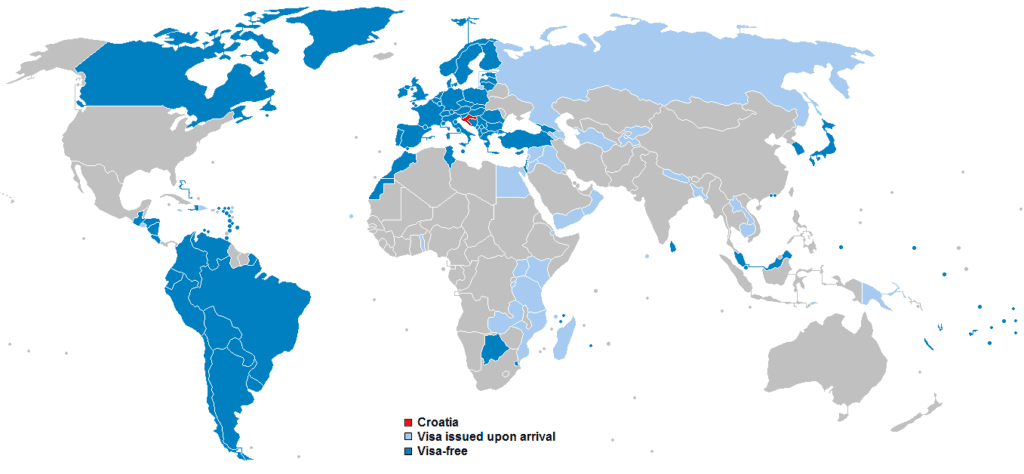
Plan your Croatia trip
Best time to visit Croatia (real climate data)
Best months: May, June, September, October.
Croatia’s warmest month is July (avg 31°C / 89°F), the coolest is January (low 4°C / 39°F). The wettest is September (104 mm) and the driest is February.
Source: Open-Meteo / WMO climate normals (WMO 1991–2020, or ERA5 2019–2023 where unavailable). See the full month-by-month weather →
You Might Also Love

Written by
John Morrison is the founder and lead travel writer at Packzup. Over the past decade he has explored destinations across Africa, the Americas, Asia, Europe, the Middle East, and Oceania — always self-funded, never on a press trip.
Trip prep: before you travel, plan what to wear, check the tap water, sort your mobile data, and see if it is a cash or card country, and skim local etiquette.
