Last updated August 21, 2026 · Editorial policy
Quick answer: This 14-day route links Beijing (4 nights), Xian (2), Chengdu (2), Shanghai (3) and Guilin/Yangshuo (3) by high-speed rail and short flights. Best months: April-May and September-October. Avoid July-August (heat + Chinese summer holidays) and major Chinese holidays (Golden Week Oct 1-7, Spring Festival). Total cost: US$2500-4500 mid-range / US$8000+ luxury per person.

Two weeks for China = 4 nights Beijing, 2 nights Xian (Terracotta Warriors), 2 nights Chengdu (pandas + Sichuan food), 3 nights Shanghai, 3 nights Guilin + Yangshuo. High-speed rail makes this manageable. Built across 2 personal China trips.
Day-by-day breakdown
Day 1
Land at Beijing Capital (PEK) or Daxing (PKX) and take the Airport Express or a Didi into the center (about ¥25–120 depending on the airport). Base yourself near Wangfujing or Qianmen — walkable to the Forbidden City and on two subway lines — or Sanlitun for nightlife and international dining. Don’t over-plan day one: beat jet lag with a gentle evening strolling the Qianmen pedestrian street and Dashilan hutong, then your first Peking duck — Da Dong for a modern, lean carving or the century-old Quanjude for the classic (about $25–40 per person). Tonight, handle the two things that make China frictionless: switch on the VPN you installed before flying, and load a card into Alipay or WeChat Pay, since most places no longer take cash.
Day 2
Start early at Tiananmen Square (bring your passport — security is strict), then enter the Forbidden City through the Meridian Gate. Pre-book the ¥60 (about $8) ticket online roughly 7 days out; it has a daily cap and walk-ups are turned away. Give it three hours, then exit the north gate into Jingshan Park and climb the hill for the postcard view over the sea of golden roofs, best in late afternoon. Spend the rest of the day getting lost on foot or by rickshaw through the Nanluoguxiang hutongs. For dinner, pick a courtyard restaurant tucked in the alleys, or graze on jianbing crepes and lamb skewers from the street stalls.
Day 3
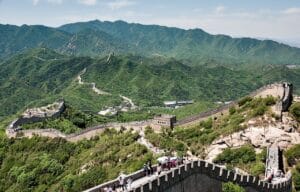
Dedicate today to the Great Wall, and skip the tour-bus crush at Badaling. Go instead to Mutianyu (about 90 minutes out) — beautifully restored, forested, and far quieter. Ride the cable car up, walk the ramparts between watchtowers 6 and 20, and take the toboggan back down (the highlight for kids). A private driver runs roughly $120–160 for the day split among your group; the entry-plus-cable-car-plus-toboggan combo is about ¥120–180. Arrive early — the coach crowds roll in by 11am. Back in the city, an evening kung fu show at the Red Theatre (about $25) is touristy fun; skip it and rest if you would rather.
Day 4
Morning at the Temple of Heaven — arrive by 8am for the real show: locals doing tai chi, water-brush calligraphy, and ballroom dancing in the park. Spend the afternoon at the Summer Palace, the Qing emperors’ lakeside retreat — walk the painted Long Corridor and cross Kunming Lake on a dragon boat. Both are easy subway rides. In the evening, browse Wangfujing snack street for the spectacle, but eat the genuinely good stuff (jianbing, zhajiangmian noodles) and skip the scorpion-on-a-stick tourist bait. It is your last Beijing night — repack for tomorrow’s train.
Day 5
Take a morning bullet train from Beijing West to Xian North (about 4.5–6 hours, around ¥515/$75 in second class). Book 2–4 weeks ahead on Trip.com or the 12306 app; it is a real-name ticket, so carry the passport you booked with and scan it at the gate. You will arrive by early afternoon — settle near the central Bell Tower. Spend the evening on a Muslim Quarter food crawl along Beiyuanmen: hand-pulled biang biang noodles, roujiamo (China’s answer to the burger), cumin lamb skewers, and sweet persimmon cakes — a feast for under $10.
Day 6
The Terracotta Army is why you came — go early (tourist bus 306 from the train station, or a private driver). Budget a full morning; the ¥120 (about $17) ticket covers all three pits, so start with the smaller Pits 2 and 3 and finish at the jaw-dropping Pit 1. A guide (about $30) is worth it to understand what you are looking at. Back in the city by afternoon, rent a bike and ride the full 14km loop atop the Ming-dynasty City Wall (about ¥45 entry plus ¥45 bike hire), best at golden hour. Dinner: a Xian dumpling banquet, a parade of intricately shaped jiaozi.
Day 7
Hop to Chengdu — a 2-hour flight (about $90–130) or a 3–4 hour bullet train. Settle near Kuanzhai Alley or Jinli, then ease into Chengdu’s famously unhurried pace with an afternoon in a People’s Park teahouse (about ¥20 for bottomless tea, plus ¥20 for an ear-cleaning if you are brave). Tonight, your first Sichuan hotpot — order the yuanyang split pot (spicy on one side, mild on the other) at Shu Jiu Xiang or any busy local joint, roughly $15–20 a head. It is the most fragrant, tongue-numbing food of the whole trip.
Day 8
Be at the Chengdu Research Base of Giant Panda Breeding for opening (7:30am) — the pandas are active and feeding from 8–9am, then sleep through midday, so early is non-negotiable. Ticket about ¥55 ($8); allow three hours. For the afternoon, choose a big sight or a slow city day: the Leshan Giant Buddha (a 1.5-hour bullet-train day trip to the world’s largest stone Buddha) if you want a wow, or a mellow loop of Wenshu Monastery and the old streets, capped by a Sichuan opera face-changing (bian lian) show at Shufeng Yayun in the evening (about $25).
Day 9
Fly to Shanghai (about 2.5–3 hours, around $110–150) and check into the leafy former French Concession, the city’s most walkable, cafe-lined district. Shake off the flight with an evening on The Bund: stroll the waterfront promenade at dusk as the Pudong skyline lights up, from the bottle-opener World Financial Center to the twisting Shanghai Tower. Have dinner in the Concession — xiaolongbao soup dumplings, or splurge on a rooftop bar with a skyline view. After Chengdu, Shanghai feels like a different country: hyper-modern, international, and slick.
Day 10
Morning at Yu Garden (about ¥40) and the old bazaar around it — arrive by 9am, before the crowds, and eat crab-and-pork soup dumplings at Nanxiang. Then the free Shanghai Museum on People’s Square, home to world-class bronzes and ceramics (reserve online). Spend the afternoon in the boutiques and lanes of Tianzifang and Xintiandi. If you are near Longyang Road, ride the Maglev (431 km/h, about ¥50) for the novelty. In the evening, take a Huangpu River night cruise (about $15) or have drinks overlooking the Bund.
Day 11
Pick your day trip by travel style. Families: Shanghai Disneyland (the best-value Disney park worldwide, about $75). Culture: a Suzhou day trip (30 minutes by bullet train) for the UNESCO classical gardens — the Humble Administrator’s Garden and a canal boat. Slow travel: Zhujiajiao water town (about an hour by bus), a canal-and-stone-bridge ‘Venice of the East’ that is far less touristy than Suzhou. Any of them is an easy self-guided day. Head back to Shanghai for a final French Concession dinner.
Day 12
Fly to Guilin (about 2.5–3 hours, around $90), then transfer 90 minutes by bus or taxi (about $40) straight on to Yangshuo — skip staying in Guilin city, because Yangshuo’s karst scenery is the real draw. Base a few blocks back from busy West Street for quiet. This is the trip’s scenery reward: jagged limestone peaks, the Yulong River, and emerald rice paddies. In the evening, catch the Impression Sanjie Liu outdoor show on the Li River — directed by Zhang Yimou, staged against the real karst peaks with a cast of 600 (about $30–50).
Day 13
The morning Li River cruise (Guilin to Yangshuo, about $40–60 over four hours) is the iconic view printed on the ¥20 note — but if you transferred yesterday, do a shorter, quieter bamboo-raft float on the Yulong River instead (about $25). In the afternoon, rent a bike or e-scooter (about $5) and ride the countryside past Moon Hill, the old Yulong bridge, and farming villages. Cap the day with a cooking class (about $25) learning Guilin rice noodles and the local beer fish.
Day 14
Fly home from Guilin (connecting via Shanghai, Beijing, or Guangzhou), or extend the trip: Hong Kong is a one-hour flight or roughly three hours by high-speed rail, and adds a completely different, English-friendly city and food scene for 2–3 days. If you are flying out, build in buffer time — Guilin’s connections are not frequent. Spend a final slow Yangshuo morning: coffee on West Street, one last look at the peaks, and the scooter ride out to the airport bus.
What to book ahead
- Chinese visa: Apply 1-2 months before trip via Chinese consulate. Tourist L visa requires hotel bookings + itinerary. New visa-free transit available some cities (check current rules).
- High-speed rail tickets: Book on trip.com or China Railway app 30 days ahead. Beijing-Xian, Xian-Shanghai etc. Window seats are scenic.
- Internal flights: Air China + China Eastern + China Southern. 30-60 days ahead. $100-200 per flight.
- Great Wall Mutianyu tickets: Book online 1-2 weeks ahead. Include round-trip cable car + toboggan options.
A local insider tip
Skip the over-touristed Forbidden City + Great Wall Badaling stretches and instead visit Mutianyu (less crowded with toboggan ride) and the lesser-known White Pagoda hutong on the way back to Tiananmen. The hutong (alley) walk reveals authentic Beijing 1000x better than any tour bus loop. Free.
Best time for this trip
April-May and September-October. Avoid July-August (heat + Chinese summer holidays) and major Chinese holidays (Golden Week Oct 1-7, Spring Festival).
Common itinerary mistakes and smarter routing
The costliest planning error is misreading the 240-hour visa-free transit rule, live since December 17, 2024, for 55 nationalities across 24 provinces and now 65 entry ports. It is a transit policy: you need a confirmed onward ticket to a different third country or region within 10 days. A round trip back to your origin country does not qualify. Hong Kong, Macau and Taiwan count as third regions, so New York to Beijing then onward to Hong Kong is valid, and since November 5, 2025 you can exit by high-speed rail through West Kowloon station.
Book the long high-speed legs, like Beijing to Xian, about 30 days ahead on Trip.com or the official 12306 app; the real-name system requires your passport details at purchase. There is no paper ticket to collect, you simply scan the same passport at the station gate and onboard, so carry it on every train.
For routing, skip the Badaling stretch of the Great Wall and the busiest Forbidden City crush; ride to the quieter Mutianyu section and wander the older hutongs instead.
Frequently asked questions
Is 2 weeks enough for China?
Yes for the classic 5-city circuit. 21 days adds Tibet (special permit needed), Yunnan (Lijiang/Shangri-La), or Hong Kong + Macau extension. China is enormous.
How much does a 2-week China trip cost?
Mid-range: US$2500-4500. Luxury: US$8000+. Cheaper than Japan by 30-40%. Internal flights + visa add to base costs.
Do I need Chinese for tourism?
Translation apps essential. English signage in tourist areas okay but limited at restaurants/transport. Bring offline Pleco app + Google Translate (need VPN for Google in China).
Internet in China?
Most Western services blocked (Google, Instagram, WhatsApp, etc). Buy VPN BEFORE arriving. Get China SIM card with international roaming. Or use eSIM.
Payment in China?
Cashless society. Set up Alipay or WeChat Pay with international card BEFORE arriving. Many places no longer accept cash.

Plan your China trip
FAQ
Is 2 weeks enough for China? For the classic arc: Beijing, Xi’an, Chengdu, Shanghai: yes, with bullet trains doing the heavy lifting.
Do I need a visa? Many nationalities now enter visa-free for short stays or use the 240-hour transit scheme: check current rules for your passport.
How to pay as a tourist? Alipay/WeChat Pay accept foreign cards now: set both up before flying.
Trains or flights? Bullet trains city-to-city: faster door-to-door, scenery included.
You Might Also Love



Written by
John Morrison is the founder and lead travel writer at Packzup. Over the past decade he has explored destinations across Africa, the Americas, Asia, Europe, the Middle East, and Oceania — always self-funded, never on a press trip.
Trip prep: before you travel, plan what to wear, check the tap water, sort your mobile data, and see if it is a cash or card country, and skim local etiquette.