
Last updated September 8, 2026 · Editorial policy
- Kaiseki: the full poem
- Tofu & shojin ryori
- Nishiki Market
- Matcha pilgrimage to Uji
- Obanzai & the home-style counters
- Sweets & the wagashi arts
- Eating Kyoto well
- The best food in Kyoto: what to eat
- Best Food In Kyoto FAQ
- Pontocho after dark: yakitori, yuka, and the Kamo River breeze
- Ramen and cheap eats around Kyoto Station
Quick answer: Kyoto eats like a tea ceremony: kaiseki’s seasonal poetry, tofu raised to an art form, Nishiki Market’s hundred-stall gauntlet and matcha everything in Uji: subtle, seasonal and quietly unforgettable.
More: When to visit Kyoto · Kyoto travel guide
Kaiseki: the full poem
Kyoto’s multi-course haute cuisine follows the season plate by plate: a splurge (lunch kaiseki costs half of dinner) but the deepest expression of Japanese cooking. Book ryotei weeks ahead, or try a kappo counter for the relaxed version.
Tofu & shojin ryori
Yudofu (hot-pot tofu) in a temple garden near Nanzen-ji is the Kyoto lunch: silken, restorative, centuries-refined. Shojin ryori (Buddhist temple cuisine) turns vegetables into a meditation: Tenryu-ji’s temple restaurant is the classic.
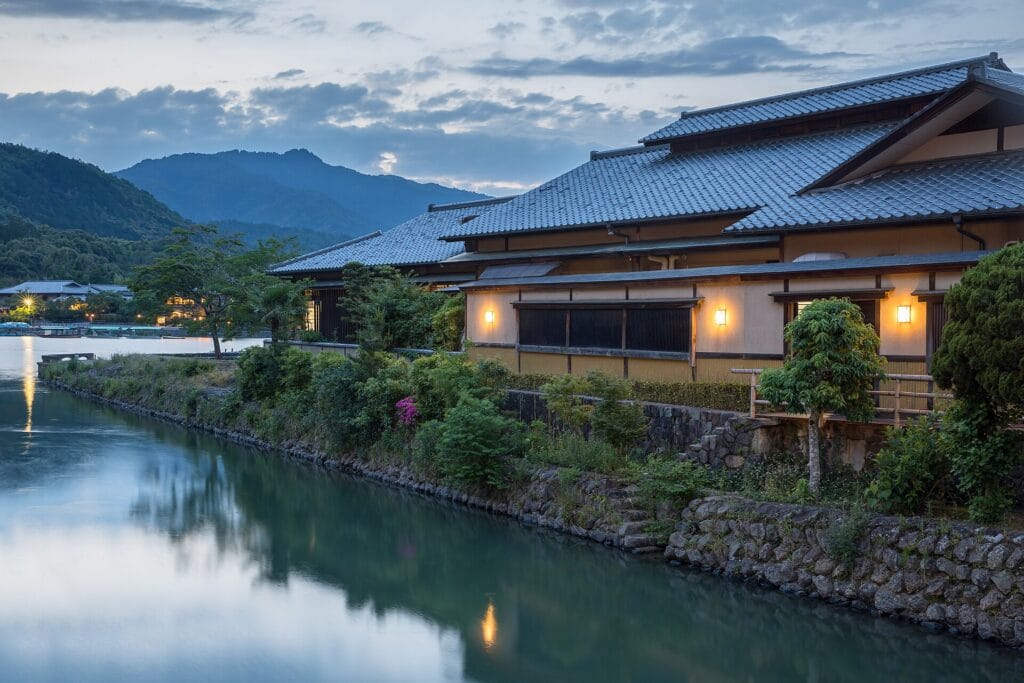
Nishiki Market
Four hundred metres of Kyoto’s kitchen: tako tamago skewers, fresh yuba, pickles in every hue, sesame everything: graze lightly, mind the no-walking-while-eating signs and buy a knife from a centuries-old smith for the souvenir that lasts.
Matcha pilgrimage to Uji
The tea capital twenty minutes south: stone-ground matcha at source, parfaits layered like pagodas and soba flecked with green: pair it with Byodo-in’s phoenix hall: the building on the ten-yen coin.
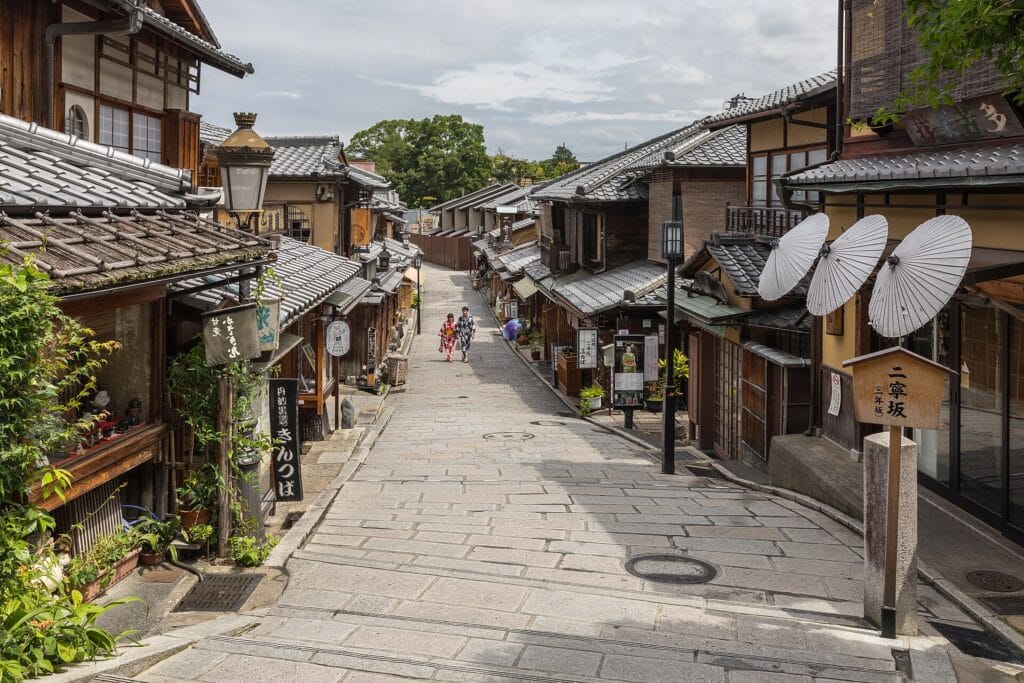
Obanzai & the home-style counters
Kyoto’s vegetable-forward home cooking served small-plate style at counters around Pontocho and the side streets: order whatever the season insists on: bamboo shoots in spring, matsutake in autumn.
Sweets & the wagashi arts
Kyo-wagashi (confections shaped to the season) with whisked matcha in a tearoom: then warabi mochi, kinako-dusted and ethereal: edible craftsmanship, centuries deep.
Eating Kyoto well
Lunch is the luxury hack (same kitchens, half price), reservations are non-negotiable for kaiseki, Pontocho alley is for atmosphere and Gion for splurges: and matcha standards here will ruin lesser matcha for life. Accept this.
The best food in Kyoto: what to eat
Kyoto’s cuisine is refined, seasonal and deeply tied to its temples and tea culture:
- Kaiseki — the multi-course art of seasonal fine dining.
- Yudofu — simple simmered tofu, a Buddhist-temple specialty.
- Obanzai — traditional Kyoto home-style small dishes.
- Matcha sweets — Kyoto is Japan’s green-tea heartland; try matcha parfaits and warabi mochi.
- Yatsuhashi — cinnamon-and-mochi sweets, the classic souvenir.
Graze through Nishiki Market (“Kyoto’s Kitchen”) for pickles, skewers and street bites, and book a kaiseki dinner ahead — the best are small and reserve out early.
Best Food In Kyoto FAQ
What food is Kyoto known for?
Refined kaiseki, temple tofu (yudofu), obanzai home cooking, and matcha sweets.
Where should I eat in Kyoto?
Nishiki Market for grazing; book a kaiseki restaurant ahead for a special dinner.
Pontocho after dark: yakitori, yuka, and the Kamo River breeze
When the lanterns flick on, walk the length of Pontocho, the 500-meter alley running parallel to the Kamo River, barely wider than your outstretched arms. Roughly 80 restaurants are crammed into it, from ¥2,000 yakitori counters to ¥25,000 kaiseki rooms, so the alley is really a decision, not a single meal.
Why go: it is the most atmospheric place in the city to eat charcoal-grilled skewers shoulder-to-shoulder with locals. Best season: roughly May through September (some restaurants extend into October), when the eastern-side establishments build noryo-yuka wooden platforms out over the water and you dine in the river breeze above the Kamogawa.
- Rough cost: a real yakitori dinner runs about $17-24 (¥2,500-3,500) for 5-8 skewers plus rice and miso, with skewers at ¥150-400 each; two drinks add ¥600-1,200. A relaxed izakaya evening lands around $20-27 (¥3,000-4,000).
- Planning note: the yuka platforms charge a premium and book out fast in summer; for the same view at a fraction of the price, grab a convenience-store beer and sit on the Kamo River banks below, where Kyotoites famously space themselves at near-equal intervals along the grass.
Ramen and cheap eats around Kyoto Station
Kyoto guards its delicate, refined reputation, but its ramen is unapologetically rich, and the best of it clusters a short walk from JR Kyoto Station, perfect for your arrival or departure day.
The institution is Honke Daiichi Asahi, founded in 1947, about five minutes on foot from the station. Its signature is a Kyoto-style soy-sauce ramen built on a clear-yet-rich pork-bone broth, seasoned with soy from nearby Fushimi, topped with a thicket of green onion.
- Why go: it is open from early morning until past midnight and almost always has a line, the surest sign you are in the right place after a late train.
- Best season: year-round, but a steaming bowl is most welcome in Kyoto’s damp, cold winter or after a long sightseeing day.
- Rough cost: a standard bowl runs about $5 (¥650); the special tokusei ramen, piled with extra char siu and noodles, is around ¥800-850 (about $6). A mini bowl is ¥550.
- Planning note: if the line is brutal, the Kyoto Porta complex inside the station has solid tonkotsu at Ippudo, no exit required and a roof over your head in the rain.
This is the budget end of Kyoto eating: two of you can leave full and happy for under $20 total.
You Might Also Love


Written by
John Morrison is the founder and lead travel writer at Packzup. Over the past decade he has explored destinations across Africa, the Americas, Asia, Europe, the Middle East, and Oceania — always self-funded, never on a press trip.
