

Last updated August 16, 2026 · Editorial policy
| Best month to visit | September — 25°C, 10 wet days |
|---|---|
| Warmest month | July, 28.8°C average high |
| Wettest month | August, 19 wet days |
| Plugs & power | Type C,F · 220 V · 60 Hz |
| Driving side | Right |
Climate from ERA5 reanalysis (2019–2023) via Open-Meteo. Open data.
South Korea Travel Guide: Complete Planning + Itinerary (2026)
South Korea is K-pop + Korean BBQ + Gangnam + tradition + DMZ + Jeju Island + the most efficient most tech-forward country in Asia after Japan.
When to Visit South Korea
April-May for cherry blossoms. September-November for autumn colors. Avoid July-August (rainy).
How Long Do You Need in South Korea?
7-10 days for Seoul + Busan + Jeju.
Top 6 Regions in South Korea
Seoul
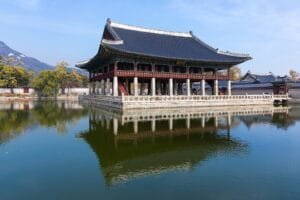
Gyeongbokgung + Bukchon Hanok Village + Myeongdong + Gangnam + Hongdae + 3-4 days minimum.
Busan
Beaches + Gamcheon Culture Village + Jagalchi fish market + day-trip Gyeongju.
Jeju Island
Volcanic island + Hallasan + waterfalls + lava tubes + UNESCO + romantic getaway.
Gyeongju
Ancient Silla capital + Bulguksa Temple + royal tombs + 1,000+ year heritage.
DMZ
North Korean border day-trip from Seoul + JSA + Third Tunnel + Cold War history.
Andong + Hahoe
Traditional Joseon village + Confucian heritage + mask dance.
Best Food in South Korea
Korean BBQ + kimchi + bibimbap + Korean fried chicken + the spiciest most fermented cuisine on Earth.
- Korean BBQ (samgyeopsal, galbi)
- Bibimbap (Jeonju style)
- Kimchi (all varieties)
- Korean fried chicken + beer (chimaek)
- Tteokbokki (spicy rice cakes)
- Bingsu (shaved ice dessert)
South Korea Trip Costs
Daily spend depends heavily on travel style:
- Budget: 45-80 USD/day
- Mid-range: 90-180 USD/day
- Luxury: 300+ USD/day
Is South Korea Safe?
One of Asia's safest countries — extremely low crime. Real risks are language barrier outside Seoul + summer humidity.
Related Packzup Guides
Best Time To Visit South Korea
Dive deeper into this South Korea topic →
Seoul 3 Day Itinerary
Dive deeper into this South Korea topic →
Trip To South Korea Cost
Dive deeper into this South Korea topic →
South Korea Travel FAQ
Torn between destinations? See our honest comparisons: Japan vs South Korea, Japan vs South Korea.
Best time to visit South Korea (real climate data)
Best months: May, June, September, October.
South Korea’s warmest month is July (avg 29°C / 84°F), the coolest is January (low -7°C / 20°F). The wettest is August (352 mm) and the driest is January.
Source: Open-Meteo ERA5 climate normals (2019–2023). See the full month-by-month weather →
You Might Also Love




Written by
John Morrison is the founder and lead travel writer at Packzup. Over the past decade he has explored destinations across Africa, the Americas, Asia, Europe, the Middle East, and Oceania — always self-funded, never on a press trip.
Before you go: see whether they speak English in South Korea and what to wear, check the tap water, sort your mobile data, and find out if it is a cash or card destination, and brush up on local etiquette.
