
Last updated September 12, 2026 · Editorial policy
- Cost comparison: what a day actually costs
- Beaches: wild and wide versus busy and convenient
- Food: seafood shacks versus seafood buffets
- Things to do beyond the sand
- Nature and wildlife
- Where you will sleep
- Crowds and overall vibe
- Weather and when to go
- Getting there and around
- Outer Banks or Myrtle Beach: the honest verdict
- FAQ
The Outer Banks and Myrtle Beach sit a little over four hours apart by car, share the same stretch of Atlantic, and could hardly be more different if they were on separate continents. One is a hundred-mile ribbon of low-slung barrier islands where wild horses wander the sand and the tallest things on the horizon are lighthouses. The other is sixty miles of high-rise hotels, mini golf castles, seafood buffets and a boardwalk Ferris wheel you can spot from the highway. Families and couples agonize over this pair every single summer, and after spending real time in both, I understand why: they solve completely different problems.
This is the honest version of the comparison, the kind a friend gives you rather than a tourism board. Myrtle Beach is cheaper, easier to book and far more entertaining for kids who bore quickly. The Outer Banks is quieter, wilder and genuinely more beautiful, and it rewards people whose idea of a perfect beach day is a book, a cooler and a long stretch of empty sand. Below is the full breakdown, and unlike most posts on this topic, the verdict at the end actually picks winners.
| Category | Outer Banks | Myrtle Beach | Winner |
|---|---|---|---|
| Beaches | Wide, wild, protected seashore | Broad and gentle but busy | Outer Banks |
| Food and dining | Fresh local seafood, small shacks | Buffets, chains, huge variety | Outer Banks |
| Entertainment and nightlife | Minimal by design | Boardwalk, shows, arcades | Myrtle Beach |
| Family attractions | Lighthouses, dunes, wild horses | Water parks, aquarium, mini golf | Myrtle Beach |
| Nature and outdoors | Exceptional, national seashore | A few good state parks nearby | Outer Banks |
| Accommodation | Mostly weekly house rentals | Cheap, flexible hotels and condos | Myrtle Beach |
| Peace and atmosphere | Slow, quiet, windswept | Loud, neon, high-energy | Outer Banks |
| Value for money | Fair if a group splits a house | Hard to beat, especially off-season | Myrtle Beach |
Cost comparison: what a day actually costs
Myrtle Beach is one of the cheapest beach vacations on the East Coast, and it is not close. Outside of peak summer weeks, clean if unglamorous hotel rooms regularly go for well under a hundred dollars a night, and even oceanfront resorts with pools and lazy rivers often land in the 120 to 250 dollar range in summer. A frugal traveler sharing a room can do Myrtle Beach on roughly 80 to 130 dollars a day including food, and a comfortable mid-range trip with an ocean-view room, a dinner show and restaurant meals runs more like 150 to 250 dollars per person.
The Outer Banks works on a different model entirely. There are relatively few hotels; the market is dominated by weekly beach-house rentals, usually Saturday to Saturday, and in July a well-located house can run anywhere from around 1,500 dollars to well over 4,000 dollars for the week depending on size and distance to the ocean. Split eight ways among family or friends, that math gets friendly fast. Booked as a couple in high season, it does not. Realistically, budget 120 to 200 dollars per person per day for a modest Outer Banks trip and 200 to 350 for a comfortable one, with groceries doing a lot of the heavy lifting because most houses have full kitchens.
The cheat code for both places is timing. September and early October bring warm ocean water, thinner crowds and prices that drop by a third or more. If value is the deciding factor and you cannot travel with a group, Myrtle Beach wins this category without breaking a sweat.
Beaches: wild and wide versus busy and convenient
Purely as sand and ocean, the Outer Banks wins. Much of the coastline falls inside Cape Hatteras National Seashore, which means miles of protected, undeveloped beach with dunes behind you instead of hotel towers. Even in July you can walk ten minutes from a beach access and have serious breathing room. The trade-offs are real, though: the surf is stronger, rip currents demand respect, lifeguarded stretches are limited, and the water runs a touch cooler than Myrtle Beach for much of the season. Surfers consider Hatteras some of the best wave territory on the East Coast, and the wind that never quite stops has made the area a genuine kiteboarding destination.
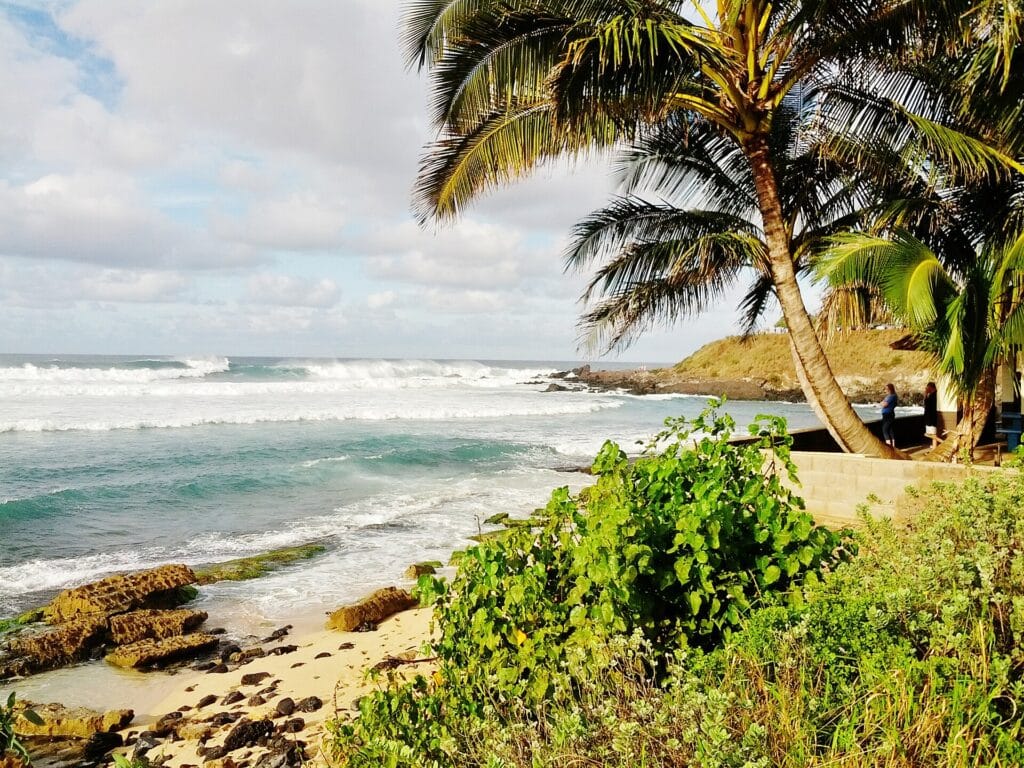
Myrtle Beach offers a broad, flat, gently sloping beach that is easier for small children and weak swimmers, with warmer water and umbrella-and-chair rentals every fifty feet. It is also, in July, shoulder to shoulder in the central stretches. If you want the sand to be steps from your hotel elevator with a snack bar in between, Myrtle delivers. If you want the beach itself to be the point of the trip, it is not really a contest.
Food: seafood shacks versus seafood buffets
The Outer Banks eats better. This is fishing country, and it shows: small chef-owned spots in Duck and Manteo, fish markets selling the morning catch, shrimp and tuna that did not travel far, and casual shacks where the hushpuppies arrive before you finish ordering. Ocracoke even has its own fig-cake tradition. Nothing about the scene is fancy, but the quality-per-dollar on a simple plate of fresh grilled fish is hard to beat anywhere on the East Coast.
Myrtle Beach food is about volume and variety: calabash-style all-you-can-eat seafood buffets, national chains, pancake houses by the dozen and steakhouses aimed at golfers. Some of it is fine, plenty of it is forgettable. The great exception is Murrells Inlet, a fishing village at the southern end of the Grand Strand whose waterfront restaurant row is legitimately good and worth a dedicated evening. It is the same quality-versus-quantity split we found comparing Italy vs Spain: one side cooks for locals, the other caters for crowds.
Things to do beyond the sand
Myrtle Beach is engineered for entertainment. Broadway at the Beach alone can absorb a full day with its aquarium, shops and restaurants; the boardwalk and the SkyWheel handle an evening; and then there are water parks, arcades, dinner shows, outlet malls and an almost absurd concentration of mini golf. Golfers have their pick of dozens of courses, and the area happily markets itself as a golf capital. On a rainy day you will not run out of indoor options, which matters more than people admit when planning a beach week.
The Outer Banks asks you to slow down instead. You can stand where the Wright brothers first flew at Kill Devil Hills, climb the Currituck or Cape Hatteras lighthouses, sandboard or hang glide on the huge dunes of Jockey’s Ridge State Park, and dig into the strange story of the Lost Colony on Roanoke Island. It is a shorter list, and a rainy week can feel long here. But everything on it feels like a place rather than an attraction, and that difference is the whole argument for coming.
Nature and wildlife
This category is a blowout. The northern Outer Banks beaches beyond the paved road at Corolla are home to a herd of wild horses you can visit on a four-wheel-drive tour or, with luck, simply spot grazing behind the dunes. Pea Island National Wildlife Refuge is a serious birding stop, sea turtles nest on the beaches in summer, and the night skies over Hatteras and Ocracoke get impressively dark by East Coast standards.
Myrtle Beach has more nature than its reputation suggests, most of it just south of town. Huntington Beach State Park is an excellent spot for alligators and wading birds, and Brookgreen Gardens pairs sculpture with beautiful low-country grounds. Both are worth a half day. They are the exception in a landscape of asphalt and neon, though, not the rule.
Where you will sleep
Myrtle Beach is hotel country. An enormous supply of rooms and condo towers means you can book two nights on a whim, cancel, rebook and chase deals all season long. Resorts with lazy rivers, waterslides and indoor pools are the local specialty, and kids adore them. Quality varies wildly, so read recent reviews rather than trusting the beachfront photos, but flexibility this cheap is rare at any American beach town.
The Outer Banks essentially requires commitment. Most of the good lodging is weekly house rentals booked months ahead for summer, and hotel options cluster in a modest strip around Kill Devil Hills and Nags Head. The upside is the houses themselves: private pools, hot tubs, ocean-view decks and enough bedrooms for three generations. For groups it is one of the best accommodation experiences on the Atlantic coast; for a spontaneous couple wanting two nights in June, it can be genuinely awkward.
Crowds and overall vibe
Myrtle Beach is loud and unembarrassed about it. Summer brings dense family crowds, spring brings students and golf groups, and motorcycle rallies take over parts of the calendar. If you enjoy energy, neon and people-watching, it is honestly fun. The Outer Banks runs on a different clock: towns go quiet by ten, there is no boardwalk, and evening entertainment usually means a bonfire and a clear sky. It is the same personality split we described in Croatia vs Portugal: one coast built for stimulation, the other for decompression. Neither is wrong, but mixing them up is how beach vacations get ruined.
Weather and when to go
Both destinations share a humid subtropical rhythm: hot, sticky summers, mild springs and falls, and a hurricane season that officially runs June through November and peaks in late August and September. The Outer Banks is the more exposed of the two; storms occasionally flood Highway 12, and evacuation orders for the islands are a real, if uncommon, possibility that decent travel insurance handles well. Myrtle Beach water is a little warmer, and its swimming season stretches comfortably from May into early October.
The best windows for both are late May through June and September through mid-October, when the ocean is warm, the light is beautiful and the crowds thin dramatically. Myrtle Beach functions year-round, with mild winters and its indoor attractions open. The Outer Banks contracts hard in winter, when many restaurants close and the islands turn windswept and empty, which a certain kind of traveler loves and most do not.
Getting there and around
Myrtle Beach is the easy logistics win. Its own airport sits minutes from the beach and receives direct budget flights from a long list of eastern and midwestern cities. Once there, you can survive without a car if you stay central, though having one makes Murrells Inlet and the state parks far easier to reach.
The Outer Banks has no major airport. Most visitors fly into Norfolk, Virginia, about two hours from the northern beaches, or Raleigh-Durham at closer to four, and everyone drives. Distances on the islands are deceptive: Corolla to Ocracoke is a half-day expedition that ends with a ferry, so pick your village deliberately rather than planning to see everything. The two destinations sit roughly four to four and a half hours apart by car, close enough that a two-stop trip works the way Belgium vs Netherlands does in Europe: entirely doable, provided you accept a solid travel day in the middle.
Outer Banks or Myrtle Beach: the honest verdict
For budget travelers, Myrtle Beach wins and it is not close. Cheap direct flights, cheap rooms, a free boardwalk and buffets that will feed teenagers for the price of an Outer Banks appetizer.
For foodies, the Outer Banks takes it. Fresh-off-the-boat seafood in unpretentious rooms beats steam trays, with the honorable exception of Murrells Inlet, which would be the best dining neighborhood in either destination.
For beach purists, the Outer Banks, decisively. Cape Hatteras National Seashore offers the kind of wide, wild, unbuilt Atlantic beach that barely exists anywhere else on the East Coast.
For first-timers and families with young children, Myrtle Beach. Gentler water, lifeguards, nightly hotel flexibility and a bottomless supply of rainy-day backups make it the lower-risk first trip. Once the kids are older, or once you notice you keep leaving the resort in search of quiet, graduate to the Outer Banks; most people who fall for it never really go back. And if the quiet-versus-lively dilemma is your favorite kind of travel decision, our Greece vs Portugal comparison wrestles with the same trade-off on the other side of the Atlantic.
FAQ
Is the Outer Banks or Myrtle Beach better for families?
Which is cheaper, the Outer Banks or Myrtle Beach?
Can you visit both the Outer Banks and Myrtle Beach in one trip?
Is the water warmer at Myrtle Beach or the Outer Banks?
You Might Also Love




Written by
John Morrison is the founder and lead travel writer at Packzup. Over the past decade he has explored destinations across Africa, the Americas, Asia, Europe, the Middle East, and Oceania — always self-funded, never on a press trip.
