Last updated September 1, 2026 · Editorial policy
Iceland itineraries by trip length
Still deciding? Compare: Iceland vs Norway · Iceland vs Greenland
7-Day Iceland Itinerary: A Day-by-Day Travel Plan
Quick answer: This 7-day Iceland itinerary covers the must-see highlights without rushing, with detailed day-by-day plans, restaurant recommendations, and budget guidance.
Best for: confident self-drivers who want waterfalls, glaciers, black-sand beaches, and hot springs at a steady road-trip pace, not nightlife or shopping-heavy city breaks.
Planning a 7-day trip to Iceland? This itinerary is built from a first-time-visitor perspective: hit the icons, eat the best food, and finish with one or two memorable experiences locals would recommend. Each day mixes a major sight, food stops, and downtime — no death marches, no missing highlights.
Iceland Itinerary at a Glance
| Day | Focus |
|---|---|
| Day 1 | Reykjavik Arrival & Old Town |
| Day 2 | The Golden Circle |
| Day 3 | Waterfalls of the South |
| Day 4 | Vik & Black Sand |
| Day 5 | The Glacier Lagoon |
| Day 6 | Back West to Vik |
| Day 7 | Sky Lagoon Farewell |
Day-by-Day Itinerary
Day 1 — Reykjavik Arrival & Old Town
Pick up your rental car at Keflavík Airport — you will want it for the whole loop — and make the 45-minute drive into Reykjavík along Route 41. Settle in, then walk the compact old town: stroll Laugavegur, the main shopping street, up to Hallgrímskirkja, the towering basalt-columned church. The lift to its tower runs in summer roughly 9am–7:45pm and costs about 1,500 ISK (roughly $11) for the best panorama over the coloured rooftops. Wander down to the Old Harbour and the Sun Voyager sculpture on the waterfront. Planning note: skip pricey sit-down dinners tonight and grab a classic lamb-and-onion hot dog from a harbour-side stand for around 700 ISK (about $5) — locals genuinely eat these. Book an early night; jet lag plus the midnight-sun twilight in June and July makes sleep tricky, so bring an eye mask.
Day 2 — The Golden Circle
Today you drive the classic Golden Circle loop, about 230 km round-trip on paved roads — no 4×4 needed in summer. Start at Þingvellir National Park (free entry; parking about 750 ISK / $5.50), where you walk the rift between the North American and Eurasian tectonic plates. Continue to the Geysir geothermal field to watch Strokkur erupt every few minutes, then the thundering two-tier Gullfoss waterfall a short drive on. Allow roughly 6–7 hours with stops. If time allows, detour to the Secret Lagoon in Flúðir, a rustic geothermal pool (entry about 3,300 ISK / $24). Planning note: the Gullfoss cafe serves a hearty lamb kjötsúpa (meat soup) with free refills for roughly 2,700 ISK (about $20) — the warmest, best-value meal on the route.
Day 3 — Waterfalls of the South
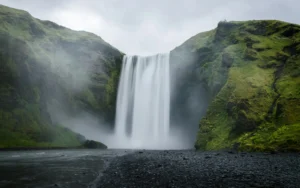
Head east on Route 1 from Selfoss toward the South Coast — about 90 minutes of driving through farmland under the Eyjafjallajökull volcano. First stop is Seljalandsfoss, the 60-metre waterfall you can walk fully behind (bring a rain jacket; parking about 900 ISK / $6.50). A few minutes further, hunt for the tucked-away Gljufúrabui, hidden inside a mossy canyon. Continue 30 minutes to mighty Skógafoss, where a steep staircase climbs to a clifftop viewpoint. In the village of Skógar, stop at the excellent turf-house folk museum (entry about 2,900 ISK / $21). Overnight near Vík. Planning note: the roadside farm cafes along this stretch sell fresh skyr, Iceland’s thick cultured dairy — try it with wild bilberries for a genuinely local snack rather than an imported chocolate bar.
Day 4 — Vik & Black Sand
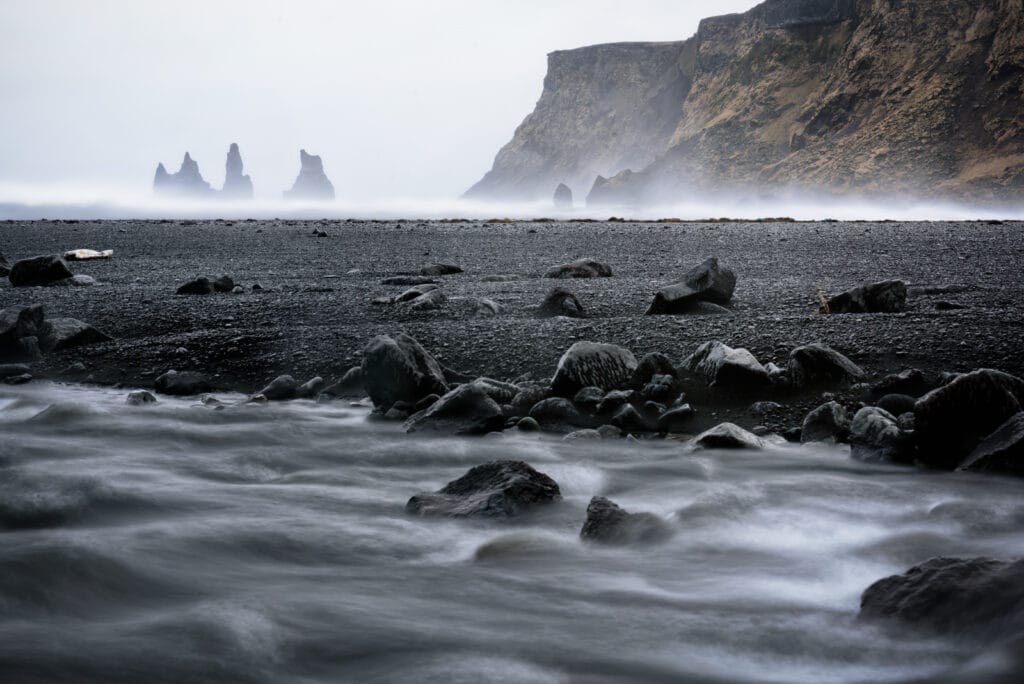
Spend the morning around Vík í Mýrdal, the southernmost village. Just west lies Reynisfjara, the famous black-sand beach with hexagonal basalt columns and the offshore Reynisdrangar sea stacks. Heed the warning signs — the sneaker waves here are genuinely dangerous, so never turn your back on the ocean or stand near the waterline. Drive up to the Dýrhólaey promontory (free) for puffins in summer and a sweeping coastal view. In the afternoon continue east about an hour to explore the vast Skaftafell area within Vatnajökull National Park; the easy hike to the basalt-framed Svartífoss waterfall takes roughly 1.5 hours round-trip. Planning note: fuel up before leaving Vík — petrol stations thin out sharply east of here, and prices at the pump run around 320 ISK per litre (about $9 a gallon).
Day 5 — The Glacier Lagoon
This is the day you drive out to Jökulsárlón, the glacier lagoon — roughly 2 hours east of Skaftafell on Route 1, and the natural turnaround point of a realistic 7-day trip. Icebergs calved from Breiðamerkurjökull drift across the water; an amphibious boat tour among them runs about 8,000 ISK (roughly $58) and books up fast in summer, so reserve ahead. Cross the road to Diamond Beach, where stranded ice glitters on the black sand. Watch for seals bobbing in the lagoon. Planning note: the food kiosk here sells fresh humar (langoustine) soup for around 2,500 ISK (about $18) — a South Coast specialty and far better than a packed sandwich. Begin the drive back west afterwards, or overnight nearby to break the return; the light stays bright late into the evening in high summer.
Day 6 — Back West to Vik
Retrace Route 1 westward toward Vík, a scenic 3–3.5 hour drive with anything you missed on the way out. Pause at the Fjadrargljufur canyon near Kirkjubæjarklaustur, a dramatic 100-metre-deep gorge with a short clifftop path (free; check the boardwalk is open, as it closes for erosion recovery). Further on, the Soláheimajökull glacier tongue is reachable by a 20-minute walk from its car park; guided ice hikes with crampons run about 12,000 ISK (roughly $87). Settle again near Vík or push on toward Hvolsvöllur. Planning note: the Lava Centre in Hvolsvöllur is an underrated, genuinely well-made exhibit on Iceland’s volcanoes and earthquakes (entry about 3,200 ISK / $23) — a smart rainy-afternoon backup if the weather turns, which it often does here.
Day 7 — Sky Lagoon Farewell
Make the roughly 2-hour drive back to the capital region for a relaxed final day. Trade the crowded Blue Lagoon for the Sky Lagoon in Kópavogur, an oceanfront geothermal spa with a stunning infinity edge over the Atlantic; the Saman pass with its seven-step ritual costs roughly 12,990–13,990 ISK (about $95–100), so book your time slot online in advance. Afterwards, return your rental car and spend your last hours back in central Reykjavík browsing design shops on Skólavörðustígur or the Kolaportið weekend flea market by the harbour. Planning note: allow at least 45–60 minutes for the drive to Keflavík Airport plus generous check-in time. If your flight is early, sample hardfiskur (dried fish) with butter — the quintessential Icelandic snack — before you go rather than overpaying at the terminal.
Where to Stay in Iceland
Choose a central neighborhood within walking distance of major sights — you’ll save hours of commute time over 7 days. Book 6-12 weeks ahead for best rates.
Budget Breakdown (7 Days)
Iceland is rated Pricey in our Travel Cost Index 2026. Figures are country-level daily ranges per person and exclude international flights.
| Travel style | Per day | Total 7 days |
|---|---|---|
| Budget | $55-100 | $385-700 |
| Mid-range | $180-300 | $1,260-2,100 |
| Luxury | $450-700 | $3,150-4,900 |
Source: Packzup Travel Cost Index 2026 — country-level averages; city and peak-season prices run higher. Excludes international flights.
What to Pack
- Clothing: A waterproof, windproof shell is essential year-round – spray at Seljalandsfoss and Skogafoss soaks through anything less. Pack warm layers even in summer, sturdy waterproof walking shoes, and swimwear for the Sky Lagoon and geothermal pools.
- Tech: Iceland uses European Type C/F plugs at 230V. Download Vedur for weather, SafeTravel for road alerts, Klapp for Reykjavik buses, and Hopp for scooters; taxis use the Hreyfill app.
- Documents: Iceland is in the Schengen area – US, UK, Canadian, and Australian visitors enter visa-free for short stays, but check current rules for your nationality. Passports should be valid three months beyond departure. Carry your driving licence for the rental car.
- Money: Iceland is close to cashless – cards and contactless cover everything from parking meters to rural cafes, so there is little need to carry Icelandic kronur. Tipping is not expected. Bring a card with a PIN for self-service fuel pumps.
- Day bag: Waterproof shell, warm hat and gloves even in July, swimsuit and towel for hot springs, and a refillable bottle, Icelandic tap water is glacier-fed and excellent.
Tips for a 7-Day Iceland Trip
- Book ahead: Book the Blue Lagoon a week or more ahead in summer; Jokulsarlon zodiac boat tours and Katla ice cave trips also sell out days in advance.
- Build in buffer time: Iceland’s weather can close roads and sights at short notice – check road.is and safetravel.is each morning. Wind or sneaker-wave warnings can reshuffle a South Coast day, so leave slack around the long Vik and glacier lagoon drives.
- Do as locals do: lunch specials and fish soup at Reykjavik food halls like Hlemmur Matholl, plus a hot dog at Baejarins Beztu, beat pricey dinners.
- Travel insurance: $40-100 for 7 days. Covers medical, theft, cancellations.
- Get connected: Grab a Siminn or Nova prepaid SIM at Keflavik arrivals, roughly 20-30 USD for ample data, or install an eSIM before flying; cafe wifi is everywhere.
Routing Mistakes That Quietly Wreck a 7-Day Iceland Trip
The single error that burns a day is treating Jokulsarlon Glacier Lagoon as a Reykjavik day trip. It sits about 380 km away, roughly 5 hours of driving each way, so a same-day return means 10 hours behind the wheel and almost no time on the ice. The fix is sequencing: push east along the South Coast and sleep near Vik, which leaves Jokulsarlon only about 2.5 hours ahead the next morning. From the lagoon car park, Diamond Beach is directly across Route 1, a 5-minute walk, so pair them rather than choosing.
Two more sequencing traps to plan around:
- Do not bolt the Golden Circle onto a South Coast day. Thingvellir, Geysir and Gullfoss form their own loop of roughly 6 to 8 hours; Gullfoss is just a 10-minute drive past Geysir, so give it a dedicated day from Reykjavik.
- The Snaefellsnes Peninsula sits about 2 to 2.5 hours northwest and takes 10 to 12 hours to circle. On a packed seven days, skip it unless you trade away a glacier day rather than squeezing both.
Skip the Reykjavik-to-lagoon dash, base yourself eastward each night, and the same kilometres become a forward-moving line instead of a backtrack.
Frequently Asked Questions
Is 7 days enough for Iceland?
For first-time visitors, 7 days in Iceland covers the main highlights without rushing. If you want to add day trips, slower pace, or hidden gems, plan 2-3 more days. 7 days is the minimum to feel you’ve truly seen Iceland — anything less is a sampler.
How much will a 7-day Iceland trip cost?
Using the Budget Breakdown table above, drawn from our Travel Cost Index 2026: Budget $55-100/day ($385-700 for 7 days), Mid-range $180-300/day ($1,260-2,100 for 7 days), Luxury $450-700/day ($3,150-4,900 for 7 days). Country-level averages, excluding international flights.
What’s the best time to do a 7-day Iceland itinerary?
Shoulder seasons (just before/after peak) offer the best balance of weather, crowds, and price for Iceland. Check the destination’s specific best-time guide for exact months. Avoid major local holidays which spike prices and crowd attractions.
How do I get around Iceland?
Iceland has no trains, so most 7-day visitors rent a car for the Golden Circle and south coast. In Reykjavik, yellow Straeto buses use the Klapp ticketing app, and Hopp scooters cover short hops. There is no Uber; taxis like Hreyfill are expensive. Flybus and Airport Direct link Keflavik airport to the city.
What should I pack for 7 days in Iceland?
Pack layers: a waterproof and windproof shell, fleece, warm hat, and sturdy waterproof boots, since weather flips fast in any month. Add a swimsuit for geothermal pools and skip the umbrella, the wind destroys them. In summer, a sleep mask helps with near 24-hour daylight.
Should I book hotels or use Airbnb in Iceland?
For 7-day trips, hotels are usually better: easier check-in, daily housekeeping, no laundry expectations, included breakfast often. Airbnb/apartments make sense for stays of 5+ nights, families, or kitchen-focused travelers. Book central locations to save commute time.
Related Iceland Travel Guides
- Best Things to Do in Iceland
- Where to Stay in Iceland
- Best Food in Iceland
- Best Time to Visit Iceland
- Iceland Trip Cost Breakdown
Related guide: Iceland Ring Road Itinerary — the full-island Route 1 loop.
Best time to visit Iceland (real climate data)
Best months: June, July, May.
Iceland’s warmest month is July (avg 13°C / 56°F), the coolest is December (low -3°C / 27°F). The wettest is December (95 mm) and the driest is June.
Source: Open-Meteo / WMO climate normals (WMO 1991–2020, or ERA5 2019–2023 where unavailable). See the full month-by-month weather →
You Might Also Love

Written by
John Morrison is the founder and lead travel writer at Packzup. Over the past decade he has explored destinations across Africa, the Americas, Asia, Europe, the Middle East, and Oceania — always self-funded, never on a press trip.
Trip prep: before you travel, plan what to wear, check the tap water, sort your mobile data, and see if it is a cash or card country, and skim local etiquette.
Still deciding? Read our honest take: Is Iceland worth visiting? The honest verdict