
Last updated September 11, 2026 · Editorial policy
Easter Sunday 2027 falls on 28 March, with Good Friday on 26 March and Easter Monday on 29 March, and three calendar facts do most of the work on this page. First, wherever both Good Friday and Easter Monday are public holidays, the general pattern across much of northern and western Europe though never universal, 26-29 March is four consecutive days off without touching annual leave; in the United States neither day is a federal holiday and 26 March is an ordinary working day in most states. Second, the European clock change lands on the holiday itself: EU summer time begins on the last Sunday of March, which in 2027 is Easter Sunday, so clocks jump forward in the small hours of Easter morning, the night after the Easter Vigil is an hour shorter, Easter Sunday runs 23 hours, and evening light arrives an hour later on the clock for the back half of the break. Third, Orthodox Easter falls five weeks later, on 2 May 2027, so Greece, Cyprus, Serbia and Romania are not celebrating in March at all, and a second Easter window opens at the start of May. Every place below earns its slot from that calendar: what the weekend opens, closes, moves or doubles.
Dates flexible beyond the holiday weekend? The Easter break is one long weekend inside a much bigger season: where to go in spring 2027 covers the March-to-May picture. This page covers what the 26-29 March weekend itself opens, closes and moves.
12 Best Easter Getaways for 2027 at a glance
| # | Destination | Suits | Main trade-off | Planning estimate |
|---|---|---|---|---|
| 1 | Seville, Andalusia, Spain | Travellers who want to witness a living religious tradition at full scale | Ordinary sightseeing in the centre is close to impossible during Holy Week: monume | Upper tier. Editorial planning estimate, not surveyed prices: roughly $1,5 |
| 2 | Braga, Minho, Portugal | Travellers who want Holy Week observed at full civic scale in a compact, w | This is solemnity, not spectacle in the party sense: the processions are acts of w | Lower tier. Editorial planning estimate, not surveyed prices: roughly $700 |
| 3 | Trapani, Sicily, Italy | Travellers who want Holy Week intensity without a big-city crowd, and are | This is not a beach trip, and late March is before the coastal season, with many s | Mid tier. Editorial planning estimate, not surveyed prices: roughly $1,000 |
| 4 | Antigua Guatemala, Sacatepequez, Guatemala | Photographers and travellers drawn to craft and devotion who will be out b | This is a national event, not a visitor curiosity: central rooms are committed a v | Mid tier. Editorial planning estimate, not surveyed prices: roughly $1,000 |
| 5 | Krakow, Lesser Poland, Poland | Travellers who rate tradition and food above weather, and anyone who would | Get the closures right, because they are not where most guides put them: Good Frid | Lower tier. Editorial planning estimate, not surveyed prices: roughly $700 |
| 6 | Hamburg, Northern Germany | Travellers curious to see how seriously northern Europe still takes the pa | Good Friday here is quieter than almost anywhere else on this list, by law as much | Mid tier. Editorial planning estimate, not surveyed prices: roughly $1,000 |
| 7 | Vienna, Austria | Couples and families who want a gentle, food-and-music Easter in a grand c | Do not build the trip on the markets alone: they are compact, daytime affairs that | Mid tier. Editorial planning estimate, not surveyed prices: roughly $1,000 |
| 8 | Zermatt, Valais, Switzerland | Skiing families using the four-day break, spring-snow skiers who will star | Easter is priced and queued like the peak week it is, and the main access lifts sh | Peak tier. Editorial planning estimate, not surveyed prices: roughly $2,00 |
| 9 | Oslo, Norway | Independent travellers who like a city to themselves, plus anyone who want | The shutdown is real: in the typical pattern supermarkets and most shops close on | Upper tier. Editorial planning estimate, not surveyed prices: roughly $1,5 |
| 10 | New York City, New York, United States | US travellers working with a plain two-day weekend who want a landmark Eas | Manage expectations about the word parade: there are no floats and no route to cla | Upper tier. Editorial planning estimate, not surveyed prices: roughly $1,5 |
| 11 | Corfu, Ionian Islands, Greece | Travellers who can take leave in early May, or who already had a March Eas | None of this is transferable to March: over the Western Easter of 26-29 March, Cor | Mid tier. Editorial planning estimate, not surveyed prices: roughly $1,000 |
| 12 | The painted monasteries of Bucovina, Suceava, Romania | Travellers with a car, patience and an interest in living religious art, t | This is a pilgrimage landscape, not a resort: distances between the monasteries ar | Lower tier. Editorial planning estimate, not surveyed prices: roughly $700 |
Editorial planning estimate, not surveyed prices. Ranges are deliberately wide, assume two people sharing, and cover lodging, food and local transport unless a row says otherwise.
1. Seville, Andalusia, Spain
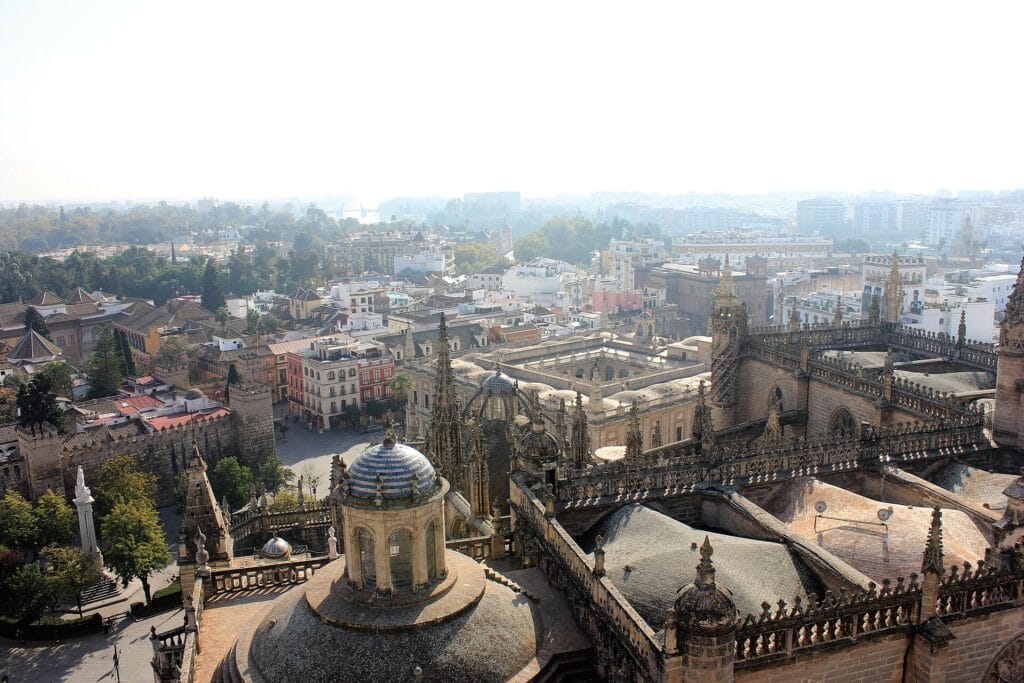
Semana Santa is the reason to be in Seville this specific week and the reason to stay away if you wanted a normal city break. Brotherhoods carry their pasos through the old city on routes and timetables published locally each year, and Holy Week 2027 runs from Palm Sunday, 21 March, to Easter Sunday, 28 March, so the 26-29 March break catches its climax: the processions of the madrugada, the night that leads into Good Friday, are the tradition's most famous hours in the typical pattern, though which brotherhoods go out, and when, must be confirmed against the official 2027 programme. One 2027-only wrinkle: EU clocks go forward in the small hours of Easter Sunday, so the night after the Easter Vigil is an hour shorter than anyone's body expects.
The honest warning: Ordinary sightseeing in the centre is close to impossible during Holy Week: monuments run holiday hours, the streets you need are shut exactly when you want to cross them, and road closures can put parts of the old city beyond taxi and bus reach for hours. Heavy rain can cancel a procession outright, because brotherhoods will not risk the images, so the thing you travelled for may never leave the church. Rooms along the processional streets are among the most constrained of the year. And the holiday pattern is asymmetric: Good Friday is a national holiday in Spain and Maundy Thursday is observed in much of the country, but Easter Monday is generally an ordinary working day in Andalusia, so the city is back at work while northern Europe is still off. Confirm all of it locally. Best suited to travellers who want to witness a living religious tradition at full scale and are content to stand, wait and be moved along by a crowd instead of ticking off monuments. Upper tier. Editorial planning estimate, not surveyed prices: roughly $1,500-3,000 for two across four days on the ground, covering lodging, food and local transport, with flights excluded. Check live prices before committing to any budget.
2. Braga, Minho, Portugal
Braga treats Holy Week as the main event of its year, and it is the natural pick if Seville's scale intimidates. The pattern in a typical year runs ceremonies and torchlit penitential processions through the week, building from Maundy Thursday, 25 March, into Good Friday, 26 March, exactly the days the 2027 break hands you, since Good Friday is a national public holiday in Portugal in the general pattern and the town is off work and out on the streets. The programme, routes and timings are set by the church authorities and brotherhoods each year, so confirm the official 2027 calendar before building days around it. The other calendar fact worth knowing: Easter Monday is generally not a public holiday in Portugal, so Monday 29 March is a quiet, functional travel-home day.
The honest warning: This is solemnity, not spectacle in the party sense: the processions are acts of worship, evenings are hushed rather than festive, and treating them as a photo backdrop lands badly. A small city fills quickly when its biggest week coincides with a four-day break across much of Europe, so central rooms go early. Easter Sunday closes most shops and restaurant opening across the weekend is patchy, so confirm directly with any place a plan depends on. Late March in northern Portugal is coat-and-umbrella weather in general character, and outdoor processions can be curtailed by rain, with changes announced locally. Best suited to travellers who want Holy Week observed at full civic scale in a compact, walkable city, without the crowds that come with the famous names. Lower tier. Editorial planning estimate, not surveyed prices: roughly $700-1,500 for two across four days on the ground, covering lodging, food and local transport, with flights excluded. Check live prices.
3. Trapani, Sicily, Italy
Trapani's Good Friday procession is the argument: carried tableaux leave the old town in the afternoon of 26 March and, in the typical pattern, are still moving through the following morning, shouldered by the town's trade guilds at a rocking pace set by a band. The town is small enough that you follow it through the streets rather than watch from a stand, though the route, timings and crowd arrangements are set by the organisers each year and must be confirmed for 2027. Italy's holiday pattern is the useful inversion here: Good Friday is an ordinary working day nationally, so the procession happens in a town still functioning, while Easter Monday, Pasquetta, is the public holiday, when Italians head out en masse for the day.
The honest warning: This is not a beach trip, and late March is before the coastal season, with many seasonal businesses not yet open and island ferry timetables still on off-season schedules set by the operators. The procession dominates the town completely, so quiet dinner options are thin on the Friday and the weekend runs on holiday hours. Pasquetta means Monday crowds at picnic spots and on the roads rather than in shops, which mostly close. Confirm the ferry schedule for your actual dates rather than reusing an old one, and confirm the 2027 procession arrangements locally. Best suited to travellers who want Holy Week intensity without a big-city crowd, and are happy to pair one very long night with slow days around a working Sicilian port. Mid tier. Editorial planning estimate, not surveyed prices: roughly $1,000-2,000 for two across four days on the ground, covering lodging, food and local transport, with flights and any car hire excluded. Check live prices.
4. Antigua Guatemala, Sacatepequez, Guatemala
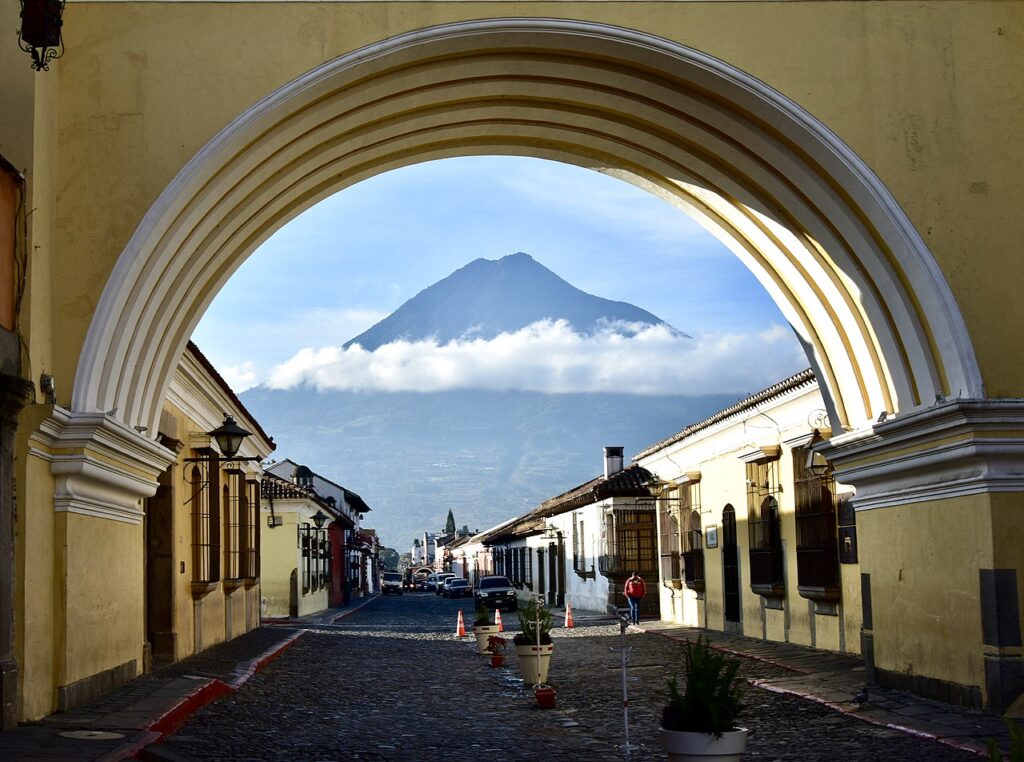
Antigua's Holy Week runs on physical effort: families and church groups spend the night laying alfombras, carpets of dyed sawdust, pine needles and flower heads, across the cobbles, and a procession then walks straight over them and destroys hours of work in seconds. The 26-29 March break catches the climax of the week, and the calendar works differently from Europe in a way that matters: in the typical Guatemalan pattern the public holidays cluster on Maundy Thursday, 25 March, and Good Friday, 26 March, when the whole country is on the move, while Easter Monday is an ordinary working day. Route maps and timings are published locally each year, so plan from the official 2027 programme, not from last year's.
The honest warning: This is a national event, not a visitor curiosity: central rooms are committed a very long way out, the streets are shoulder to shoulder with Guatemalan families as much as foreign visitors, and the centre closes to vehicles. The cobbles are ankle-turning and genuinely hostile to anyone with mobility limits. Processions run for hours with no shortcut and no reserved viewing, and the biggest days in the typical pattern are Thursday and Friday, so arriving on the Saturday misses much of what you came for. For most travellers this is also long-haul flying for a four-day pattern their own country may not give them, so check what you actually get off. Best suited to photographers and travellers drawn to craft and devotion who will be out before dawn and stand for hours in a dense crowd. Mid tier. Editorial planning estimate, not surveyed prices: roughly $1,000-2,000 for two across four days on the ground, covering lodging, food and local transport, with international flights excluded. Check live prices.
Best time to visit Guatemala →
5. Krakow, Lesser Poland, Poland
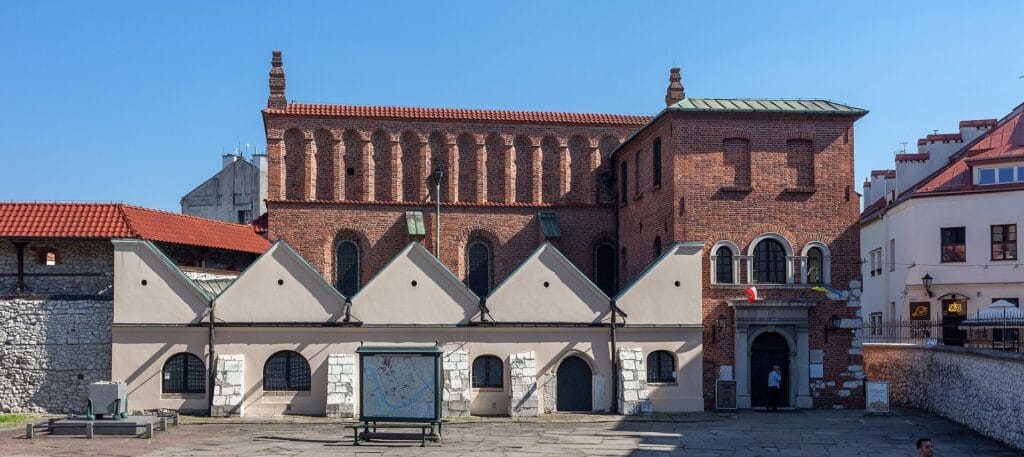
Polish Easter is a domestic, food-centred holiday, and Krakow lets you watch it at close range without being a guest at anyone's table. The rhythm follows the calendar precisely: baskets of eggs, bread, salt and sausage carried to parish churches for blessing on Holy Saturday, 27 March; a family breakfast behind closed doors on Easter Sunday; then Smigus-Dyngus on Easter Monday, 29 March, when water is thrown in the street and not only by children. An Easter market on the Main Square is usual, with run dates set annually, so confirm the 2027 dates. One timing note: the woven palm bundles belong to Palm Sunday, 21 March, five days before this break begins, so do not count on seeing them.
The honest warning: Get the closures right, because they are not where most guides put them: Good Friday is not a statutory public holiday in Poland and shops generally trade, while the near-total shutdown is Easter Sunday, a statutory holiday that also falls under Poland's Sunday trading restriction, followed by Easter Monday. Easter Sunday happens behind family doors, so the city can feel emptied out rather than festive. Wet Monday is not a staged show; assume you may be soaked on the way to breakfast. Late March here is winter's end in general character, so pack for cold and grey. Confirm opening directly with any restaurant you care about. Best suited to travellers who rate tradition and food above weather, and anyone who would rather spend four inexpensive days in a working city than in a resort. Lower tier. Editorial planning estimate, not surveyed prices: roughly $700-1,500 for two across four days on the ground, covering lodging, food and local transport, with flights excluded. Check live prices.
6. Hamburg, Northern Germany
Northern Germany marks Holy Saturday with Easter fires, and Hamburg's version, bonfires along the Elbe beach at Blankenese on the evening of 27 March in the typical pattern, is the city's signature Easter sight, with the fires, the river traffic and the crowds on the sand making the occasion; whether and how the 2027 fires run is decided locally each year, so confirm before building the evening around it. The German calendar then does the rest: Good Friday and Easter Monday are public holidays nationwide in the general pattern, giving the full 26-29 March block, and Good Friday is additionally a legally protected quiet day in most states, with public entertainment restricted. And when the fires burn down, EU clocks jump forward that very night.
The honest warning: Good Friday here is quieter than almost anywhere else on this list, by law as much as custom: shops are shut, club nights and public dancing are restricted in most states, and the city expects you to take the day at walking pace. Shops close again Sunday and Monday, so plan food shopping around Saturday. The fires are weather-dependent, can be regulated or cancelled at short notice, and the Blankenese slopes get densely crowded from late afternoon. River-facing rooms and tables go early for that Saturday. Confirm the 2027 arrangements and transport plans locally, since the crowds change how trains and buses run that evening. Best suited to travellers curious to see how seriously northern Europe still takes the pause: a four-day city break built around one spectacular, uncommercial Saturday night. Mid tier. Editorial planning estimate, not surveyed prices: roughly $1,000-2,000 for two across four days on the ground, covering lodging, food and local transport, with flights excluded. Check live prices.
7. Vienna, Austria
Vienna's Easter markets exist only because of the holiday, which makes them exactly what this break is for: stalls of painted eggs, evergreen decorations and food filling the squares, typically running through the weeks before Easter and over the holiday itself, with 2027 dates set by each market's organisers, so confirm before travelling. Holy Week is also a dense week for sacred music in the city's churches, with programmes set annually. The Austrian calendar has a wrinkle worth knowing: Good Friday is no longer a general public holiday for most workers, so Friday 26 March trades close to normally, while Easter Monday, 29 March, is a public holiday and properly shut. From Easter Sunday evening, the clock change puts light an hour later on the clock for the parks and terraces.
The honest warning: Do not build the trip on the markets alone: they are compact, daytime affairs that can be walked in an hour or two, not a festival, and they are modest beside the December versions. Easter Sunday and Monday close most shops, and restaurant booking tightens across the weekend as the four-day break fills the city. Church music programmes are worship first and performance second, with access set by each church, so confirm the 2027 programmes directly. Late March in Vienna is changeable in general character, so keep indoor alternatives in the plan. Best suited to couples and families who want a gentle, food-and-music Easter in a grand city, with traditions on show but no crowd crush to manage. Mid tier. Editorial planning estimate, not surveyed prices: roughly $1,000-2,000 for two across four days on the ground, covering lodging, food and local transport, with flights excluded. Check live prices.
8. Zermatt, Valais, Switzerland
Easter can fall anywhere from 22 March to 25 April, and 2027's 28 March sits near the earliest end, which is the entire argument for Zermatt. In an early-Easter year, the four-day block that Good Friday and Easter Monday create across much of Europe lands while high-altitude lifts are typically still in full season; in a late-April Easter year that overlap thins badly. So 2027 offers something the calendar only occasionally grants: a long ski weekend without spending leave, at the top of the Alps' altitude range, though snow is a function of the winter rather than the calendar and no date guarantees cover. One 2027-only quirk: spring snow rewards first-lift starts, and the clocks jumping forward on Easter Sunday morning steal exactly the hour that discipline needs.
The honest warning: Easter is priced and queued like the peak week it is, and the main access lifts show it. Spring snow has a narrow good window, fast and grippy early, heavy and grabby by mid-afternoon, so ski early and stop early. The local holiday pattern will not match yours: Swiss public holidays are set canton by canton, and the Valais list differs from much of the country, with Good Friday generally not a public holiday there, so expect ordinary local trading on the Friday and confirm locally. Lower resorts nearby may already be winding down, with closing dates announced by each resort. Zermatt is car-free, which means a train transfer with luggage at both ends. Best suited to skiing families using the four-day break, spring-snow skiers who will start at first lift, and non-skiers content to ride mountain trains and sit on terraces. Peak tier. Editorial planning estimate, not surveyed prices: roughly $2,000-4,000 for two across four days on the ground, covering lodging, food and local transport, with flights, transfers and lift access excluded. Lift access and eating out move this band most, so price both live.
9. Oslo, Norway
Norway runs one of Europe's longest Easter pauses in the typical pattern: Maundy Thursday, Good Friday and Easter Monday are all public holidays, so 25-29 March 2027 is five consecutive days off, and the country responds by decamping wholesale to mountain cabins for skiing, oranges and paskekrim, the national habit of reading crime fiction over Easter. For a visitor that produces a rare thing: a capital at its emptiest and calmest, with museums typically running holiday hours, confirm each one, and late-season cross-country and downhill terrain reachable by public transport, on operating dates set by the snow year. Come for the strange, pleasant hush of a city whose inhabitants have gone up a mountain, and for a national holiday with no commercial edge at all.
The honest warning: The shutdown is real: in the typical pattern supermarkets and most shops close on Maundy Thursday, Good Friday, Easter Sunday and Easter Monday, with shortened Saturday hours in between, and restaurant opening is patchy all weekend, so buy provisions early and confirm anything a day depends on. Norway is expensive at the best of times, and an emptied city is atmospheric rather than lively: if you want buzz, this is the wrong pick. Late March is winter's end in general character, with snow entirely possible in the city. Ski-area operating dates depend on the season and are announced by each operator, so confirm before counting on them. Best suited to independent travellers who like a city to themselves, plus anyone who wants to see a whole country treat Easter as its principal holiday rather than a shopping weekend. Upper tier. Editorial planning estimate, not surveyed prices: roughly $1,500-3,000 for two across four days on the ground, covering lodging, food and local transport, with flights excluded. Check live prices.
10. New York City, New York, United States
New York is on this list for readers the European four-day pattern skips: in the United States neither Good Friday nor Easter Monday is a federal holiday, and 26 March 2027 is an ordinary working day in most states, so the realistic American Easter trip is Saturday and Sunday. New York fits that shape exactly, because its signature Easter tradition sits on the Sunday itself: the Easter Parade and Bonnet Festival along Fifth Avenue, a promenade of extravagant hats and costumes in the typical pattern rather than a ticketed event, alongside Holy Week services at the city's landmark churches; confirm the 2027 arrangements for both. A practical calendar note: US clocks changed on 14 March, two weeks earlier, so there is no mid-trip time jump for domestic travel.
The honest warning: Manage expectations about the word parade: there are no floats and no route to claim early. It is a slow, self-organised promenade, weather-exposed and at its best from mid-morning in the typical pattern. Easter Sunday brunch is one of the city's hardest tables of the weekend, so book ahead or eat off-script. Some states and many school districts do give Good Friday off, which pushes weekend demand up. Sunday hours at shops and attractions vary for the holiday, so check the specific places you care about for 28 March rather than assuming a normal Sunday. Best suited to uS travellers working with a plain two-day weekend who want a landmark Easter tradition on the Sunday itself, no day of leave required. Upper tier. Editorial planning estimate, not surveyed prices: roughly $1,500-3,000 for two across four days on the ground, covering lodging, food and transit, with flights or driving excluded; trim proportionally for a two-day weekend. Check live prices.
Best time to visit New York City →
11. Corfu, Ionian Islands, Greece
Corfu is on this page for the other Easter. Orthodox Easter 2027 falls on Sunday 2 May, five weeks after the Western date, because the two churches calculate the feast differently, and by the fixed offsets of the church calendar Orthodox Good Friday is 30 April and Easter Monday is 3 May. Corfu Town's Holy Saturday morning custom is the famous one: botides, large clay pots hurled from balconies to shatter on the streets below, in the typical pattern, followed that night by the midnight Resurrection service. In 2027 that Saturday is 1 May, itself a holiday in the general Greek pattern, so confirm locally how the two observances combine. Philharmonic bands and epitaphios processions fill the preceding days; confirm the official 2027 programme.
The honest warning: None of this is transferable to March: over the Western Easter of 26-29 March, Corfu is in mid-Lent, quiet and partly pre-season, so do not book it then expecting festivity. The May window needs leave unless your own calendar follows the Orthodox dates, since the March holidays do not carry over. Greek domestic demand for Orthodox Easter is intense, and an island celebrates it at full capacity: rooms, ferries and flights around 30 April to 3 May fill early, with seasonal timetables set by the operators. Easter Monday, 3 May, is a public holiday in the general Greek pattern, and Good Friday is widely observed with reduced hours, so confirm locally. Best suited to travellers who can take leave in early May, or who already had a March Easter at home and want a second one, and anyone drawn to traditions with real noise in them. Mid tier. Editorial planning estimate, not surveyed prices: roughly $1,000-2,000 for two across four days on the ground, covering lodging, food and local transport, with flights and ferries excluded. Check live prices.
12. The painted monasteries of Bucovina, Suceava, Romania
Romania keeps the Orthodox calendar, so its Easter falls on 2 May 2027, with public holidays in the general Romanian pattern on Orthodox Good Friday, 30 April, and Easter Monday, 3 May, which means the painted monasteries of Bucovina, in the country's northeast, mark Easter five weeks after the Western date. The draw is the setting: exterior fresco walls, candle-lit midnight Resurrection services, and the region's tradition of intricately decorated eggs, all in the typical pattern of a rural, devout Easter. Programmes and service times are set by each monastery and parish, so confirm locally for 2027. Over the Western Easter of 26-29 March the region is in mid-Lent: open for sightseeing, but solemn, fasting and entirely without festivity.
The honest warning: This is a pilgrimage landscape, not a resort: distances between the monasteries are real, public transport is thin, and the trip effectively needs a car and unhurried days. Midnight services are worship, not spectacle, so dress and behave accordingly and expect photography limits set by each monastery. The 30 April to 3 May window collides with May Day travel in the general pattern, so roads and guesthouses carry domestic holiday traffic. Rural opening hours are irregular across the holidays. And the March window buys quiet rather than celebration, so choose which trip you are actually taking. Confirm holiday observance and programmes locally for 2027. Best suited to travellers with a car, patience and an interest in living religious art, taking the early-May Easter rather than the March one. Lower tier. Editorial planning estimate, not surveyed prices: roughly $700-1,500 for two across four days on the ground, covering lodging, food and local transport, with flights and car hire excluded. Check live prices.
The easter getaways 2027 calendar
| Easter Sunday 2027 | Sunday 28 March 2027. |
| Good Friday 2027 | Friday 26 March 2027. |
| Easter Monday 2027 | Monday 29 March 2027. |
| Holy Week 2027 | Palm Sunday is Sunday 21 March 2027, seven days before Easter Sunday, so Holy Week 2027 runs 21-28 March. Maundy Thursday is Thursday 25 March, three days before Easter Sunday. The 26-29 March break therefore catches the climax of Holy Week, Good Friday included. |
| Length of the break | Friday 26 to Monday 29 March 2027 is four consecutive days wherever both Good Friday and Easter Monday are public holidays, the general pattern across much of northern and western Europe, three days where only one of them is, and an ordinary weekend where neither is. Public-holiday status is a national and often regional question, so confirm your own list rather than the pattern. Some countries also observe Maundy Thursday, which would stretch the block to five days. |
| United States | Neither Good Friday nor Easter Monday is a US federal holiday, and 26 March 2027 is an ordinary working day in most states, though some states and many school districts observe Good Friday. For most American workers this is a two-day Easter. |
| The clock change lands on Easter | EU summer time begins on the last Sunday of March, and in 2027 that is Easter Sunday itself: clocks go forward in the small hours of 28 March, making Easter Sunday a 23-hour day, shortening the night after the Easter Vigil by an hour, and moving evening light an hour later on the clock from Sunday onward. The UK follows the same last-Sunday-of-March rule. Clock-change rules are set by legislation and can change, so confirm close to the date that the transition still applies. |
| US clocks changed two weeks earlier | US daylight saving time began on Sunday 14 March 2027 under the second-Sunday-of-March rule, so the usual US-Europe time difference is one hour narrower between 14 and 28 March and returns to normal on Easter morning. |
| Orthodox Easter 2027 | Sunday 2 May 2027, five weeks after the Western date, because the Orthodox churches calculate the feast on the older Julian reckoning. Greece, Cyprus, Serbia, Romania and Russia celebrate then, with Orthodox Good Friday on 30 April and Orthodox Easter Monday on 3 May 2027 by the same fixed offsets. Late March in those countries is mid-Lent, not Easter. |
| How early this Easter is | Gregorian Easter can fall anywhere from 22 March to 25 April. At 28 March, Easter 2027 sits near the early end of that range, which is what keeps the four-day break inside the Alpine ski season and puts the clock change on the holiday itself. |
| Movable feast | Easter's date is calculated rather than fixed, so nothing about 2027 transfers to any adjacent year. |
Planning and booking notes
- Decide the supply-constrained trips first: Seville, Braga and Antigua Guatemala treat this exact week as their peak, and centrally placed rooms in procession cities are committed a long way ahead, as are rooms for Zermatt's holiday week and for Corfu around 30 April to 3 May, when Greek domestic demand does the same thing. Book those as early as your plans allow.
- Match the trip to the days you actually get. Where both Good Friday and Easter Monday are public holidays, the general pattern in much of northern and western Europe but something to confirm against your own entitlement, 26-29 March is four days without leave, and Norway's typical pattern adds Maundy Thursday for five. In the United States neither day is federal and 26 March is an ordinary working day in most states, which is why New York appears here as a two-day trip. The May picks, Corfu and Bucovina, need leave unless your calendar follows the Orthodox dates.
- Plan around the clock change, because in 2027 it lands on the holiday itself. EU summer time begins on the last Sunday of March, which is Easter Sunday, 28 March: clocks go forward in the small hours, the night is an hour shorter, and Easter Sunday runs 23 hours. Recheck any Sunday-morning departure, which will feel an hour earlier than it reads, and enjoy the compensation: evening light an hour later on the clock for the last two days of the break. The UK follows the same last-Sunday-of-March rule, and US clocks changed on 14 March, so the usual US-Europe time gap is an hour narrower in the fortnight before Easter and snaps back to normal on Easter morning. Clock-change rules on both sides of the Atlantic are set by legislation and can change, so confirm close to the date that the transitions described here still apply.
- Do not book Greece, Cyprus, Serbia or Romania for 26-29 March expecting Easter. Their churches keep the Orthodox calendar, and in 2027 that puts Easter on 2 May, five weeks later; late March there is mid-Lent, with none of the festivity and some of the closures. Treat that either as a warning or as a second chance: the 30 April to 3 May window is a full Easter of its own.
- Learn the Good Friday split before assuming anything is open or shut. In the general pattern it is a public holiday in Spain, Portugal, Germany, the UK and much of northern Europe, and an ordinary working day in Italy, Poland, most of Austria for most workers, and most of the United States. Easter Monday roughly inverts several of those. Buy food and pharmacy items before the holiday starts, and confirm opening directly with any specific place a day depends on.
- Treat every named tradition as a typical pattern, not a booking: procession routes and hours, Easter markets, the Elbe fires, the Fifth Avenue parade and the Corfu pots are all set, and occasionally cancelled, year by year. Confirm the official 2027 programme for anything the trip is built around.
- If your real question is where is pleasant in spring rather than what to do with the Easter weekend, our guide to the best places to visit in spring 2027 (/best-places-to-visit-spring-2027/) answers that directly. Blossom, bulb fields and mild-weather trips belong there, and none of them needs the holiday calendar to work.
- Take refundable rates where the occasion itself can be rained off. Processions in Seville, Braga, Trapani and Antigua can be shortened or cancelled in heavy rain, and outdoor fires and promenades are weather-exposed, so the flexible rate is doing real work on this particular list.
- Do not assume the fare pattern. Where both days are holidays, the outbound Thursday and Friday and the return Monday are what most travellers want; price the alternatives live for your route, because this page has surveyed no fares and cannot tell you which is cheaper.
12 Best Easter Getaways for 2027 FAQ
When is Easter 2027?
Easter Sunday is Sunday 28 March 2027. Good Friday is Friday 26 March and Easter Monday is Monday 29 March, so the Western Easter break runs 26-29 March. Palm Sunday is Sunday 21 March and Maundy Thursday is Thursday 25 March, both fixed offsets from Easter Sunday, putting Holy Week 2027 at 21-28 March. Orthodox Easter falls five weeks later, on Sunday 2 May 2027, which is the date that governs Greece, Cyprus, Serbia, Romania and Russia. Easter is a movable feast that can fall anywhere from 22 March to 25 April, and 28 March sits near the early end of that range, so none of these dates carries over to any adjacent year.
Does Easter 2027 give me a long weekend?
Only if the days around it are public holidays where you live, which is a national and often regional question. Where both Good Friday, 26 March, and Easter Monday, 29 March, are public holidays, the general pattern across much of northern and western Europe, the break is four consecutive days without leave. Some countries also observe Maundy Thursday, 25 March, Norway's typical pattern among them, stretching it to five. In the UK, Good Friday is a bank holiday everywhere and Easter Monday is one in England, Wales and Northern Ireland, with Scotland's list differing. In the United States neither day is a federal holiday: 26 March is an ordinary working day in most states, so an American Easter trip is realistically built on the Saturday and Sunday unless a state, employer or school district gives Good Friday off. Confirm your own entitlement rather than the pattern.
What happens to the clocks over Easter 2027?
Something that only happens in early-Easter years: the EU's summer-time change falls on Easter itself. EU clocks go forward on the last Sunday of March, and in 2027 that is Easter Sunday, 28 March, so the clocks jump in the small hours of Easter morning, the night after the Easter Vigil is an hour shorter, and Easter Sunday is a 23-hour day. The practical effects: a Sunday-morning flight feels an hour earlier than it reads, and from Sunday evening the light runs an hour later on the clock for the rest of the break. The UK follows the same last-Sunday-of-March rule. US clocks changed on Sunday 14 March 2027 under the second-Sunday rule, so the usual US-Europe offset is an hour narrower between 14 and 28 March and returns to normal on Easter morning. Clock-change rules on both sides of the Atlantic are set by legislation and can change, so confirm with an official source close to the date that these transitions still apply.
Why is Easter in Greece on a different date in 2027?
Because the Orthodox churches calculate Easter with the older Julian reckoning, and in 2027 the two methods land five weeks apart: Western Easter on 28 March, Orthodox Easter on Sunday 2 May. Greece, Cyprus, Serbia, Romania and Russia therefore celebrate at the start of May, with Orthodox Good Friday on 30 April and Easter Monday on 3 May by the same fixed offsets. Two consequences for a traveller: booking those countries for 26-29 March in the expectation of Easter is a mistake, since late March there is mid-Lent; and 2027 effectively offers a second Easter, so a traveller who wants the full celebration can take it on Corfu or among Bucovina's monasteries in the 30 April to 3 May window instead.
What is open and what closes over Easter 2027?
It varies more than most travellers expect, and the common assumption that Good Friday closes everything is wrong in several countries. In the general pattern, Good Friday is a public holiday in Spain, Portugal, Germany and the UK, and in Germany a legally quiet day with public entertainment restricted, but an ordinary trading day in Italy, Poland and, for most workers, Austria. Easter Sunday is the widest shutdown across observant Europe, and in Poland it also falls under the Sunday trading restriction. Easter Monday closes much of Europe again, though not Portugal in the general pattern, while in the United States the whole weekend involves no public holiday at all, only Sunday hours. Norway's typical pattern closes most shops on Maundy Thursday, Good Friday, Easter Sunday and Easter Monday, with shortened trading on Holy Saturday in between. Buy food before the holiday starts, expect holiday transport timetables, and confirm hours directly with the specific places a day depends on.
What this page does not claim to know
- All costs here are editorial planning estimates, not surveyed prices. They are four deliberately coarse tiers for two people across four days on the ground, covering lodging, food and local transport, with flights and any stated extras excluded. No live pricing was checked, nothing here is a quote, no supplier supplied a figure, and the tiers are not fine-grained enough to rank one destination against another on price.
- No hotel, guesthouse, restaurant, tour operator, airline, fare or bookable product is named or recommended anywhere on this page. Where a market, museum, mountain railway, ferry, ski area or ticketed civic event is referred to generically, it is flagged as something to confirm directly, not endorsed, and no price, availability or booking route is implied.
- This is desk-written editorial planning guidance, not first-hand trip reporting. Nothing here claims that anyone visited, stayed, ate or travelled at any of these places for this guide, and no description of a street, crowd or queue should be read as an eyewitness account.
- The only dates stated on this page are: Good Friday 26 March, Easter Sunday 28 March and Easter Monday 29 March 2027; Palm Sunday 21 March, Maundy Thursday 25 March and Holy Saturday 27 March 2027, all fixed offsets from Easter Sunday (seven days, three days and one day before it respectively); Orthodox Easter Sunday 2 May 2027, with Orthodox Good Friday 30 April, Holy Saturday 1 May and Easter Monday 3 May by the same fixed offsets; and the clock-change Sundays of 28 March 2027 (EU and UK rule: last Sunday of March) and 14 March 2027 (US rule: second Sunday of March). Every other movable date, including procession programmes, market seasons, school holidays, ferry, lift and flight timetables, and Ramadan and Eid, is deliberately not stated and must be confirmed with the responsible organiser or authority.
- Clock-change statements describe the standing rules: last Sunday of March for the EU and UK, second Sunday of March for the US. These rules are set by legislation and can be changed, so confirm with an official source close to the date whether the transitions described here still apply.
- Public-holiday observance differs by country, region, sector and employer, and this page describes general patterns only. Good Friday in particular is a public holiday in some countries and an ordinary working day in others, and cantonal, state and regional lists differ within single countries. It cannot tell you what you personally get off work; confirm your own entitlement and the local list at your destination.
- Weather is described as general seasonal character only. No temperature, rainfall, snow-depth, sea-temperature or daylight-hours figure is asserted anywhere on this page, and nothing here is a forecast for any travel window.
- Every named tradition, including processions, Easter markets, Easter fires, the Fifth Avenue parade and the Corfu pot-throwing, is described as the typical pattern of a long-standing event. Programmes, routes, timings and whether an event runs at all are set year by year, can change or be cancelled at short notice, and must be confirmed against the official 2027 programme.
- Crowd, demand and availability descriptions are qualitative editorial judgements about how these occasions typically run, not measured visitor counts or occupancy data, and they can be wrong in any given year.
- "Best" here means best-suited to this particular holiday calendar in the editors' judgement. The order is not a scored ranking, and no index, survey, study or measured dataset sits behind it or behind any statement on this page.
- Entry requirements, visas, transit rules and government travel advice change independently of the travel calendar, are not covered here, and should be checked with official government sources before you commit to non-refundable travel.
You Might Also Love


Written by
John Morrison is the founder and lead travel writer at Packzup. Over the past decade he has explored destinations across Africa, the Americas, Asia, Europe, the Middle East, and Oceania — always self-funded, never on a press trip.
