
Last updated August 28, 2026 · Editorial policy
Best time to visit Vancouver: at a glance
Short answer: June to September — warm, dry and long days.
| Season | Months | What to expect |
|---|---|---|
| Peak | Jul–Aug | Warm, dry, all open; busiest |
| Shoulder (best value) | May–Jun, Sep | Mild, fewer crowds |
| Low | Oct–Apr | Rainy; ski season on the local mountains |
Best Time to Visit Vancouver: Month-by-Month Guide
Quick take: Timing your Vancouver trip right makes everything better: lower prices, better weather, fewer crowds. Month-by-month reality below.
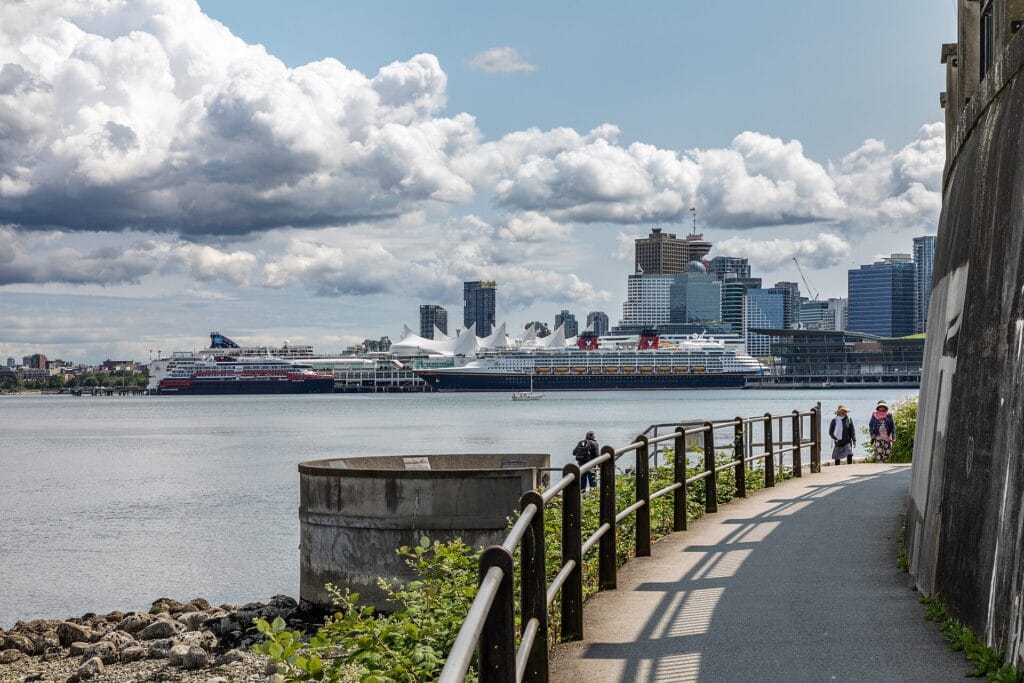
Peak: summer (June-August) · Off-season: winter (December-February)
Knowing the best time to visit Vancouver can transform your trip — saving you hundreds on flights and hotels while putting you in better weather with fewer crowds. This guide breaks down each season, key events, and what to expect month by month so you can pick the right travel dates.
Best Months to Visit Vancouver
Top pick: June and September. Vancouver’s dry, mild summer peaks in July and August, but cruise season and festivals push hotel rates up sharply then. June brings long daylight and gardens in bloom; September stays warm and clear while crowds thin out. Avoid late October through March, when persistent Pacific rain settles in for the winter.

Time your trip around the confirmed 2026 events rather than guessing. Two big draws cluster at the end of July: Summer Lights in English Bay, the free one-night fireworks show on July 31 that replaces the cancelled Honda Celebration of Light, and Vancouver Pride, running July 25 to August 2 with its parade on the closing weekend. Both pack the downtown waterfront, so book lodging weeks ahead if those dates appeal to you.
- Visit in September for near-summer weather and thinner crowds.
- Come late July for the fireworks and Pride, and reserve early.
- Skip November: it is the wettest month, with roughly 20 rainy days and daytime highs near 9C.
Frequently Asked Questions
Are there major festivals in Vancouver?
Yes — Vancouver hosts notable events including: Pacific National Exhibition (PNE) Fair (Aug-Sep), Vancouver International Jazz Festival (Jun-Jul), Vancouver International Film Festival (Sep-Oct), Vancouver Folk Music Festival (Jul). Major festivals can spike hotel prices 50-200% — book 3-6 months ahead if attending.
What should I pack for Vancouver?
Pack for the season you’re visiting and the climate zone. Summer in Vancouver: lightweight breathable clothes, sunscreen, hat, comfortable walking shoes. Winter: layers, waterproof jacket, warm accessories. Check the 10-day forecast 1-2 weeks before departure and adjust.
Related Vancouver Travel Guides
- Best Things to Do in Vancouver
- Where to Stay in Vancouver
- Best Food in Vancouver
- How Much Does a Trip to Vancouver Cost?
- Vancouver Itinerary Guide
Torn between destinations? See our honest, first-hand comparisons: Toronto vs Vancouver, Vancouver vs Banff.
Climate data source: monthly temperature and rainfall figures on this page come from Open-Meteo’s Historical Weather API, which serves the ECMWF ERA5 reanalysis (Copernicus Climate Change Service). Five-year averages, 2019–2023. See our data methodology.
Vancouver weather & climate by month
Best months to visit: June, July, August, September. Vancouver’s warmest month is August (avg 22°C / 72°F), the coolest is February (low 0°C / 33°F). The wettest is November (175 mm) and the driest is July.
| Month | Avg high | Avg low | Rainfall | Rainy days |
|---|---|---|---|---|
| January | 7°C / 44°F | 2°C / 36°F | 174 mm | 18 |
| February | 5°C / 42°F | 0°C / 33°F | 91 mm | 13 |
| March | 9°C / 48°F | 3°C / 37°F | 106 mm | 14 |
| April | 11°C / 53°F | 5°C / 41°F | 86 mm | 12 |
| May | 16°C / 61°F | 9°C / 49°F | 59 mm | 10 |
| June | 19°C / 66°F | 12°C / 54°F | 51 mm | 8 |
| July | 22°C / 71°F | 15°C / 58°F | 34 mm | 5 |
| August | 22°C / 72°F | 15°C / 60°F | 36 mm | 5 |
| September | 19°C / 65°F | 13°C / 55°F | 52 mm | 6 |
| October | 13°C / 55°F | 8°C / 46°F | 124 mm | 13 |
| November | 8°C / 47°F | 4°C / 38°F | 175 mm | 17 |
| December | 6°C / 42°F | 1°C / 35°F | 172 mm | 17 |
Climate source: Open-Meteo / WMO climate normals (WMO 1991–2020, or ERA5 2019–2023 where unavailable). Compare destinations in the Best Time to Visit Index.
You Might Also Love



Written by
Drew Treasury is a contributing travel writer at Packzup, specialising in city culture, food markets, street art, and neighbourhood-level travel.
