Last updated September 16, 2026 · Editorial policy
The date that matters most for travel buyers is not Black Friday itself but Tuesday 1 December 2026 — Travel Tuesday, the Tuesday after Cyber Monday, which in recent years has become the travel industry's own deal day, with travel-specific offers historically clustering later in the window than merchandise offers. The full calendar runs from Thanksgiving on Thursday 26 November 2026 (the fourth Thursday of the month, whose Thursdays fall on the 5th, 12th, 19th and 26th) through Black Friday on Friday 27 November and Cyber Monday on Monday 30 November, with early-November teasers opening the season in the typical pattern. This page carries no surveyed prices, no retailers and no live offers; it is a strategy for the window — the calendar, the categories that genuinely discount in the typical pattern, how to test anything labelled a deal, how refunds actually work, and twelve trip families that Black Friday-window bookings have historically covered well.
Looking for where to spend Thanksgiving instead? This page is about buying travel during the sale window, not the holiday trip itself: for that, the best Thanksgiving getaways for 2026 ranks the destinations.
Black Friday Travel Deals 2026 at a glance
| # | Destination | Suits | Main trade-off | Planning estimate |
|---|---|---|---|---|
| 1 | Caribbean all-inclusive winter-sun week, Dominican Republic, Jamaica and the wider Caribbean resort belt | couples and families who want a fixed-cost winter-sun week between mid-Jan | The headline rate usually attaches to the lowest room category on the least wanted | roughly $2,400-4,200 for two across a seven-night winter week on the groun |
| 2 | Riviera Maya beach week, Quintana Roo, Mexico — the Cancún-to-Tulum corridor | beach-first travellers who want the shortest route to winter sun plus a re | Seaweed arrivals on this coast vary sharply year to year and beach to beach, and t | roughly $1,800-3,200 for two across a seven-night winter week on the groun |
| 3 | Early-season ski in the Rockies, Colorado and Utah, United States | flexible skiers and boarders who value cheap lift-adjacent beds and quiet | Early-season terrain can be genuinely thin — partial mountain openings, limited ru | roughly $1,400-2,600 for two across a five-night early-December stay on th |
| 4 | Orlando theme-park base weeks, Central Florida, United States | families aiming at quiet January park weeks who want whole-home space with | Park admission itself rarely sees deep genuine discounting, in the window or out o | roughly $1,600-3,000 for two across a six-night January stay on the ground |
| 5 | Transatlantic repositioning cruise, Atlantic crossings between the US East Coast and the Mediterranean | time-rich travellers who love sea days and can treat the crossing as one-w | The one-way flight is yours to solve, and it can consume the entire saving: peak-d | roughly $1,800-3,400 for two across a one-to-two-week crossing on the grou |
| 6 | Caribbean cruise from a Florida home port, Florida home ports to the Caribbean | first-time and budget cruisers within driving range of Florida who will do | The base fare is a fraction of what you will actually spend, and add-on-heavy prom | roughly $1,400-2,800 for two across a seven-night sailing on the ground, c |
| 7 | European Christmas-market city break, Germany, Austria, Czechia and Alsace | spontaneous travellers able to fly within a fortnight of booking who will | You are booking a transatlantic trip that departs within days or a couple of weeks | roughly $900-1,700 for two across a four-night December city break on the |
| 8 | Mediterranean spring booked far ahead, Spain, Portugal and Greece | planners happy to commit in November to a spring trip, provided the rate i | Five or more months separate payment from travel, and plans change more often than | roughly $1,600-2,900 for two across a seven-night spring stay on the groun |
| 9 | Hawaii between the peaks, Hawaii, United States | travellers flexible on island and week who will price flights before celeb | Airfare is one of the largest lines of a Hawaii trip and the least likely to disco | roughly $2,800-4,800 for two across a seven-night spring stay on the groun |
| 10 | Las Vegas and Southwest canyon country, midweek, Nevada, Arizona and Utah, United States | road-trippers with midweek flexibility who want big winter scenery on a sm | Resort fees can rival or exceed a discounted midweek room rate and have historical | roughly $1,100-2,200 for two across a five-night winter midweek stay on th |
| 11 | Costa Rica dry-season tour package, Costa Rica | wildlife-first travellers who want a pre-organised route and will compare | Package inclusions vary enormously — number of nights, meals covered, guided days | roughly $2,000-3,600 for two across an eight-night guided circuit on the g |
| 12 | Big-city January trough break, New York, Chicago and other major US cities | museum, theatre and food-first travellers who don't mind bundling up betwe | Deep winter is the reason these dates are cheap: cold, short days, and the outdoor | roughly $1,300-2,400 for two across a four-night January city break on the |
Editorial planning estimate, not surveyed prices. Ranges are deliberately wide, assume two people sharing, and cover lodging, food and local transport unless a row says otherwise.
1. Caribbean all-inclusive winter-sun week, Dominican Republic, Jamaica and the wider Caribbean resort belt
All-inclusive packages are the cleanest fit for the Black Friday window because the product is priced as a bundle and the inventory is enormous. The Dominican Republic's east-coast resort zones, Jamaica's north shore and their neighbours carry an enormous stock of near-identical rooms, and in recent years the typical pattern has been to use the Black Friday-to-Travel Tuesday stretch to fill the winter weeks that sell slowly once the New Year rush fades, roughly mid-January through the run-up to spring break. Because room, meals and drinks are one price, a genuine markdown moves the whole cost of the trip rather than just a room rate, which makes this one of the few categories where a saving claim can be checked against a single number. The travel windows attached to these promotions have historically pointed exactly where a US winter-sun buyer wants to go anyway; confirm the current-year promotion windows rather than assuming the pattern repeats.
The honest warning: The headline rate usually attaches to the lowest room category on the least wanted dates, and capacity controls mean the advertised number can vanish within days while the promotion banner stays up. Blackout dates around the Christmas-to-New-Year peak and the busiest spring weeks are standard in the typical pattern, so the dates you most want may be exactly the ones excluded. Savings shown against a comparison price are often measured from an inflated base rather than the ordinary January rate you could have had anyway, so record normal pricing for your exact dates before the window opens. Check what the bundle omits, too — transfers, premium dining tiers and departure taxes are common gaps that quietly narrow the difference between sale and non-sale pricing. Best suited to couples and families who want a fixed-cost winter-sun week between mid-January and the spring-break run-up and are happy staying inside one resort. Editorial planning estimate, not surveyed prices: roughly $2,400-4,200 for two across a seven-night winter week on the ground, covering an all-inclusive room with meals and drinks plus airport transfers, with flights excluded. Check live prices.
Best time to visit the Dominican Republic →
2. Riviera Maya beach week, Quintana Roo, Mexico — the Cancún-to-Tulum corridor
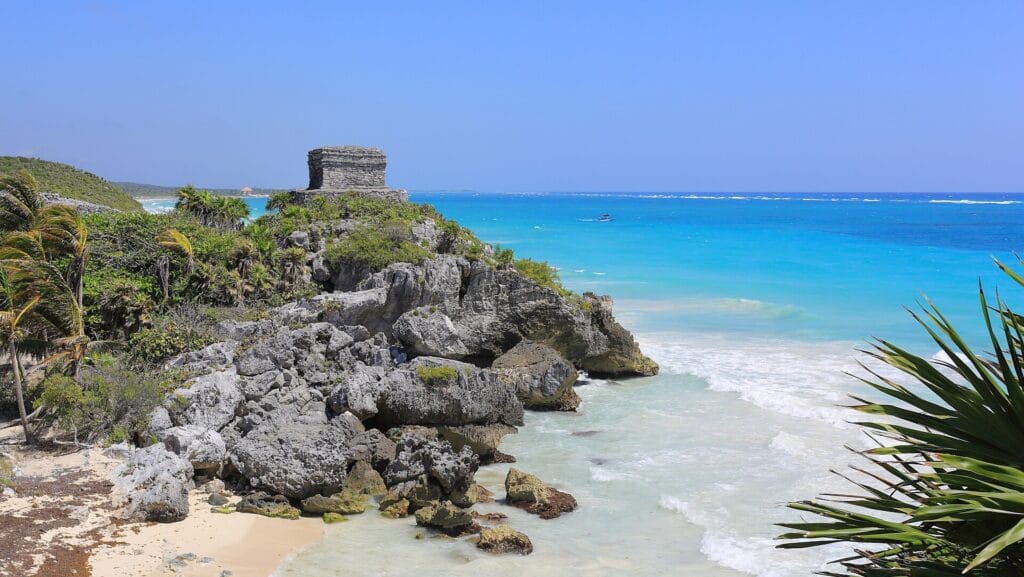
The Cancún-to-Tulum corridor behaves like the Caribbean belt with a shorter flight for much of the United States, and its room count is vast enough that filling January-to-April weeks is a structural problem sellers have historically solved with Black Friday-window pricing. Two discount channels operate at once in the typical pattern: all-inclusive resort packages, and vacation-rental promotions on the corridor's enormous condo stock, which suits travellers who would rather self-cater near Playa del Carmen or Tulum than take a wristband. Winter here is the dry, bright side of the year in seasonal character, and the corridor offers more non-beach substance than most winter-sun rivals — cenotes, Maya sites and reef trips fill the days a beach week usually wastes. As everywhere on this page, treat the pattern as a starting point and confirm what the current-year promotions actually cover before assuming the corridor repeats it.
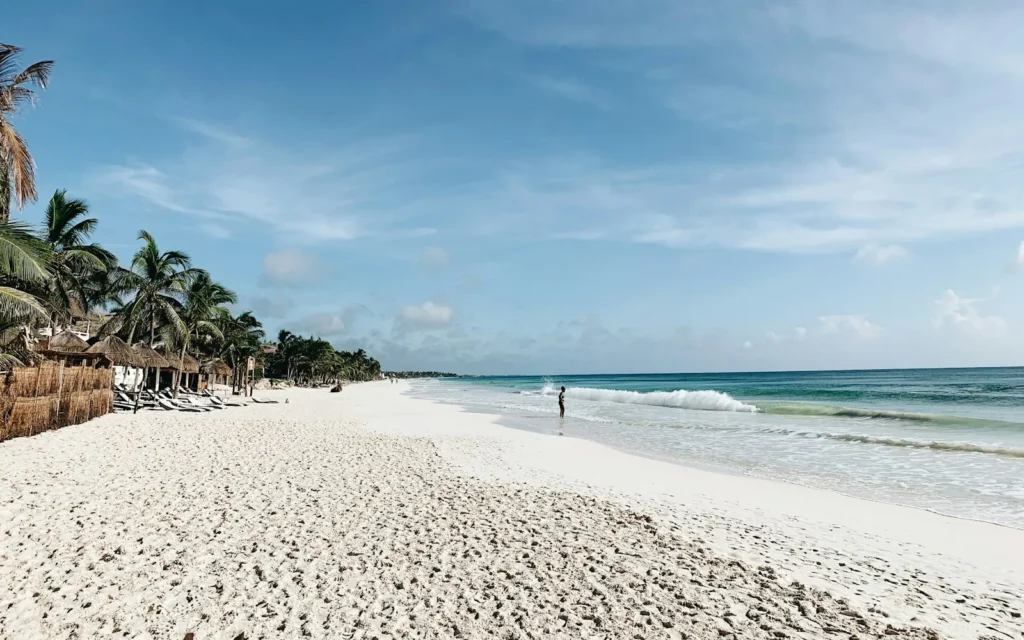
The honest warning: Seaweed arrivals on this coast vary sharply year to year and beach to beach, and there is no way to know at a November booking what any given week next spring will look like — if a pristine shoreline is the entire point of the trip, favour cancellable rates over the deepest discount. Resort-zone extras add up quickly: transfers along the corridor, taxi pricing and premium tiers inside all-inclusive bundles all sit outside the headline number. The busiest holiday and spring weeks are the usual blackout candidates in the typical pattern, and rental promotions frequently carry minimum-stay conditions. The corridor's popularity also means the flagship stretches get crowded even in a trough month, so read location fine print rather than assuming the photo matches the block you booked. Best suited to beach-first travellers who want the shortest route to winter sun plus a real choice between resorts and self-catered condos. Editorial planning estimate, not surveyed prices: roughly $1,800-3,200 for two across a seven-night winter week on the ground, covering lodging, food and transport along the corridor, with flights excluded. Check live prices.
3. Early-season ski in the Rockies, Colorado and Utah, United States
The weeks between a Rockies resort's opening and the Christmas holiday peak are typically the softest demand of the entire ski year, and lodging-and-lift packaging plus vacation-rental promotions have in recent years leaned on the Black Friday window to fill exactly those dates. The 2026 calendar makes the fit unusually tight: the deal window has historically closed around Travel Tuesday — 1 December in 2026 — right as the early-December value weeks begin, so you are booking days ahead rather than months ahead and can check how the season is actually opening before you commit. Lodging is the dominant cost of a ski trip once you strip flights out, and early-season midweeks are when that cost has historically fallen furthest. If your group cares more about cheap slope-side beds and quiet lift lines than about every run being open, this is the strongest domestic use of the window in the typical pattern.
The honest warning: Early-season terrain can be genuinely thin — partial mountain openings, limited runs, machine-made ribbons — and that is precisely why these weeks are cheap, so a bargain week on a barely open mountain is a real and common outcome. Nobody can promise what will be skiable in any given early December, which makes refundable lodging worth more than a slightly deeper non-refundable discount. The holiday peak weeks rarely see genuine markdowns in the typical pattern, so do not expect the window to rescue a Christmas trip. Budget separately for lift access, rentals and lessons, which sit outside most lodging promotions, and remember that mountain roads in early winter can demand proper tyres or chains on short notice. Best suited to flexible skiers and boarders who value cheap lift-adjacent beds and quiet slopes over a fully open mountain. Editorial planning estimate, not surveyed prices: roughly $1,400-2,600 for two across a five-night early-December stay on the ground, covering lodging, food and local mountain transport but not lift access, with flights excluded. Check live prices.
4. Orlando theme-park base weeks, Central Florida, United States

Orlando is arguably the most package-shaped destination in the country: an enormous ring of hotels and vacation-rental homes exists to serve the parks, and the January-to-early-February stretch after the holidays is its softest ground. In the typical pattern, Black Friday-window lodging and package promotions point squarely at that trough, because those are the rooms hardest to sell at full rate. For a US family the maths is friendly — drive-to for the Southeast, short flights for much of the rest of the country — and the vacation-rental channel adds whole-home options that suit multigenerational groups far better than two hotel rooms ever do. Winters here are mild in seasonal character, the parks have typically run full schedules through winter in recent years — confirm current-year operating hours — and the queues in a January midweek bear no resemblance to summer's. The saving lives in the lodging and the package, so anchor the plan there and treat everything else as full price.
The honest warning: Park admission itself rarely sees deep genuine discounting, in the window or out of it, so the biggest line on the budget barely moves while the lodging line falls — price the whole trip before judging the deal. Ticket pricing has in recent years been date-based and has tended to run regardless of any promotion — confirm the current-year structure — and event weekends scattered through the winter can spike both crowds and room rates inside an otherwise quiet month. Per-day costs on the ground — parking, food inside the parks, extras — routinely exceed a modest nightly lodging saving, and a car or transport plan is close to mandatory given the sprawl. Rental promotions often carry minimum stays and cleaning-fee structures that shrink the advertised discount on short trips. Best suited to families aiming at quiet January park weeks who want whole-home space without peak-season lodging rates. Editorial planning estimate, not surveyed prices: roughly $1,600-3,000 for two across a six-night January stay on the ground, covering lodging, food and getting around the resort sprawl but not park admission, with flights excluded. Check live prices.
5. Transatlantic repositioning cruise, Atlantic crossings between the US East Coast and the Mediterranean
Repositioning crossings exist because ships that spend winter in the Caribbean typically head to the Mediterranean for summer, and each spring they have to get there. Those one-way, sea-day-heavy sailings are structurally hard to fill, which is why they have historically shown some of the deepest genuine value in cruising — and cruises are one of the categories that reliably participates in the Black Friday-to-Travel Tuesday window in the typical pattern. Booked in late November for a spring departure, a crossing turns dead inventory into one of the lowest per-night propositions afloat: a week or more of full-board travel where the journey is the holiday. For a US buyer, the eastbound spring crossing doubles as one-way positioning for a European spring or summer trip, which converts a curiosity into a genuinely useful piece of travel. Confirm the current-year deployments and dates rather than assuming any particular sailing exists.
The honest warning: The one-way flight is yours to solve, and it can consume the entire saving: peak-date flights rarely see deep genuine discounts, and a single transatlantic leg bought alone is often priced unkindly, so count the flight into the comparison before calling the crossing cheap. The itinerary is mostly ocean — many consecutive sea days with few or no ports — which delights some travellers and defeats others, and there is no changing your mind mid-Atlantic. Departure dates are few and fixed, so this only fits calendars with slack. Spring seas on the North Atlantic can be lively in character, gratuities and onboard spending sit outside the fare, and cabins on these sailings sell in odd patterns, so the advertised category may not be the one actually available. Best suited to time-rich travellers who love sea days and can treat the crossing as one-way positioning for a European trip. Editorial planning estimate, not surveyed prices: roughly $1,800-3,400 for two across a one-to-two-week crossing on the ground, covering an inside cabin, gratuities and everyday spending on board, with flights excluded. Check live prices.
6. Caribbean cruise from a Florida home port, Florida home ports to the Caribbean
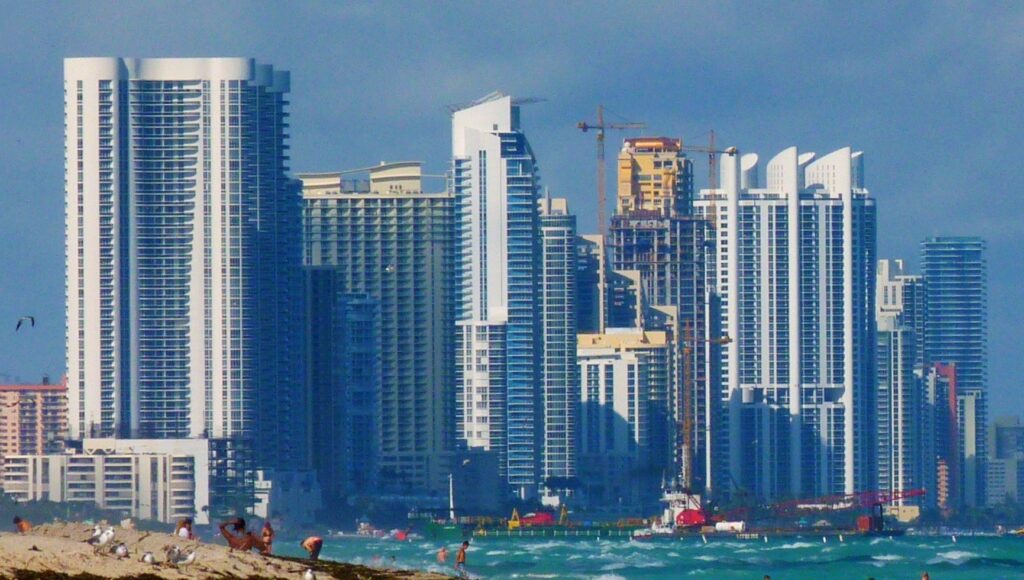
Few places concentrate more cruise inventory than the Florida home ports, and filling an enormous weekly berth count through winter and spring is a permanent sales problem. In recent years the typical pattern has been for the Black Friday-to-Travel Tuesday stretch to arrive loaded with fare and add-on promotions, effectively pre-empting the industry's traditional new-year selling season. For a large slice of the US population the ports are drive-to, which quietly removes the weakest link in most deal-window trips: flights, the piece that rarely discounts, simply are not part of the equation. Short Caribbean loops also make the category forgiving for first-timers — modest commitment, easy logistics, and sailing dates spread across the whole winter and spring rather than clustered on peak weeks. Treat the pattern as historical, and check what the current-year window actually offers before planning around it.
The honest warning: The base fare is a fraction of what you will actually spend, and add-on-heavy promotions often just move money between lines of the same invoice — a bundled drinks package or onboard credit has a real cost baked in somewhere. The only comparison that means anything is total cost per person per night against ordinary pricing for the same sailing class, and building that number takes effort. Gratuities, wifi, excursions and port parking accumulate quickly. Guarantee-cabin offers hand the line the choice of your cabin, which is fine until it is not. Peak holiday sailings rarely join the discounting in the typical pattern, and the cheapest departures are cheap partly because they are the dates nobody was fighting over. Best suited to first-time and budget cruisers within driving range of Florida who will do the total-bill maths before booking. Editorial planning estimate, not surveyed prices: roughly $1,400-2,800 for two across a seven-night sailing on the ground, covering an inside cabin, gratuities and everyday spending on board, with flights excluded. Check live prices.
7. European Christmas-market city break, Germany, Austria, Czechia and Alsace
The calendar does the work here. In the typical pattern the Christmas-market season runs from late November into the days just before Christmas, so a booking made between Black Friday on 27 November and Travel Tuesday on 1 December 2026 lands inside the season itself, aimed at early-to-mid December travel. Those weeks sit before the Christmas peak, which is precisely why city lodging for them has historically stayed discountable while peak-week lodging is not, and transatlantic winter off-peak routes are among the fare families that have appeared in window sales in recent years. The trip itself is short, dense and seasonal in the best sense — mulled-wine stalls, old-town squares, and cities compact enough that three or four days feels complete. Market operating dates vary by city and year, so confirm the current-year programme for your chosen city before booking anything around it.
The honest warning: You are booking a transatlantic trip that departs within days or a couple of weeks, and market operating dates vary by city and year — some markets close earlier in December than visitors expect — so a booking built around a specific market without checking its current-year dates is the classic failure here. Short daylight and genuine cold define the season's character, which suits the markets but limits everything else. Weekend hotel pricing in the famous market cities can hold firm regardless of any sale, so midweek stays carry most of the value. And a short-notice transatlantic hop gives jet lag a large share of a small trip, so build the itinerary around slow evenings rather than packed days. Best suited to spontaneous travellers able to fly within a fortnight of booking who will verify their chosen city's market dates first. Editorial planning estimate, not surveyed prices: roughly $900-1,700 for two across a four-night December city break on the ground, covering lodging, food and local transport, with flights excluded. Check live prices.
8. Mediterranean spring booked far ahead, Spain, Portugal and Greece
Forward inventory is what sellers discount most confidently: in late November, an April or May bed in Spain, Portugal or Greece is unsold, unscarce and five months from mattering, which is why far-out shoulder dates are where package and lodging promotions have historically been most generous in the typical pattern. The payoff is the Mediterranean at its best value point — mild in seasonal character, major sights open and uncrowded relative to summer, and locals still outnumbering visitors in most places. Booking this far ahead has a second advantage the window itself does not advertise: cancellable rates are plentiful and reasonably priced when nothing is scarce, so you can lock the trip while keeping every exit open. For a US buyer planning around spring school breaks or simply dodging summer pricing, this is the window's best use of patience rather than speed.
The honest warning: Five or more months separate payment from travel, and plans change more often than people expect at booking time — over that horizon, refund terms are worth more than discount depth, so favour a cancellable rate even when a stricter one undercuts it. Holiday weeks inside the spring window can price up sharply, and they move year to year, so check the current-year holiday calendar for your exact dates rather than assuming all of April and May behave alike. Early shoulder season means cool seas for swimmers and a few coastal businesses still shuttered, particularly on the islands. And a package bought far ahead locks routing decisions you might make differently in spring, so keep at least the internal legs flexible. Best suited to planners happy to commit in November to a spring trip, provided the rate is cancellable. Editorial planning estimate, not surveyed prices: roughly $1,600-2,900 for two across a seven-night spring stay on the ground, covering lodging, food and local transport, with flights excluded. Check live prices.
9. Hawaii between the peaks, Hawaii, United States
Hawaii's on-the-ground cost is dominated by lodging more than almost any other domestic destination, which makes it unusually responsive to the one thing the Black Friday window historically delivers: resort and package promotions. In the typical pattern those promotions target the troughs between the holiday peak and summer — the late-winter and spring weeks when rooms outnumber visitors — and a genuine lodging markdown there moves the total trip cost meaningfully. For US buyers the practicalities compound the case: no passport, no currency exchange, domestic consumer protections, and enough island variety that flexibility on which island multiplies the odds of a promotion fitting your dates. Winter and spring bring the islands' green, dramatic side in seasonal character. The category also rewards patience inside the window, since travel-specific offers have historically clustered later than merchandise, toward Cyber Monday on 30 November and Travel Tuesday on 1 December.

The honest warning: Airfare is one of the largest lines of a Hawaii trip and the least likely to discount, because peak-date flights rarely see deep genuine markdowns, so a lodging promotion attached to rigid dates can be swamped entirely by what the flights cost that week — price the flights first, then judge the deal. Resort fees and parking are per-night charges that promotions have historically left untouched, and in Hawaii they are substantial enough to reshape the comparison, so always work from the all-in nightly figure. Spring-break weeks sit inside the trough and price accordingly. Inter-island hops add cost and airport time that a one-island trip avoids. And promotion travel windows here are often narrow, so read the eligible dates before imagining the trip. Best suited to travellers flexible on island and week who will price flights before celebrating a lodging deal. Editorial planning estimate, not surveyed prices: roughly $2,800-4,800 for two across a seven-night spring stay on the ground, covering lodging, food and a rental car, with flights excluded. Check live prices.
10. Las Vegas and Southwest canyon country, midweek, Nevada, Arizona and Utah, United States
Las Vegas rooms are yield-managed at a scale few places match, and deep-winter midweeks have historically been the bottom of its pricing year — which is exactly where Black Friday-window hotel sales have pointed in the typical pattern, because those are the rooms hardest to sell at rack rate. The trick is to treat the cheap room as a base rather than the point: winter canyon country is within day-trip range, the desert light is at its clearest in seasonal character, and the crowds at the famous overlooks are a fraction of summer's. A US buyer with midweek flexibility can assemble a big-scenery trip around a room cost that would not cover a parking spot in peak season, with the city's food and shows as the evening programme. As with everything in this window, the sales are a recent-years pattern rather than a promise, so verify what the current-year window actually covers.
The honest warning: Resort fees can rival or exceed a discounted midweek room rate and have historically sat outside promotions entirely, so the advertised number is not the nightly cost — compare all-in figures or the comparison is fiction. Citywide conventions and major events spike prices unpredictably within otherwise quiet months, and a two-day shift in dates can double a room, so stay loose by a few days rather than fixed. Weekend rates bear no relation to the midweek promotion you saw. Winter storms can close high-elevation park roads on short notice, so day-trip plans need flexible ordering and a backup. And the drive distances are real: canyon-country day trips from the city mean long days behind the wheel. Best suited to road-trippers with midweek flexibility who want big winter scenery on a small room budget. Editorial planning estimate, not surveyed prices: roughly $1,100-2,200 for two across a five-night winter midweek stay on the ground, covering lodging, food and a rental car for day trips, with flights excluded. Check live prices.
11. Costa Rica dry-season tour package, Costa Rica
Tour packages are one of the categories that genuinely participates in the Black Friday window in the typical pattern, and Costa Rica is one of the most package-mature destinations in the Americas: bundled routes linking volcano country, cloud forest and the Pacific coast, with lodging, internal transport and guiding priced as one number. The window lands right at the start of the Pacific side's dry season, so operators have historically used it to fill January-to-April departures — the exact months a US buyer wants. Because the bundle covers most of the trip's moving parts, a genuine markdown moves nearly everything at once, and the internal logistics that make independent Costa Rica travel tiring — transfers, rough roads, connection timing — become someone else's job. For first-time visitors who want wildlife, rainforest and beach in one itinerary without building it themselves, this is the window's strongest guided-travel play.
The honest warning: Package inclusions vary enormously — number of nights, meals covered, guided days versus free days, transfer classes — so two similarly priced bundles can be entirely different products, and building a like-for-like comparison is your job before any discount means anything. Deposits typically become non-refundable past a stated cutoff, so put that date in your diary the moment you book. Fixed departures limit flexibility, and bundled itineraries spend real hours on internal travel days that the brochure map understates. Late in the dry season the Pacific side turns brown and dusty in character, which surprises visitors sold on rainforest green. And single-operator routes mean one company's standards define the whole trip, for better or worse. Best suited to wildlife-first travellers who want a pre-organised route and will compare bundle inclusions line by line. Editorial planning estimate, not surveyed prices: roughly $2,000-3,600 for two across an eight-night guided circuit on the ground, covering bundled lodging, most meals and internal transport, with flights excluded. Check live prices.
12. Big-city January trough break, New York, Chicago and other major US cities
The first half of January is typically the deepest hotel trough of the American city year: the holiday visitors have gone home, business travel has not fully restarted, and rooms in New York and Chicago that were unbookable in December sit empty. Black Friday-window hotel sales in the typical pattern lean hard on exactly those dates, because they are the hardest rooms in the calendar to sell. The city, meanwhile, does not shrink to match the price — museums, theatre, music and the restaurant scene have typically run at full strength through the trough in recent years, and dining-promotion programmes have tended to land in the same weeks, though the current-year programme should be confirmed rather than assumed. For travellers whose ideal city day happens indoors anyway, January delivers the same city at the year's lowest lodging cost, with the deal window as the mechanism for locking it in.
The honest warning: Deep winter is the reason these dates are cheap: cold, short days, and the outdoor half of these cities effectively off the menu, so the trip only works if your plans live indoors and you are dressed for the walks between venues. The holiday-season spectacle is mostly gone by mid-January, so if decorations and festivity are the draw, this is the wrong window. Some attractions trim winter hours or close for maintenance in the trough, and a holiday weekend inside January prices up against the days around it. Theatre and event tickets do not follow hotel discounts, and headline shows cost what they cost in any month. Storms can also snarl travel days at exactly this time of year, so pad the connections. Best suited to museum, theatre and food-first travellers who don't mind bundling up between venues. Editorial planning estimate, not surveyed prices: roughly $1,300-2,400 for two across a four-night January city break on the ground, covering lodging, food and local transport, with flights excluded. Check live prices.
The black friday travel deals 2026 calendar
| Thanksgiving 2026 | Thursday 26 November 2026 — the fourth Thursday of the month, since November 2026's Thursdays fall on the 5th, 12th, 19th and 26th. |
| Black Friday 2026 | Friday 27 November 2026, the day after Thanksgiving. |
| Cyber Monday 2026 | Monday 30 November 2026, the Monday after Thanksgiving weekend. |
| Travel Tuesday 2026 | Tuesday 1 December 2026 — the Tuesday after Cyber Monday, also called Travel Deal Tuesday, which in recent years has become the travel industry's own deal day in the typical pattern. |
| Deal-season shape (typical pattern) | Teaser offers have historically appeared from early November, building to a peak across Cyber Monday on 30 November and Travel Tuesday on 1 December — treat the whole month as the season, not the Friday alone. |
| Travel offers vs merchandise offers | Travel-specific offers have historically clustered later in the window than merchandise offers, which is why the travel peak sits at the Cyber Monday-to-Travel Tuesday end rather than on Black Friday itself. |
| What typically goes on sale (pattern, never guaranteed) | Hotel and resort packages, cruises, tour packages, vacation-rental promotions, and airline fare sales on specific route families. |
| What rarely discounts | Peak-date flights and peak-week lodging — the scarce dates people fight over rarely see deep genuine markdowns, in this window or any other. |
Planning and booking notes
- Record baseline prices in late October or early November for your exact dates and room or cabin type; a markdown is only measurable against a number you captured before the window opened.
- Read the travel window before the price: most Black Friday-window travel promotions apply to specific date ranges, carry minimum stays, and blank out the peak weeks people actually want.
- The refundable-first move beats waiting: book cancellable lodging early at an acceptable price, then rebook without penalty if the window produces something genuinely better.
- Know the deposit mechanics before booking cruises or tours — the deposit amount, the date it becomes non-refundable, and whether cancellation returns cash or only future travel credit.
- Judge any percentage claim against seasonal norms: January hotel rooms and early-December ski beds are cheap in ordinary years too, and a sale price that merely matches the usual seasonal dip is not a sale.
- Do not spend the whole budget on Friday 27 November — travel-specific offers have historically clustered later, toward Cyber Monday on 30 November and Travel Tuesday on 1 December.
- Always compute the all-in figure: resort fees, gratuities, transfers, parking and cleaning fees sit outside most promotions and can erase a headline saving entirely.
- Capacity-controlled fine print means the advertised price can be exhausted while the promotion continues to run; if a specific offer matters to you, act early inside the window rather than at its end.
- Keep a copy of the offer terms, the cancellation deadline and the booking confirmation at purchase time — disagreements about what a promotion included are far easier to resolve with the original wording in hand.
- This page is about what to buy during the sale window, not where to spend the holiday itself — for the trip question, see our guide to the best Thanksgiving getaways for 2026 (/best-thanksgiving-getaways-2026/).
- Nothing on this page asserts that any company will run any promotion in 2026: the calendar is fixed arithmetic, the categories are a historical pattern, and current-year programmes must be confirmed live.
Black Friday Travel Deals 2026 FAQ
When do Black Friday travel deals start in 2026?
In the typical pattern, teaser offers appear from early November, the main wave lands around Black Friday on Friday 27 November 2026, and travel-specific offers cluster later — peaking across Cyber Monday on 30 November and Travel Tuesday on 1 December. That timing is a recent-years pattern, not a schedule any company has published for 2026, so confirm current-year programmes as November approaches.
Is Travel Tuesday real?
As a recent-years pattern, yes: the Tuesday after Cyber Monday — 1 December 2026 — has become the travel industry's own deal day, with travel offers historically clustering there rather than on Black Friday itself. Its scale varies year to year and nothing guarantees the 2026 edition matches earlier ones, but if you only watch one day for travel offers, this is the one.
Are flights actually discounted for Black Friday?
Rarely in the way people hope. Peak-date flights — holiday weeks, school breaks — almost never see deep genuine markdowns. What the typical pattern does produce is airline fare sales on specific route families, usually for off-peak travel windows. The dependable savings sit in hotel and resort packages, cruises, tour packages and vacation-rental promotions rather than in airfare.
Should you book before Black Friday or wait for the window?
Book early on a cancellable rate, then rebook if the window beats your price — that captures the deal season without gambling on it. Waiting only pays in the categories that historically discount: packages, cruises, tours, rentals and off-peak lodging. For peak-date flights and peak-week lodging, waiting usually just means paying more for less choice.
How does refundability work on Black Friday travel bookings?
Three shapes dominate. Cancellable lodging refunds fully up to a stated deadline — find the exact date and time zone. Cruises and tours usually hold a booking with a deposit that becomes non-refundable after a cutoff. And some refunds arrive as future travel credit rather than cash, which is a very different thing. Deal-window rates are often the stricter non-refundable kind, so read the terms before paying and keep a copy of them.
Do Black Friday travel deals cover Christmas and New Year trips?
Almost never meaningfully. Peak-week lodging and peak-date flights are the two things that rarely see deep genuine discounts, and promotion travel windows in the typical pattern route around the holiday peak with blackout dates. The window is a tool for January-onwards trips, forward shoulder-season bookings and early-December travel — not for rescuing a Christmas itinerary.
What this page does not claim to know
- No live offers were consulted for this page; every statement about what discounts is a description of the typical recent-years pattern, not a report of any current sale.
- No company — hotel, airline, cruise line, tour operator or booking platform — is named or implied here, and nothing on this page confirms that any of them will run a promotion in 2026.
- The dollar bands are editorial planning estimates for orientation only; they were not surveyed against listings and can be wide of the mark for specific properties, ships or dates.
- Discount depth is deliberately unstated: no percentages appear anywhere, because historical markdowns vary too much by category, seller and year to summarise responsibly.
- Travel Tuesday is a recent industry pattern rather than an institution; its 2026 scale, timing and participants cannot be known from here.
- The refund mechanics described are the common shapes, not any seller's actual policy — the terms attached to a specific booking are the only ones that bind anyone.
- Seasonal descriptions — winter sun, dry season, early ski weeks — are general character only, and this page makes no claim about conditions in any specific week, including snow cover, seaweed or sea state.
- Ski-area opening terrain, Christmas-market operating dates, theme-park operating hours and city dining-promotion programmes all vary by year, and none of the current-year versions had been announced when this was written.
- Convention calendars, event weekends and school-break timing shift pricing inside the windows described, and this page has not mapped them for 2026-2027.
- Entry requirements, visas and travel-document rules for the international picks are outside this page's scope entirely.
- The twelve picks reflect a judgment about which categories the window has historically covered well for US buyers; they are not a ranking, and plenty of workable alternatives are omitted.
Cyber Monday falls on 30 November 2026 and is a different sale. See Cyber Monday travel deals 2026 for what actually drops that day.
Next year: Looking ahead? Black Friday 2027 falls on 26 November.
You Might Also Love



Written by
John Morrison is the founder and lead travel writer at Packzup. Over the past decade he has explored destinations across Africa, the Americas, Asia, Europe, the Middle East, and Oceania — always self-funded, never on a press trip.