
Last updated August 28, 2026 · Editorial policy
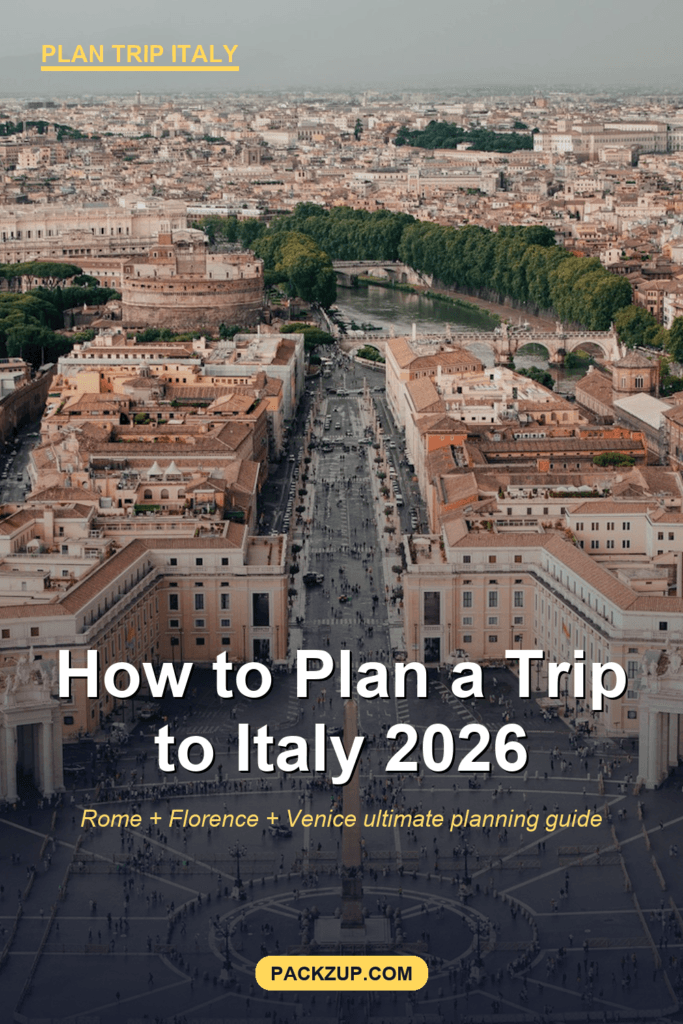
Italy is the most-visited country in Europe by Americans. Here’s how to plan a trip without falling into tourist traps or wasting money.
More: Italy travel guide
10-Step Plan for Your Italy Trip
Step 1: Decide when to go (3-4 months ahead)
May, June, September are best – perfect weather, manageable crowds. July-August brutally hot + crowded. Avoid Easter + Christmas if budget-conscious.
Step 2: Book flights (8-12 weeks ahead)
$500-1,000 round trip from USA. Fly into Rome (FCO) or Milan (MXP). Tuesday-Wednesday flights cheapest.
Step 3: Decide route (10-14 days = 3-4 cities)
Classic: Rome + Best Time to Visit Florence + Venice. Add Cinque Terre, Amalfi Coast, or Tuscany. Don’t try to do all of Italy in 1 trip.
Step 4: Book trains (Trenitalia or Italo)
$30-50 per leg. Book ON the website 2-3 months ahead for cheapest fares (~50% off). Day-of fares double.
Step 5: Book accommodations (8 weeks ahead)
Rome: Trastevere or Monti for charm. Florence: stay walking distance from Duomo. Venice: stay 1 night IN Venice (expensive), commute from Mestre to save.
Step 6: Buy skip-the-line tickets EARLY
Vatican (book 1-2 months ahead). Uffizi (book 2 weeks ahead). Colosseum (book 1 month ahead). David (book 1 month ahead). All sell out daily.
Step 7: Plan day trips (1 week ahead)
Tuscany from Florence ($60 wine tour). Pompeii from Rome ($60 day tour). Burano from Venice (vaporetto $7.50).
Step 8: Get a SIM card or eSIM
Buy Italian SIM at airport TIM/Vodafone ($20-30 for 30GB). Or buy Ubigi/Airalo eSIM before travel.
Step 9: Money – cards + cash
Cards accepted everywhere. Carry €200-300 cash for tips, markets, small towns. Use bancomats (ATMs) for cash.
Step 10: Packing + apps
Comfortable walking shoes (cobblestones). Layers. Modest clothing for churches (shoulders + knees covered). Apps: Trenitalia + Google Maps.
Sample 10-Day Italy Itinerary
Days 1-3: Capital/gateway city (acclimate + main sights).
Days 4-7: Second major destination (cultural deep dive).
Days 8-10: Third destination (beach/nature/relaxation).
Common Mistakes to Avoid
Overstuffing the itinerary: Don’t try to see 6 cities in 10 days. You’ll spend more time in transit than experiencing.
Booking too late: Major attractions, trains, and ferries sell out. Book 2+ months ahead.
Skipping travel insurance: $50-100 for peace of mind. Cancellation + medical coverage saves thousands if things go wrong.
Not learning basic local phrases: Hello, thank you, please, sorry – 10 words go far.
FAQ
How much does a trip to Italy cost?
Budget: $80-120/day. Mid-range: $180-280/day. Luxury: $400+/day. Add $700-1,400 flight from USA.
How many days do I need in Italy?
7-10 days is ideal for first-timers. 14 days allows deeper exploration without rushing.
When should I book my Italy trip?
For summer, Easter week in Rome, or the mid-August Ferragosto rush, book flights 5-6 months out; for quieter months like November or February, 2-3 months is enough. Book hotels 6-8 weeks ahead. Book major attractions (museums, tours) 4 weeks ahead. Book peak-season trips (Christmas, Easter) 4-6 months ahead.
Do I need a visa for Italy?
Most US/UK passport holders get 30-90 days visa-free or visa-on-arrival. Some countries require ETIAS/eTA/ESTA – check before booking flights.
What apps do I need for Italy?
Google Maps + Google Translate (camera feature is magic). Airbnb/Booking.com for accommodations. Country-specific train/ferry apps. Local taxi apps (Uber, Bolt, Grab).
Related Guides
Frequently Asked Questions
How far in advance should I plan a trip to Italy?
Start planning 2-3 months ahead for the best flight and hotel deals. Peak season may require 4-6 months advance booking, especially for popular accommodations.
What is the best way to plan a trip to Italy?
Start with your dates and budget, then choose your base location. Book flights and accommodation first, then research activities. Leave room for spontaneity in your daily schedule.
Do I need a guide for Italy?
Guides are optional but valuable for historical sites and complex logistics. For most travelers, self-guided exploration with good research works well.
Gear that earns its place: best travel apps · best travel books to read before you go.
You Might Also Love





Written by
John Morrison is the founder and lead travel writer at Packzup. Over the past decade he has explored destinations across Africa, the Americas, Asia, Europe, the Middle East, and Oceania — always self-funded, never on a press trip.
