
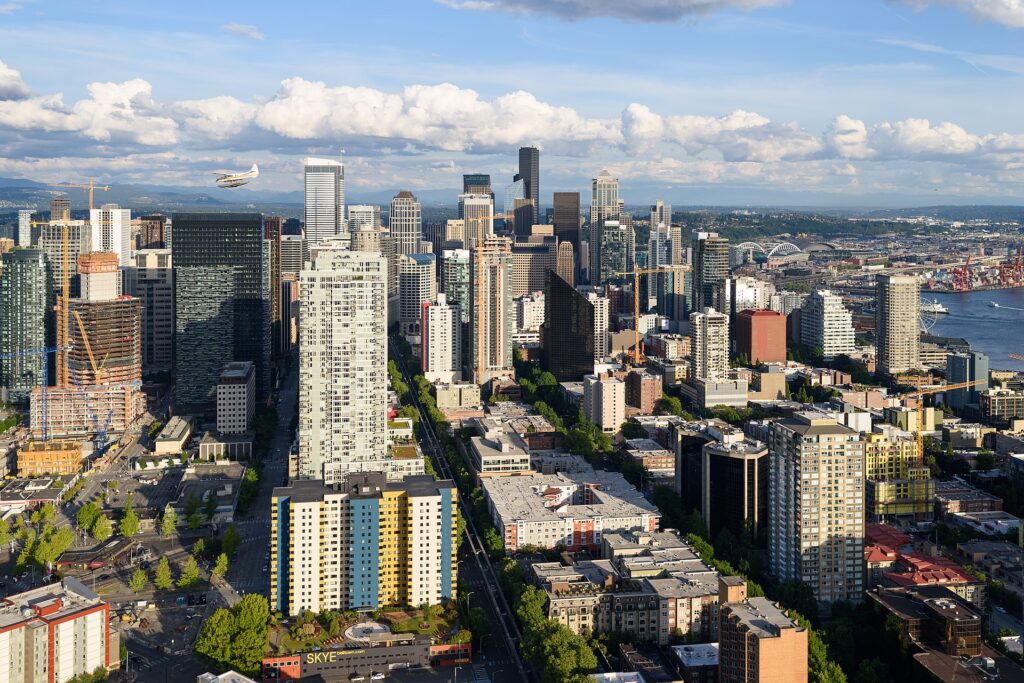
- Road trips from Seattle at a glance
- 1. Seattle to Mount Rainier
- 2. Seattle to Leavenworth over Stevens Pass
- 3. Seattle to the San Juan Islands
- 4. Seattle to the Columbia River Gorge
- 5. Seattle to the Olympic Peninsula loop
- 6. Seattle to Vancouver and Whistler
- 7. Seattle to the Oregon Coast
- 8. Seattle to the North Cascades and Winthrop
- How to choose between them
- Planning notes for driving out of Seattle
- Related planning
- Road trips from Seattle: FAQ
- What this page does not claim to know
Seattle is boxed in by water and mountains, which is what makes the driving good and the logistics fiddly. Three of the routes below involve a ferry or a border, one crosses a highway that closes for roughly half the year, and two enter parks that have used timed-entry systems in recent seasons.
The pattern here is that distances are short and friction is high. Mount Rainier is ninety miles away but the road you want may be closed; the San Juan Islands are ninety minutes plus a ferry you should have reserved weeks ago. Each entry below leads with the window and the booking constraint, because in this region those decide the trip more than mileage does.
Road trips from Seattle at a glance
| # | Where you end up | One-way distance | Typical drive | Nights | Best window |
|---|---|---|---|---|---|
| 1 | Mount Rainier National Park | About 90-110 miles | About 2-2.5 hours | 1-2 nights | Paradise year-round with restrictions, Sunrise typically July to early October |
| 2 | Leavenworth and the Wenatchee Valley | About 120 miles | About 2-2.5 hours | 2 nights | Year-round |
| 3 | The San Juan Islands | About 85 miles to the ferry | About 1.5-2 hours plus ferry | 2-3 nights | June to September |
| 4 | The Columbia River Gorge and Hood River | About 200 miles | About 3.5-4 hours | 2 nights | April to October, waterfalls best in spring |
| 5 | Olympic National Park | About 300-330 miles as a loop | Loop, allow 8-9 hours driving total | 2-3 nights | June to September |
| 6 | Vancouver and Whistler, British Columbia | About 140-215 miles | About 3-4.5 hours | 3 nights | Year-round |
| 7 | The Oregon Coast: Cannon Beach to Newport | About 215-330 miles | About 3.5-5.5 hours | 3 nights | Year-round, driest July to September |
| 8 | The North Cascades Highway loop | About 440 miles as a loop | Loop, allow 9-10 hours driving total | 3 nights | SR-20 typically open late April to mid-November |
Distances and drive times are approximate. They are door-to-door estimates for the most direct sensible route, rounded, and they exclude traffic, construction, weather and stops. Treat them as planning figures for deciding how many nights you need, not as a schedule.
1. Seattle to Mount Rainier
A fourteen-thousand-foot stratovolcano close enough for a single night, and in late July the subalpine meadows at Paradise hold one of the densest wildflower displays in the country. Sunrise on the north-east side is higher, drier and quieter, with the clearest close view of the mountain's glaciers, but its road opens late.
The route: I-5 south then SR-7 and SR-706 to the Nisqually entrance for Paradise, the standard first visit. For Sunrise, take SR-410 through Enumclaw instead. A loop combining both is possible in summer when all roads are open.
The honest warning: the park has used timed-entry reservations for the Paradise and Sunrise corridors in recent peak seasons, the Sunrise road does not open until well into summer, and the mountain is frequently hidden in cloud even on a fine day in the lowlands. Best suited to a first trip out of Seattle, wildflower timing in late July, and anyone with only one night.
2. Seattle to Leavenworth over Stevens Pass
Leavenworth is a former timber town that remade itself as a Bavarian village, which sounds like a gimmick and largely is, but it sits in a genuinely beautiful stretch of the eastern Cascades with dry, sunny weather when Seattle is grey. That rain-shadow effect is the real reason to drive over Stevens Pass in winter.
The route: US-2 east over Stevens Pass to Leavenworth. Add Icicle Creek Road for walking, the Wenatchee River for summer rafting, and Lake Chelan an hour further east if you have a third night.
The honest warning: Stevens Pass needs winter tyres or chains in storms and closes occasionally, the town is at its most crowded during the December lighting festival and Oktoberfest, and the Bavarian theming is relentless. Best suited to winter weekends chasing sunshine, families, and anyone who wants dry weather within two and a half hours.
3. Seattle to the San Juan Islands
An archipelago in the rain shadow of the Olympics, which makes it drier and sunnier than the mainland, reached by a ferry ride that is itself among the best in the country. Orcas Island has the hills and the state park with a summit road, San Juan Island has the walkable town of Friday Harbor and the better whale-watching departures.
The route: I-5 north to Mount Vernon then SR-20 west to the Anacortes ferry terminal. Take the vehicle ferry to Friday Harbor or Orcas, or leave the car and travel as a foot passenger, which avoids the reservation problem entirely.
The honest warning: vehicle space on the Anacortes ferries needs reserving well ahead for summer sailings and turning up without a booking can mean a wait of hours, while island lodging is limited and prices reflect it. Best suited to couples and walkers, whale-watching trips, and anyone willing to plan a ferry booking weeks ahead.
4. Seattle to the Columbia River Gorge
A river canyon cut through the Cascades with a concentration of waterfalls on its Oregon side that has no real parallel in the region, plus Mount Hood on the skyline behind it. Hood River on the Washington-facing bank is the base, a windsurfing town with orchards behind it and a genuinely good food and cider scene.
The route: I-5 south to Portland, then I-84 east into the Gorge, or the slower and better Historic Columbia River Highway for Multnomah Falls and the viewpoints. Cross to Hood River for lodging and add the Mount Hood loop via Timberline.
The honest warning: Multnomah Falls and the busiest Gorge trailheads have used timed permits in summer, and the 2017 fire still shows on the Oregon-side slopes, which surprises visitors expecting unbroken forest. Best suited to spring waterfall trips, and travellers who want a river canyon and a food town rather than a summit.
5. Seattle to the Olympic Peninsula loop
Three parks in one: a mile-high ridge at Hurricane Ridge, temperate rainforest at Hoh with some of the highest rainfall in the contiguous United States, and a wild driftwood coast at Ruby and Rialto beaches. Few places let you drive between alpine, rainforest and shoreline in a single day.
The route: Either the Bainbridge or Edmonds-Kingston ferry, or drive round via Tacoma, then US-101 anticlockwise through Port Angeles for Hurricane Ridge, Lake Crescent and Sol Duc, on to Forks for the Hoh Rain Forest and the coast, returning via Lake Quinault.
The honest warning: the loop is long and US-101 does not cut across the interior, so shortcutting is not possible, and this is genuinely one of the wettest places in the country outside high summer. Best suited to travellers with three nights who want variety, and anyone prepared for rain as part of the experience.
6. Seattle to Vancouver and Whistler
A major city and a world-class mountain resort within four and a half hours, and the Sea-to-Sky Highway between them runs along a fjord below hanging glaciers, which makes the connecting drive as good as either destination. Vancouver alone justifies the trip; Whistler turns it into two distinct halves.
The route: I-5 north to the Peace Arch or Pacific Highway border crossing, then Highway 99 into Vancouver and onwards up the Sea-to-Sky to Squamish and Whistler. The Sea to Sky Gondola at Squamish is a worthwhile stop on the way.
The honest warning: this is an international border and waits at Peace Arch can run to a couple of hours on summer weekends and holidays, and every passenger needs a passport, while Whistler's peak-season prices are high in either summer or winter. Best suited to travellers wanting a city and a mountain resort in one trip, with documents already in order.
7. Seattle to the Oregon Coast
Oregon made its entire shoreline public in 1967, which is why this coast has almost no private beachfront and a nearly continuous run of accessible sand, headlands and sea stacks. Cannon Beach with Haystack Rock is the famous stretch, and the run south through Cape Kiwanda to Newport is quieter and arguably better.
The route: I-5 south past Portland then US-26 to Cannon Beach, joining US-101 south through Manzanita, Tillamook, Pacific City and Lincoln City to Newport. Ecola State Park and Cape Lookout are the two viewpoints most worth the detour.
The honest warning: this coast is wet and windy for much of the year and even in summer the mornings are often fogged in, while US-101 through the towns is slow enough that the mileage understates the driving time. Best suited to travellers who like a wild coast rather than a swimming beach, and storm-watchers in winter.
8. Seattle to the North Cascades and Winthrop
The most spectacular drive in Washington and the least visited of its national parks. SR-20 climbs past the turquoise glacial water of Diablo Lake and over Washington Pass, where the granite spires above the switchbacks are the single best roadside view in the state, then drops into the dry pine country around Winthrop.
The route: I-5 north to Burlington, then SR-20 east past Diablo Lake and over Rainy and Washington passes to Winthrop. Return south through the Methow Valley to Wenatchee and back over Stevens Pass on US-2, which makes a complete loop rather than a there-and-back.
The honest warning: SR-20 closes with snow from roughly mid-November to late April, which removes the loop entirely for half the year, and there are long stretches without fuel or phone signal between Newhalem and Winthrop. Best suited to travellers with three nights between late spring and autumn who want the best mountain driving in the state.
How to choose between them
If you have one night, Mount Rainier is the only entry that works properly, and late July is when its meadows justify the trip. Check the timed-entry position before you go.
If you have two nights, the choice is weather-driven. Leavenworth over Stevens Pass is the reliable pick when Seattle is grey, because the eastern Cascades sit in a rain shadow. The Columbia River Gorge is the better spring option, when the waterfalls are at full volume.
If you have three nights, the Olympic Peninsula gives the most variety and the North Cascades loop the best driving. The San Juans are the calmest of the three but demand the earliest booking, because ferry vehicle space is the real bottleneck.
If you have three nights and want a city rather than a landscape, Vancouver and Whistler is the strongest trip on this list, provided everyone in the car has a passport and you are willing to absorb an unpredictable border wait.
Between mid-November and late April the North Cascades loop is closed and Sunrise at Rainier is shut. That leaves Leavenworth, the Oregon Coast for storm-watching, and Vancouver as the winter routes that lose nothing.
Planning notes for driving out of Seattle
- Washington State Ferries vehicle reservations are essential for the San Juan Islands in summer and strongly advisable on the Olympic Peninsula crossings. Foot passengers do not need them, which is a real argument for leaving the car behind.
- Mount Rainier has operated timed-entry reservations for its busiest corridors in recent seasons, and the Columbia River Gorge has used timed permits for Multnomah Falls. Both change between years and need checking.
- SR-20 across the North Cascades closes for winter, typically from mid-November to late April. It is a scheduled seasonal closure, not an occasional one, and there is no short detour.
- Stevens Pass and Snoqualmie Pass both require traction tyres or chains during winter storms, and closures happen. Check pass conditions the morning you leave rather than the night before.
- The Canadian border needs a passport or equivalent for every passenger. Peace Arch waits are longest on summer weekend afternoons, and the Pacific Highway truck crossing alongside it is sometimes faster for cars.
- Fuel and mobile signal are both sparse on the North Cascades between Newhalem and Winthrop, and on the western Olympic Peninsula. Fill up before those stretches rather than during them.
Related planning
- Best weekend getaways from Seattle, including the ferry and fly-to options
- Pacific Coast Highway road trip, if you want to continue south from Oregon
- Best weekend getaways from Portland, which overlaps the Gorge and coast routes
Road trips from Seattle: FAQ
What is the best road trip from Seattle?
For three nights, the North Cascades Highway loop is the best driving in the state, taking in Diablo Lake and Washington Pass before dropping into the Methow Valley. For a single night, Mount Rainier at about two to two and a half hours is the strongest option, particularly in late July when the meadows at Paradise are in flower.
Do I need a ferry reservation for the San Juan Islands?
If you are taking a car in summer, yes. Vehicle space on the Anacortes sailings is reserved well in advance and arriving without a booking can mean waiting hours for space. Foot passengers do not need a reservation, and since the islands have local buses and bike rental, leaving the car in Anacortes is a reasonable alternative.
When is the North Cascades Highway open?
SR-20 over Rainy and Washington passes is normally open from late April to mid-November, closing with snow for the rest of the year. The dates move with snowpack, and because there is no nearby detour the closure removes the whole loop rather than just lengthening it, so confirm the status before planning around it.
How long do I need for the Olympic National Park loop?
Three nights is the realistic minimum. The loop runs roughly 300 to 330 miles on US-101, which does not cut across the peninsula's interior, so you cannot shortcut it. Two nights forces you to choose between Hurricane Ridge, the Hoh Rain Forest and the coast rather than seeing all three.
Can you drive from Seattle to Vancouver for a weekend?
Yes. Vancouver is roughly 140 miles and about three hours from Seattle, excluding the border. Every passenger needs a passport or equivalent, and waits at the Peace Arch crossing can add a couple of hours on summer weekend afternoons. Adding Whistler up the Sea-to-Sky Highway makes it a three-night trip rather than two.
What this page does not claim to know
- Drive times exclude ferry queues, border waits and stops, all of which are significant on several of these routes.
- Park reservation systems, permit requirements and ferry schedules change between seasons and are the most common reason a plan built from older information fails.
- Mountain pass opening dates vary with snowpack. Every date given here is a typical pattern rather than a guarantee.
- This region's weather is genuinely unpredictable and cloud can hide Mount Rainier for days at a time. No page can promise you the view.
You Might Also Love

Written by
John Morrison is the founder and lead travel writer at Packzup. Over the past decade he has explored destinations across Africa, the Americas, Asia, Europe, the Middle East, and Oceania — always self-funded, never on a press trip.
