

Last updated September 8, 2026 · Editorial policy
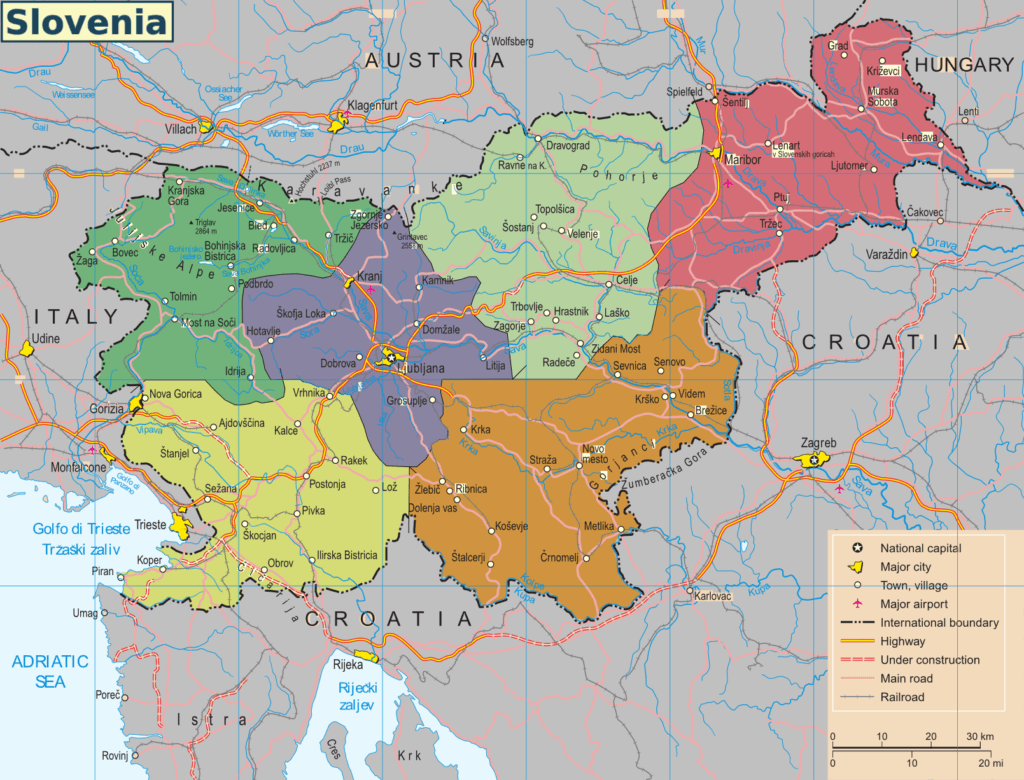
Slovenian cuisine sits at the crossroads of four European food cultures — Alpine, Mediterranean, Pannonian, and Balkan — creating a diversity that is astonishing for a country of just two million people. The government has officially recognised 24 gastronomic regions, each with distinct specialties. Ljubljana’s restaurant scene has embraced local sourcing and seasonal cooking with an intensity that rivals Copenhagen or Tokyo. The Karst region produces world-class prosciutto and Teran wine. The Julian Alps offer dairy and game. The Adriatic coast delivers seafood. And everywhere, there are štruklji (rolled dumplings), potica (nut roll), and honey — Slovenia has the only legally protected indigenous bee.
More: When to visit Slovenia · Slovenia travel guide
What to Eat:
1. Potica (Nut Roll)
Slovenia’s national pastry — thin, elastic dough rolled out on a tablecloth until translucent, spread with a walnut filling, rolled into a spiral, and baked in a traditional ring mould. Every Slovenian family has their grandmother’s recipe. About 3-6 EUR per slice at bakeries. The walnut (orehova) version is the most traditional but tarragon (pehtranova), poppy seed (makova), and chocolate varieties exist. The dough should be paper-thin with a thick spiral of filling. Buy a whole potica at the Central Market in Ljubljana.
2. Kraški Pršut (Karst Prosciutto)
Dry-cured ham from the Karst region, aged by the Bora wind that blows from the northeast through the limestone plateau. Sliced paper-thin and served as an antipasto with Karst Teran wine, olives, and bread. About 8-14 EUR for a plate. Protected by EU geographical indication. The Bora wind creates drying conditions that give Kraški pršut a firmer texture and more intense flavour than Italian prosciutto. Visit the prosciutto farms in the Karst villages of Štanjel and Pliskovica for tastings.
3. Žlikrofi (Idrija Dumplings)
Small, ear-shaped dumplings from the mining town of Idrija, filled with potato, onion, lard, and marjoram, served with meat sauce or bakalca (mutton stew). They are one of Slovenia’s most unique dishes and carry EU protected geographical indication. About 8-12 EUR at restaurants. The shape — each one has a distinctive groove — requires skill to form. Gostilna pri Škafarju in Idrija and Gostilna na Gradu in Ljubljana serve excellent versions. The potato filling is savoury and comforting.
4. Štruklji (Rolled Dumplings)
Rolled dough filled with cottage cheese, walnuts, tarragon, apple, or poppy seeds, then boiled or baked. Served as a side dish, main course, or dessert depending on the filling. About 5-10 EUR. The cottage cheese (skuta) version with breadcrumb topping is the most popular. Tarragon štruklji are distinctly Slovenian — the herb adds an anise-like freshness. Found at traditional gostilna (inn) restaurants throughout the country. The rolled technique resembles strudel but produces a softer, more dumpling-like result.
5. Jota (Bean and Sauerkraut Stew)
A thick, hearty stew of beans, sauerkraut (or turnip), potatoes, and smoked pork — the workday lunch of the Karst and Vipava Valley regions. About 6-10 EUR at gostilnas. Each village has its own version: some use more sauerkraut, others more beans, some add ribs. The dish improves when reheated the next day. It is the Slovenian equivalent of cassoulet — simple ingredients elevated by slow cooking. Pair with crusty bread and a glass of Teran wine.
6. Prekmurska Gibanica
A layered pastry from the Prekmurje region in eastern Slovenia — alternating layers of filo pastry with four fillings: poppy seeds, cottage cheese, walnuts, and apples, baked until golden. It is a dessert that encompasses four flavours and textures in every bite. About 4-7 EUR per slice. Protected by EU geographical indication. The cake is dense, moist, and meant to be served in small slices. Gostilna Rajh near Murska Sobota and specialty bakeries in Ljubljana make the best versions.

7. Slovenian Honey
Slovenia is the only EU country with a legally protected indigenous bee (the Carniolan bee, Apis mellifera carnica), and beekeeping is a national passion with the highest per-capita number of beekeepers in Europe. Slovenian honey varieties include acacia, linden, chestnut, forest, and the rare Alpine flower honey. About 8-15 EUR per jar. The painted beehive panels (panjske končnice) are folk art icons. Visit the Beekeeping Museum in Radovljica and taste honeys at apiaries in the Julian Alps.
8. Kremna Rezina (Bled Cream Cake)
Lake Bled’s signature dessert since 1953 — a rectangular slice of vanilla custard and whipped cream between two layers of crispy puff pastry, dusted with powdered sugar. The original is served at the Park Hotel patisserie overlooking the lake. About 5-7 EUR per slice. Over 12 million slices have been served. The pastry should be shatteringly crisp, the custard firm but creamy, and the cream light. It is a simple dessert perfected by decades of repetition. Eat it with a view of the lake and island church.
Eating Tips for Slovenia
Ljubljana’s Central Market (designed by Jože Plečnik) hosts Open Kitchen (Odprta Kuhna) every Friday from March to October — dozens of stalls serve dishes from Slovenian restaurants. Gostilnas (traditional inns) serve the best traditional food at reasonable prices — look for the Gostilna Slovenia quality mark. Wine: Slovenia has three wine regions producing excellent wines (Goriška Brda for whites, Karst for Teran, Štajerska for Šipon). Slovenian craft beer is booming — Reservoir Dogs, Pelicon, and Human Fish are top breweries. Restaurant prices: 8-15 EUR for mains at gostilnas, 20-40 EUR at fine dining. Tipping 10% is appreciated. Hiša Franko in the Soča Valley has two Michelin stars and is worth a pilgrimage.
Frequently Asked Questions
What is the must-try food in Slovenia?
The most iconic dish is Potica (Nut Roll). Slovenia’s national pastry — thin, elastic dough rolled out on a tablecloth until translucent, spread with a walnut fill…
Is street food safe in Slovenia?
Yes. Street food and market stalls are popular with locals and generally safe. Stick to busy stalls with high turnover for the freshest food.
How much does a meal cost in Slovenia?
Budget travellers can eat well from street stalls and markets. Sit-down restaurants are moderately priced by international standards.
Related Articles
You Might Also Love


Written by
John Morrison is the founder and lead travel writer at Packzup. Over the past decade he has explored destinations across Africa, the Americas, Asia, Europe, the Middle East, and Oceania — always self-funded, never on a press trip.
