
Last updated August 27, 2026 · Editorial policy
Whistler vs Banff is the great Canadian mountain dilemma, and I understand why people agonize over it. On paper they look like the same trip: a famous ski town, jaw-dropping peaks, a walkable village stuffed with gear shops and patios, and a price tag that makes you wince. Travelers assume they are interchangeable and book whichever has a hotel deal that week. That is a mistake: the two places have completely different personalities.
I have done both in winter and in summer, and here is the short version I give friends: Whistler is a ski resort with scenery, and Banff is scenery with ski resorts. Whistler is the bigger, better-oiled ski machine with the livelier village. Banff is a real town inside a national park, where elk wander across lawns and the lakes look like someone cranked the saturation slider. We have refereed plenty of destination matchups on this site — Croatia vs Portugal, France vs Italy — and this pair has the clearest answer-by-traveler-type of any of them. Let’s get into it.
| Category | Whistler | Banff | Winner |
|---|---|---|---|
| Ski terrain & variety | One enormous interconnected resort, huge vertical | Three separate resorts, smaller but varied | Whistler |
| Snow quality | Deep coastal snow, heavier and wetter | Lighter, drier Rockies snow | Banff |
| Lift tickets & passes | Painful walk-up rates (Epic Pass territory) | Noticeably cheaper day tickets (Ikon Pass) | Banff |
| Scenery | Lovely coastal mountains and forest | Turquoise lakes, glaciers, castle hotels | Banff |
| Village & convenience | Car-free, ski-in/ski-out, everything walkable | Real town, but resorts are a drive away | Whistler |
| Nightlife & après | Legendary, borderline rowdy | Low-key pubs, early nights | Whistler |
| Summer activities | World-class bike park, lakes, alpine hikes | Iconic hikes, canoeing, hot springs | Banff |
| Value for money | Premium prices for almost everything | Expensive, but your dollar goes further | Banff |
Cost comparison: what a day actually costs
Neither is a budget destination. The good news for Americans: everything is priced in Canadian dollars, which knocks a meaningful chunk off the sticker price. The bad news: both towns know exactly what they are worth.
In winter, a backpacker doing hostel dorms, groceries, and local buses can scrape by on roughly US$100–150 a day in Banff and more like US$120–180 in Whistler — before skiing, which blows any backpacker budget apart. A realistic mid-range ski day, meaning a split hotel room, a lift ticket, casual meals, and a couple of drinks, lands around US$250–400 per person in Banff and US$350–550 in Whistler. If you want slope-side hotels and nice dinners, plan on US$600 and up in either town, with Whistler usually edging higher.
Lift tickets are where the gap is most obvious. Whistler’s walk-up single-day rates have crept north of US$200 in peak weeks, which is why almost everyone buys in advance or skis on an Epic Pass. Banff’s three resorts sell day tickets in the rough range of US$110–150, with multi-day tickets and the Ikon Pass bringing that down further. Banff also charges a national park entry fee — only around US$8 per adult per day, but it is one more line on the bill.
One wrinkle worth knowing: their price calendars are mirror images. Whistler’s most expensive season is winter, and summer brings genuinely reasonable hotel deals. Banff’s hotel prices peak in July and August, when the lakes thaw and the whole world shows up. If you are hunting value, Whistler in summer and Banff in winter are the sweet spots.
Skiing: one giant vs three characters
Whistler Blackcomb is the largest ski resort in North America, and it feels like it. Two huge mountains linked by the PEAK 2 PEAK gondola, roughly a mile of lift-served vertical, and everything from gentle learning zones to serious high alpine bowls. You can ski for a week and not repeat a run. The catch is coastal weather: storms roll in heavy and wet, the village sits low enough that rain is a real possibility in early and late season, and fog can swallow the alpine for days. When it is good, it is spectacular. When it is not, you are riding chairlifts inside a wet cloud.
Banff splits its skiing across three separate resorts — Lake Louise, Sunshine Village, and little Mt. Norquay — all reached by a 15 to 45 minute drive or shuttle from town. None is Whistler-sized, but together they cover a lot of ground: Lake Louise has big, varied terrain with ridiculous views, Sunshine sits high and holds snow deep into spring, and Norquay is the quick local hill for a half day. The snow itself is the draw here: colder, lighter, drier Rockies powder, with one of the longest seasons on the continent. The trade-off is cold that gets genuinely serious — January cold snaps can sit far below zero Fahrenheit, and you dress for survival, not style.
Verdict for skiers: if you want maximum terrain and a ski-out-your-door village, Whistler. If you want better snow quality, cheaper tickets, and don’t mind driving to the hill, Banff. And if cold, deep powder is your entire religion, you will eventually find yourself researching Japan anyway — our Japan vs China comparison covers that rabbit hole.
Scenery: this one is not close
Whistler is beautiful in the way coastal British Columbia is beautiful: deep green forest, glaciated peaks, moody clouds, the Black Tusk spire on the horizon. If it were anywhere else, you would rave about it.
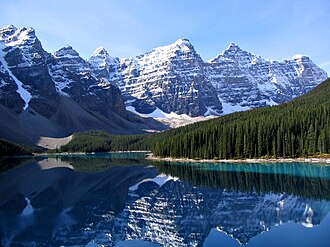
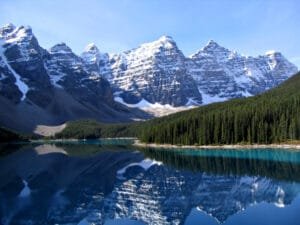
Banff is another category entirely. Lake Louise and Moraine Lake are the postcard images of Canada for a reason — glacier-fed turquoise water under vertical rock walls — and they are just the openers. The Icefields Parkway toward Jasper is one of the most scenic drives on Earth, with glaciers hanging near the road shoulder and a new impossible lake every twenty minutes. Add elk grazing at the edge of town and the castle-like Fairmont Banff Springs rising from the forest, and Banff simply delivers more scenery per hour than almost anywhere I have been. If your trip is primarily about landscapes and photographs, this section alone decides it.
Summer: bike park vs hiking heaven
Summer flips both towns into different modes, and both are excellent in different directions. Whistler becomes the mountain biking capital of the planet. The Whistler Mountain Bike Park is the sport’s mecca, the village fills with armored riders, and even non-bikers have a great time: lift-served alpine hiking, swimmable lakes ringed by walking trails, golf, and long patio evenings. Because winter is the peak season, summer hotel prices are surprisingly humane.
Banff in summer is hiking heaven. Johnston Canyon’s catwalks, the teahouse trails above Lake Louise, larch-filled valleys in fall, canoe rentals on water so blue it looks fake, and the Banff Upper Hot Springs to soak it all off. The caveat is that everyone knows this. July and August crowds are intense, parking at the famous lakes fills before sunrise, and Moraine Lake is no longer accessible by private car at all — you take a shuttle or tour bus, and you book it ahead. Go anyway; just go with a plan and an alarm clock.
Town vibe and nightlife
Whistler Village is purpose-built and pedestrian-only, which sounds sterile but works brilliantly: you park once (or skip the car entirely) and walk everywhere between lifts, restaurants, and hotels. It skews young and energetic. Après-ski here is a genuine cultural institution — patios erupt at 3 p.m., bars go late, and on peak weekends the village can feel like a snowy spring break. If that sounds fun, it absolutely is. If it sounds exhausting, book a room on the village edges.
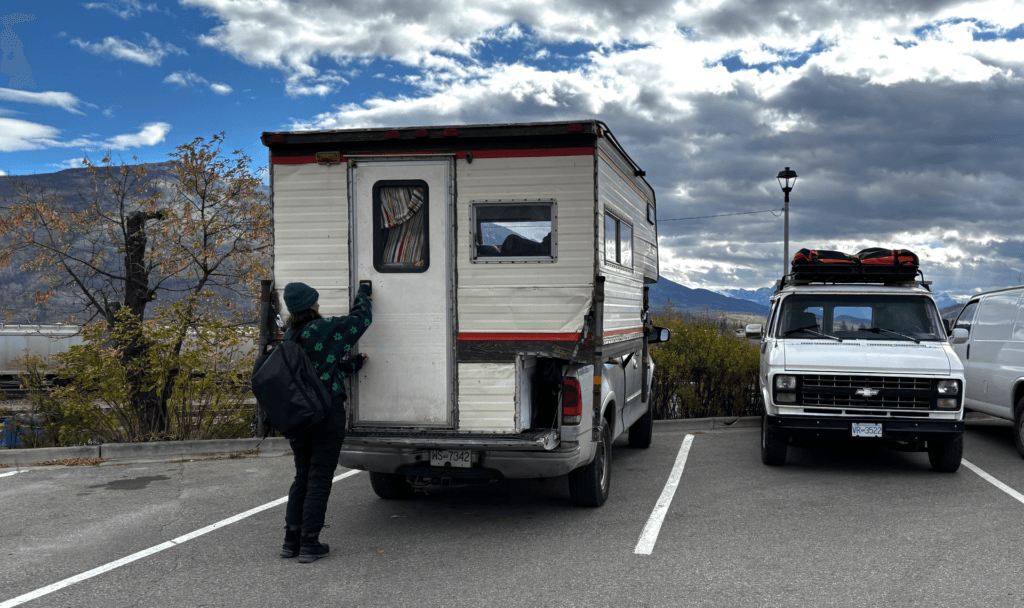
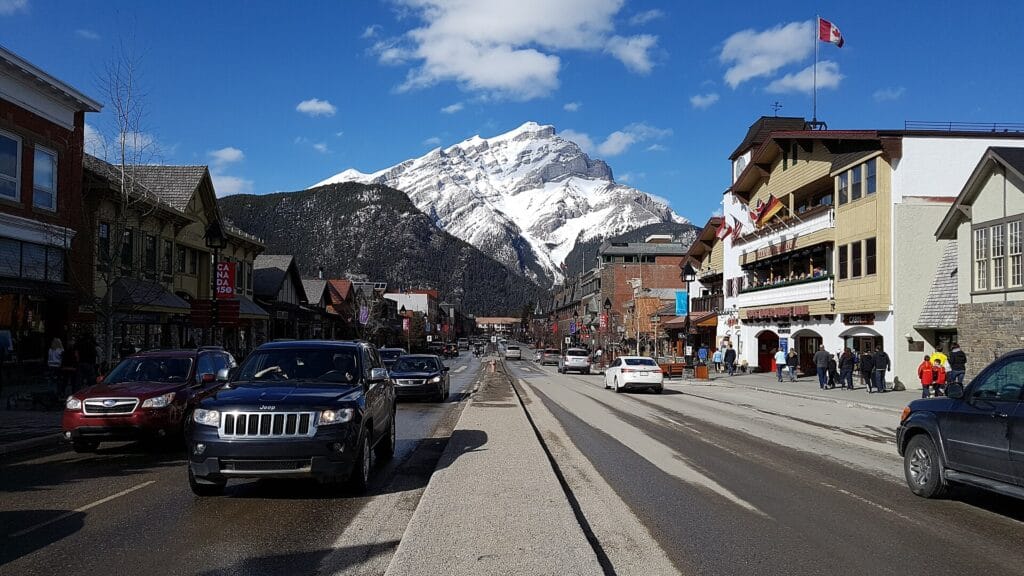
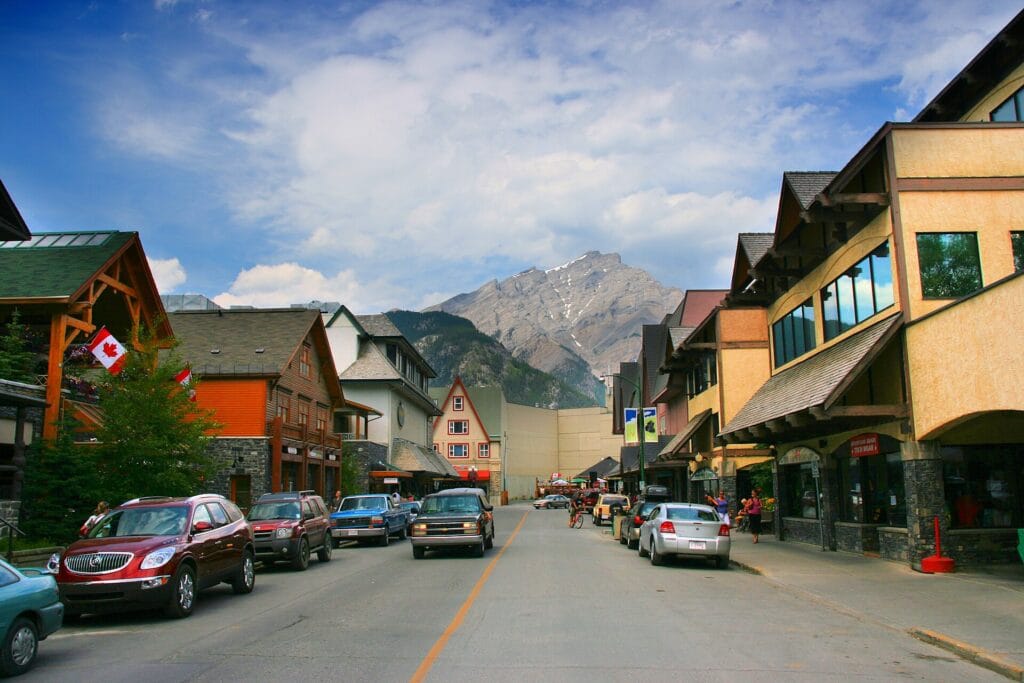
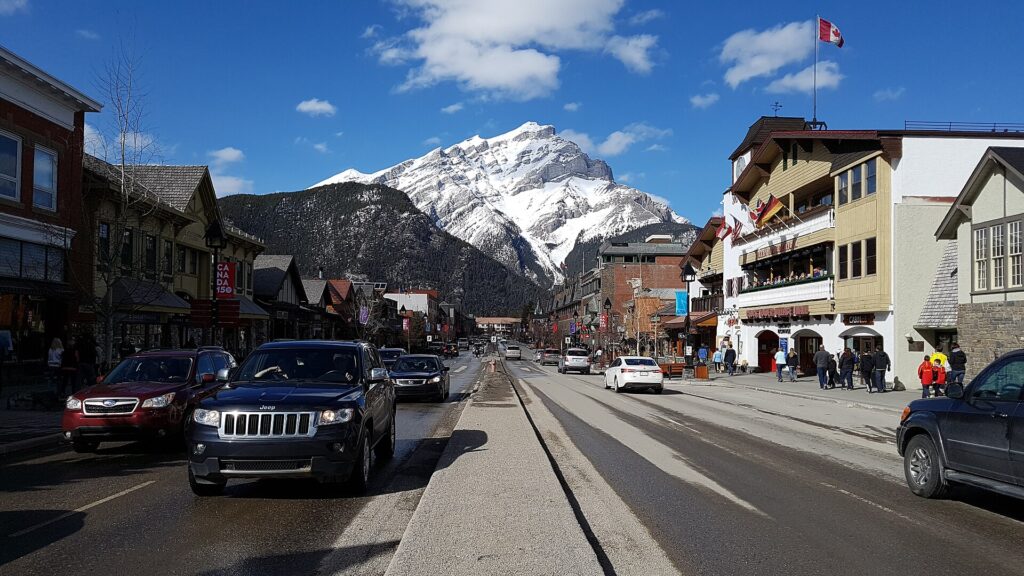
Banff is a real town with schools, locals, and a main street — Banff Avenue — framed by Cascade Mountain in a way that never gets old. Nightlife exists in the form of good pubs and a couple of livelier spots, but the town runs on early alarms, not late nights. The atmosphere is more national-park romantic than party town. Couples and families tend to prefer it; groups of twenty-somethings sometimes find it sleepy.
Food and après
Whistler has the more polished food scene, full stop. Years of wealthy international visitors have built a village with serious fine dining, excellent sushi, and inventive cocktail bars alongside the pizza-and-wings staples. You pay for it — mains in the nicer rooms sit comfortably in the US$30–50 range — but the quality ceiling is high.
Banff eats better than a town its size has any right to, with solid steakhouses, mountain-lodge cooking, and plenty of casual spots where a burger and a local beer will not require financing. The ceiling is lower than Whistler’s, but so is the average bill, and the pub culture suits the place.
Crowds, wildlife and practicalities
Neither place is a secret. Whistler’s crush is concentrated in winter: powder-day lift lines, holiday-week village crowds, and hotels that sell out months ahead. Banff’s crush is summer at the headline lakes, where mid-day arrivals face full lots and long shuttle queues; the fix is dawn starts, shuttles booked in advance, and picking a few less famous trails.
Banff adds a genuine wildlife dimension. Elk are regulars in town, bears are a real presence on trails from spring through fall, and carrying bear spray on hikes is standard practice, not paranoia. It makes Banff feel wilder than Whistler, where the wilderness sits a little further offstage. In both places, book lodging far earlier than feels reasonable — six months ahead is normal for peak dates.
Weather & when to go
Whistler’s climate is coastal: mild, wet, and snowy in enormous volumes up high. Ski season runs roughly late November through April, with February and March the sweet spot for snowpack and daylight. Village-level rain is the recurring heartbreak, especially early and late in the season. Summer is gorgeous from late June through September, warm without being hot.
Banff’s climate is continental: colder, drier, sunnier. The ski season is one of the longest anywhere, stretching from November into May at the higher resorts, but January can bring brutal cold snaps — check forecasts and pack properly. Summer peaks July through early September; the famous lakes stay frozen well into June, so a June trip means fewer crowds but possibly icy lakes. Late September brings golden larches and thinner crowds, and it might be the single best week of Banff’s year.
Getting there & around
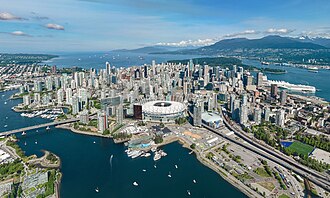
Whistler has no airport of its own. You fly into Vancouver, then drive or shuttle about two hours up the Sea-to-Sky Highway, which is a spectacular arrival in itself. Frequent shuttle buses make a car genuinely optional, and once you are in the car-free village you will not miss one. Many travelers bolt a city day or two onto the front of the trip — our guide to things to do in Vancouver covers how to spend it.
Banff is about an hour and a half from Calgary’s airport on a fast, flat highway, with plenty of shuttle options. In town, the Roam public buses are cheap and useful, and seasonal routes reach Lake Louise and Johnston Canyon. That said, a rental car earns its keep in Banff more than in Whistler — the Icefields Parkway, sunrise trailheads, and hopping between three ski resorts all favor having your own wheels. In winter, be honest with yourself about driving on snow; the shuttles exist for a reason.
Whistler or Banff: the honest verdict
For dedicated skiers and snowboarders: Whistler. The sheer scale of terrain, the vertical, and the ski-everywhere village make it the stronger pure ski trip, even accounting for coastal weather roulette. Powder purists who prioritize snow quality over acreage can fairly pick Banff instead.
For budget travelers: Banff, in winter especially. Cheaper lift tickets, cheaper casual food, and hostels that do not require a second mortgage. In summer the equation flips because Banff hotels spike, so warm-weather bargain hunters should actually look at Whistler.
For first-timers and scenery chasers: Banff, and it is not particularly close. Whistler is a world-class resort; Banff is a world-class place. If you will only ever do one Canadian mountain trip in your life, the lakes, the Parkway, and the wildlife make Banff the more singular memory.
For party groups and mountain bikers: Whistler, decisively. The après scene has no equal in North America, and the bike park has no equal anywhere.
For families: a genuine toss-up — Whistler’s car-free village is wonderfully easy with kids in winter, while Banff’s summer mix of easy hikes, gondolas, hot springs, and animal sightings is hard to beat. Pick by season and you will not go wrong.
FAQ
Is Whistler or Banff better for skiing?
Is Banff cheaper than Whistler?
Can you visit Whistler and Banff on the same trip?
Which is better in summer, Whistler or Banff?
Planning the trip? Go deeper with best time to visit Banff.
Weighing Banff against somewhere further afield? See Banff vs Patagonia.
You Might Also Love
More side-by-side comparisons


Written by
John Morrison is the founder and lead travel writer at Packzup. Over the past decade he has explored destinations across Africa, the Americas, Asia, Europe, the Middle East, and Oceania — always self-funded, never on a press trip.
