
Last updated September 6, 2026 · Editorial policy
- 10 best things to do in Argentina
- Suggested routes
- Practical tips
- How big is Argentina, and what does that do to an itinerary?
- Iguazu falls is in two countries, and that means two tickets
- What do Argentina's national parks charge, and what is the 72-hour rule?
- Perito Moreno: the gate hours that decide your day
- Why the seasons invert between Buenos Aires and Patagonia
- The currency position for visitors in 2026
- What you need to enter Argentina as a tourist
- What catches people out in Argentina
- At a glance
- Frequently asked questions
Argentina is huge — the eighth-largest country on earth — and its highlights are spread from the subtropical north to the sub-Antarctic south, so the trick is choosing a region rather than trying to see it all. From the tango bars of Buenos Aires to Patagonian glaciers, Andean wine country and the thundering Iguazú Falls, here are the ten experiences worth building a trip around, with rough costs and timing for each.
More: When to visit Argentina
10 best things to do in Argentina
1. Soak up Buenos Aires
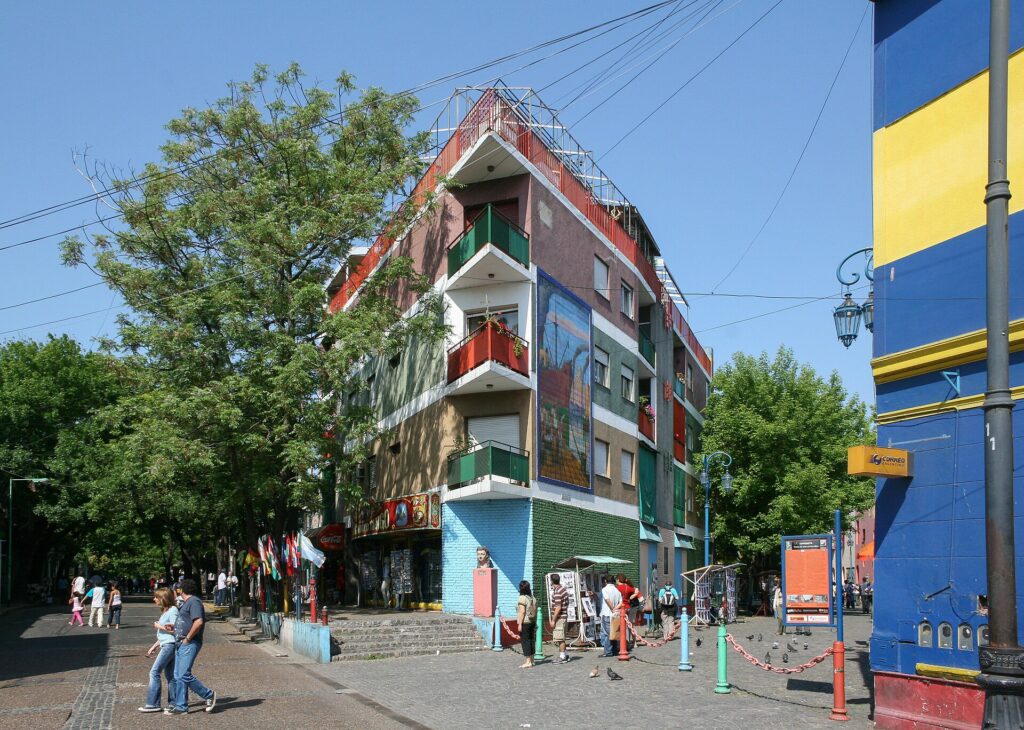
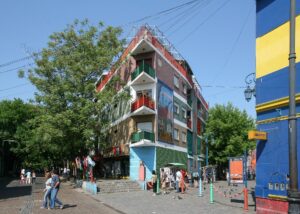
Start in the capital: watch (or learn) tango in a San Telmo milonga, wander the colourful La Boca and leafy Palermo, and pay respects at Recoleta Cemetery where Eva Perón is buried. A steak-and-Malbec dinner rarely tops $15–25. Give it 3–4 days.
2. Stand before the Perito Moreno Glacier
Near El Calafate in the south, this 5 km-wide wall of ice regularly calves house-sized chunks into the lake. Boardwalks get you close; a boat trip or ice-trek gets you closer. Park entry is around $25–30.
3. Chase waterfalls at Iguazú
On the Brazilian border, Iguazú is a system of 275 falls that dwarfs Niagara. Walk the Argentine-side trails to the roaring Devil’s Throat, then get soaked on a speedboat run beneath the cascades. Budget a full day plus travel; it’s a roughly 2-hour flight from Buenos Aires.
4. Drink Malbec in Mendoza
At the foot of the Andes, Mendoza is Argentina’s wine capital and the home of Malbec. Cycle or drive between bodegas in Luján de Cuyo and the Uco Valley, most offering tastings and long lunches for $20–60. Aim for harvest season (Feb–April) if you can.
5. Explore the Patagonian Lake District around Bariloche
Chocolate-box Bariloche sits among glacial lakes and forests, Argentina’s answer to the Alps. Hike the Circuito Chico, kayak Lake Nahuel Huapi, and in winter ski at Cerro Catedral. It’s also the gateway to the scenic Route of the Seven Lakes.
6. Reach the ‘End of the World’ in Ushuaia
The world’s southernmost city is the launch point for Antarctic cruises and the beautiful Tierra del Fuego National Park. Ride the End of the World Train, spot penguins on a Beagle Channel boat trip, and post a card from the southernmost post office.
7. Trek in El Chaltén
Argentina’s self-styled trekking capital sits beneath the jagged Monte Fitz Roy. The Laguna de los Tres day hike to a glacial lake below the peak is world-class; since late 2024 the northern-zone trails charge foreign visitors a park access fee (roughly USD 30-40), still superb value — one of the best value adventures in the country.
8. Discover the colourful Northwest
Around Salta and Jujuy the landscape turns to red-rock canyons and rainbow-striped hills. Drive the Quebrada de Humahuaca (a UNESCO site), see the Hill of Seven Colours at Purmamarca, and taste empanadas salteñas, widely rated the country’s best.
9. Watch wildlife on the Valdés Peninsula
This Atlantic peninsula in Patagonia is a wildlife magnet: southern right whales (June–Dec), colonies of penguins, sea lions and elephant seals, and orcas that famously beach themselves to hunt. Puerto Madryn is the base.
10. Taste the asado and café culture
Beyond the sights, Argentina runs on asado (the slow barbecue), dulce de leche, medialunas with coffee, and late dinners that start at 10pm. Eating and drinking well here is remarkably affordable thanks to the exchange rate — bring US dollars in cash.
Suggested routes
10 days: Buenos Aires → El Calafate (glacier + El Chaltén) → Bariloche. 2 weeks: add Mendoza and Iguazú. Northwest add-on: Salta and the Quebrada need 4–5 days of their own. Argentina’s distances are vast, so fly between regions rather than relying on (excellent but very long) buses.
Practical tips
Money: cards now settle near the market rate since Argentina lifted currency controls in 2025, so paying by card is usually simplest; carry some pesos for small vendors. When to go: Nov–March for Patagonia (southern summer); year-round for Buenos Aires and the north. Getting around: Aerolíneas Argentinas and low-cost carriers link the regions; book domestic flights early.
How big is Argentina, and what does that do to an itinerary?
Big enough that two of its headline sights are further apart than most people’s entire previous trips. Puerto Iguazú in the subtropical north-east and El Calafate in southern Patagonia are about 3,140 km apart in a straight line. The country itself runs about 3,643 km from La Quiaca on the Bolivian border to Ushuaia, again as the crow flies.
From Buenos Aires, the straight-line distances are: Mendoza about 986 km, Puerto Iguazú about 1,066 km, Salta about 1,285 km, Bariloche about 1,345 km, El Calafate about 2,080 km and Ushuaia about 2,373 km. Those are great-circle figures calculated from city coordinates, so treat them as the floor. Road distance is always longer, sometimes far longer where the route has to detour around the Andes or a river system.
Two published road figures show what that means on the ground. The Administración de Parques Nacionales gives 80 km from El Calafate to the Perito Moreno glacier on provincial route 11, and 220 km from El Calafate to El Chaltén, all paved. Those are two points inside the same national park, and the drive between them is a half day.
The planning rule that follows is simple. Fly the long legs and drive the short ones. A bus between Buenos Aires and El Calafate is a multi-day commitment across more than two thousand kilometres, and it exists mainly because the country is long and the road network is good, not because it is the sensible way to spend a two-week holiday. Buses earn their place inside a region, such as El Calafate to El Chaltén, not between them.
Iguazu falls is in two countries, and that means two tickets
The waterfalls sit on the border, so there is an Argentine national park and a Brazilian national park, each with its own gate, its own currency and its own price. There is no combined ticket, and going from one to the other is an international border crossing.
On the Argentine side, Parque Nacional Iguazú is run by the Administración de Parques Nacionales, and from 1 June 2026 its published access right for the General category, which is what a foreign visitor pays, is ARS 60,000 for a day. Argentine residents pay ARS 25,000, residents of Misiones province ARS 8,000 and students ARS 15,000.
On the Brazilian side, Parque Nacional do Iguaçu is administered by ICMBio, the Instituto Chico Mendes de Conservação da Biodiversidade, under the Brazilian environment ministry, and run day to day by the concessionaire Urbia+Cataratas S.A. under concession contract 001/2022. The concessionaire publishes the foreign visitor ticket as R$ 134,00, being R$ 131,00 de ingresso plus R$ 3,00 de contribuição ao Fundo Iguaçu, and the Brazil and Mercosur resident ticket as R$ 121,00, being R$ 118,00 plus the same R$ 3,00. Those rates are válidas a partir de 19 de dezembro de 2025, were adjusted on the IPCA consumer price index, and were authorised by ICMBio through Ofício SEI number 549/2025 of 17 December 2025.
Practically, the two sides do different jobs. The Argentine park puts you on walkways among the falls and holds most of the trail network; the Brazilian park gives the wide frontal view. Seeing both means budgeting two admissions, two park days and a border crossing with your passport, and it means checking Brazilian entry requirements for your nationality separately from Argentine ones. Confirm both parks’ current prices before you go: the Argentine figure is a peso amount that has been reset repeatedly, and the Brazilian one is indexed annually.
What do Argentina’s national parks charge, and what is the 72-hour rule?
Access rights are set nationally by the Administración de Parques Nacionales and were last set effective 1 June 2026. For Parque Nacional Iguazú: General ARS 60,000, Nacional ARS 25,000, Residentes Provinciales ARS 8,000, Estudiantes ARS 15,000. For Parque Nacional Los Glaciares, which covers both the Perito Moreno glacier and the El Chaltén sector: General ARS 50,000, Nacional ARS 25,000, Residentes Provinciales ARS 8,000, Estudiantes ARS 15,000.
The rule worth planning around is the second-day discount. The APN states that en todos los Parques Nacionales con derechos de acceso se aplicará una bonificación del 50% de la tarifa para el segundo día de visita, que tendrá una vigencia de 72 horas desde el primer ingreso. In plain terms: a second day of visiting costs half price, and the clock runs 72 hours from your first entry. At Iguazú that turns a second day from ARS 60,000 into ARS 30,000, and at Los Glaciares from ARS 50,000 into ARS 25,000. Build the second visit inside three days of the first or lose it. In Tierra del Fuego the APN notes the benefit requires online purchase.
There is an annual pase anual costing ARS 300,000, which the APN says covers all parks cualquiera sea tu lugar de residencia, so a non-resident can buy it. Against a single Iguazú day at ARS 60,000 it only makes sense on a long multi-park trip.
Exemptions listed by the APN include children aged 0 to 6, retirees and pensioners holding an Argentine DNI, organised educational visits, people with disabilities, local residents, park staff, guides and Malvinas War veterans. Tickets are sold through the APN’s own web portal at ventaweb.apn.gob.ar.
Perito Moreno: the gate hours that decide your day
The glacier corridor stops admitting visitors two hours earlier in winter than in summer, and the whole entry window is three hours shorter.
The APN publishes the Mitre and Glaciar Moreno corridor as open desde el 1° de septiembre hasta el 30 de abril de 8 a 18 hs (con permanencia hasta las 20), and desde el 1° de mayo al 31 de agosto de 9 a 16 hs (con permanencia hasta las 18). So in the southern summer you can enter any time between 08:00 and 18:00 and stay until 20:00, a ten-hour entry window. In the southern winter you can enter only between 09:00 and 16:00, a seven-hour window, and must be out by 18:00. The winter gate opens an hour later, shuts two hours earlier, and turns you out two hours earlier.
The geography around it is fixed and published. The park has gates in three zones: a south zone entered from El Calafate on provincial route 11 and at Puerto Bandera on routes 11 and 8; a central zone entered at Parador La Leona; and a north zone entered from the town of El Chaltén. El Calafate to the glacier is 80 km, and El Calafate to El Chaltén is 220 km, all paved.
Put those together and a self-driven winter day is tight: 80 km each way, a gate that will not admit you after 16:00, and a walkway circuit you will want two hours for. Boat trips and ice treks run their own timetables inside park hours, generally in the middle of the day, so confirm them against the gate hours for the month you are travelling rather than the ones you read in a summer trip report.
Why the seasons invert between Buenos Aires and Patagonia
Because Argentina spans more than thirty degrees of latitude, and its two most-visited regions sit at opposite ends of it. Buenos Aires is at roughly 34 degrees south. El Calafate is at roughly 50 degrees south and Ushuaia at nearly 55. Puerto Iguazú, in the far north-east, is at roughly 25 degrees south and subtropical.
The clearest official signal of what that does is the park’s own calendar. Los Glaciares runs its long day from 1 September to 30 April and its short day from 1 May to 31 August, which is the Argentine state telling you when the far south is practical and when it is not. Nothing similar constrains Buenos Aires, which is a city you can walk in any month.
The southern summer, December to February, is therefore Patagonia’s window: long daylight, full gate hours, everything open. It is also the Argentine domestic holiday season, so El Calafate and Bariloche are at their busiest and their most expensive then. The southern winter, June to August, does the opposite: Patagonian park hours contract, several routes and services reduce, and the country’s ski regions take over.
The north-east does not follow either pattern. Iguazú is subtropical and open all year, so it is the part of the country that works in a Patagonian off-season. The usable rule: pick your Patagonian dates first, because they are the constrained ones, then fit the north around them. An itinerary that puts El Calafate in July and Iguazú in January has it exactly backwards.
The currency position for visitors in 2026
Argentina’s exchange arrangements changed materially in 2026, and most travel advice written before 2025 now describes a system that no longer operates the way it did.
The Banco Central de la República Argentina runs a floating band. From 1 January 2026 the ceiling and floor of that band move each month at the rate of the latest monthly inflation figure published by INDEC, taken with a two-month lag, rather than at the flat plus and minus 1% a month the BCRA applied until 31 December 2025.
The BCRA has also been unwinding the remaining exchange restrictions. Comunicación “A” 8417 of 9 April 2026, published in the Boletín Oficial on 13 April 2026, amends the consolidated Exterior y Cambios rules. Its point 6 is the one a traveller might notice: it sets aside the limits in point 4.1 of that text on retiros en el exterior en carácter de adelanto en efectivo, cash advances abroad, for holders of locally issued credit and purchase cards. Other points exempt individuals from settling proceeds from exports of goods where the funds enter the exchange market within the regulatory window, and extend that treatment to all service categories. The only later communication that touches 8417, “A” 8421 of 15 April 2026, adapts the BCRA’s monthly reporting regime to it and changes none of the substance, so as at 6 September 2026 point 6 stands.
Read the audience carefully: those measures are aimed at Argentine residents, exporters and firms, not at visitors. The consequence for a visitor is indirect but real. Guidance that tells you to bring US dollars in cash to capture a parallel rate is describing a regime the BCRA has been dismantling, so check the BCRA’s own current published rate and rules before you plan around it, and treat any quoted premium as something to verify rather than assume.
One more consequence for this page. Every peso figure here, including all the park fees, is a nominal amount fixed by the APN on 1 June 2026. Peso prices in Argentina are reset rather than indexed, so confirm the current tariff at ventaweb.apn.gob.ar before you budget. Confirmed 6 September 2026.
What you need to enter Argentina as a tourist
A valid passport, or for some South American nationals a valid national identity card. The Dirección Nacional de Migraciones lists the accepted documents as a pasaporte (vigente) or a cédula de identidad (vigente) o documento de viaje hábil (vigente), and names Brazil, Bolivia, Uruguay, Paraguay, Chile, Peru, Venezuela, Ecuador and Colombia as the countries whose nationals may enter on a national identity document instead of a passport.
The tourist permission is un plazo de permanencia autorizado de hasta TRES (3) MESES PRORROGABLE POR OTRO PERÍODO SIMILAR: up to three months, extendable for a similar further period. Whether your nationality needs a visa in advance is a separate question that Migraciones and the Argentine consular network answer by country, and it is the one to check first, because it is the only requirement that can stop you boarding.
If Iguazú is on your route, remember the border. Visiting the Brazilian side means satisfying Brazilian entry rules as well, on the same trip, and returning across the frontier afterwards. Those two sets of rules are set by two different governments and change independently of each other.
Re-check both before travelling. Entry rules are the single most volatile item on any country page, and the correct sources are Migraciones for Argentina and the Brazilian immigration authority for Brazil, not an airline booking screen. Confirmed 6 September 2026.
What catches people out in Argentina
Five things, in the order they usually bite.
Underestimating the map. Buenos Aires to Ushuaia is about 2,373 km in a straight line and Iguazú to El Calafate about 3,140 km. An itinerary with four regions in ten days is an itinerary about aeroplanes.
Treating Iguazu as one place. Two national parks in two countries, two tickets, one border. ARS 60,000 on the Argentine side and BRL 134.00 on the Brazilian side for a foreign visitor, plus whatever the crossing costs you in time.
Missing the 50% second day. The APN halves the fee for a second day within 72 hours of first entry. Split your Iguazú or Los Glaciares visits across consecutive days and you pay one and a half admissions instead of two.
Planning a winter Patagonian day on summer hours. From 1 May to 31 August the Perito Moreno corridor admits visitors only between 09:00 and 16:00, against 08:00 to 18:00 in the summer season.
Budgeting from an old peso figure. The park fees on this page were set on 1 June 2026 and are nominal peso amounts. Check ventaweb.apn.gob.ar for the current numbers and the BCRA for the current rate before you convert anything.
At a glance
| Charge or rule | Amount or detail | Set by | In force from |
|---|---|---|---|
| Parque Nacional Iguazú, General category | ARS 60,000 per day | Administración de Parques Nacionales | 1 June 2026 |
| Parque Nacional Los Glaciares, General category | ARS 50,000 per day | Administración de Parques Nacionales | 1 June 2026 |
| Nacional category, both parks | ARS 25,000 per day | Administración de Parques Nacionales | 1 June 2026 |
| Estudiantes category, both parks | ARS 15,000 per day | Administración de Parques Nacionales | 1 June 2026 |
| Residentes Provinciales, both parks | ARS 8,000 per day | Administración de Parques Nacionales | 1 June 2026 |
| Annual pass, all national parks | ARS 300,000, any residence | Administración de Parques Nacionales | 1 June 2026 |
| Second day of visit | 50% off, valid 72 hours from first entry | Administración de Parques Nacionales | All parks with access rights |
| Parque Nacional do Iguaçu, foreign visitor | BRL 134.00, being BRL 131.00 plus BRL 3.00 | ICMBio, via the concessionaire Urbia+Cataratas | 19 December 2025 |
| Perito Moreno corridor, summer | 08:00 to 18:00, stay until 20:00 | Administración de Parques Nacionales | 1 September to 30 April |
| Perito Moreno corridor, winter | 09:00 to 16:00, stay until 18:00 | Administración de Parques Nacionales | 1 May to 31 August |
| Tourist stay | Up to three months, extendable once for a similar period | Dirección Nacional de Migraciones | Current |
Peso and real amounts are nominal figures published by each authority and confirmed on 6 September 2026. Argentine peso tariffs are reset periodically rather than indexed.
Frequently asked questions
How much does it cost to enter Iguazu Falls on the Argentine side?
The Administración de Parques Nacionales set the General category, which is the foreign visitor rate, at ARS 60,000 per day effective 1 June 2026. Argentine residents pay ARS 25,000, students ARS 15,000 and residents of Misiones province ARS 8,000. A second day of visiting is half price if taken within 72 hours of first entry. Tickets are sold at ventaweb.apn.gob.ar.
Do you need separate tickets for the Argentine and Brazilian sides of Iguazu?
Yes. They are two national parks in two countries. The Argentine park is run by the Administración de Parques Nacionales; the Brazilian park is administered by ICMBio and run by the concessionaire Urbia+Cataratas S.A., which publishes the foreign visitor ticket at R$ 134,00, being R$ 131,00 admission plus a R$ 3,00 Fundo Iguaçu contribution, valid from 19 December 2025 and authorised by ICMBio through Ofício SEI 549/2025 of 17 December 2025. Crossing between them is an international border crossing with your passport, and Brazilian entry rules apply separately.
How much is the Perito Moreno glacier entry fee?
Perito Moreno sits inside Parque Nacional Los Glaciares, where the APN General rate is ARS 50,000 per day from 1 June 2026, with ARS 25,000 for Argentine residents, ARS 15,000 for students and ARS 8,000 for provincial residents. The same fee covers the El Chaltén sector, and a second day within 72 hours is half price.
What time does the Perito Moreno glacier close?
It depends on the season. The APN publishes the corridor as open 08:00 to 18:00 from 1 September to 30 April, with visitors permitted to stay until 20:00, and 09:00 to 16:00 from 1 May to 31 August, with stay permitted until 18:00. The glacier is 80 km from El Calafate on provincial route 11, so a winter visit needs an early start.
How far is Buenos Aires from El Calafate?
About 2,080 km in a straight line, with road distance longer again. Ushuaia is about 2,373 km from Buenos Aires and Puerto Iguazú about 1,066 km. Corner to corner, Iguazú to El Calafate is about 3,140 km. Fly the long legs; buses make sense within a region, such as the 220 km of paved road from El Calafate to El Chaltén.
Should you bring US dollars in cash to Argentina in 2026?
Check before you assume. The Banco Central runs a floating band whose ceiling and floor have moved monthly with INDEC inflation, taken at a two-month lag, since 1 January 2026, and Comunicación “A” 8417 of 9 April 2026, published in the Boletín Oficial on 13 April 2026, set aside the limits on cash advances abroad for holders of locally issued credit and purchase cards. Advice written before 2025 about capturing a parallel rate describes a regime that has been changed. Take the current position from the BCRA.
How long can a tourist stay in Argentina?
The Dirección Nacional de Migraciones authorises tourists for up to three months, extendable for a similar further period. Entry is on a valid passport, or on a valid national identity document for nationals of Brazil, Bolivia, Uruguay, Paraguay, Chile, Peru, Venezuela, Ecuador and Colombia. Whether your nationality needs a visa in advance is a separate check with Migraciones or an Argentine consulate.
You Might Also Love

Written by
John Morrison is the founder and lead travel writer at Packzup. Over the past decade he has explored destinations across Africa, the Americas, Asia, Europe, the Middle East, and Oceania — always self-funded, never on a press trip.
