
Last updated September 16, 2026 · Editorial policy
Things to Do in Aruba: What Is Actually Worth Your Time
Quick answer: This is an honest look at Aruba: which popular attraction to think twice about, what to do with that time instead, and the spot most visitors never reach. It also covers the transit and money moves that save the most hassle.
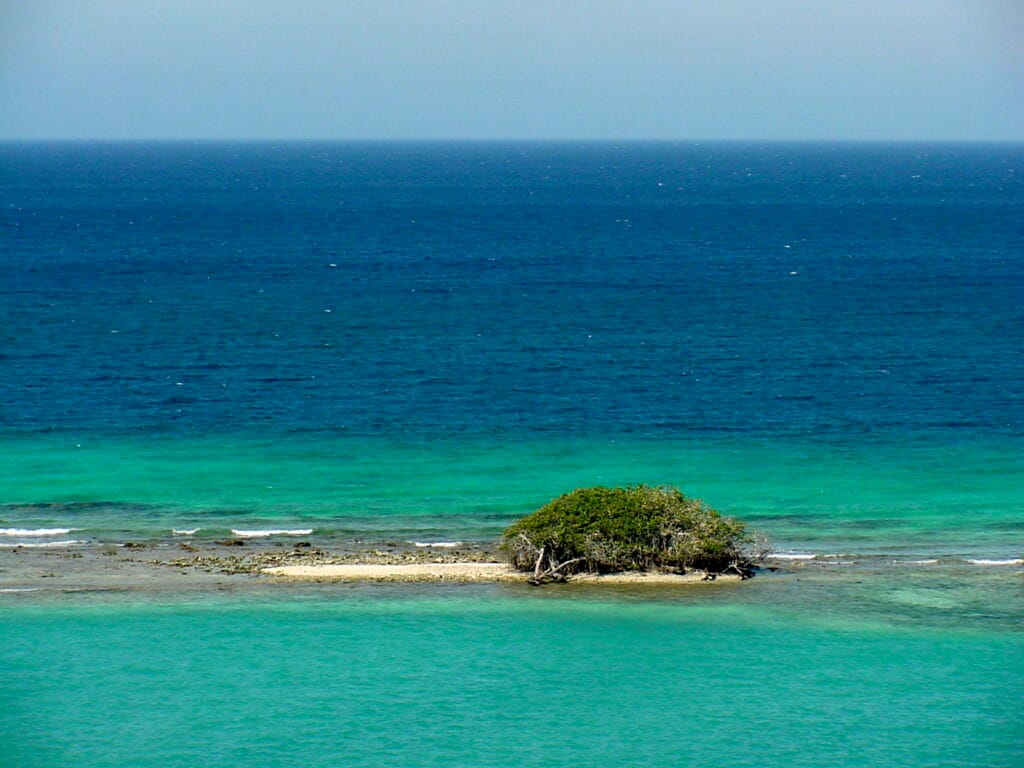
The California Lighthouse draws every rental-car convoy on the island, but the 1916 tower (Aruba’s tallest structure) is mostly a photo stop with a parking jam at sunset. Drive ten minutes inland to Alto Vista Chapel instead, the bright-yellow 1952 rebuild of Aruba’s first Catholic church from 1750, where the winding coastal road and quiet hilltop give you more than the lighthouse railing does.
For beaches, the resort crowd packs Palm Beach in front of the high-rises. Eagle Beach next door stays wider and calmer, and its gnarled Fofoti trees (often misnamed divi-divi, which actually grow inland) are the real postcard. The pick most visitors miss is Mangel Halto, a mangrove-fringed cove on the south coast with reef fish a short swim out. Currents past the drop-off run strong, so beginners should stick to the shallows or choose the sheltered lagoon at Baby Beach.
One smart money move: skip a second rental-car day for short hops. Arubus Line 10 connects Oranjestad to Eagle and Palm Beach, and a day pass covers unlimited rides for a few dollars. For the Conchi natural pool inside Arikok National Park, budget the per-person national park fee plus either a 4×4 or the 3 to 4 hour round-trip hike.
How Aruba is laid out
- The west and south-west coast holds Eagle Beach, Palm Beach and the resort strip, with calm, shallow, sheltered water.
- Oranjestad, the capital, sits on the same coast and is the cruise-ship arrival point.
- The north and east coast is the wild side – surf, rocky shoreline and no swimming to speak of.
- Arikok National Park covers close to a fifth of the island, and its interior tracks need a genuine four-wheel drive or a long walk.
- The island is small, so the difference between coasts is a short drive rather than a day.
The wind is the defining feature
- Aruba sits in constant trade winds, which is why the divi-divi trees all lean the same way – to the south-west – and they make a reliable natural compass.
- The wind makes the heat bearable and is why the island feels cooler than its latitude suggests.
- It also makes Aruba a serious windsurfing and kitesurfing destination, centred on the shallow water at Boca Grandi and Fisherman’s Huts.
- It works against umbrellas and light hats, which visitors discover on day one.
When to go
- Aruba sits outside the main hurricane belt, well south of the usual Atlantic track, which is its biggest structural advantage over most of the Caribbean. It is not impossible for a system to affect it, but it is uncommon.
- It is also arid – this is a desert island with cacti, not a rainforest one, and rainfall is low and concentrated in the late autumn.
- High season runs from about December to April, with prices to match.
- May, June and the autumn are the value windows, with weather that barely differs.
- Carnival, in the weeks before Lent, is the island’s biggest event and fills accommodation.
What most visitors get wrong about Aruba
- They assume it is a rainforest island. Aruba is arid – cactus, divi-divi trees bent permanently by the trade winds, and a desert interior. The famous beaches are real; the lush tropical image belongs to other Caribbean islands.
- They stay only on the leeward strip. Palm Beach and Eagle Beach are calm and beautiful because they face west, sheltered from the wind. The windward north coast is the opposite – rough surf, natural bridges, and the rugged Arikok National Park covering nearly a fifth of the island.
- They do not realise it is Dutch. Aruba is a constituent country within the Kingdom of the Netherlands, Dutch and Papiamento are official, and the architecture in Oranjestad reflects that.
- They miss that it sits outside the hurricane belt. Aruba is far enough south that direct hits are very rare, which is why it stays open and dry when much of the Caribbean does not. That is its single biggest practical advantage.
- They overpay for the sea. The snorkelling off the shore at Boca Catalina and Mangel Halto is excellent and free; the Antilla wreck is one of the largest in the Caribbean and is reachable on an ordinary boat trip.
How to choose what you actually do
- Beach days need no planning – but rent a vehicle for at least one day to see the windward coast and Arikok, which is a genuinely different island.
- The wind is constant, which makes the heat bearable and makes windsurfing and kitesurfing world-class here. It also means hats and light books do not stay where you put them.
- Eat away from the high-rise strip. Oranjestad and San Nicolas have local kitchens and, in San Nicolas, a substantial street-art scene that almost no resort guests see.
You Might Also Love

Written by
John Morrison is the founder and lead travel writer at Packzup. Over the past decade he has explored destinations across Africa, the Americas, Asia, Europe, the Middle East, and Oceania — always self-funded, never on a press trip.
