
Last updated September 6, 2026 · Editorial policy
- Things to Do in Punta Cana, Dominican Republic: What Is Actually Worth Your Time
- Related Punta Cana, Dominican Republic Travel Guides
- Is Punta Cana a town, and why does that matter for what there is to do?
- What paperwork do you need to enter and leave the Dominican Republic?
- Los Haitises: why you can only enter the park by boat
- Saona Island is inside a national park, and that changes what happens there
- When is sargassum worst on the Punta Cana coast, and who monitors it?
- What is actually reachable from the Punta Cana strip on a day out?
- At a glance
- Frequently asked questions
Things to Do in Punta Cana, Dominican Republic: What Is Actually Worth Your Time
Quick answer: This is an honest look at Punta Cana, Dominican Republic: which popular attraction to think twice about, what to do with that time instead, and the spot most visitors never reach.
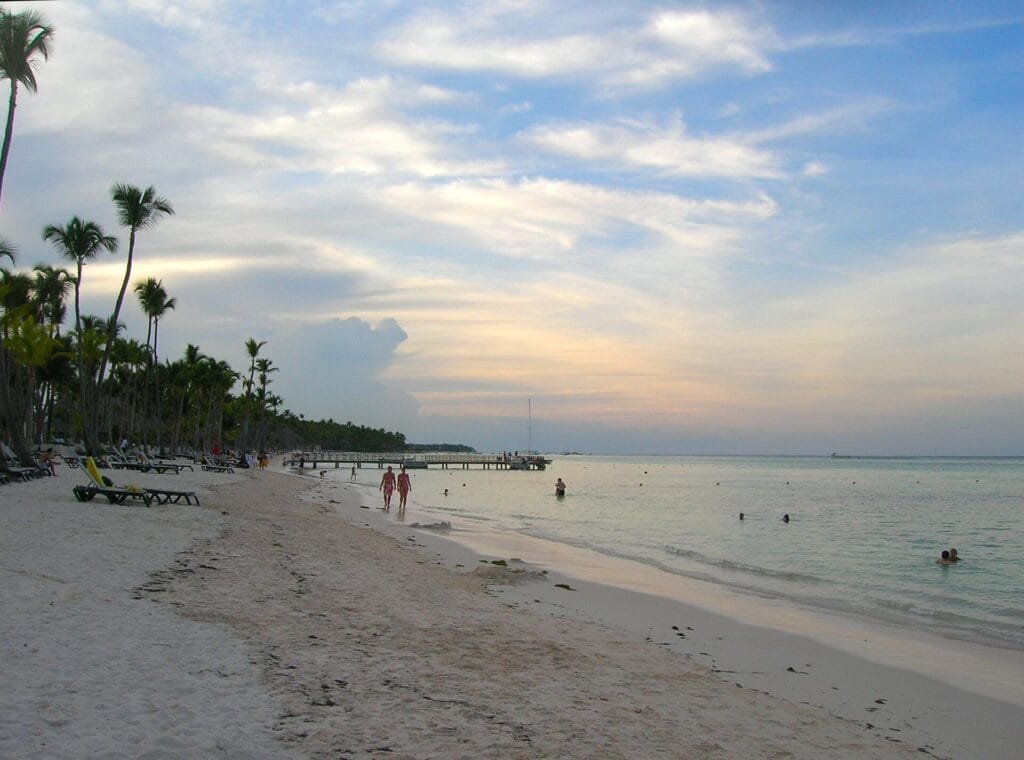
The Saona Island excursion is the one most guests book first, and it’s the one I’d skip. The reality is roughly 1.5 hours by bus to the launch at Bayahibe, an overbooked catamaran with loud music aimed at the crew more than the passengers, and a beach shared with several other operators’ boats by midday. If you want water that actually pays off, trade it for Isla Catalina instead. The boat ride out of La Romana runs around 20 to 25 minutes, and the reef wall there is genuinely better for snorkeling and diving than anything off Saona.
The pick most visitors walk past is the Indigenous Eyes Ecological Park (Ojos Indigenas), a private reserve run by the Puntacana Ecological Foundation since 1994. It holds 12 freshwater lagoons fed by underground springs, several open for swimming, and it’s a calmer, cheaper swim than the cenote crowds at Hoyo Azul in Scape Park. Entry is free if you’re staying at Puntacana Resort & Club; otherwise budget around $50.
One money move that adds up: book day trips with the licensed vendors in El Cortecito rather than your hotel’s tour desk. The same Saona trip often runs near $93 in town versus the marked-up resort price.
Related Punta Cana, Dominican Republic Travel Guides
Is Punta Cana a town, and why does that matter for what there is to do?
It is not a town. Verón-Punta Cana is a municipal district of the municipality of Salvaleón de Higüey, in La Altagracia province, created by Law No. 386-06 of 3 October 2006 as the country’s first tourist municipal district. There is no old quarter, no cathedral square and no historic centre inside it, because the district was drawn around a tourism zone rather than around a settlement.
The boundaries in the law tell you the shape of the place. The district runs north to the Atlantic at Uvero Alto, south to the Caribbean at Cabo San Rafael, east to the Caribbean, and west to La Jarda and the Bávaro to Higüey highway. That is a long coastal frontage with a single road behind it, which is exactly how it feels on the ground.
The practical consequence is that almost everything with a history attached is a drive. The municipal seat, Higüey, is in the same municipality and holds the Basílica Catedral Nuestra Señora de la Altagracia, the country’s principal Marian shrine. The Colonial City of Santo Domingo, inscribed on the UNESCO World Heritage List, is at the far end of the eastern motorways. Los Haitises is on the other side of the eastern region entirely.
None of that is a criticism of the strip. It is the thing to know before you book a day out, because a Punta Cana excursion is measured in hours of road and boat rather than in kilometres, and the tour that reads as a morning is usually a full day. Plan one long trip rather than three, and keep the rest for the beach.
What paperwork do you need to enter and leave the Dominican Republic?
One online form, filed twice, and two charges that are already inside your air ticket. The E-Ticket is compulsory and free for travellers of every nationality, both to enter and to leave the country, and it is completed at eticket.migracion.gob.do.
The government introduced it on 3 September 2021, and it combines in a single document the Migration, Customs and Public Health declarations that travellers previously filled in by hand at ports of entry and exit. Completing it produces a QR code, and that code is what is checked when you pass through. The Dirección General de Migración advises completing it in advance, up to 72 hours before travel, and checking every field before submitting.
A return trip means filling it in twice. One submission covers the arrival and a second covers the departure, and each produces its own QR code, so a traveller who files only the entry form has half the paperwork. The official tourism board puts the same rule plainly: every foreign and Dominican passenger entering or leaving on a commercial flight must complete the free form, before reaching the airline counter.
Use the official portal only. The form costs nothing. Sites that charge a fee to file it for you are filing a free government form on your behalf, and the department’s own guidance is to go to eticket.migracion.gob.do to avoid scams.
The second item is the tourist card, and it is a charge rather than a document you carry. Decree 430-17, issued on 4 December 2017, incorporated the ten US dollar tourist card into the price of air and sea tickets sold for travel to the Dominican Republic, so a visitor arriving by air from abroad has already paid it. You will not be asked for it at the airport.
There is a third charge, on the way out, and it works the same way. The official tourism board gives the departure tax as 20 US dollars and states that it is already included in your airline ticket fare. So the two money items on a Punta Cana trip are both prepaid, and neither is something to hand over at a desk. If anyone at an airport asks a departing tourist for a cash departure tax, that is the point to ask what it is for.
Some travellers never owed the ten dollars in the first place. Civil Aviation Board resolution 217-2022 instructed airlines to stop collecting it from Dominican nationals and from foreign residents in the country, giving them 45 days from October 2022 to change their booking systems, so for those two groups the charge should not appear at all rather than be reclaimed afterwards.
Where it is still collected, the tax authority runs a refund procedure. The categories reported for it are Dominicans who bought the ticket outside the country, foreign residents with a valid residency card, foreigners holding a valid Dominican visa, accredited diplomats, naturalised Dominicans, and nationals of countries covered by a ratified bilateral agreement. A short-stay foreign tourist is in none of those groups. The procedure is cited variously to General Norm 02-22 and to the earlier General Norm 08-2018 of 3 April 2018, and the DGII pages setting it out returned gateway timeouts on 6 September 2026, so confirm the current instrument, the deadline and the documents with DGII rather than relying on this paragraph if you think you can claim.
Los Haitises: why you can only enter the park by boat
Because the part of the park visitors go to is a flooded karst coast on Samaná Bay, with mangrove channels and sea caves that no road reaches. The Ministry of Environment and Natural Resources describes Parque Nacional Los Haitises as sitting in the northeast of the Dominican Republic near Samaná and Sabana de la Mar, and as the most important karst region in the Antilles.
What the ministry lists as the activities there is a useful check on what a trip should contain: boat tours through the mangrove forests, visits to caves holding indigenous rock art, and birdwatching. If a trip sold to you as Los Haitises does not put you in a boat, it is not going into the park.
The two access points are Sabana de la Mar and Samaná, both on Samaná Bay, on the north side of the eastern region. Punta Cana is on the far southeast corner. That geography, not the length of the boat ride, is what makes this a full day from the resort strip: a long road transfer to the bay, a boat crossing, time in the park, and the same again in reverse.
One honest gap. The ministry’s own page for Los Haitises does not publish an entry tariff, opening hours or a rule on whether a guide is compulsory, and its general tariff page carries no figures either. The ministry directs visitors to its protected areas portal at sinap.ambiente.gob.do, and lists a contact line on 809-567-4300. Take the fee and any guide requirement from one of those rather than from a booking page, and expect the park fee to be separate from the boat.
Saona Island is inside a national park, and that changes what happens there
Saona lies within Parque Nacional Cotubanamá, a protected area in the eastern region straddling the provinces of La Romana and La Altagracia. The Ministry of Environment and Natural Resources states this plainly, and it is the single fact that explains the rules a visitor meets on the day.
Cotubanamá is a category II protected area. The ministry lists the permitted uses as research, education, recreation, nature tourism and ecotourism, and it has said of the island that no action outside the law will be allowed there. Construction is controlled through a ministry design manual intended to keep new structures compliant with environmental law and in keeping with the island’s character.
The scale of the pressure is the part worth knowing. National and foreign visitors to the area exceed one million every year, while the island’s settlement at Mano Juan has a population of roughly 500. The ministry’s Saona Sostenible project, running from 2021 to 2024, was built around housing repairs, water and sanitation for those residents, and tourism management that returns something to the local community.
For a visitor from Punta Cana, three things follow. The island is reached by boat, and the trip is a full day. What you are joining is regulated recreation inside a national park rather than a private beach club, so expect the operator to work to park rules on where boats stop and where people land. And the settlement you may be taken to is a working village of a few hundred people, not a set piece.
When is sargassum worst on the Punta Cana coast, and who monitors it?
The Atlantic sargassum belt normally peaks in June or July and is at its lowest in the winter months. The Optical Oceanography Lab at the University of South Florida College of Marine Science, which runs the Sargassum Watch System and issues a monthly bulletin on bloom conditions for the Caribbean, puts it as: within the Great Atlantic Sargassum Belt, sargassum typically peaks in June or July, with minimum quantity during the winter months.
The lab attaches a warning to its own seasonal rule. In some years the quantity in the belt, and especially between the Lesser Antilles and west Africa, can be very large even during the winter months, and it gives December 2022 to February 2023 as the example. A winter booking is a better bet than a July one, not a guarantee.
The belt itself is an ocean-scale feature. The lab’s bulletin dated 31 August 2026 described it as still stretching from the coast of West Africa to the Gulf, with the total amount inside the belt halved over the month. Even so, the amount in every region except the east Atlantic still exceeded the 75th percentile of historical levels for August measured against 2011 to 2025, and the lab expected beaching around the Caribbean and the Lesser Antilles to continue.
Its outlook for the rest of the year was that amounts in all regions would keep decreasing, possibly until November, with continued beaching around the Caribbean but not as severe as in the summer months. That is the practical read for a Punta Cana trip: a December to April visit sits in the low part of the cycle, and a June to August visit sits in the high part.
Two cautions before you plan around it. The lab states explicitly that its bulletin is a general regional outlook and should not be used to predict conditions at a specific beach, because where the weed lands depends on local wind and current on the day. And a bad sargassum year is not a bad sargassum coast: within a single week one stretch of shore can be clear while another is not.
On the Dominican side, monitoring and response are official. The Ministry of Environment and Natural Resources publishes a National Contingency Plan for Sargassum Management, and ANAMAR, the national maritime affairs authority, publishes its sargassum monitoring reports for Dominican waters under the official publications section of its transparency portal. Those are the two Dominican sources to check rather than a hotel’s own photographs.
What is actually reachable from the Punta Cana strip on a day out?
Four things, in ascending order of driving: the municipal seat, the protected coast, the national park island, and the colonial capital. Each is a commitment of most of a day, and the reason is the geography set out at the start rather than any single bad road.
Higüey is the seat of the same municipality that Verón-Punta Cana belongs to, and it holds the Basílica Catedral Nuestra Señora de la Altagracia, the principal Marian shrine of the Dominican Republic. It is the closest thing to a town centre that the municipality has, and it is a working provincial city rather than a visitor attraction.
Saona and the wider Parque Nacional Cotubanamá are the standard boat day, reached from the La Romana side of the park. Los Haitises is the long one, because it is entered from Samaná Bay on the other side of the eastern region. Santo Domingo holds the Colonial City, inscribed on the UNESCO World Heritage List in 1990 as reference 526, and is reached on the eastern motorway corridor.
One local rule worth knowing while you are on the strip itself. The Ministry of Environment and Natural Resources issued Resolution No. 0008/2024 establishing an ecological recovery area over the Bávaro reef lagoon, the shallow water immediately off the main hotel beaches. The resolution is published on the ministry site as a scanned document, so the operative restrictions are not quotable here; if you intend to do anything in that lagoon beyond swimming, ask the ministry what the recovery area permits.
Put together, the honest planning advice for a first Punta Cana trip is to pick one long day out and protect the rest. Everything on this list is a national park, a UNESCO site or a provincial city, and none of it is fifteen minutes away.
At a glance
| Item | What it is | Cost to a foreign visitor | Where it comes from |
|---|---|---|---|
| E-Ticket | Compulsory electronic form for entry and exit, all nationalities | Free | eticket.migracion.gob.do; introduced 3 September 2021 |
| Tourist card | Charge included in air and sea tickets sold for travel to the country | 10 US dollars, already in the ticket price | Decree 430-17 of 4 December 2017 |
| Departure tax | Charge included in the airline ticket fare | 20 US dollars, already in the ticket price | Official Dominican Republic tourism board entry requirements page |
| Tourist card not charged at all | Airlines instructed to stop collecting it from Dominican nationals and foreign residents | Nothing, if the airline applied it | Civil Aviation Board resolution 217-2022, October 2022 |
| Tourist card refund | Defined categories only, not short-stay foreign tourists; confirm with DGII | Free to request; DGII pages returned gateway timeouts on 6 September 2026 | Cited variously to DGII General Norm 02-22 and General Norm 08-2018 |
| Parque Nacional Los Haitises | Karst park on Samaná Bay, entered by boat from Sabana de la Mar or Samaná | Tariff not published on the ministry page; ask via sinap.ambiente.gob.do or 809-567-4300 | Ministerio de Medio Ambiente y Recursos Naturales |
| Parque Nacional Cotubanamá | Category II protected area between La Romana and La Altagracia, containing Saona Island | Tariff not published on the ministry page; ask via the protected areas portal | Ministerio de Medio Ambiente y Recursos Naturales |
| Sargassum season | Atlantic belt typically peaks June or July, minimum in the winter months, though some winters run high | Not applicable | USF Optical Oceanography Lab, Sargassum Watch System |
Frequently asked questions
Do I need to fill in the Dominican Republic E-Ticket, and does it cost anything?
Yes, and no. The E-Ticket is compulsory and free for travellers of all nationalities, and it is required both to enter and to leave the country. It replaces the Migration, Customs and Public Health declarations that used to be completed by hand, and it produces a QR code that is checked when you pass through. Complete it at eticket.migracion.gob.do, in advance and up to 72 hours before travel. Any site charging you a fee is filing a free government form on your behalf.
What is the 10 dollar tourist card and do I have to buy it?
You have almost certainly already paid it. Decree 430-17 of 4 December 2017 put the ten US dollar tourist card inside the price of air and sea tickets sold for travel to the Dominican Republic, so a visitor flying in from abroad is not asked for it at the airport. The departure tax of 20 US dollars works the same way and is already inside the airline fare. Since Civil Aviation Board resolution 217-2022, airlines have been instructed not to charge the ten dollars to Dominican nationals or foreign residents at all, and where it is still collected the tax authority runs a refund procedure for defined categories: Dominicans who bought the ticket abroad, foreign residents with a valid residency card, holders of a valid Dominican visa, accredited diplomats, naturalised Dominicans and nationals covered by a ratified bilateral agreement. A short-stay foreign tourist is in none of those groups. Confirm the procedure with DGII, whose pages returned gateway timeouts on 6 September 2026.
Can you drive to Los Haitises from Punta Cana?
You can drive towards it, but you cannot enter the park by road. The part visitors see is a flooded karst coast on Samaná Bay reached by boat from Sabana de la Mar or from Samaná, and the ministry describes the activities there as boat tours through mangroves, cave visits with indigenous rock art, and birdwatching. Punta Cana is in the far southeast corner of the country and the park is on the north side of the eastern region, so it is a long road transfer plus a boat crossing, and a full day either way.
Which months have the least sargassum in Punta Cana?
December to February, at the low point of the Atlantic cycle. The USF Optical Oceanography Lab, which runs the Sargassum Watch System, puts the annual peak of the sargassum belt in June or July and the minimum in the winter months. It also warns that some winters break the pattern, and gives December 2022 to February 2023 as an example when the amount between the Lesser Antilles and west Africa stayed very large. Its bulletin of 31 August 2026 expected amounts in all regions to keep falling, possibly until November, with continued but less severe beaching around the Caribbean. The lab warns that its outlook is regional and should not be used to predict a specific beach, because landfall depends on local wind and current.
Is Punta Cana a good base for seeing the Dominican Republic?
It is a good base for the beach and a long one for everything else. Verón-Punta Cana is a tourist municipal district created by Law No. 386-06 of 3 October 2006, not a town, and it has no historic centre of its own. The municipal seat at Higüey holds the Basílica Catedral Nuestra Señora de la Altagracia, Saona sits inside Parque Nacional Cotubanamá, Los Haitises is entered by boat from Samaná Bay, and the Colonial City of Santo Domingo is a UNESCO World Heritage site at the other end of the eastern motorways. Plan one long day out rather than three.
You Might Also Love


Written by
John Morrison is the founder and lead travel writer at Packzup. Over the past decade he has explored destinations across Africa, the Americas, Asia, Europe, the Middle East, and Oceania — always self-funded, never on a press trip.
