
Last updated September 8, 2026 · Editorial policy
- Where to stay in Buenos Aires: best areas
- Palermo (Soho & Hollywood): the obvious-correct base
- Recoleta: Paris-of-the-south elegance
- San Telmo: tango and patina
- Puerto Madero & Microcentro notes
- Quick picks by traveler type
- Where the dollars actually go, and the blocks to skip after dark
- FAQ
- What changed about money in Argentina, and what it does to your room bill
- Palermo Soho, Hollywood and Botanico are three different decisions
- Recoleta, San Telmo, Retiro and Puerto Madero on price, noise and walking
- Paying for transport, and why the subte closing time shapes where you sleep
Quick answer: Palermo is the default for good reason: leafy streets, the city’s best food and bars, and safe evening walks: Soho for boutiques and brunch, Hollywood for nightlife. Recoleta suits elegant-classic tastes: San Telmo brings tango-era atmosphere with grit.
Where to stay in Buenos Aires: best areas
| Area | Best for | The vibe |
|---|---|---|
| Recoleta | First-timers, upscale | Elegant, leafy |
| Palermo | Nightlife & dining | Hip, trendy |
| San Telmo | History & tango | Bohemian, old |
| Puerto Madero | Modern & waterfront | Sleek, upscale |
Palermo (Soho & Hollywood): the obvious-correct base
Plane-tree streets of parrillas, natural-wine bars, specialty coffee and design shops: with parks for runs and ride-hail everywhere. Soho is daytime-pretty: Hollywood pulses later. Boutique stays and apartments US$100–150; the US$40 Palermo bargain people still expect is out of date.
Recoleta: Paris-of-the-south elegance
Belle-époque apartments, the famous cemetery, grand cafes and museum afternoons. Quieter nights, classic hotels: the dignified base for first visits skewing cultural.
San Telmo: tango and patina
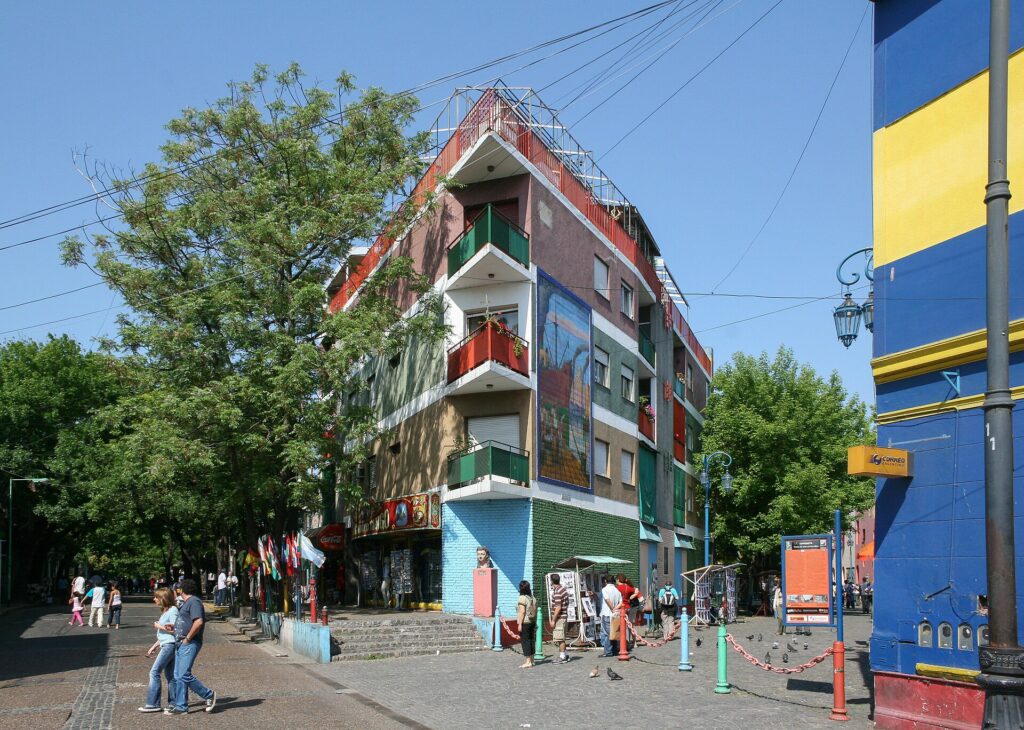
Cobbles, antique markets (Sunday’s feria swallows the district), peñas and candlelit parrillas in 1900s buildings. Atmospheric and central: choose well-reviewed blocks: edges fray after dark.
Puerto Madero & Microcentro notes
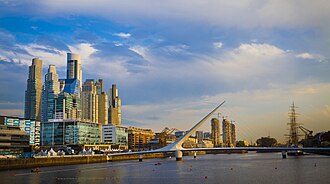
Madero: glassy calm and river walks, slightly sterile: fine for business. Microcentro empties at night: sleep elsewhere.
Quick picks by traveler type
First visit: Palermo Soho. Nightlife: Palermo Hollywood. Classic elegance: Recoleta. Tango romantics: San Telmo. Long stays: Palermo apartments: the per-week rates astonish.

Where the dollars actually go, and the blocks to skip after dark
Buenos Aires reads as cheap from abroad, but tourist-zone hotel rates have caught up: a decent room in Palermo, Recoleta, San Telmo or Puerto Madero now lands around $100–150 USD a night, not the $40 bargain people still expect. San Telmo’s atmospheric Mansion Dandi Royal, for instance, runs about $80–120. Palermo Soho and Recoleta are the two areas that are genuinely fine to walk day and night with normal city sense, which is why both are oversaturated with short-term rentals and price-competitive.
Puerto Madero is the safest district on paper — glass towers, heavy police presence, restaurants charging $40 for a steak — but it empties out completely after office hours, so you’ll feel like you’re staying in a financial park, not a city. San Telmo is the opposite: terrific by day, but the residential side streets get sketchy once it’s dark, so take a taxi the last few blocks rather than walking.
The areas to actively avoid as a base: Constitución and the deeper parts of Microcentro at night. Microcentro is the business core — busy and fine at lunchtime, dead and not worth lingering in after the offices close. Keep your phone in a front pocket; pickpocketing, not violence, is the real day-to-day risk.
FAQ
Is Buenos Aires safe for tourists?
Where is the food scene?
Dollar tips?
How many nights?
Plan the practical side: Cost of Living Buenos Aires.
What changed about money in Argentina, and what it does to your room bill
The old rule, bring clean US$100 notes and change them on the street, is out of date. Argentina announced the end of the exchange restrictions known as the cepo for individuals on 11 April 2025, in force from the following Monday, and moved the peso into a floating band inside which the Banco Central de la Republica Argentina says the rate fluctuates freely on supply and demand. Through December 2025 the floor of the band crawled down 1 per cent a month and the ceiling up 1 per cent a month. From 1 January 2026 both edges move at the most recently published INDEC monthly inflation figure, which in practice is the reading for the month before last.
That shrank the brecha, the gap between official and parallel rates. It once ran at 50 to 100 per cent and drove what a night in Palermo cost; through 2026 it has mostly been small enough to stop mattering, though it still moves. The Impuesto PAIS on foreign-currency transactions expired on 22 December 2024 under the sunset in Law 27,541 and was not renewed, which changed the sums for Argentine residents buying foreign currency rather than for visitors, and the 2022 arrangement giving non-residents’ card spending the financial MEP rate mattered only while the rates diverged. A foreign Visa or Mastercard now settles close to the market rate.
One rule should decide how you pay for a bed. Argentina refunds the 21 per cent VAT on lodging to foreign visitors, and it comes off the invoice at billing, with no form to file and nothing to reclaim on the way out of the country. It requires payment by a credit or debit card issued outside Argentina, or a transfer of foreign currency, and the property has to be registered for VAT and issuing the class T invoice the scheme runs on: hotels, inns, guesthouses, motels, apart-hotels, campsites and the like, booked either directly or through a registered travel agency. Pay cash, pay with an Argentine card, or take an informal rental through a platform such as Airbnb, and the tax stays on your bill. The relief covers the room, and breakfast when it is included in the room price; restaurant meals, bar bills and other extras are invoiced separately and keep their VAT. A hotel with a higher headline rate can still finish below an apartment once 21 per cent comes off the room. Do not plan against any rate you read online; check the Banco Central’s site on the day.
Palermo Soho, Hollywood and Botanico are three different decisions
Palermo gets treated as one answer, which is why people book the wrong part of it. It is the city’s largest barrio by area, and the three pockets visitors mean are split by main roads and a railway.
- Palermo Soho radiates from Plazoleta Julio Cortazar, universally called Plaza Serrano. Low-rise, tightly gridded, dense with independent shops and cafes, so you can leave the room without a plan. Also the loudest, because the bars sit under the flats.
- Palermo Hollywood lies across Avenida Juan B. Justo and the rail line, named for the television and film companies that arrived in the 1990s. More residential, with the eating and drinking concentrated rather than continuous, so you walk further and sleep better.
- Palermo Botanico, often bundled with Palermo Chico, sits around Plaza Italia and the Jardin Botanico Carlos Thays. Greener, quieter, closest to the parkland, and the easiest of the three if you do not want to be woken up.
If evenings are the point of the trip, Soho puts you inside them and charges you in sleep. For the same restaurants and a quiet street to come home to, Hollywood and Botanico are 10 to 20 minutes’ walk away.
Recoleta, San Telmo, Retiro and Puerto Madero on price, noise and walking
These four are usually ranked cheap to expensive. They differ more in what happens outside at 23:00.
- Recoleta is the calmest central option: wide pavements, residential blocks, subte lines D and H. Recoleta Cemetery now charges non-residents admission while Argentine residents enter free with a DNI, so budget a ticket.
- San Telmo gives you cobbles and the Sunday feria along Defensa street around Plaza Dorrego, which is both the reason to stay and the reason not to: a room on Defensa is loud from mid-morning every Sunday. Streets are narrower, less evenly lit, and shift in character block by block.
- Retiro is a transport decision, not a neighbourhood one: the long-distance bus terminal and the railway termini, on lines C and E.
- Puerto Madero, a 1990s redevelopment of the old docks, trades precisely: quietest streets, modern rooms, highest prices, almost nothing at street level but restaurants. It has no subte station of its own: the nearest are Leandro N. Alem on Line B and Correo Central on Line E, each about a 10 minute walk, so every journey starts on foot or in a taxi.
On safety, work from the current official advisory rather than reputation. The UK Foreign, Commonwealth and Development Office names Palermo, San Telmo, La Boca, Retiro and its bus terminal, the Ecological Reserve, Florida street, 9 de Julio and Avenida de Mayo among places to take particular care, and warns of pickpockets on transport and at terminals, bag-cutting in crowds and phone snatching. That list covers most areas visitors sleep in, so read it as advice about crowds and belongings, not a ranking of barrios.
Paying for transport, and why the subte closing time shapes where you sleep
You cannot pay a bus driver in cash here. For years the only answer was the SUBE card, sold at subte and rail stations, lottery kiosks and Correo Argentino post offices, and topped up anywhere showing a Carga SUBE sign. It covers subte, buses, trains and some ferries; register it in your name for the lower fare. You no longer strictly need one: contactless Visa and Mastercard credit, debit and prepaid cards, and phones carrying them, work at marked turnstiles across the subte and premetro, with no registration and at the same fare a registered SUBE pays. What a bank card does not get you is the SUBE transfer discount, which takes half off a second fare within two hours and more off the third. On buses the rollout is partial, covering around 30 routes under city jurisdiction, so a SUBE is still the safer default.
Line D runs from the Microcentro through Recoleta to Plaza Italia and Palermo. Line B skirts Palermo Hollywood at Dorrego and Malabia. Lines C and E reach Retiro and San Telmo. Puerto Madero has none.
Then there is the closing time. Trains start around 05:30 on weekdays, 06:00 on Saturdays and 08:00 on Sundays and holidays, and last departures fall roughly between 22:56 and 23:51 on weekdays depending on the line and the direction, dropping to about 21:56 onwards on Sundays and holidays. The premetro stops earlier, at about 21:00. Line B is the exception, running a special service until about 01:30 on Friday and Saturday nights, holidays excepted, at selected stations.
Set that against the dining clock. Kitchens get going at 20:00 or later and rooms fill after 21:00, so a table booked at an hour that feels normal at home still has you leaving after the last train. That is the argument for sleeping in the barrio you intend to eat in, and for pricing a return taxi into every evening if you do not.
Best time to visit Buenos Aires (real climate data)
Best months: January, February, March, April, October, November, December.
Buenos Aires’s warmest month is January (avg 28°C / 83°F), the coolest is July (low 8°C / 46°F). The wettest is March (140 mm) and the driest is August.
Source: Open-Meteo / WMO climate normals (WMO 1991–2020, or ERA5 2019–2023 where unavailable).
You Might Also Love


Written by
John Morrison is the founder and lead travel writer at Packzup. Over the past decade he has explored destinations across Africa, the Americas, Asia, Europe, the Middle East, and Oceania — always self-funded, never on a press trip.
