Last updated August 22, 2026 · Editorial policy
African safaris are bucket-list adventures. Here are the 10 best safari destinations with real differences between them.
Top African Safaris Destinations
1. Maasai Mara, Kenya (Great Migration July-October)
Best for wildebeest river crossings. 1.5M wildebeest. Premium safaris $500-1,500/night.
2. Serengeti, Tanzania (Great Migration year-round)
Largest unfenced ecosystem. Migration here year-round – different sections. $400-2,000/night.
3. Okavango Delta, Botswana
Mokoro canoe safaris. Most exclusive + remote. $1,000-3,000+/night.
4. Kruger National Park, South Africa
Best self-drive option. 4WD rental $30-60/day. Lodges $100-2,000+/night.
5. Ngorongoro Crater, Tanzania
World’s largest unbroken volcanic caldera. Densest wildlife concentration. $300-1,500/night.
6. Sabi Sand Game Reserve, South Africa
Best leopard sightings. Premium lodges $1,500-3,000+/night.
7. Chobe National Park, Botswana
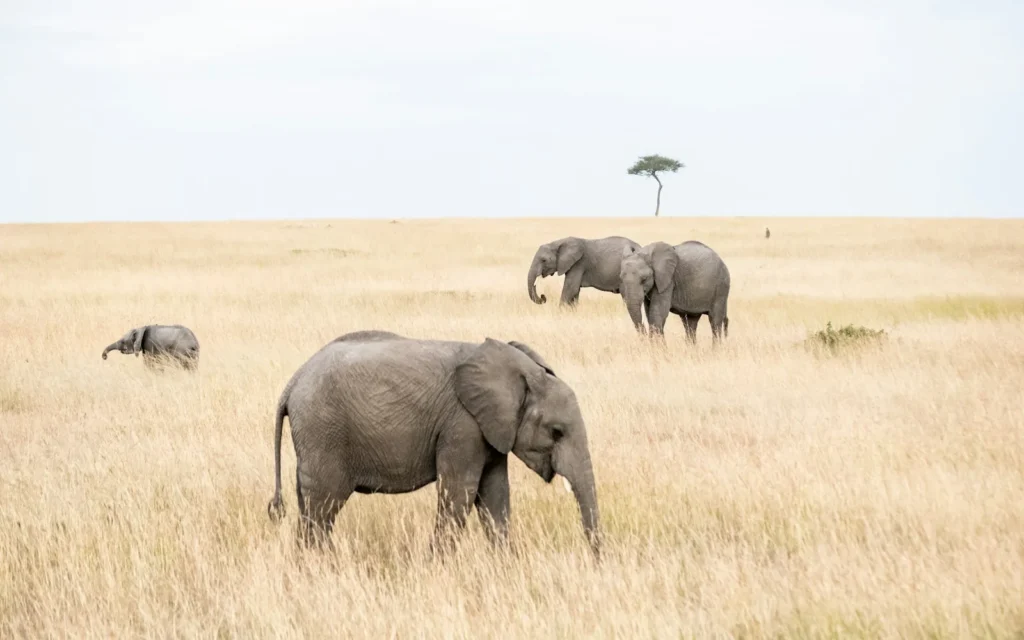
Best elephant population (130,000+). $400-1,500/night.
8. Etosha National Park, Namibia
Salt pans + desert wildlife. Self-drive friendly. $50-500/night.
9. Mana Pools, Zimbabwe
Canoe safaris. Wild + remote. $500-2,000/night.
10. Bwindi, Uganda (gorilla trekking)
$700 gorilla permit + $200-1,500/night lodges.
Wildlife Travel Tips
Patience: Wildlife viewing requires patience + luck. Not every game drive guarantees sightings.

Good binoculars: 8×42 or 10×42 ideal. Worth $150-300 investment.
Camera with long lens: 300mm+ for safaris. 600mm+ for birds.
Travel insurance: Essential for remote destinations + medical evacuation.
Timing the Great Migration: A Month-by-Month Read
The single decision that shapes a Serengeti-Mara safari is timing, and ‘July to October’ hides the most important detail. The wildebeest move in a continuous loop, so what you witness depends on the exact weeks you book, not the broad season.
From late January through February the herds gather on the short-grass plains of the southern Serengeti and Ndutu, where calving peaks. Thousands of calves drop within a roughly two-to-three-week window, and the concentration of newborns draws lions and cheetahs into the open. This is the quietest, and often best-value, way to see dense predator action.
The crossings come later. Herds reach the Grumeti River in the Western Corridor around June into July, the first major crocodile barrier. The famous Mara River crossings on the Kenya border run from late July into October, with the heaviest activity typically through August and September. Crossings are unpredictable by the hour, so a Mara safari rewards travelers who hold three or four nights in one area rather than rushing.
- Late Jan to Feb: calving, southern Serengeti and Ndutu
- June to July: Grumeti River, Western Corridor
- Late July to October: Mara River crossings, peak Aug to Sep
- November to December: herds drift back south on the short rains
If your dates are fixed and fall outside these windows, weight your trip toward resident-game parks such as Ngorongoro Crater or the Mara conservancies rather than chasing herds that have already moved on.
FAQ
What’s the best time for African Safaris?
Most destinations have specific seasons – check above for each location. Wildlife migrations + breeding seasons + best weather all factor in.
How much does African Safaris cost?
Budget safaris/wildlife trips: $300-500/day. Mid: $500-1,000/day. Luxury: $1,500-3,000+/day.
What should I pack?
Neutral colors (no white or bright). Layers. Hat + sunscreen. Binoculars essential. Long lens camera (300mm+). Bug spray.
Should I book a tour or self-drive?
Africa safaris: tour recommended. Some parks allow self-drive (Kruger, Etosha). India + Costa Rica: tours best for first-timers. Galapagos requires tour.
Is wildlife travel safe?
Yes with proper guides + precautions. Stay in vehicle during safari. Don’t approach animals. Follow guide instructions.
Related Guides
Looking beyond Africa? Best Wildlife Safari Destinations Worldwide
You Might Also Love


Written by
John Morrison is the founder and lead travel writer at Packzup. Over the past decade he has explored destinations across Africa, the Americas, Asia, Europe, the Middle East, and Oceania — always self-funded, never on a press trip.