Quick facts: Morocco runs about $45-90/day mid-range (Budget-friendly) vs Egypt at about $45-90/day (Budget-friendly). Daily costs are broadly similar.
Traveler factor
Morocco
Egypt
Daily cost (mid-range)
$45-90 (Budget-friendly)
$45-90 (Budget-friendly)
Tourist tax
Municipal tourist tax (taxe de sejour / TPT) charged per person per night, tiered by accom
Tourism & Antiquities Support Fund fee of 1% of the nightly room price, floor LE 5 and cap
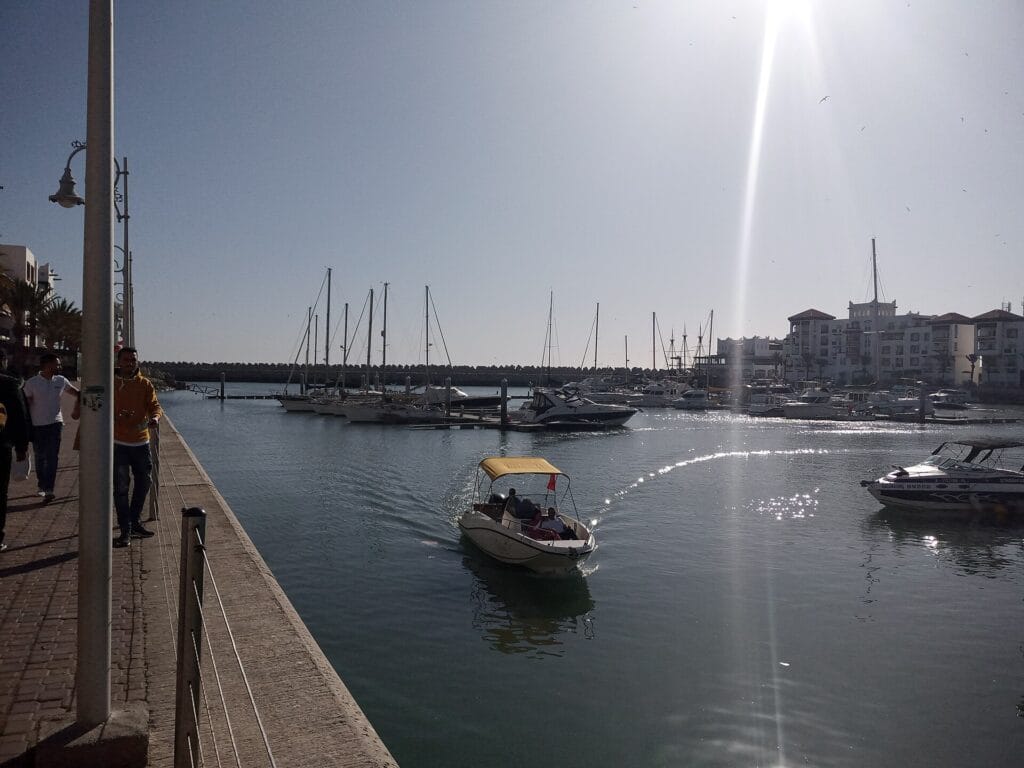
Quick verdict: Both promise ancient wonders, dramatic landscapes, and a culture shock that sticks. But the experience is completely different. Morocco is a sensory immersion — souks, riads, the Sahara at your doorstep, Atlas Mountains, Berber villages. Egypt is a monument pilgrimage — Pyramids, Luxor, Nile cruise, the desert deeper. Here’s how to choose.
Morocco
Best time: Mar-May, Sep-Nov Daily cost: $50-100/day
Egypt
Best time: Oct-Apr Daily cost: $40-90/day
When to go: Morocco vs Egypt
Measured, not guessed — five years of climate normals (WMO 1991–2020, or ERA5 2019–2023 where unavailable). Months are ranked by how close the average high sits to 25°C, penalised by wet days.
Morocco
Best month
November
Then expect
24.5°C · 3 wet days
Next best
April, February
Wettest month
March (7 wet days)
J20°January: average high 19.7 degrees Celsius, 3 wet daysF23°February: average high 22.8 degrees Celsius, 5 wet daysM24°March: average high 23.7 degrees Celsius, 7 wet daysA26°April: average high 25.9 degrees Celsius, 6 wet daysM32°May: average high 31.8 degrees Celsius, 3 wet daysJ33°June: average high 33.2 degrees Celsius, 0 wet daysJ39°July: average high 39.2 degrees Celsius, 0 wet daysA38°August: average high 38.4 degrees Celsius, 0 wet daysS33°September: average high 33.4 degrees Celsius, 1 wet daysO31°October: average high 30.5 degrees Celsius, 2 wet daysN25°November: average high 24.5 degrees Celsius, 3 wet daysD21°December: average high 21.3 degrees Celsius, 4 wet days
Egypt
Best month
March
Then expect
24.3°C · 2 wet days
Next best
November, December
Wettest month
February (2 wet days)
J20°January: average high 19.6 degrees Celsius, 1 wet daysF21°February: average high 20.7 degrees Celsius, 2 wet daysM24°March: average high 24.3 degrees Celsius, 2 wet daysA30°April: average high 29.8 degrees Celsius, 1 wet daysM35°May: average high 34.9 degrees Celsius, 0 wet daysJ37°June: average high 36.9 degrees Celsius, 0 wet daysJ39°July: average high 38.9 degrees Celsius, 0 wet daysA39°August: average high 38.6 degrees Celsius, 0 wet daysS37°September: average high 36.5 degrees Celsius, 0 wet daysO32°October: average high 32 degrees Celsius, 1 wet daysN27°November: average high 27.3 degrees Celsius, 1 wet daysD23°December: average high 22.5 degrees Celsius, 2 wet days
Different windows — Morocco peaks in November, Egypt in March. If your dates are fixed, that is the deciding factor.
Egypt is the drier bet at its peak — 2 wet days vs 3.
Biggest split is April — Egypt is 3.9°C warmer that month.
Source: climate normals (WMO 1991–2020, or ERA5 2019–2023 where unavailable) via Open-Meteo, CC BY 4.0 — Packzup Travel Climate Dataset (open data).
EgyptWhite Desert, Siwa Oasis, Mount Sinai, Nile — variety but more pilgrimage-paced.
Edge: Morocco
Food
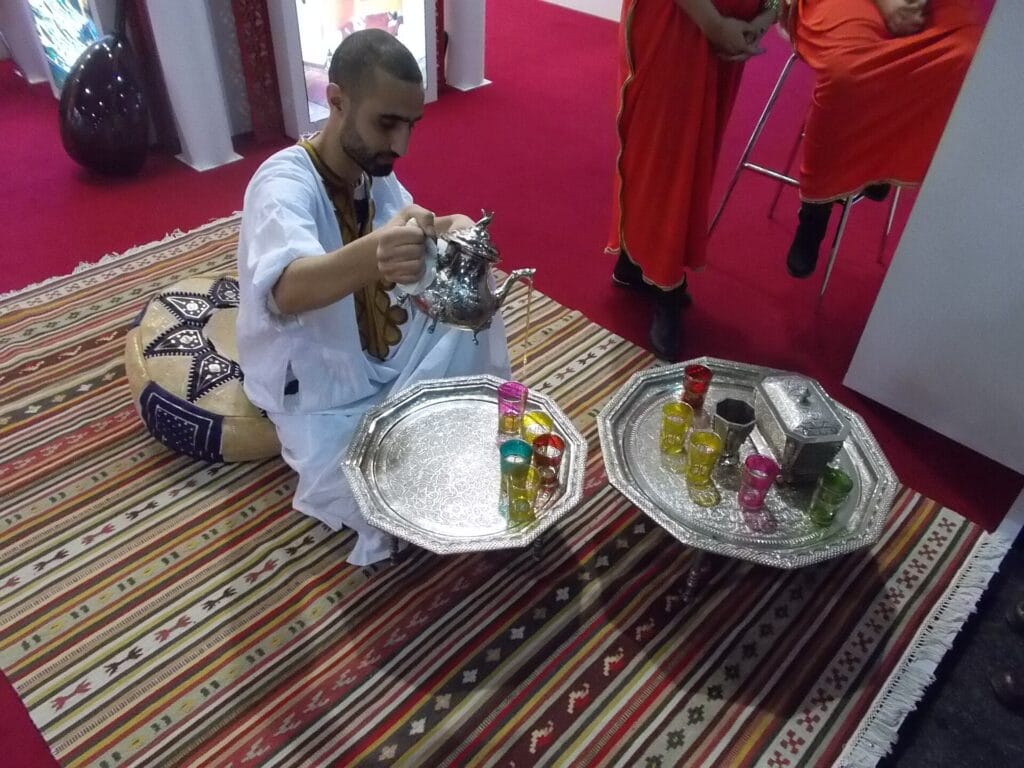
MoroccoTagine, couscous, mint tea, pastilla — refined, comforting, leans sweet-savory.
EgyptKoshari, ful medames, grilled meats, mahalabia — simpler, more rustic.
Edge: Morocco
Ease for First-Timers
MoroccoTourist infrastructure mature; many travelers do solo or self-drive comfortably.
EgyptOften easier with guided tours; hassle-factor in Cairo/Luxor is real; tipping culture intense.
Edge: Morocco
Morocco or Egypt: the honest verdict
Morocco for first North African trip, sensory immersion, variety in shorter time, easier solo travel. Egypt for ancient-history obsession, Nile cruise dream, Red Sea diving. Bucket-list pyramids? Egypt. Vibrant culture + landscape mix? Morocco.
Ready to book? Compare tours and tickets for both.
The Honest Verdict: Which One Should You Actually Book?
Choose Egypt if your trip is built around ancient monuments, and choose Morocco if you want landscapes, food, and atmosphere over museum-piece history. The single deciding factor is the Grand Egyptian Museum, which fully opened beside the Giza pyramids on November 4, 2025 after years of delays. For roughly LE1450 (about $30) you now see the complete Tutankhamun collection of more than 5,000 objects under one roof, steps from the Sphinx. Nothing in Morocco competes with that concentration of antiquity.
The differences are concrete:
Headline sights: Egypt stacks Giza, Luxor’s Karnak, and Abu Simbel; Morocco counters with the Erg Chebbi dunes near Merzouga and the Fes el-Bali medina, the world’s largest car-free urban zone.
How you move: Egypt’s signature is a multi-day Nile felucca or cruise between Luxor and Aswan; Morocco’s is a 4×4 Sahara overnight or a High Atlas trek to Toubkal.
Hassle vs. polish: Morocco’s riad and rail network make independent travel smoother, while Egypt’s best sites reward a guided or cruise package.
Go to Egypt for the monuments. Go to Morocco for everything around them.
Frequently asked questions
Which is cheaper?
Egypt is marginally cheaper — $40-90/day vs Morocco’s $50-100/day. Egypt’s package tours and Nile cruises bundle costs efficiently. Morocco is cheap for street food and riad stays.
Which is safer?
Both have travel advisories in specific regions (avoid Sinai interior in Egypt; avoid border zones in Morocco). Tourist zones in both are heavily policed and generally safe. Petty scams more common in Egypt; harassment more common in Marrakech medina.
Can I do both in one trip?
Possible but ambitious. Direct flights between Casablanca and Cairo run 5 hours. Plan minimum 14-16 days: 7 Morocco (Marrakech + Sahara), 7-9 Egypt (Cairo + Nile cruise). Most travelers pick one and go deep.
Which is better for solo female travelers?
Both require modesty considerations. Egypt with a guided tour is generally smoother for solo women; navigating Cairo independently can be tiring. Morocco’s medinas (especially Marrakech and Fes) have catcalling issues but women report Chefchaouen and Essaouira as easier.
Which has better food?
Morocco. Tagine variety, mint tea ritual, pastilla, Marrakech street food, and the cafe culture all rank above Egyptian dining. Egypt’s koshari is excellent but the food scene is overall narrower.
Some links on Packzup are affiliate links. We may earn a small commission at no extra cost to you. We only recommend partners we trust.
John Morrison is the founder and lead travel writer at Packzup. Over the past decade he has explored destinations across Africa, the Americas, Asia, Europe, the Middle East, and Oceania — always self-funded, never on a press trip.