

Last updated August 22, 2026 · Editorial policy
- 1. Yellowstone — Wyoming / Montana / Idaho
- 2. Grand Canyon — Arizona
- 3. Yosemite — California
- 4. Zion — Utah
- 5. Glacier — Montana
- 6. Grand Teton — Wyoming
- 7. Rocky Mountain — Colorado
- 8. Acadia — Maine
- 9. Olympic — Washington
- 10. Arches & Canyonlands — Utah
- 11. Great Smoky Mountains — Tennessee / North Carolina
- 12. Sequoia & Kings Canyon — California
- How to choose — and when to go
- US national parks FAQ
- Related travel guides
The United States has 63 national parks, and trying to “do” them all is a fast route to burnout. These are the twelve worth building a trip around — the ones that deliver something you genuinely can’t see anywhere else — with the honest timing and the practical catch for each.
1. Yellowstone — Wyoming / Montana / Idaho
The world’s first national park, and still its most surreal: geysers (Old Faithful erupts roughly every 90 minutes), the rainbow-rimmed Grand Prismatic Spring, and the best roadside wildlife in the country — bison herds, wolves and grizzlies in the Lamar and Hayden valleys at dawn. Best May–September; September thins the crowds. Book lodging months ahead or base in West Yellowstone.
2. Grand Canyon — Arizona
A mile deep and 277 miles long, and it genuinely outpaces the hype. The South Rim is open year-round with the classic viewpoints (Mather and Hopi Points at sunset); the higher North Rim is quieter and closed in winter. Spring and fall are ideal — summer bakes the inner canyon. Even a short walk below the rim on the Bright Angel Trail changes the scale completely.

3. Yosemite — California
Granite cathedrals — El Capitan, Half Dome — and waterfalls that thunder in late spring when the snowmelt peaks (Yosemite Falls is best May–June). Tunnel View and Glacier Point deliver the postcards. Peak-season day-use reservations are often required, so arrive early; the high country at Tuolumne Meadows stays emptier and opens by summer.
4. Zion — Utah
Red sandstone canyons you walk into: the Narrows (wading the river between thousand-foot walls) and Angels Landing (a chain-assisted spine with enormous drops, now lottery-permit only). A shuttle runs the canyon in season. Spring and fall are best; summer is hot and the Narrows depends on water levels.

5. Glacier — Montana
The Going-to-the-Sun Road is one of the great alpine drives on earth, threading turquoise lakes and grizzly country. Many Glacier and Lake McDonald are the highlights. The road fully opens late June or July and the season is short (best July–September). Summer vehicle reservations for the road are required — book them the moment they release.
6. Grand Teton — Wyoming
An hour south of Yellowstone and arguably more beautiful: the Tetons rise straight off the valley floor with no foothills. Jenny Lake, dawn reflections at Oxbow Bend and Schwabacher Landing, moose and pronghorn. Pair it with Yellowstone in a single trip. Best summer through early fall.
7. Rocky Mountain — Colorado
Trail Ridge Road climbs above 12,000 feet into genuine alpine tundra, with elk in the meadows and Bear Lake for easy hikes. Summer (June–September) is the window, and timed-entry permits apply in peak months. The altitude is real — take day one gently.
8. Acadia — Maine
New England’s coast at its most dramatic: pink-granite shores, the Park Loop Road, popovers at Jordan Pond, and Cadillac Mountain — for part of the year the first place to see sunrise in the US (summit reservation required). Best in late summer and the fall foliage.
9. Olympic — Washington
Three parks in one: wild Pacific beaches, the moss-draped Hoh Rain Forest, and the alpine meadows of Hurricane Ridge. It’s vast and spread out, so pick one or two zones rather than rushing all three. Best July–September, when the mountain roads are reliably open.
10. Arches & Canyonlands — Utah
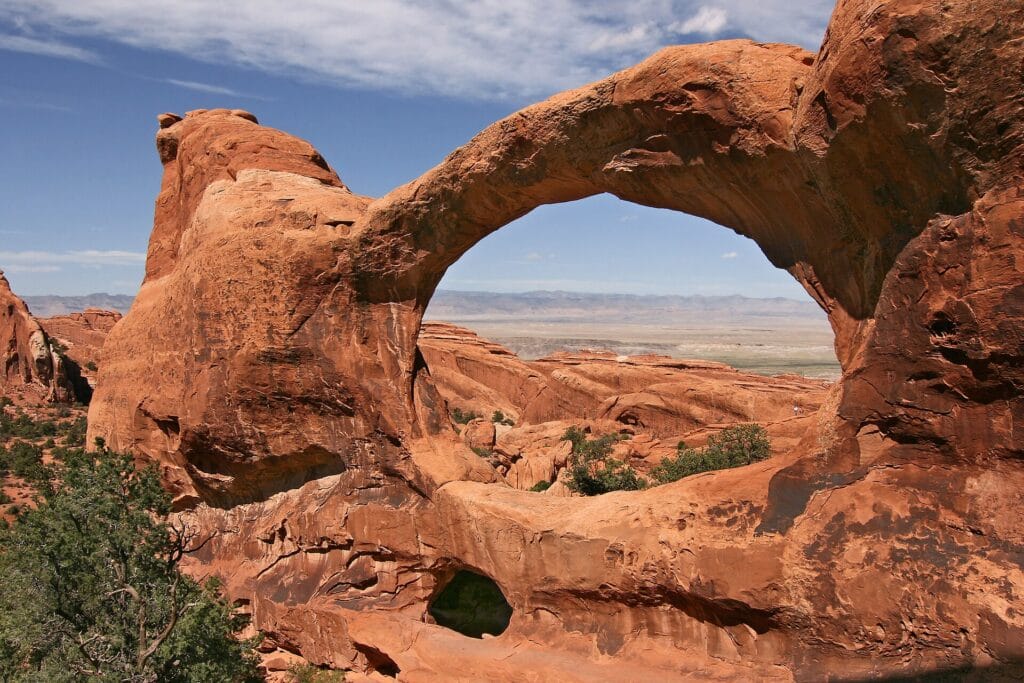
Two parks beside Moab: Arches has the highest density of natural stone arches on earth (Delicate Arch at sunset is the icon), while Canyonlands offers Mesa Arch at sunrise and vast canyon overlooks. Spring and fall only — summer is punishing — and Arches uses timed-entry in peak season.
11. Great Smoky Mountains — Tennessee / North Carolina
The most-visited US national park, and free to enter. Misty blue ridges, spring wildflowers, Cades Cove for early-morning black bears and deer, and some of the country’s best fall colour. Best in spring and autumn — go at dawn to beat the famous crowds.
12. Sequoia & Kings Canyon — California
Home to the largest trees on the planet — General Sherman, a single sequoia greater by volume than any other tree — plus deep glacial canyons next door. Summer and early fall are easiest; carry chains off-season. Standing under a 2,000-year-old sequoia quietly recalibrates your sense of scale.
How to choose — and when to go
With 63 parks, cluster by region and season. Utah’s “Mighty Five” (Zion, Bryce, Arches, Canyonlands, Capitol Reef) make one road trip; Yellowstone and Grand Teton pair naturally; California stacks Yosemite, Sequoia and Kings Canyon. Shoulder season — May–June and September–October — is the sweet spot almost everywhere: fewer crowds, milder weather. If you’ll visit more than two parks in a year, the America the Beautiful pass ($80) covers entry to all of them and pays for itself fast. And several big parks now run timed-entry or vehicle reservations in summer (Glacier, Rocky Mountain, Arches, Yosemite, Acadia’s Cadillac summit) — check the park’s official NPS page before you go, because they sell out. For the wider trip, see the best time to visit the USA and a realistic USA trip cost breakdown; if the marquee parks feel too busy, our where-to-go-instead guide leans into the quieter season and corners.
US national parks FAQ
Which US national park is best for a first visit?
Yellowstone for sheer variety (geysers plus the best wildlife), or the Grand Canyon for the single most jaw-dropping view. Both are accessible and deliver immediately.
Do you need reservations for US national parks?
Increasingly, yes — several big parks use timed-entry or vehicle reservations in summer (Glacier, Rocky Mountain, Arches, Yosemite). Entry itself is cheap or free; the reservation just manages crowds. Always check the official NPS page for the park.
What’s the cheapest way to visit several parks?
The America the Beautiful annual pass ($80) covers entry to every national park for a year — worth it from the third park onward. Great Smoky Mountains is free to enter regardless.
Related travel guides
You Might Also Love


Written by
John Morrison is the founder and lead travel writer at Packzup. Over the past decade he has explored destinations across Africa, the Americas, Asia, Europe, the Middle East, and Oceania — always self-funded, never on a press trip.
