Last updated August 22, 2026 · Editorial policy
- 1. Vienna, Austria
- 2. Nuremberg, Germany
- 3. Strasbourg, France
- 4. Cologne, Germany
- 5. Prague, Czechia
- 6. Tallinn, Estonia
- 7. Copenhagen (Tivoli), Denmark
- Market-hopping tips
- Plan your trip to these destinations
- How to Choose: Matching the Market to Your Trip
- Best Season, Costs, and One Insider Tip Per City
- Getting There: Linking the Markets by Rail
Quick answer: Europe’s essential Christmas markets: Vienna for elegance, Nuremberg for tradition, Strasbourg for the “Capital of Christmas” title it earns, and Tallinn for the fairytale square you didn’t know you needed. Go late November to December 23rd — many close before Christmas itself.
1. Vienna, Austria
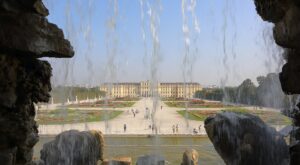
The Rathausplatz market glitters in front of the neo-Gothic city hall, with skating trails, punsch in collectible mugs and concert-hall evenings to warm up. Smaller markets (Spättelberg’s lanes, Schönbrunn’s courtyard) are the connoisseur’s circuit.
2. Nuremberg, Germany
The Christkindlesmarkt is the tradition-keeper: red-and-white striped stalls, the famous Zwetschgenmännle prune figures, original Lebkuchen gingerbread and the city’s tiny, mandatory bratwursts — three in a bun, mustard, done.
3. Strasbourg, France
Christkindelsmärik since 1570: half-timbered Alsace lanes, a colossal tree on Place Kléber and vin chaud done the French way. The whole city centre becomes the market.
4. Cologne, Germany
Seven markets, one cathedral: the Dom market’s stage-lit stalls beneath Gothic spires are the showstopper, with the harbour market’s nautical twist a stroll away. Glühwein mugs are the souvenir.
5. Prague, Czechia
Old Town Square under the astronomical clock: trdelník chimney cakes, mulled mead and the most photogenic tree-and-spires combo on the continent. Crowded for good reason — go at dusk on a weekday.
6. Tallinn, Estonia
A storybook Hanseatic square, often snow-dusted, with Estonian crafts, black pudding and glögi — small, deeply atmospheric and far less touristed than the German giants.

7. Copenhagen (Tivoli), Denmark
Not a market so much as a Christmas world: the 1843 pleasure garden in full hygge dress, lights on the lake, æbleskiver and gløgg between rides. Magical with kids; lovely without.
Market-hopping tips
Weekday afternoons beat weekend crushes, mugs carry deposits (keep or return), cash still helps at small stalls and two cities by train beat four by plane — Vienna+Prague or Strasbourg+Cologne make perfect pairs.
Plan your trip to these destinations
Every destination here is chosen from first-hand visits and independent research — Packzup runs no sponsorships or paid placements.
How to Choose: Matching the Market to Your Trip
All five are world-class, but they reward different travelers, so pick by what you actually want out of the trip rather than by reputation.
- For the grandest atmosphere: Vienna’s Rathausplatz wins on sheer spectacle, with the neo-Gothic city hall floodlit behind 150-plus stalls. Go for the looks, the ice path through the park, and the late hours (open daily until 10 p.m., roughly Nov 14 to Dec 26).
- For tradition and authenticity: Nuremberg’s Christkindlesmarkt is the purist’s pick. It bans plastic toys and pre-fab tat by rule, so the wooden stalls sell real Lebkuchen, Zwetschgenmännle (prune-people figurines), and tin ornaments. It is also the cheapest to eat at: 3 im Weckla (three grilled sausages in a roll) runs about 2.50 euros.
- For fairytale density: Strasbourg packs eight markets and 300-plus chalets into a compact medieval old town, all walkable in an afternoon. Vin chaud is just 3 euros plus a refundable cup deposit.
- For the postcard backdrop: Cologne sets its main market directly beneath the twin-spired cathedral. Seven themed markets sit within one tram ride.
- For value and a long season: Prague’s Old Town Square runs latest of all, into early January, and the strong dollar makes it the cheapest of the five.
My honest take: first-timers should do Strasbourg or Cologne. Repeat visitors who want depth should choose Nuremberg.
Best Season, Costs, and One Insider Tip Per City
Timing matters as much as the destination. Here is the realistic picture on when to go and what you will spend, drink by drink.
- Vienna: Best in the first two weeks of December for full lights without Christmas-week crowds. A Punsch runs about 5.50 to 7.50 euros plus a roughly 5-euro mug deposit (refundable). Tip: skip the touristy Rathausplatz Punsch and walk 15 minutes to the smaller Karlsplatz or Spittelberg markets for better mulled wine and elbow room.
- Nuremberg: Open only Nov 28 to Dec 24, so it has the tightest window. Weekday mornings are far calmer than weekends. Tip: buy Original Nürnberger Lebkuchen in the decorative tins; they are vacuum-fresh and survive the flight home better than any other market souvenir.
- Strasbourg: Late November is mild and uncrowded; closes Dec 24. Tip: ride the free or cheap tram one stop to Place Broglie and Place de la Cathedrale rather than driving; the old town is a car-free zone with serious parking pain.
- Cologne: Glühwein is 3 to 5 euros plus a 3-to-5-euro mug deposit. Tip: collect each market’s distinct themed mug, then cash in deposits at your final stall for a free souvenir set.
- Prague: Runs Nov 29 into Jan 6, the longest season. Trdelník (chimney cake) is roughly 100 to 200 CZK. Tip: trdelník is actually a Hungarian import, not Czech, so locals eat klobása sausage instead. Follow them.
Getting There: Linking the Markets by Rail
Europe’s rail network makes a multi-market trip genuinely easy, and the train usually drops you steps from the stalls rather than at an airport an hour out. A few of these cities chain together naturally.
- Strasbourg is the most rail-friendly base of the five. Direct TGV trains from Frankfurt or Karlsruhe reach it in about 2 hours, and Paris is roughly 2 hours by high-speed line. The station is a 10-minute walk from the chalets.
- Cologne sits on the ICE high-speed spine, with frequent fast trains to Frankfurt, Brussels, and Amsterdam. Cologne’s main station literally opens onto the cathedral square, so you can step off the train and into the market.
- Nuremberg to Vienna is one direct Railjet ride of about 5 hours, which makes pairing those two the cleanest two-city itinerary on this list.
- Prague connects to both Vienna and Nuremberg by direct trains in roughly 4 hours each.
A practical plan: anchor in Strasbourg and Cologne first (both on the western high-speed network), then take the Nuremberg-Vienna-Prague triangle as a separate eastern loop. Buy ICE and Railjet tickets a few weeks ahead for the cheapest fares, and reserve TGV seats into France, which require a small mandatory reservation fee even with a rail pass.
You Might Also Love



Written by
John Morrison is the founder and lead travel writer at Packzup. Over the past decade he has explored destinations across Africa, the Americas, Asia, Europe, the Middle East, and Oceania — always self-funded, never on a press trip.