
Quick Answer
Europe’s best food markets run from La Boqueria in Barcelona and Borough Market in London to Madrid’s San Miguel, Lisbon’s Time Out Market, Vienna’s Naschmarkt and Palermo’s street markets. Here are 10, with what to eat and when to go.
A market tells you how a city actually eats. These 10 span produce halls where locals still shop, restored buildings turned food halls, and street markets that have run for centuries — each with what to look for and the best time to arrive.
10 of the Best Food Markets in Europe
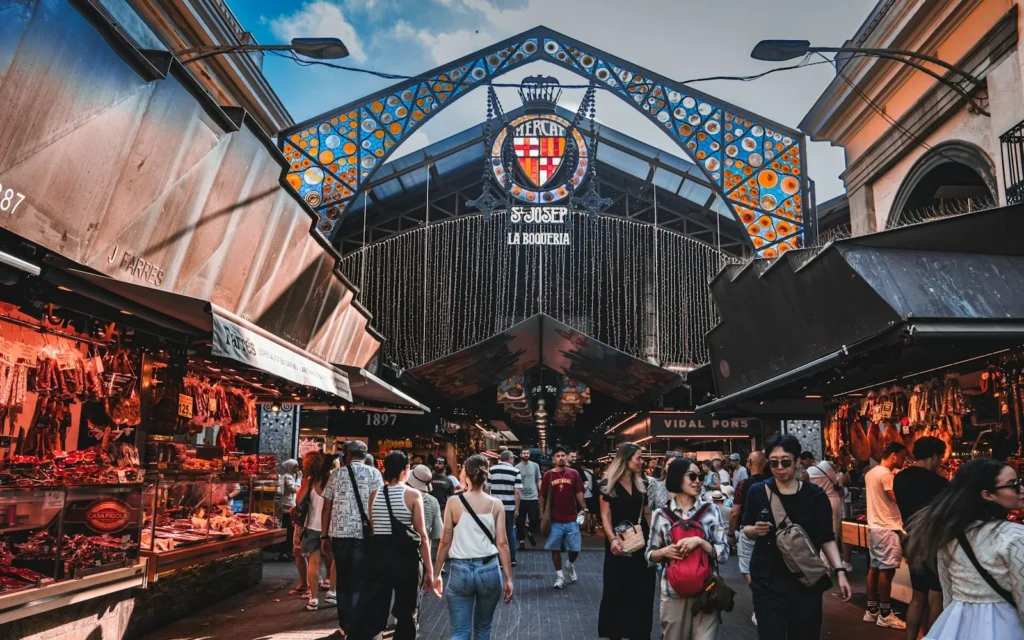
1. La Boqueria, Barcelona
Best months: Jun–Aug · 22–29°C days · dry (climate data)
Barcelona’s cathedral of food just off La Rambla — jamón counters, seafood on ice and juice stalls beneath a stained-glass entrance. Go early.
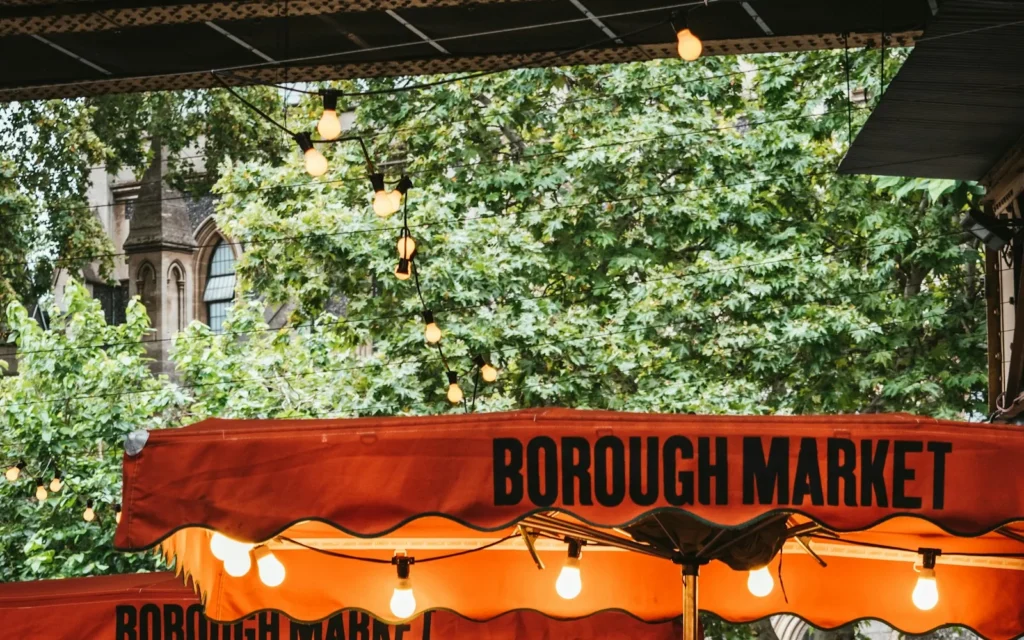
2. Borough Market, London
Best months: Jun–Aug · 14–23°C days · some rain (climate data)
Trading since the 12th century: British cheese, oysters, salt-beef bagels and traders happy to let you taste before buying.
3. Mercado de San Miguel, Madrid
Best months: Apr–Jun · 12–25°C days · some rain (climate data)
A restored iron-and-glass hall beside the Plaza Mayor, now a tapas hall of vermouth, croquetas and Iberian ham.
4. Time Out Market, Lisbon
Best months: Jun–Aug · 18–28°C days · dry (climate data)
The city’s best chefs gathered under one riverside roof — the model now copied in cities worldwide.
5. Naschmarkt, Vienna
Best months: Jul–Sep · 17–26°C days · some rain (climate data)
Almost two kilometres of Austrian, Balkan and Middle Eastern stalls, with a famous Saturday flea market alongside.
6. Mercato Centrale, Florence
Tripe sandwiches downstairs, a modern food hall above — the best of Tuscan cooking in one 19th-century building.
7. Testaccio Market, Rome
Best months: Apr–Jun · 13–23°C days · rainy (climate data)
Where Romans actually shop, and home to some of the city’s best sandwiches at Mordi e Vai.
8. Torvehallerne, Copenhagen
Best months: Jun–Aug · 15–20°C days · some rain (climate data)
Two glass halls of Nordic produce, smørrebrød and coffee — compact, design-led and excellent.
9. Mercado da Ribeira & Bolhão, Porto
Best months: Jun–Aug · 16–24°C days · dry (climate data)
Porto’s restored Bolhão market brings the city’s producers back under one roof after years of renovation.
10. La Vucciria & Ballarò, Palermo
Sicily’s loudest street markets, where Arab-Norman history shows up directly in the street food.
How to visit European markets
Go in the morning for produce and seafood — traders are freshest and famous halls like La Boqueria empty out well before lunch. Many close Sundays and some Mondays, so check before planning a day around one. Follow the queues of local shoppers rather than the photogenic stalls at the entrance, carry small notes, and in Spain and Italy remember that lunch runs late — markets often wind down mid-afternoon and reopen in the evening.
Frequently Asked Questions
What is the best food market in Europe?
La Boqueria in Barcelona and Borough Market in London top most lists, with Lisbon’s Time Out Market the best modern food hall.
When should you visit?
Mid-morning for produce markets; evenings for food halls like Time Out Lisbon and San Miguel.
Are markets good value?
Produce markets yes; tourist-facing food halls can be pricey — eat where locals queue.
Related Articles
Which European food markets close on Monday, and which close on Sunday?
Closing day wrecks more market visits than any other single fact, and there is no European standard. A covered hall that has shifted towards eating rather than shopping usually opens on Sunday, because Sunday is its strongest day. A working produce market usually does not, because its customers buy food on the way home from work.
The pattern is worth fixing in your head before you build an itinerary. Borough Market in London closes on Monday and trades the other six days, on the hours its own visitor page publishes. Mercato Testaccio in Rome, Mercado do Bolhão in Porto and the English Market in Cork all close on Sunday, and the Porto and Cork markets also close on public and bank holidays as well. Markthalle Neun in Berlin closes on Sunday too, which catches out visitors who assume a Kreuzberg food hall must be a weekend venue.
Two of the best known halls do not take a weekly day off at all. Torvehallerne in Copenhagen and the Markthal in Rotterdam both publish seven-day hours. St George’s Market in Belfast is the opposite extreme: it trades on three days only, Friday, Saturday and Sunday, and is closed for the rest of the week.
So the decision rule is simple. If a city has one famous market and you have one spare morning, check the closing day before you fix the morning, not afterwards. Hours here are those the operators published on 5 September 2026, and should be re-checked on the market’s own site in the week you travel, because several of them change for December and for national holidays.
How can you tell a working food market from a food hall before you go?
Read the opening time, not the description. A market that opens at 07:00 and stops at 15:30 is feeding a neighbourhood. A market that opens at 10:00 or noon and runs to 20:00 or later is feeding visitors and office workers, whatever the name over the door says.
Mercato Testaccio in Rome is the clearest working example. Its own site gives the hours as Monday to Saturday, 07:00 to 15:30. Those are shopping hours. Nobody builds an evening destination that shuts at half past three.
The English Market in Cork and Mercado do Bolhão in Porto belong to the same family, both opening at 08:00 six days a week. Cork City Council owns the English Market and leases the stalls to individual traders, and its published line is worth reading closely: the market is open to the public 08:00 to 18:00 Monday to Saturday, but some traders may operate different trading hours within those hours. The building being open is not the same as your stall being open. Bolhão splits the difference openly and publishes two schedules for one building on its own FAQ: the market trades 08:00 to 20:00 Monday to Friday and 08:00 to 18:00 on Saturday, while its restaurants run 08:00 to midnight, Monday to Saturday. Same roof, two clocks.
At the other end, the Markthal in Rotterdam opens at 10:00 on weekdays, at noon on Sunday, and runs to 20:00, or 21:00 on Friday, with its own note that hours can vary and should be checked on the pages of the individual restaurants and food spots. Torvehallerne in Copenhagen publishes 10:00 to 19:00 Monday to Friday and 10:00 to 18:00 at weekends, while noting that coffee and bakery counters serve from 07:00 and some food stalls run later than the hall. Those are the hours of a place you eat in rather than shop at, and both are honest about it.
Markthalle Neun in Berlin is the instructive hybrid, because it publishes the split itself rather than making you guess. The building has door hours, and the market inside has its own: a Kleiner Markt from 12:00 to 18:00, Monday to Thursday, a Großer Markt on Friday 12:00 to 18:00 and Saturday 10:00 to 18:00, and Street Food Thursday from 17:00 to 22:00. Arriving at 09:00 gets you a building with the lights on and very little to buy.
The test that works everywhere: if the first published hour is before 09:00, you are looking at a market. If it is 10:00 or later, you are looking at a meal.
What time should you arrive, and when do the counters start packing up?
Arrive in the first two hours of trading at a working market, and around midday at a hall. A published closing time tells you when the doors shut, not when the fish counter still has fish.
At a market that opens at 07:00 or 08:00, the first two hours are the real trade: restaurant buyers, residents with lists, full counters. In the last hour, stallholders are wrapping and washing down. Testaccio’s 15:30 close means the useful window is roughly the first half of the morning, and the 08:00 starts at Bolhão and the English Market mean the same thing even though both stay open much later.
Borough Market inverts this. Its published hours are 10:00 to 17:00 Tuesday to Friday, 09:00 to 17:00 on Saturday and 10:00 to 16:00 on Sunday, so there is no early morning to catch at all. The choice there is between a quiet weekday opening hour and a Saturday that is the busiest trading day of its week.
St George’s Market in Belfast publishes the tightest windows of any major market in this group: Friday 08:00 to 14:00, Saturday 09:00 to 15:00, Sunday 10:00 to 15:00, with a different market on each of the three days. The Friday session is the variety market, Saturday is the city food and craft market, and Sunday is the craft and antiques market. A Friday lie-in costs you the whole thing.
Belfast City Council also publishes something almost no other market authority does: a designated quiet hour at the start of each market day. It runs 09:00 to 10:00 on Friday, 09:00 to 10:00 on Saturday and 10:00 to 11:00 on Sunday, so it is the first hour of trading in each case. The council states that during it the music is turned off and other noise reduced, to make the hall more welcoming for all visitors and especially for people with autism and their families. For a group that includes anyone who finds a crowded hall difficult, that hour is the reason to arrive at opening rather than an argument against it.
Where exactly is each market, and which entrance should you aim for?
Addresses and entrances decide how the visit starts, and covered markets are the easiest places in Europe to approach from the wrong side.
Mercato Testaccio is registered at via Lorenzo Ghiberti, 00153 Rome, and lists four ways in: via Beniamino Franklin, via Alessandro Volta, via Aldo Manuzio and via Lorenzo Ghiberti. The market sits under a modern shed built over the remains of a Roman warehouse, which is why the entrances are spread around a block rather than clustered on one street.
Markthalle Neun is at Eisenbahnstraße 42/43, 10997 Berlin, in Kreuzberg, and the hall itself points visitors to U1 to Görlitzer Bahnhof or bus 140 to Wrangelstraße.
Borough Market gives its address as 8 Southwark Street, London SE1 1TL, with London Bridge as the station on the Jubilee line, the Northern line and National Rail.
Torvehallerne is at Frederiksborggade 21 in central Copenhagen, split across two glass halls with an open square between them, which is why the "is it open" question sometimes gets two different answers on the same day.
Markthal Rotterdam is at Ds. Jan Scharpstraat 298, 3011 GZ Rotterdam. St George’s Market is at 12 to 20 East Bridge Street, Belfast BT1 3NQ. Mercado do Bolhão stands on Rua Formosa in central Porto, and states on its own FAQ that access is possible through the four main doors and that the building has ten lifts inside it.
That last detail is worth carrying over to every market you consider. Historic halls were built on split levels and many were never adapted; the ones that have been rebuilt, like Bolhão, tend to say so on their own site. If step-free access matters, the market’s own visitor page is the only source that will tell you.
Do you need cash, and what else does a market publish that a round-up leaves out?
Carry some cash for the produce counters and expect the cooked-food stalls to take cards, but do not treat that as a rule for any individual trader, because most markets publish no card policy at all.
There is one useful tell. Mercado do Bolhão states on its own FAQ that the market contains two ATM terminals, one behind the central staircase and one in the hall leading up to the restaurants on the second floor, on the Rua Sá da Bandeira side. A market that installs its own ATM is telling you that a meaningful share of its traders still expect notes. Where a market says nothing on the subject, assume the smallest fruit and vegetable stalls are the ones most likely to be cash-only.
Three other things worth reading on the market’s own pages before you travel:
- The holiday exception. The English Market closes on Sundays and bank holidays, and Bolhão closes on Sundays and holidays. Borough Market says plainly that opening times vary during the festive period and at bank holidays, and keeps those on a separate page rather than changing its main hours table, so the main table can be right and still not apply on the day you are there.
- December. Several of these markets extend to seven days in the run-up to Christmas and then close hard for two or three days around it. A December visit needs a fresh check, not an annual assumption.
- Building hours against market hours. Markthalle Neun states both. Most halls state only one, and the one they state is usually the building. If a hall lists a 08:00 opening and a lunchtime market, the stalls are the later number.
Where an operator publishes nothing, ask what the market is for. A hall with an ATM, an early start and a mid-afternoon close is somewhere to buy ingredients. A hall that opens at noon and closes at 22:00 is somewhere to eat, and the cards will be fine.
Where should you look up a market’s hours, and what should you refuse to trust?
Use the market’s own domain, or the city authority that runs it, and take nothing from a round-up. Hours change, and aggregator listings carry the change months late.
The chain of authority is short and easy to follow. Some European markets are run directly by the council, which makes the council the primary source: Belfast City Council publishes St George’s Market, Cork City Council publishes the English Market, and Barcelona City Council’s municipal markets service lists la Boqueria under its registered name, Mercat de Sant Josep, at Rambla 91, alongside every other city market. Others run their own site, and those sites are the record: boroughmarket.org.uk, mercatoditestaccio.it, mercadobolhao.pt, markthalleneun.de, markthal.nl and torvehallernekbh.dk.
Where a market’s own site and a city page disagree, take the one that is more specific. A page that gives different hours for different days is being maintained. A page that says "daily" usually is not.
One market in this group has to be read in a browser rather than quoted, and it is worth saying why. La Boqueria publishes its hours on boqueria.barcelona, but that site builds its pages in the browser and returned no readable text to an automated request on 5 September 2026, while barcelona.cat and the council’s markets pages refused such requests outright. So no opening times for it are stated here. That is the rule of this page applied to itself: read the hours on the operator’s own site, in a browser, in the week you travel, and do not accept a figure that nobody can show you the source for.
And apply one filter to any list of European food markets, including the ones you find elsewhere: if neither the market nor a city authority publishes its hours, drop it from the plan. A market with no published hours is a market that may have closed, moved into a temporary building, or turned into something else since the article was written. That has happened repeatedly across Europe in the past decade, usually during a restoration, and the round-ups are always the last to notice.
At a glance
| Market | City | Days it trades | Published hours | Closed |
|---|---|---|---|---|
| Borough Market | London, 8 Southwark Street SE1 1TL | Tuesday to Sunday | Tue to Fri 10:00 to 17:00; Sat 09:00 to 17:00; Sun 10:00 to 16:00 | Monday |
| Mercato Testaccio | Rome, via Lorenzo Ghiberti | Monday to Saturday | 07:00 to 15:30 | Sunday |
| Mercat de la Boqueria (Mercat de Sant Josep) | Barcelona, Rambla 91, 08001 | Check boqueria.barcelona | Not quoted here: the market site renders in the browser and the council pages refused an automated request on 5 September 2026 | Check boqueria.barcelona |
| Mercado do Bolhão | Porto, Rua Formosa | Monday to Saturday | Market Mon to Fri 08:00 to 20:00, Sat 08:00 to 18:00; restaurants Mon to Sat 08:00 to midnight | Sunday and public holidays |
| English Market | Cork | Monday to Saturday | 08:00 to 18:00; some traders keep different hours within those | Sunday and bank holidays |
| Markthalle Neun | Berlin, Eisenbahnstraße 42/43, Kreuzberg | Monday to Saturday | Kleiner Markt Mon to Thu 12:00 to 18:00; Großer Markt Fri 12:00 to 18:00 and Sat 10:00 to 18:00; Street Food Thursday 17:00 to 22:00 | Sunday |
| St George’s Market | Belfast, 12 to 20 East Bridge Street BT1 3NQ | Friday, Saturday, Sunday | Fri 08:00 to 14:00; Sat 09:00 to 15:00; Sun 10:00 to 15:00. Quiet hour Fri and Sat 09:00 to 10:00, Sun 10:00 to 11:00 | Monday to Thursday |
| Torvehallerne | Copenhagen, Frederiksborggade 21 | Seven days | Mon to Fri 10:00 to 19:00; Sat and Sun 10:00 to 18:00; coffee and bakery counters from 07:00 | No weekly closing day |
| Markthal | Rotterdam, Ds. Jan Scharpstraat 298 | Seven days | Mon to Thu 10:00 to 20:00; Fri 10:00 to 21:00; Sat 10:00 to 20:00; Sun 12:00 to 18:00 | No weekly closing day |
Frequently asked questions
Which European food markets are open on a Sunday?
Torvehallerne in Copenhagen and the Markthal in Rotterdam publish seven-day hours, so both trade on Sunday. Borough Market in London opens 10:00 to 16:00 on Sunday, and St George’s Market in Belfast runs its craft and antiques market 10:00 to 15:00, with a quiet hour until 11:00. Mercato Testaccio in Rome, the English Market in Cork, Mercado do Bolhão in Porto and Markthalle Neun in Berlin are all closed on Sunday. La Boqueria in Barcelona publishes its own hours at boqueria.barcelona, which could not be read automatically, so check that site rather than a round-up.
Is Borough Market open on Mondays?
No. Borough Market’s own visitor page lists Monday as closed, with trading Tuesday to Friday 10:00 to 17:00, Saturday 09:00 to 17:00 and Sunday 10:00 to 16:00. Bank holidays and the festive period run on separate published hours, so check the market’s bank holiday page if your date falls near one.
What time does Mercato Testaccio in Rome close?
15:30, Monday to Saturday, with trading from 07:00. That early close is the clearest sign that it is a working neighbourhood market rather than an evening food destination, so the productive window is the morning. It is closed on Sunday.
Which days is St George’s Market in Belfast open?
Three: Friday, Saturday and Sunday, and each day is a different market. Friday 08:00 to 14:00 is the variety market, Saturday 09:00 to 15:00 is the city food and craft market, and Sunday 10:00 to 15:00 is the craft and antiques market. Belfast City Council also runs a quiet hour at the start of each day, 09:00 to 10:00 on Friday and Saturday and 10:00 to 11:00 on Sunday, with the music off and other noise reduced. The building does not trade Monday to Thursday.
Do European food markets take cards?
Cooked-food and prepared-food stalls almost always do. Small produce counters are the ones most likely to want cash, and most markets publish no card policy at all. Mercado do Bolhão notes two cash machines inside the building, which is a fair signal that some traders still expect notes. Carry a small amount of local currency and treat card acceptance as a bonus rather than a guarantee.
Are European food markets closed on public holidays?
Often, and the market’s weekly table will not always say so. The English Market in Cork closes on bank holidays and Mercado do Bolhão closes on public holidays. Borough Market keeps its holiday hours on a separate page from its main timetable. If your visit falls on or beside a national holiday, check the holiday notice rather than the weekly hours.
How far in advance should I check a market’s hours?
In the week you travel, and on the market’s own domain or the council site that runs it. Hours quoted in travel round-ups are frequently years out of date, and several European market halls have closed for multi-year restorations while the old hours stayed online. If neither the market nor a city authority publishes hours, leave it out of the plan.
Is there a quiet time to visit a European food market with someone who finds crowds difficult?
St George’s Market in Belfast is the one that publishes an answer. Belfast City Council designates a quiet hour at the start of each trading day, 09:00 to 10:00 on Friday and Saturday and 10:00 to 11:00 on Sunday, during which it turns the music off and reduces other noise, stating that this is to make the market more welcoming for all visitors and especially for people with autism and their families. No other market in this group publishes an equivalent. Elsewhere the nearest substitute is the first hour of trading at a working market, or a weekday rather than a Saturday at a food hall.
You Might Also Love


Craving the neon-and-skewers version?
Asia runs the other great market tradition:
