
Last updated August 28, 2026 · Editorial policy
- The arrondissements that matter
- When to come
- The food, separated by category
- The museums, ranked by usefulness
- The walks worth your time
- What will surprise you
- What will disappoint you if you let it
- Practical, briefly
- A final thought
- Seasonal questions
- Paris like a local: arrondissements, food & the plan
- Paris Travel Guide FAQ
- More from Packzup
- More Travel Guides You’ll Love
- Frequently Asked Questions
A friend who has lived in Paris for fifteen years once told me that the test of whether you understand the city is whether you know what to do on a Sunday afternoon in February. The famous Paris, the one in the photographs, the one in the films, closes early in February. The museums are open but exhausted. The cafés are full but inward. The light is grey from ten in the morning and gone by five. And yet the city, on that grey Sunday, can be more itself than it is in any postcard. You walk through the Marais on quiet streets. You sit in a bookshop on Île Saint-Louis for two hours and no one disturbs you. You eat a long lunch alone at a small bistro in the eleventh and the waiter never once tries to hurry you. That is the Paris worth coming for, and it is not, despite what travellers tell themselves, a Paris that requires good weather to find.
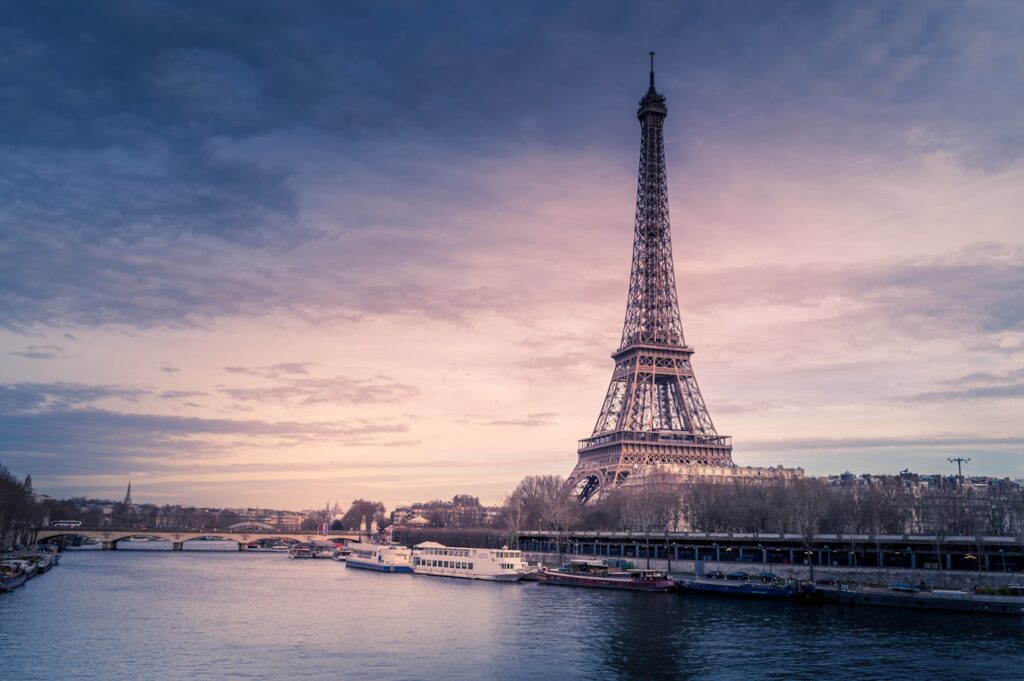
I want to be straight about what this city has become. Paris is the most-visited city in the world, and the famous parts of it, the Louvre courtyard, the path along the Seine from Notre-Dame to the Tour Eiffel, the Champs-Élysées — have become close to unworkable in summer. The trick is to learn the city sideways. To choose two or three arrondissements and walk them slowly. To accept that the Mona Lisa is a poor use of a Saturday in August and that the Musée d’Orsay’s Pissarros, on a Tuesday morning, are not.
Planning around the season?
See Paris in October for month-specific timing, pricing, and crowd realities.
| Best month to visit | July — 25.6°C, 7 wet days |
|---|---|
| Warmest month | July, 25.6°C average high |
| Wettest month | December, 16 wet days |
| Plugs & power | Type C,E · 230 V · 50 Hz |
| Driving side | Right |
Climate: normals (WMO 1991–2020, or ERA5 2019–2023 where unavailable) via Open-Meteo. Open data.
The arrondissements that matter
Paris is laid out in a spiral of twenty arrondissements numbered from the centre outward, and the centre is not the centre any more than Manhattan’s Times Square is the centre of New York. The interesting Paris, at this point, sits roughly in arrondissements three through eleven, plus a handful of corners in the eighteenth and nineteenth.
The Marais (3rd and 4th) is the postcard medieval Paris: narrow streets, beautifully preserved hôtel particuliers, the Place des Vosges, and now a heavy Sunday brunch crowd and a wave of monobrand fashion shops. Worth walking once at eight in the morning before the brunchers arrive. Stay in if you want to be in the centre and you have the budget.
The Latin Quarter and Saint-Germain (5th and 6th) are the famous bohemian arrondissements that have, mostly, been bought out. The bookshops are still there; the cafés are still there; but the rents that once made these blocks the home of writers and students have made them the home of the Hermès clientele. Beautiful for a walk; expensive for a base.
The eleventh is where I’d send a careful first-time visitor to actually stay. Bastille to République, with the eastern stretches toward Père-Lachaise. Real bistros that haven’t been turned over to tourist menus, the natural-wine bars that have given Paris its current food-and-drink identity (Septime, Clamato, Le Servan), a good distance to walk from the Marais and reasonable transport to the rest. Less photogenic than the centre. More alive.
The ninth and tenth. Pigalle, South Pigalle, Canal Saint-Martin, are the neighbourhoods that have absorbed the small-batch coffee, the natural wine bars, and the design shops that London’s Hackney took on a decade ago. The light around Canal Saint-Martin at six in the evening, in May, is the kind of thing you remember.
The seventh, sixteenth, and eighth are polished, quiet, and expensive, the Paris of the embassy and the family of four generations. Worth a walk for the Eiffel and the Bois de Boulogne. Not where you stay unless you’ve come for the Plaza Athénée.
And the eighteenth — Montmartre, but also the lower-slope quarter around Abbesses, and the very different North African and West African neighbourhoods around Barbès and the Goutte d’Or. Montmartre proper above Sacré-Cœur has been Disneyfied for thirty years; the streets one tier down from the basilica are still working Paris.
When to come
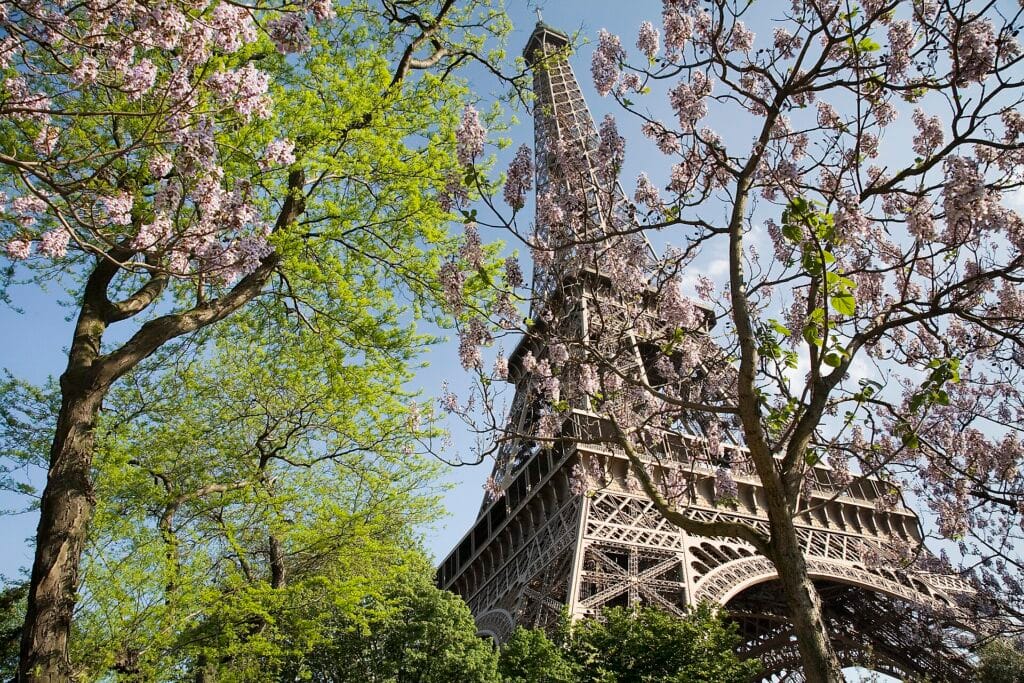
May and the first half of June. October. Late September if the weather holds. These are the best windows of the year and Parisians know it.
Avoid July and August if you can. The city empties of Parisians, the small bakeries close for two weeks, the bistros close for three, the natural-wine bars frequently for a month, and fills with travellers who came expecting the Paris of the films. The Paris of the films is in fact on holiday in Normandy or Corsica until late August. What is left is a thinner, hotter, more tourist-shaped version of the city.
December is genuinely beautiful, the lights, the small markets, the cold-rosé-cheek light at three in the afternoon, and prices are lower than the summer peak. February and March are honestly the city’s best months for a reader’s holiday: museums uncrowded, cafés interior-lit at four, the cost half what it would be in May.
The food, separated by category
Paris is no longer the world’s best food city. It has not been for fifteen years. What it remains is the city with the densest concentration of one particular thing, the small neighbourhood bistro with eight tables, a slate menu, and a chef-owner cooking a market lunch, that no other city has in the same volume.
Paris is not the meal you remember from Anthony Bourdain anymore. It is something quieter and, on its best evenings, more precise.
Three categories worth your attention.
The new-Paris bistros. These are the small places that came out of the bistronomie movement in the 2010s and are now the actual contemporary food culture of the city. Septime is the famous one (book three weeks ahead). The honest workhorses are Clamato (the seafood-only annex of Septime, walk-in), Le Servan, Le Chateaubriand, Verjus, Aux Bons Crus, Bistrot Paul Bert, Le Comptoir du Relais. €60–€90 a head with wine. Worth the planning.
The old-school institutions. Brasseries that have been doing the same thing since the 1920s: Bofinger, Le Train Bleu, Bouillon Chartier in its expanded form. Some of these are good and some are coasting. The honest pick for a first-time visitor is Bouillon Pigalle or Bouillon République. €18 a head for a proper three-course French meal in a beautifully restored room, because the experience is the room and the price, and the food is acceptable rather than the point.
The bakeries. Paris is, still, the best bakery city in the world by a margin. Du Pain et des Idées, Poilâne, Mamiche, Ten Belles Bread, Tout Autour du Pain. Buy a loaf in the morning. Eat it with butter and a piece of fruit. That is half the city’s food culture.
What to skip: the meal at the Eiffel, the meal on a tourist street in the fifth, anything where the menu is in five languages, anything where the chairs face the street so you can be seen rather than fed. The food on the Île Saint-Louis is a specific genre of acceptable disappointment.
The museums, ranked by usefulness
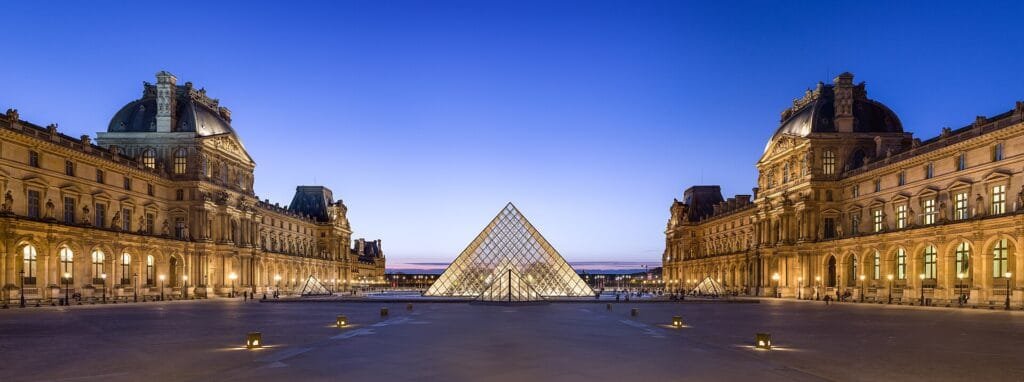
The Louvre is too big to do well in less than three days, and most travellers give it three hours and feel guilty. The honest move is to pick one wing, the Italian Renaissance corridor, or the Egyptian galleries, or the Dutch and Flemish rooms upstairs, and treat it as your whole visit. The Mona Lisa is a four-minute thing at best.
The Musée d’Orsay is, on the strength of its Impressionists alone, the museum to do first. Less famous and more rewarding than the Louvre for most travellers.
The Musée de l’Orangerie, the Monet Water Lilies in their custom rooms, is one of the great twenty-minute experiences in European museum-going. Go early in the morning when the light comes through the skylights and the rooms are half-empty.
The Rodin Museum, the Picasso Museum (in the Marais), the Musée Marmottan-Monet, the Musée Carnavalet for Paris’s own history, all underrated. The Marmottan in particular holds the Monet collection most non-French travellers never make it to.
The Centre Pompidou is closed for major renovation through 2030. Plan around it.
Skip the wax museum, the perfume museum, the Catacombs unless you’ve genuinely planned for the wait, the boat trip on the Seine unless it’s your only evening and you want the city from the water.
The walks worth your time
Three.
The Canal Saint-Martin from République up to Jaurès — about forty-five minutes, the canal locks, the small bookshops and shops on the quai, the Sunday-afternoon picnic culture on the banks in summer.
The Promenade Plantée, the elevated railway-line garden that runs from Bastille east to the Vincennes ring road: about a ninety-minute slow walk, the original of the New York High Line and still the better one. Almost unvisited by foreign tourists.
And the Marais slowly. Start at Place des Vosges at nine, when the gravel paths under the chestnut trees are still raked smooth from the previous evening and only the dog-walkers are out. Work west through the small streets of the Carreau du Temple. Rue Charlot, rue de Saintonge, rue Vieille-du-Temple. Cut north into the third arrondissement, where the eighteenth-century hôtels particuliers have their courtyards visible from the street if you look through the porte cochère. Finish with a coffee at Boot Café (eight stools, one machine, no Wi-Fi) or Fragments. Two hours. Mid-morning, before the brunchers; an hour past noon, the same streets are unrecognisable.
What will surprise you
The smallness of Paris, geographically. The walkable centre is not much bigger than walking from London Bridge to Hyde Park. The cleanliness in some arrondissements and the genuine, ongoing problem in others, the eighteenth, parts of the tenth, the area around Gare du Nord, that the postcards do not show. The number of small independent bookshops that still exist. The seriousness of the natural wine scene. The fact that the waiters are not actually rude, only direct in a way that English-speaking visitors sometimes misread. The price of a small espresso at a real café (€2 to €3) versus the price of a flat white at a third-wave roaster (€6) and the cultural distance between the two.
What will disappoint you if you let it
The crowds at the famous photo-spots. The Louvre courtyard queue. The smell on the Pont Neuf in August. The pickpocket conversation, which is real (do not carry your wallet in a back pocket on the Métro, do not put a phone on a café table on a tourist street). The €25 platter of “French specialties” at the tourist bistros along Rue de Rivoli. The fact that the city is now genuinely expensive in a way that London was a decade ago and is roughly catching up to.
Practical, briefly
The Métro is excellent and tourists routinely overcomplicate the ticket question, a Navigo Easy card, loaded with a carnet of ten, is the cheapest path for most visitors. Bike (Vélib’) works well in central Paris. Uber and the local apps (G7, Bolt) are functional. The two airports are unequal, Charles de Gaulle is busy and slow, Orly is faster and smaller; the new line 14 extension makes Orly a thirty-minute Métro ride from the centre. Tap water is excellent. Tipping is genuinely not expected (€1–€2 if you want).
A final thought
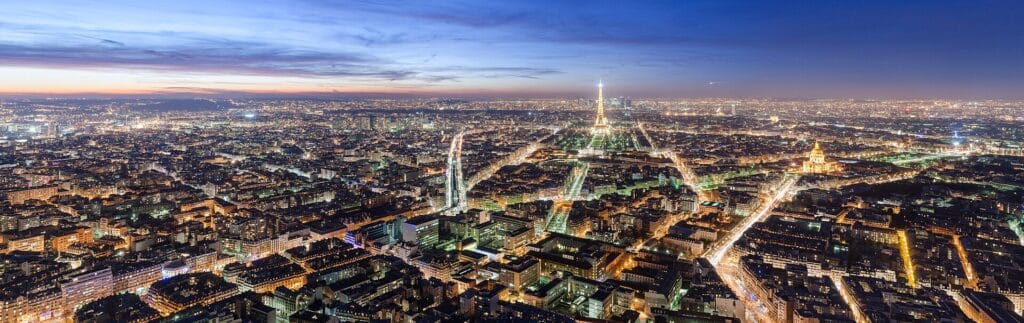
The way to read Paris is the way Parisians read it — as a city to walk slowly, eat at a counter at one o’clock, sit in a café at five, and never try to “see” in a complete way. The famous monuments are obligations; the small streets are the experience. A trip that works tends to be three or four days, two arrondissements, the same café visited three times, one museum done properly, and at least one long lunch where you give up and order a second carafe of the house red. That is the city worth coming for. The other one, the one in the photograph from the top of the Tour Eiffel at sunset: is a postcard, and you can see it on someone else’s holiday.
<!–
<!–
Planning around the season?
–>
<!–
See Paris in October for month-specific timing, pricing, and crowds.
–>
<!–
–>
Seasonal questions
What is the best month to visit Paris?
May or September. Both deliver mild weather (15-22 C), the city running at full capacity, and prices around 25% below July-August peak. June is also excellent if you can handle the longer evenings and the start of the tourist surge.
Is October a good month for Paris?
Yes, arguably the city’s most photogenic month. Highs around 13-16 C, autumn light through the chestnut trees on the Champ de Mars, museum lines half what they are in summer, and hotel rates 30-40% off peak. Bring a waterproof jacket: about 10 rain days in the month.
How much cheaper is Paris in shoulder season?
Mid-tier hotels run 120-180 euros per night in May or September versus 180-260 in July-August. Add a 15-25% discount on flights from the US and UK. The Eiffel Tower elevator line drops from 90 minutes to roughly 25-30.
Paris like a local: arrondissements, food & the plan
Where to base
Le Marais (3rd/4th) for central trendy charm, Saint-Germain (6th) for classic elegance, Montmartre (18th) for romance and views. Avoid being far out — the metro has stairs.
The must-dos (book ahead)
The Eiffel Tower, the Louvre and Musée d’Orsay all need timed tickets. Pair them with the Latin Quarter, the Marais, and a sunset from Sacré-Cœur.
Eat well
Skip the tourist-strip cafés. Do a neighborhood bistro, a boulangerie breakfast, a market (Rue Mouffetard), and a wine bar. Greet shopkeepers with “bonjour.”
Day trip & logistics
Versailles (or Giverny) is the classic day out. Carry a Navigo/metro pass, watch your bag at major sights, and many museums are free under 18 / first Sundays.
Four to five days covers the icons plus Versailles and time to wander.
Paris Travel Guide FAQ
How many days do you need in Paris?
Four to five — the icons, a museum or two, Montmartre, and a Versailles day trip.
Do I need to book the Louvre and Eiffel Tower?
Yes — timed tickets save you from very long queues, especially in summer.
More from Packzup
Frequently Asked Questions
Is Paris worth visiting?
Yes. Paris rewards travelers who are willing to look beyond the surface. From local food to cultural sites, there is plenty to discover for every type of traveler.
How many days should I spend in Paris?
Three days covers the essentials: the Louvre, Eiffel Tower, Notre-Dame area, and a Seine walk. Five days adds Montmartre, the Marais, and the Musee d’Orsay at a saner pace, plus a day trip to Versailles or Giverny.
What is the best way to get to Paris?
Most travelers fly into Charles de Gaulle (CDG) or Orly; the RER B train and Roissybus link CDG to central Paris in 35-60 minutes. Eurostar trains from London reach Gare du Nord in about 2 hours 20 minutes, and TGV lines connect major European cities.
Do I need travel insurance for Paris?
Pickpocketing and phone theft around the metro and major sights are the main risks in Paris, alongside frequent transport strikes that derail plans. Non-EU visitors also pay out of pocket for French healthcare, so medical and cancellation cover matters.
Still deciding on Paris?
More guides: Paris airport to city center · Amsterdam vs Paris
Best time to visit Paris (real climate data)
Best months: May, June, July, August, September.
Paris’s warmest month is July (avg 26°C / 78°F), the coolest is January (low 2°C / 36°F). The wettest is May (69 mm) and the driest is February.
Source: Open-Meteo / WMO climate normals (WMO 1991–2020, or ERA5 2019–2023 where unavailable). See the full month-by-month weather →
You Might Also Love


Written by
Founder of Packzup. Independent travel writer covering offbeat destinations across six continents since 2018. Every guide is independently researched and self-funded — no press trips, never sponsored.
Before you go: see whether they speak English in Paris and what to wear, check the tap water, sort your mobile data, and find out if it is a cash or card destination, and brush up on local etiquette.
Still deciding? Read our honest take: Is Paris worth visiting? The honest verdict
Wondering about safety? Read the honest answer: Is Paris safe in 2026?
