Solo female
The 15 best solo female travel destinations
Our picks for destinations where solo female travelers consistently report feeling safe, welcomed, and able to travel freely. These 15 are based on actual reporting + crime data + traveler feedback, not assumptions.
Safety is the primary filter, but the secondary criteria matter too: ease of solo dining, female-friendly accommodation, good public transport (so you’re not dependent on taxis), and a community of fellow solo travelers.
Japan (Tokyo + Kyoto)
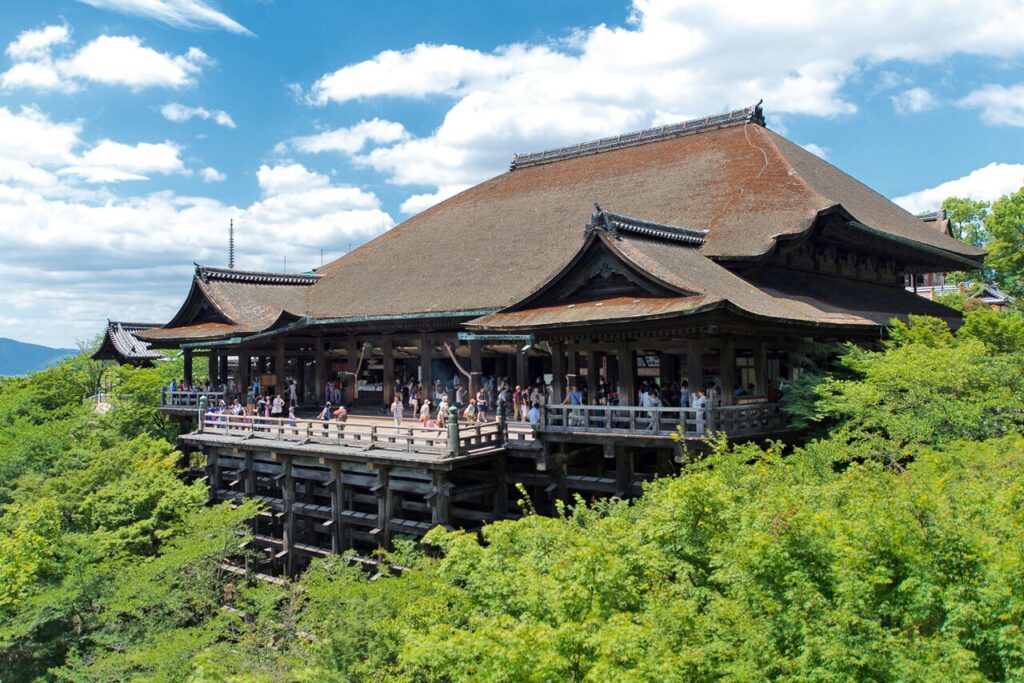
Among the world’s safest countries for solo female travel. Excellent public transport, English signage, almost-zero violent crime.
Portugal (Lisbon + Porto)

Western Europe’s safest country for solo female travel. Walkable cities, English-friendly, manageable costs.
South Korea (Seoul)
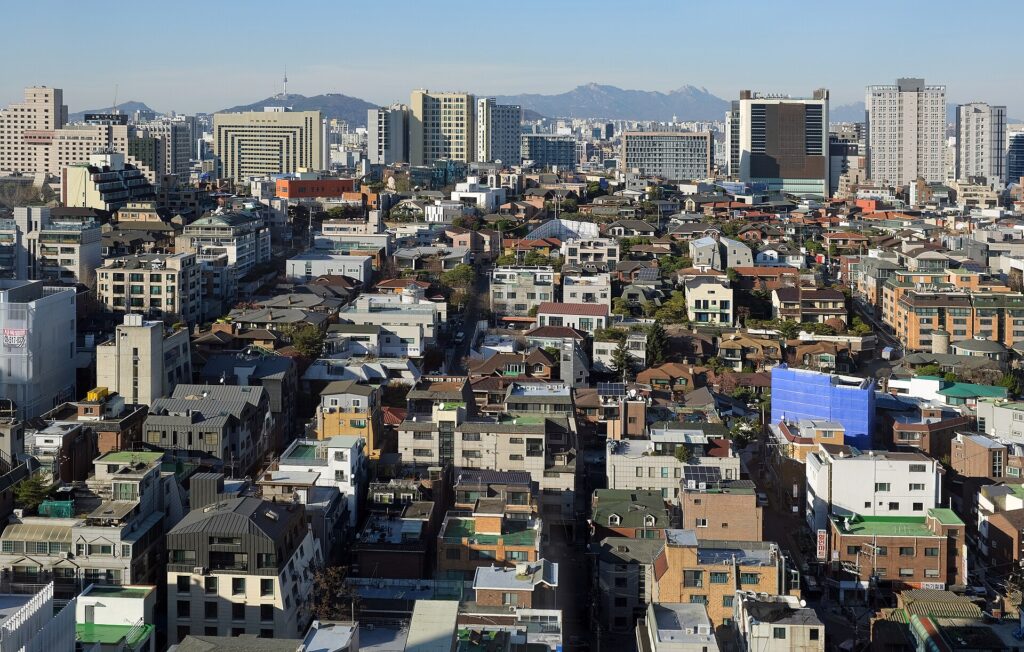
Low crime, excellent infrastructure, vibrant solo-friendly dining culture (KBBQ for one is normal).
Vietnam
Generally very safe; tourism infrastructure mature; Hoi An especially solo-female-friendly.
Japan again (Hokkaido)
Even safer than mainland Japan; ski-town communities + small-city walkability.
Greece (Athens + islands)
Solo female travelers report Greece as one of Europe’s most welcoming countries. Greek family culture extends warmth to visitors.
Slovenia (Ljubljana + Triglav)
Compact, safe, English-friendly, with serious outdoor adventure access.
Iceland (Reykjavík + Ring Road)
Statistically the safest country in the world. Solo Ring Road trips are common and well-supported.
New Zealand
Very safe + adventure-friendly + English-speaking. Wellington, Queenstown, Auckland all solo-female-friendly.
Canada (Vancouver + Banff)
Safe, English-speaking, excellent infrastructure for solo travel.
Spain (Madrid + Barcelona)
Generally safe; some pickpocket awareness needed in Barcelona but solo female travelers report Spain as comfortable.
Netherlands (Amsterdam)
Cycling culture + English universal + low crime + thriving solo-female community.
Norway (Oslo + fjords)
Very safe, English-friendly, expensive but operationally smooth for solo travel.
Austria (Vienna)
Safe, walkable, English-speaking, with a thriving solo dining culture.
Denmark (Copenhagen)
Bicycle-friendly + safe + welcoming + excellent solo dining options.
What does official government advice actually say about women travelling alone?
It says less about whether a country is safe and more about which specific crimes have been reported against foreign women, and that is the part worth reading. Two governments publish free country-by-country advice that is updated when something changes: the UK Foreign, Commonwealth and Development Office and the US Department of State. Neither ranks destinations for women. Both describe patterns.
The FCDO advice for India, last amended on 9 July 2026, is a good example of the register. It states that "There is a risk of sexual assault, including attacks on female foreign national visitors in tourist areas and cities", that "Female travellers often experience verbal and physical harassment by individuals or groups of men", and that "British women have been victims of sexual assault, including rape, in multiple states in India". Its instruction is narrower than the version people repeat: "Avoid isolated areas, including beaches, when alone at any time of day." The qualifier is "when alone", not never. On dress it is brief and specific: "Respect local dress and customs, particularly when visiting religious sites and rural areas." That is a description of reported incidents and a behavioural instruction, not a rating.
The FCDO also runs a standing guidance page called Advice for women travelling abroad, built around five headings: before you go, while you are abroad, know the law, resources for women travelling abroad, and urgent or emergency assistance from the FCDO. Its core instruction is to "Do your research to understand laws, and authorities’ attitudes towards gender equality issues, particularly around crimes and violence against women", and it acknowledges plainly that "In some countries or cultures, women travelling alone or in female-only groups can face extra risks and obstacles". It links to country-specific guidance on what to do after a rape or sexual assault abroad, which is the single most practical thing on the page, and gives an FCDO emergency line of +44 (0)20 7008 5000, open 24 hours a day, for calls from the UK.
Read both governments’ pages for the same country rather than one. They are written by different missions from different reporting, and where they diverge the divergence is itself information. Read the date stamp too: country advice is amended, and an unamended page is not the same as a reassuring one.
Where does the law itself constrain what a woman may wear or do?
In a small number of countries dress and conduct are not custom but statute, enforced by police, and the detail matters because the popular version is often wrong in both directions.
Iran is the strictest, and the rule is precise. The FCDO advice for Iran, last amended on 13 August 2026, records that Islamic codes of behaviour and dress are strictly enforced and sets out what that means: "In public places women must cover their heads with a headscarf, wear trousers or a floor-length skirt, and a long-sleeved tunic or coat that reaches to mid-thigh or knee." Women may be asked to put on a chador, a garment that covers the whole body except the face, before entering some religious sites. The enforcement is not theoretical: the same advice states that "The Iranian authorities have arrested, detained and in some cases committed serious acts of violence against women and girls for not properly following dress codes." Separately, "Sex outside marriage and same-sex relations are against the law in Iran, with the death penalty as the defined punishment", and unmarried partners or friends of the opposite sex travelling together are advised to be extremely cautious. It is illegal to import, sell, manufacture or drink alcohol, with exceptions only for certain recognised Iranian religious minorities, and drinking in public is not allowed with no exceptions.
Saudi Arabia is where the popular version is most often out of date. The FCDO advice, last amended on 25 July 2026, states that "Men and women must wear loose-fitting clothing that covers the elbow and below the knees", and that "Female travellers do not have to wear the traditional robe (‘abaya’) or cover their hair." Clothing that is tight-fitting, or that carries profane slogans or images, or symbols or slogans that could be viewed as political, is to be avoided and can lead to arrest. During Ramadan, do not eat, drink, smoke or chew gum in public in the daytime, including in your car, and do not play loud music, dance or swear in public. "Sex outside of marriage and adultery are illegal, including for tourists." Do not bring alcohol into the country or arrive under the influence of it, and it is illegal to drink alcohol or be drunk in public, with penalties including prison.
The practical difference is between a garment requirement and a coverage requirement. Iran specifies the headscarf; Saudi Arabia specifies elbows and knees and explicitly does not require the hair to be covered. Check the destination’s local laws and customs page rather than a packing list, because that is where a change in enforcement shows up first, and treat rules on unmarried couples and on alcohol as part of the same body of law, because the same officers enforce them. Both pages were re-read on 5 September 2026; enforcement here changes quickly, so check the FCDO amendment date before you fly.
Which cities run women-only carriages, and exactly how do they work?
It is not one policy but several, differing in which carriage, at what hours, and who else is allowed in. Getting it wrong means boarding a carriage you should not, or standing on a crowded platform beside an empty one you could have used.
Cairo is position-based and time-based. The Cairo Metro operator states that two cars in the middle of the train are allocated to women, and that from 9pm one of those reverts, leaving a single women’s car on Line 1; Line 3 works the same way, with the second of the two middle cars open to men only after 9pm. Two further rules are stated plainly: men should not use the women’s cars, and women are allowed to use all cars. The set-aside is a floor for women, not a ceiling.
Tokyo is time-based and marked on the platform. Tokyo Metro operates women-only cars during the morning rush, from the first train of the day to around 9:30am, with the exact times varying by line and operation, and identifies them with a "Women Only" sign at the boarding position on the platform rather than by a fixed carriage number. Besides women, the cars may be used by elementary school students and younger children, and by physically or mentally challenged passengers and their caregivers. Osaka Metro states that women-only cars have been introduced on the Midosuji Line and the Tanimachi Line as a measure against sexual molestation, without publishing the hours on that page, so confirm those with Osaka Metro.
Mexico City is position-based across selected lines. The Sistema de Transporte Colectivo Metro records that from July 2000 the first two cars of each train were set aside for the exclusive use of women and minors under 12 on Lines 1, 3, 7, 8, 9 and A. The city also runs a Viaja Segura programme with staffed modules inside metro stations, including at Hidalgo, Mixcoac and Pino Suárez, open 7am to 8pm every day, offering legal advice from a lawyer of the Secretaría de las Mujeres and psychological support. That is the part most visitors do not know exists, and it is the difference between an incident you absorb and one you can report with help.
Delhi, Jakarta and Dubai are position-based all day. Delhi Metro runs one separate ladies coach in each train, and states that male children up to the age of 12 may travel in it only when accompanied by a woman passenger. KAI Commuter has set aside the first and last carriage of every Commuter Line set for women since the Kereta Khusus Wanita service began on 19 August 2010. Dubai runs women and children cabins, which the Roads and Transport Authority moved to the other end of the train in a changeover completed on 7 August 2019, to match the position used in the new trains, so old diagrams and old photographs point at the wrong end.
Confirm the current arrangement with the operator on the day. Carriage positions, hours and the lines covered are all operational decisions that change, and this summary was checked on 5 September 2026.
Which emergency number do you actually dial, and why check it with the country’s own authority?
Because emergency numbers are consolidated, replaced and re-pointed, and a stale number costs minutes at the worst possible moment. The reliable method is to take the number from the country’s own police, interior ministry or government portal, and to cross-check it against your own government’s travel advice, which republishes the same numbers and carries a visible amendment date.
The numbers below were taken from each country’s own authority, from the FCDO travel advice for that country, or from both, on 5 September 2026.
India has folded its separate lines into one. The Ministry of Home Affairs describes 112 as the pan-India Emergency Response Support System, reached over ten channels including voice call, SMS, SOS, email, web request, chatbot, media crawler, IoT signals and WhatsApp, with emergency response centres integrated with police, fire, health and women’s helpline services. The women’s helpline numbers 1091 and 181 sit inside that structure, and the helpline has been integrated with ERSS-112 in 34 states and union territories. The official 112 India app also carries a SHOUT feature that alerts registered volunteers nearby, available to women and children. The FCDO gives the same set: 112 as the national emergency number, 100 for the police helpline, 1091 for the women’s helpline, and instructs you to dial 112 and ask for an ambulance.
Japan keeps two numbers, and they are not interchangeable. 110 reaches the police; 119 reaches both the fire service and an ambulance. If you dial the wrong one in a medical emergency you have called the police.
Mexico runs a single national number. The federal government describes 9-1-1 as the Número Único de Llamadas de Emergencia, which harmonises medical, security and civil protection numbers across federal, state and municipal services and covers 242 incident types in the Catálogo Nacional de Incidentes de Emergencia. The old codes 060, 061, 065, 066, 068 and 080 were retired into it. Every operator was trained and assessed under a programme developed by the UNAM Faculty of Psychology, and operators are prepared to give telephone first aid in the 11 most frequent medical emergencies while help travels.
The United Arab Emirates keeps three: 999 for police, 998 for ambulance and 997 for fire and civil defence, callable from anywhere in the country. The UAE government platform and the FCDO give the same three.
Four more, taken from FCDO country advice with the date each page was last amended, so you can re-check them at source. Egypt (amended 4 August 2026): police 122, ambulance 123, fire 180, tourist police 126. Turkey (22 July 2026): 112 for ambulance, fire and police together. Indonesia (28 August 2026): police 110, ambulance 118, fire 112. Morocco (19 August 2026): police 190, ambulance and fire 150, and gendarmerie 177, which is the one that matters outside the cities.
Save whichever numbers apply as phone contacts, not as a note. Then check two things: whether the number works from a foreign SIM, and whether it works with no SIM at all.
How do visa and accommodation rules land differently on a woman travelling alone?
Mostly they do not, and the countries where they once did have generally changed the rule rather than advertised the change. The reliable move is to check the issuing authority rather than to assume either way.
Saudi Arabia is the clearest case of a rule that has moved. The official tourist visa guidance states that women may visit as solo travellers, and the only guardian condition attaches to age: applicants must be 18 or over, and a person over 18 must act as guardian only for an applicant under 18. Visit Saudi puts the eVisa at 49 eligible countries, applied for online before travel or on arrival through the Immigration Department visa offices. Read the duration carefully, because the popular shorthand is wrong. The FCDO states that e-visas are "valid for 365 days from the date of issue" and "valid for multiple entries, but only for 90 days in total across the 365 day period". That is 90 days in aggregate, not 90 days per entry. The FCDO adds that an e-visa includes health insurance for the visit up to 100,000 Saudi riyals. A woman travelling alone needs no sponsor and no male relative on the form.
Where the constraint is real, it is usually about who you travel with, not that you travel alone. Iran is the example: with sex outside marriage illegal and carrying the death penalty, official advice is that unmarried partners and opposite-sex friends travelling together should be extremely cautious. That is a restriction on a shared booking, not on a solo one, which is the opposite of the assumption most people make.
Three questions are worth putting in writing before you pay for anything, because the answers are cheap in advance and expensive on arrival.
- Ask the property, by email, what identity document it must collect and register. Many countries require accommodation providers to record guest details and pass them to the police, and the request is routine rather than a warning sign. What you want to know is whether a passport is taken away overnight or copied at the desk and returned, because handing over your passport for a night is a different risk from a photocopy.
- Ask the destination’s immigration authority whether any registration falls on you personally. In some countries the duty sits with the hotel, in others it sits with the guest, and in a few it sits with both. Get that from the immigration or interior ministry site, not from a booking platform.
- Ask whether your accommodation type is licensed for foreign guests at all. Short-let and homestay rules differ from hotel rules in many jurisdictions, and a booking that cannot legally register you is a booking that can be cancelled at the door.
One honest limit: registration law changes without announcement and is rarely translated well. Where no official source gives a clear answer, book a licensed hotel for the first two nights and sort the rest once you can ask locally. Checked on 5 September 2026; visa terms are revised often, so confirm with the issuing authority before you apply.
At a glance
| City and operator | What is set aside | When it applies | Who else may board | Stated position |
|---|---|---|---|---|
| Cairo, Cairo Metro | Two cars in the middle of the train | All day, dropping to one car on Line 1 from 9pm; on Line 3 the second car opens to men after 9pm | Not stated | Men should not use the women’s cars; women are allowed to use all cars |
| Tokyo, Tokyo Metro | A car marked by a Women Only sign at the platform boarding position | Morning rush, first train of the day to around 9:30am, varying by line and operation | Elementary school students and younger children; physically or mentally challenged passengers and their caregivers | Operated so those passengers can ride with a sense of security during the morning peak |
| Osaka, Osaka Metro | Women-only cars on the Midosuji and Tanimachi lines | Hours not published on the operator’s women-only cars page; confirm with Osaka Metro | Not stated on that page | Introduced on those two lines as a measure against sexual molestation |
| Mexico City, Sistema de Transporte Colectivo Metro | The first two cars of each train | Set officially from July 2000 on Lines 1, 3, 7, 8, 9 and A | Minors under 12 | Backed by staffed Viaja Segura modules in stations, 7am to 8pm daily |
| Delhi, Delhi Metro Rail Corporation | One separate ladies coach in each train | All day | Male children up to the age of 12, only when accompanied by a woman passenger | Reserved coach on every train |
| Jakarta, KAI Commuter | The first and last carriage of each Commuter Line set | All day, since the Kereta Khusus Wanita service began on 19 August 2010 | Not stated | Women-only carriages at both ends of the set |
| Dubai, Roads and Transport Authority | Women and children cabins | All day | Children | Cabins relocated to the other end of the train to match the new trains, completed 7 August 2019 |
Frequently asked questions
Is there an official list of countries that are safe for women travelling alone?
No, and neither the UK nor the US publishes one. The Foreign, Commonwealth and Development Office and the US Department of State publish country advice describing reported crime patterns and legal restrictions, and the FCDO runs a standing guidance page for women travelling abroad. They describe what has been reported and what the law requires. They do not rank destinations, and any list that claims to be official is not.
Do you have to cover your hair in Saudi Arabia?
No. The FCDO guidance, last amended on 25 July 2026, states that female travellers do not have to wear the traditional robe, the abaya, or cover their hair. What is required of both men and women is loose-fitting clothing covering the elbow and below the knees, and tight-fitting clothing or clothing with profane or political slogans can lead to arrest. Iran is the country where a headscarf is legally required in public, along with trousers or a floor-length skirt and a long-sleeved tunic or coat reaching mid-thigh or knee.
Can a man be fined for sitting in a women-only carriage?
Enforcement differs by system and is set by the operator, so check with that operator rather than assuming. What the operators do publish is the rule itself. Cairo Metro states that men should not use the women’s cars. Tokyo Metro marks the boarding position with a Women Only sign and names the additional groups who may board, which are elementary school students and younger children and physically or mentally challenged passengers and their caregivers. Delhi Metro allows male children up to the age of 12 in the ladies coach only when a woman passenger is with them.
Can women use the ordinary carriages as well?
Yes, and Cairo Metro says so explicitly: women are allowed to use all cars. Treat a women-only carriage as an option you can take rather than a place you are confined to. In Mexico City the reserved section is the first two cars on selected lines, so the rest of the train is available; in Cairo the reserved cars sit in the middle of the train, which changes where you wait on the platform.
What is the emergency number in India?
112. India’s Ministry of Home Affairs describes 112 as the pan-India Emergency Response Support System, which integrates police, fire, health and women’s helpline services, and can be reached by voice call as well as SMS, SOS, email, web request, chatbot and WhatsApp. The women’s helpline numbers 1091 and 181 sit inside that system, and the official 112 India app carries a SHOUT feature that alerts registered volunteers nearby. The FCDO gives the same numbers and tells you to dial 112 and ask for an ambulance.
What emergency numbers apply in Egypt, Turkey, Indonesia and Morocco?
Turkey uses a single number, 112, for ambulance, fire and police. Egypt splits them: police 122, ambulance 123, fire 180 and tourist police 126. Indonesia gives police 110, ambulance 118 and fire 112. Morocco gives police 190, ambulance and fire 150, and gendarmerie 177, which is the one that covers rural areas and roads outside the cities. These are the numbers published in FCDO country advice, amended between 22 July and 28 August 2026. Re-check them on the country page before you travel, and save them as phone contacts rather than as a note.
Does a solo woman need a male guardian for a Saudi tourist visa?
No. The official tourist visa guidance permits solo female travellers, and a guardian is required on the application only for applicants under 18. Applicants must be 18 or over. Visit Saudi lists 49 eligible countries for the eVisa. On duration, read the FCDO wording rather than the shorthand: e-visas are valid for 365 days from the date of issue and valid for multiple entries, but only for 90 days in total across that 365 day period, and the e-visa includes health insurance for the visit up to 100,000 Saudi riyals. Confirm the current terms with the issuing authority before applying, because visa terms are revised often.