
Last updated August 29, 2026 · Editorial policy
- Best time to visit Greece: at a glance
- Best Time to Visit Greece: Month-by-Month Guide
- Best Months to Visit Greece
- Greece Travel Seasons at a Glance
- Weather in Greece
- Festivals & Events in Greece
- When to Visit by Travel Goal
- What to Avoid
- Booking Tips
- The Real Sweet Spot: Why September Beats June, and the One Week to Skip
- Frequently Asked Questions
- Related Greece Travel Guides
- Greece Month-by-Month Guides
Best time to visit Greece: at a glance
Short answer: May–June and September — beach weather without the peak crush.
| Season | Months | What to expect |
|---|---|---|
| Peak | Jul–Aug | Hot, packed beaches; priciest |
| Shoulder (best value) | Apr–Jun, Sep–Oct | Warm, ideal sightseeing, fewer crowds |
| Low | Nov–Mar | Mild, quiet, some rain |
Best Time to Visit Greece: Month-by-Month Guide
Quick answer: The best time to visit Greece is May-June and September-October — ideal weather, fewer crowds than peak, and reasonable prices.

Peak: July-August · Off-season: November-March (islands closed)
Knowing the best time to visit Greece can transform your trip — saving you hundreds on flights and hotels while putting you in better weather with fewer crowds. This guide breaks down each season, key events, and what to expect month by month so you can pick the right travel dates.
Best Months to Visit Greece
Continue planning your Greece trip
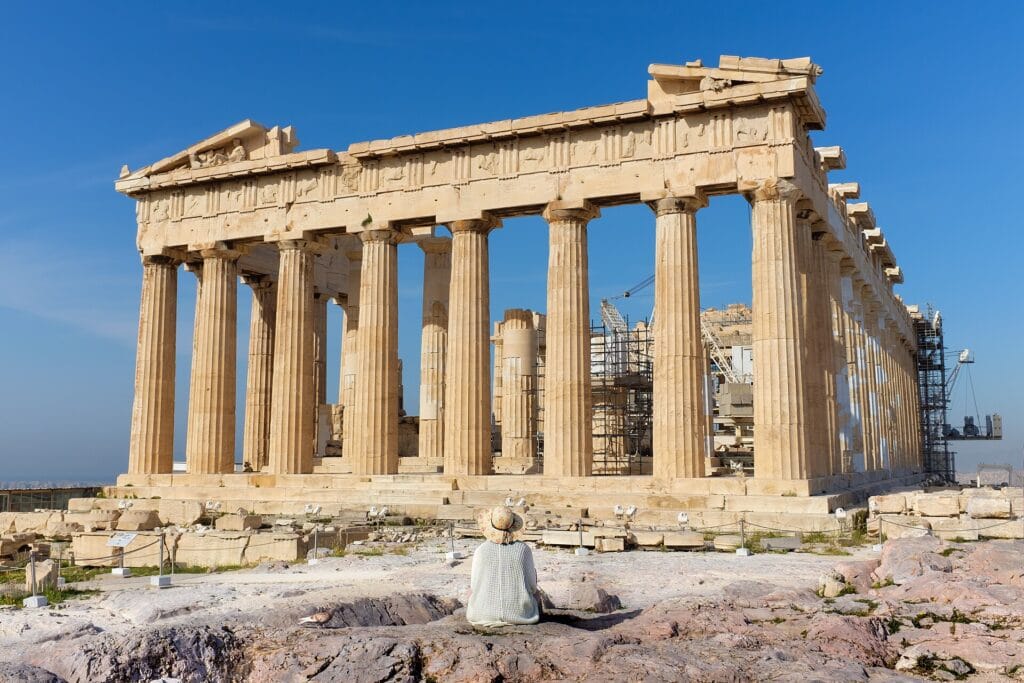
Top pick: Late May through June is Greece at its most workable. Daytime highs typically sit in the mid-20s to low 30s C, the Aegean is warm enough for swimming, and sites like the Acropolis and Delphi stay bearable on foot. Ferry timetables have usually shifted to summer frequency, while island crowds and room rates generally stay below the July-August peak, when Meltemi winds can also cancel sailings.
Greece Travel Seasons at a Glance
| Season | Months | What to Expect |
|---|---|---|
| Peak | July-August | Best weather (for that region), highest prices, biggest crowds. Book hotels 3-6 months ahead. |
| Shoulder | May-June and September-October | Sweet spot: good weather, moderate crowds, 15-30% lower prices than peak. |
| Off-season | November-March (islands closed) | Cheapest, quietest. Some sights may be closed. Best for budget travelers and shoulder-month flexibility. |
Weather in Greece
Mediterranean; hot dry summer, mild winter. Typical peak season highs: 80-95°F summer.
Festivals & Events in Greece
The most booking-critical window in Greece is Assumption week, roughly August 10-17, when the August 15 holiday puts much of the country on the move and ferries and island hotels sell out well ahead. If you must travel then, lock in ferry seats and rooms months in advance.
- Athens Epidaurus Festival (Jun-Aug)
- Greek Orthodox Easter
- Patras Carnival (Feb-Mar)
When to Visit by Travel Goal
- Best weather: Visit during May-June and September-October. Comfortable temperatures, low rainfall, manageable crowds.
- Lowest prices: November-March (islands closed). Hotels and flights cut 30-50%. Trade weather for savings.
- Fewest crowds: November through March is genuinely quiet, though most islands close. For open hotels and thin crowds together, early May and late October are typically the sweet spots, and even June feels calm next to the July-August crush and the packed mid-August Assumption week.
- Festivals & culture: The Athens Epidaurus Festival runs June through August, staging drama and music at the Odeon of Herodes Atticus and the ancient Epidaurus theatre; book those seats early. Patras Carnival, peaking in the weeks before Clean Monday (February-March), is Greece’s biggest pre-Lenten party.
- Outdoor activities: Avoid peak rain/hurricane months. May-June and September-October is generally optimal.
- Budget travelers: November through March is Greece’s true bargain window, with Athens flights and city hotels typically at their cheapest; just accept that most islands are shut. For beach weather on a budget, aim for late April, May, or October, when rates run well below the July-August peak.
What to Avoid
- Peak crowds: July-August brings 2-3x the visitors. Major sites require ticket reservations weeks ahead.
- Major holidays: Greek Orthodox Easter (April 12 in 2026) sends locals island-bound and fills ferries through Holy Week, while the August 15 Assumption makes roughly August 10-17 the busiest week of the year. Clean Monday and Ochi Day (October 28) also spark long-weekend domestic travel.
- Closures: Island Greece largely shuts from November to March: most Santorini and Mykonos hotels, beach clubs, and seasonal tavernas close, and ferry schedules thin dramatically. Athens, Thessaloniki, and mainland sites stay open year-round, so winter trips work best as city-and-ruins itineraries.
Booking Tips
- For July-August trips, book flights roughly three to five months out; summer fares to Athens and the islands typically climb from spring onward. Shoulder dates in May-June or September-October usually hold reasonable prices until six to eight weeks before departure, and winter Athens fares stay soft even later.
- Greece’s shoulder windows are May-June and September-October. Late September is the standout: the Aegean is still warm from summer, crowds thin fast after early September, and rates ease. May trades warmer seas for wildflowers and cooler sightseeing weather; by late October many island businesses begin winding down.
- The school calendars that matter most for Greece are British, German, French, and Italian summer breaks, which stack up across July and August alongside Greek families’ own holidays. Traveling in June or from mid-September onward, once most European schools are back, noticeably eases beach and ferry crowds.
- Travel insurance earns its keep in Greece mainly in high summer: July-August heatwaves and wildfire disruption have affected some regions in recent years, and strong meltemi winds can cancel Aegean ferries, unraveling island-hopping plans. Look for a policy covering trip interruption and missed ferry or flight connections.
The Real Sweet Spot: Why September Beats June, and the One Week to Skip
The month-versus-month math hides two facts that decide whether your trip feels relaxed or rushed. First, late September often beats June for island travel even though both sit in the shoulder window. The Aegean holds summer heat: sea temperatures peak around 24-27C in July and August and are still near 22C into October, while late-spring water stays noticeably cooler. So September gives you warm swimming, thinning crowds, and softer prices at once. Second, the wind matters. The northerly meltemi blows across the Aegean from roughly May to September and peaks from mid-July to mid-August, often gusting around 15-20 knots and occasionally past 30 over the Cyclades. That is why exposed islands like Mykonos and Naxos can feel relentless in high summer even on a clear day.
Two dates to plan around in 2026:
- Greek Orthodox Easter falls on April 12 (Holy Week, April 10-13), when Greeks travel domestically and island ferries fill fast.
- Dekapentavgoustos, the August 15 Assumption, makes roughly August 10-17 the single busiest week of the year, with ferries selling out well ahead.
For warmth without the squeeze, target late May or mid-to-late September and avoid that mid-August window unless the festivals are the point.
Frequently Asked Questions
What is the best month to visit Greece?
The single best time to visit Greece depends on your priorities. For ideal weather plus reasonable crowds, target May-June and September-October. Peak season is July-August (busiest, highest prices). Off-season is November-March (islands closed) (cheapest, least crowded — but check what’s open).
What’s the cheapest time to visit Greece?
The cheapest time to visit Greece is during the off-season: November-March (islands closed). Flights and hotels drop 30-50%. Trade-offs: some sights/restaurants may close, weather may be less favorable, fewer events.
When should I avoid Greece?
Avoid Greece during peak season (July-August) if you want fewer crowds and lower prices. Also consider local school holidays (when domestic travel surges) and weather extremes (80-95°F summer during peak heat).
What is the weather like in Greece?
Mediterranean; hot dry summer, mild winter. Summer highs and winter lows vary by altitude, coast vs. inland, and exact location within Greece. Always check the specific city forecast a week before departure.
Are there major festivals in Greece?
Yes — Greece hosts notable events including: Athens Epidaurus Festival (Jun-Aug), Greek Orthodox Easter, Patras Carnival (Feb-Mar). Major festivals can spike hotel prices 50-200% — book 3-6 months ahead if attending.
What should I pack for Greece?
Pack for the season you’re visiting and the climate zone. Summer in Greece: lightweight breathable clothes, sunscreen, hat, comfortable walking shoes. Winter: layers, waterproof jacket, warm accessories. Check the 10-day forecast 1-2 weeks before departure and adjust.
Related Greece Travel Guides
- Best Things to Do in Greece
- Where to Stay in Greece
- Best Food in Greece
- How Much Does a Trip to Greece Cost?
- Greece Itinerary Guide
Greece Month-by-Month Guides
Greece in May · Greece in June · Greece in September · Greece in October
Key Takeaways
- Best months: May, June, September
- Avoid: Peak tourist season for lower prices and fewer crowds
- Budget tip: Shoulder months offer the best value — good weather at 30-50% lower costs
- Book ahead: Flights and hotels are cheapest 6-8 weeks before travel
📖 Read our Complete Travel Guide to Greece for the full picture.
🗺️ More Greece guides: Budget Guide · Complete Guide
Want the full month-by-month breakdown? See our Greece weather by month (temperatures, rainfall & crowds).
Greece weather & climate by month
Best months to visit: April, May, June, September, October, November. Greece’s warmest month is July (avg 34°C / 92°F), the coolest is January (low 5°C / 42°F). The wettest is December (110 mm) and the driest is July.
| Month | Avg high | Avg low | Rainfall | Rainy days |
|---|---|---|---|---|
| January | 12°C / 54°F | 5°C / 42°F | 91 mm | 9 |
| February | 13°C / 56°F | 6°C / 43°F | 51 mm | 7 |
| March | 15°C / 59°F | 7°C / 45°F | 42 mm | 6 |
| April | 19°C / 66°F | 10°C / 51°F | 44 mm | 7 |
| May | 25°C / 76°F | 16°C / 60°F | 33 mm | 5 |
| June | 29°C / 85°F | 20°C / 68°F | 30 mm | 6 |
| July | 34°C / 92°F | 23°C / 74°F | 5 mm | 1 |
| August | 33°C / 92°F | 23°C / 73°F | 13 mm | 3 |
| September | 29°C / 83°F | 20°C / 67°F | 16 mm | 3 |
| October | 24°C / 75°F | 15°C / 60°F | 38 mm | 4 |
| November | 19°C / 66°F | 12°C / 53°F | 72 mm | 8 |
| December | 15°C / 59°F | 9°C / 47°F | 110 mm | 10 |
Climate source: Open-Meteo ERA5 reanalysis (2019–2023). Compare destinations in the Best Time to Visit Index.
You Might Also Love





Written by
John Morrison is the founder and lead travel writer at Packzup. Over the past decade he has explored destinations across Africa, the Americas, Asia, Europe, the Middle East, and Oceania — always self-funded, never on a press trip.
Still deciding? Read the honest take: Is Santorini worth visiting? — who it suits, who should skip it, and what it really costs.
